Full Article
about Oleiros
Hide article Read full article
Between a city and its own pace
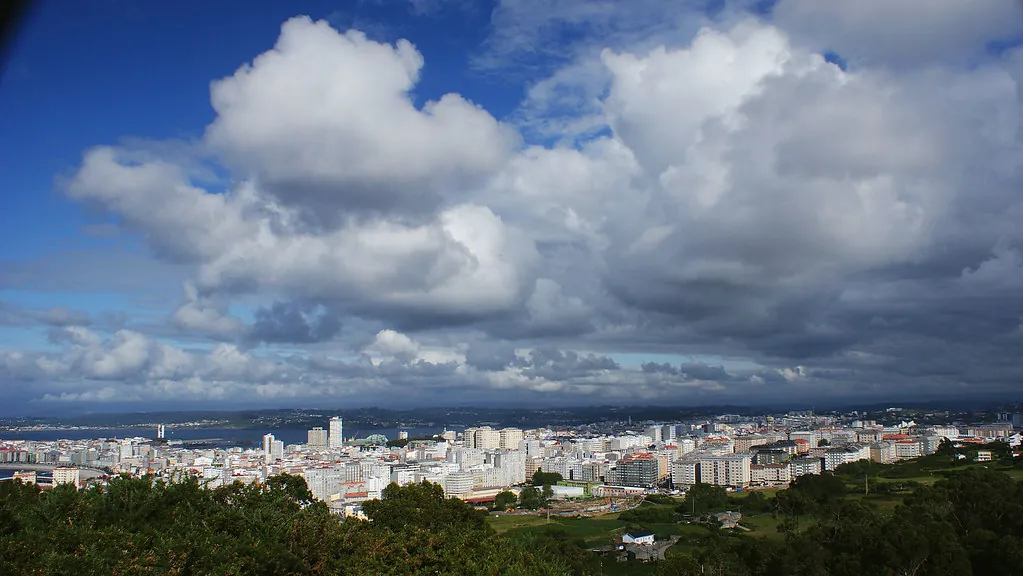
Some places sit right next to a big city and still keep a life of their own. Oleiros is one of them. It lies just outside A Coruña, yet the rhythm shifts as soon as you move around here.
Oleiros brings together open Atlantic beaches, expensive residential areas and corners that still feel very local. In a single day you might pass large villas and then see a retired man watching the sea from a bench. And then there is the oversized monument to Che Guevara by the roadside. It tends to catch people off guard the first time.
The castle watching over the ría
The Castillo de Santa Cruz appears almost without warning. You park near the promenade and walk for a few minutes. Suddenly a wooden footbridge stretches out towards a small island.
That is where the fortress stands. It was built in the 16th century to protect the ría of A Coruña, a coastal inlet that saw its share of unwanted visitors. Corsairs and English fleets were part of the picture at the time.
The castle itself is well maintained, but what draws attention is the setting. Water surrounds the islet, and the walk across has a calm, unhurried feel. It is the kind of place where conversations go on longer than planned.
In summer, the romería de las Merendiñas usually takes place here. A romería is a traditional outdoor gathering, and this one feels very Galician. Families arrive with bags full of food, accordions play, and improvised tables appear on the grass. It is less about visitors and more about neighbours meeting again.
Walking the Atlantic edge on the Costa de Dexo
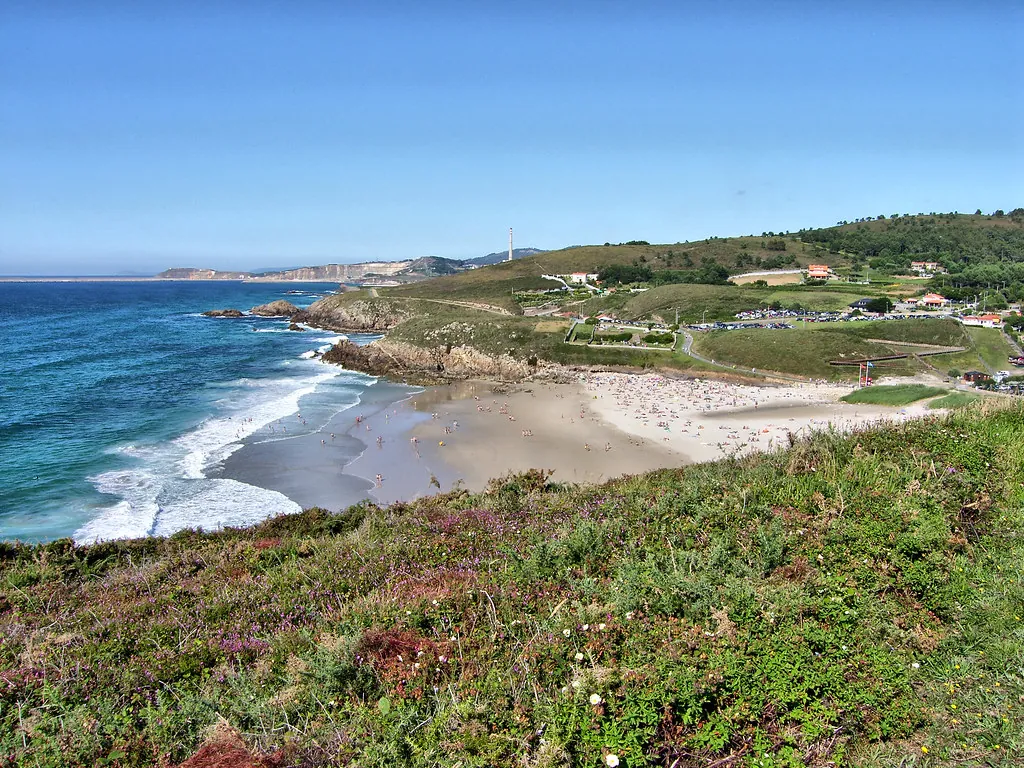
For anyone who likes being close to the sea, the Costa de Dexo makes sense. The landscape changes quickly, moving between stretches of cliffs, small coves and paths through low vegetation.
The route between the faro de Mera and the area of Lorbé covers several kilometres. There is no need to complete the whole thing. Many people choose shorter sections and leave it at that.
The faro de Mera has a fairly modern look. There is no image here of an isolated tower facing storms. Still, the spot offers wide views over the ría.
Near the castle there is also a short circular path of around a kilometre and a half. It works well for a simple walk without much effort.
Along the way you come across a large pine tree, officially listed as a singular tree. It is more than a century old, and it shows. The trunk looks as if it belongs to another time.
Eating with the sea in sight
In this part of Galicia, the sea shapes the food as much as the landscape. In Oleiros, dishes combine maritime tradition with home-style cooking.
Pulpo a la mugardesa appears frequently on local menus. It is prepared with paprika, onion and a thick sauce that almost demands bread on the side. It is not exactly light, but it goes down easily.
Caldeirada de merluza a la oleirense is also common. This hake stew varies from one household to another, and there is always some discussion about which version is the right one.
Empanada de zamburiñas, a pie filled with small scallops, turns up at many family gatherings. It usually starts as something to share and ends with people quietly keeping an eye on their portion.
Then come the desserts made with chestnuts. In autumn they are everywhere in this area. Tarta de castañas carries flavours that feel tied to damp woodland and traditional kitchens.
A roundabout, a monument and a house full of books
The monument to Che Guevara is one of those details that sparks conversation. It stands next to the old Nacional VI road and rises several metres high. Since it was installed, it has been a recurring topic of debate.
At the same time, it has become a practical reference point. People often give directions using that roundabout.
Not far away is Villa Ría Leda, a house dating from the early 20th century. Today it serves as the municipal library.
Its history is unusual. The architect built it as a gift for his wife. Over time, it became a public space holding more than one hundred thousand books.
When to come and getting around
Oleiros partly functions as a residential area for A Coruña, and that shows in the traffic. Early mornings and late afternoons tend to be busy with cars.
If there is a choice, those times are best avoided. The rest of the day feels more relaxed for getting around.
Spring and early autumn are often good moments to visit. The weather is generally pleasant, and the beaches are quieter.
In June, around the festival of San Juan, bonfires appear all along the coast of A Coruña. The atmosphere resembles a large open-air dinner.
During summer, the feria de los alfareros usually takes place. Artisans from different places work with clay in front of visitors. It fits the area well, as the name Oleiros itself comes from the craft of pottery.
Oleiros is not without its drawbacks. Housing prices have risen sharply, and traffic can feel heavy at times. Yet the mix is what defines it: part fishing village, part well-to-do residential area.
In the end, something simple tends to happen. You sit facing the sea, look out over the ría, and the day slips by almost unnoticed. That kind of place.