Full Article
about A Porqueira
Hide article Read full article
A Place You Understand Slowly
Some villages make sense in ten minutes. Others require a long drive along secondary roads before they begin to fall into place. A Porqueira belongs firmly in the second group.
As soon as you start moving through it, the logic becomes clear. Tourism in A Porqueira is not about arriving at a main square and ticking off a few sights. It is about travelling from hamlet to hamlet and noticing how the countryside shapes everything else.
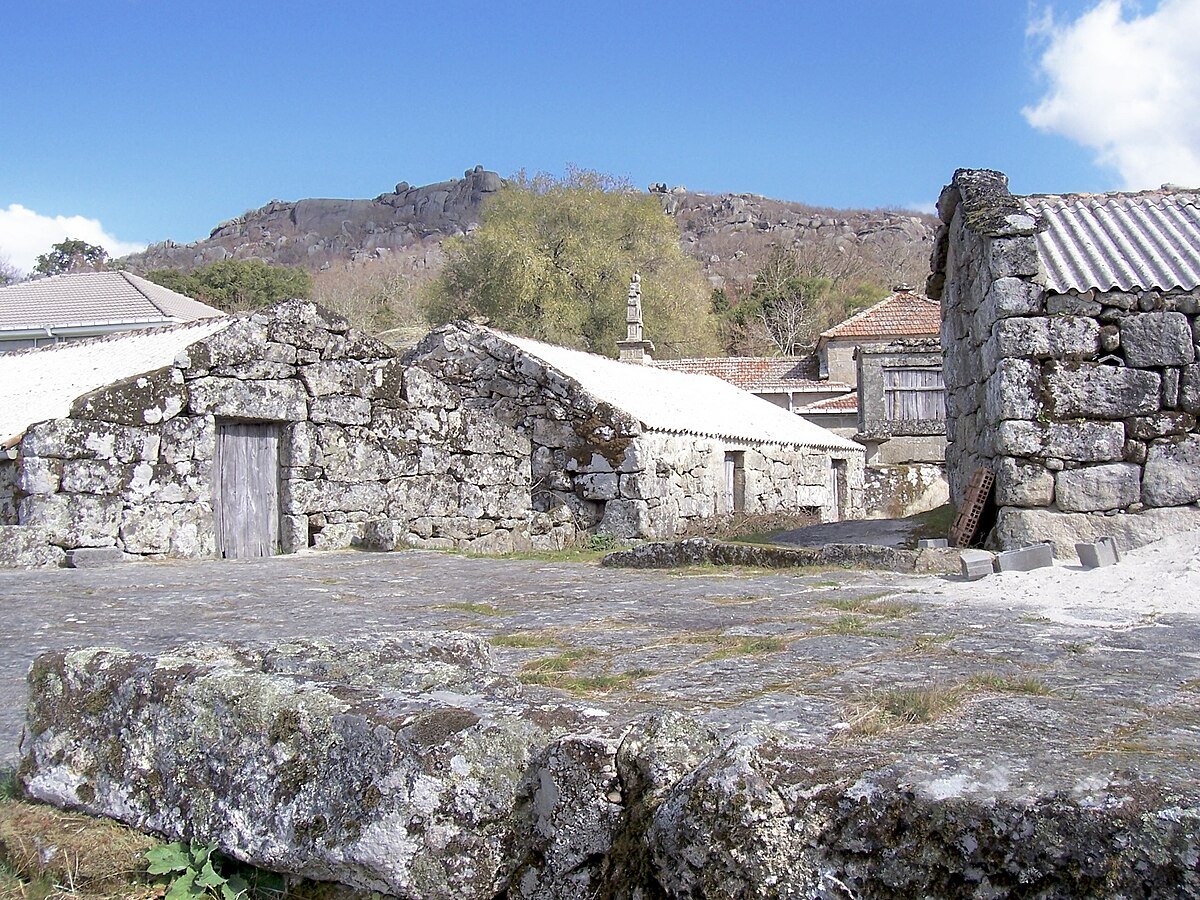
There is no obvious centre where life gathers. Instead, a handful of small settlements lie scattered across the comarca of A Limia, each with its own church, its own hórreos, and its own fields stretching out around it. A hórreo, for anyone unfamiliar with rural Galicia, is a traditional raised granary built in stone or wood, designed to keep grain dry and safe from animals. Here they are not decorative relics. They still form part of the agricultural landscape.
This is the sort of place where you understand the character of the area by looking at how the land is worked.
A Landscape That Follows Its Own Rules
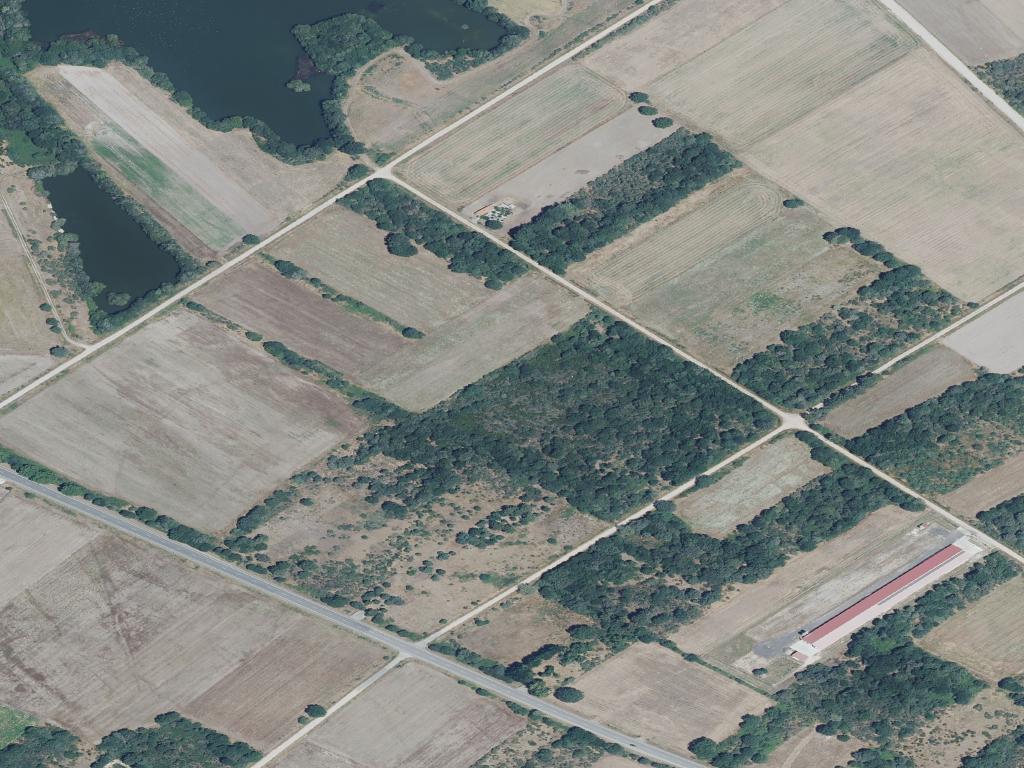
A Porqueira does not try to impress. There are no purpose-built viewpoints or marked trails designed for a quick photo stop. What you see is working countryside.
Meadows are divided into plots marked by stone walls that have stood for decades. At first glance they can look improvised, almost random. A closer look reveals their practical logic. They define property boundaries, help slow the flow of water during heavy rain, and trace the old paths between fields.
Scattered carballeiras, small oak groves, appear among the farmland. These large trees act almost as landmarks. When an old oak stands nearby, there is often a fountain, a crossroads or a house not far away.
The landscape changes quickly when the weather turns. After several days of rain, some tracks become pure mud. This is not unusual in this part of the province of Ourense. It is simply part of the natural rhythm of the area, something that shapes daily life as much as it shapes any visit.
Churches, Chapels and Hórreos
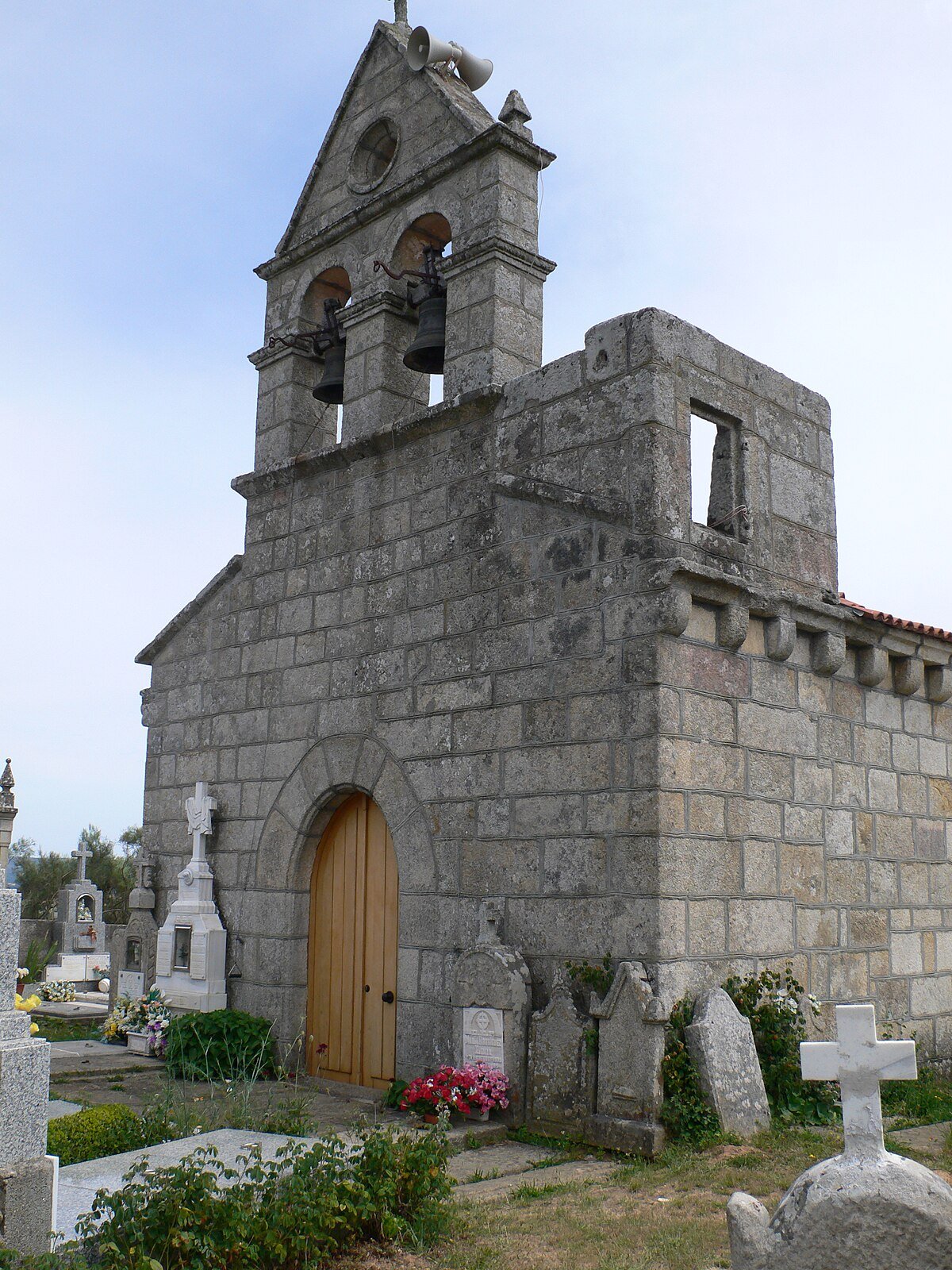
Each settlement is still organised around its parish church. The church of San Pedro de A Porqueira is a good example. It is fairly simple: a single nave, a square bell tower, little else. There is nothing monumental about it, yet it fits the scale of the village perfectly.
In other parishes, small chapels appear dedicated to saints such as Santa Eufemia or San Bartolomé. They are often located close to paths or on slight rises from which several houses can be seen. In many cases granite benches remain outside, the kind where people sit to talk after Mass or at the end of the day.
Among the houses stand old hórreos. Some are carefully maintained. Others clearly show the passage of time, with darkened stone and well-worn wood. They are not displayed as heritage pieces set apart from daily life. They continue to form part of the agricultural setting that has defined A Porqueira for generations.
Walking Between Hamlets
Moving around A Porqueira feels unhurried. There is no need for a fixed route.
Rural tracks link hamlets such as O Carballal, A Moa and A Igrexa. These are narrow lanes, sometimes unpaved, that cross small streams and run alongside fields still under cultivation. A fountain appears unexpectedly. A hórreo stands at the edge of a plot. A small cluster of houses comes into view after a bend.
The usual plan is simple. Park near one settlement, walk for a while, then continue on towards the next. The aim is not to cover long distances but to look around. Each junction requires a choice about which way to go, and that sense of quiet decision-making becomes part of the experience.
Weather makes a difference. After several days of rain, decent footwear is advisable. Mud here is not symbolic. It clings to boots and reshapes the tracks.
When the Countryside Feels at Its Best
From spring to early autumn, the fields are at their most rewarding for walking. The days are longer, and the landscape shifts noticeably with the seasons.
Spring fills the meadows with intense green, and tractors and livestock become more visible. Summer brings drier conditions. The colours fade slightly, yet the tracks are easier underfoot. In autumn, chestnut trees are heavy with fruit and the tones of the fields grow more muted.
Winter tells a different story. It can have its own appeal for those who appreciate a quiet, almost empty countryside. Rain, however, often complicates the paths and makes exploring more demanding.
Getting There and Getting Around
From the city of Ourense, most visitors approach via the OU‑540 before continuing along local roads into the interior of the municipality. These stretches are narrow, and a calm pace helps. It is common to encounter a tractor occupying a good part of the carriageway.
Cars are usually left near the hamlets, taking care not to block entrances to fields. Many plots remain in use, and from the outside it is not always obvious whether a track is private.
Accommodation within the municipality itself is limited and quite spread out. A Porqueira functions more as a peaceful base from which to explore the wider A Limia area than as a destination with extensive tourist infrastructure. That lack of development is not an oversight. It is part of the character of the place.
A Porqueira does not offer a checklist of landmarks. It offers something quieter: a network of villages, fields and stone walls that make sense when given time.