Full Article
about Calvos de Randín
Hide article Read full article
At nine in the morning, the mist has not quite lifted and the slate roofs shine as if it has rained. It has not. The sheen comes from dew drifting in from the Xurés, a fine mountain damp that clings to the skin and means that, even in August, a sweatshirt can feel welcome. From the castelo da Picoña at the top of the hill, Portugal seems closer than the provincial capital. A mobile phone can switch countries depending on where you stand.
Here, the border feels more like an administrative habit than a dividing line. For centuries people crossed it on foot without much thought.
The Scent of History
The path up to the castelo smells of heather and dried chestnut as summer begins to fade. Once the sun appears, the stone of the fortress warms quickly. It is generally said that the castle was built in the Early Middle Ages, when these mountains formed a watched frontier between neighbouring kingdoms. Over time it became linked to a more unusual chapter: the Couto Mixto, a small border territory that for centuries enjoyed its own privileges, lighter taxes and a degree of autonomy that is hard to imagine today.
Stories from that period still circulate, passed from grandparents to grandchildren. People spoke Galician with Portuguese words mixed in, switching languages without noticing. That is hardly surprising. The river Limia and these hills have never been a real barrier.
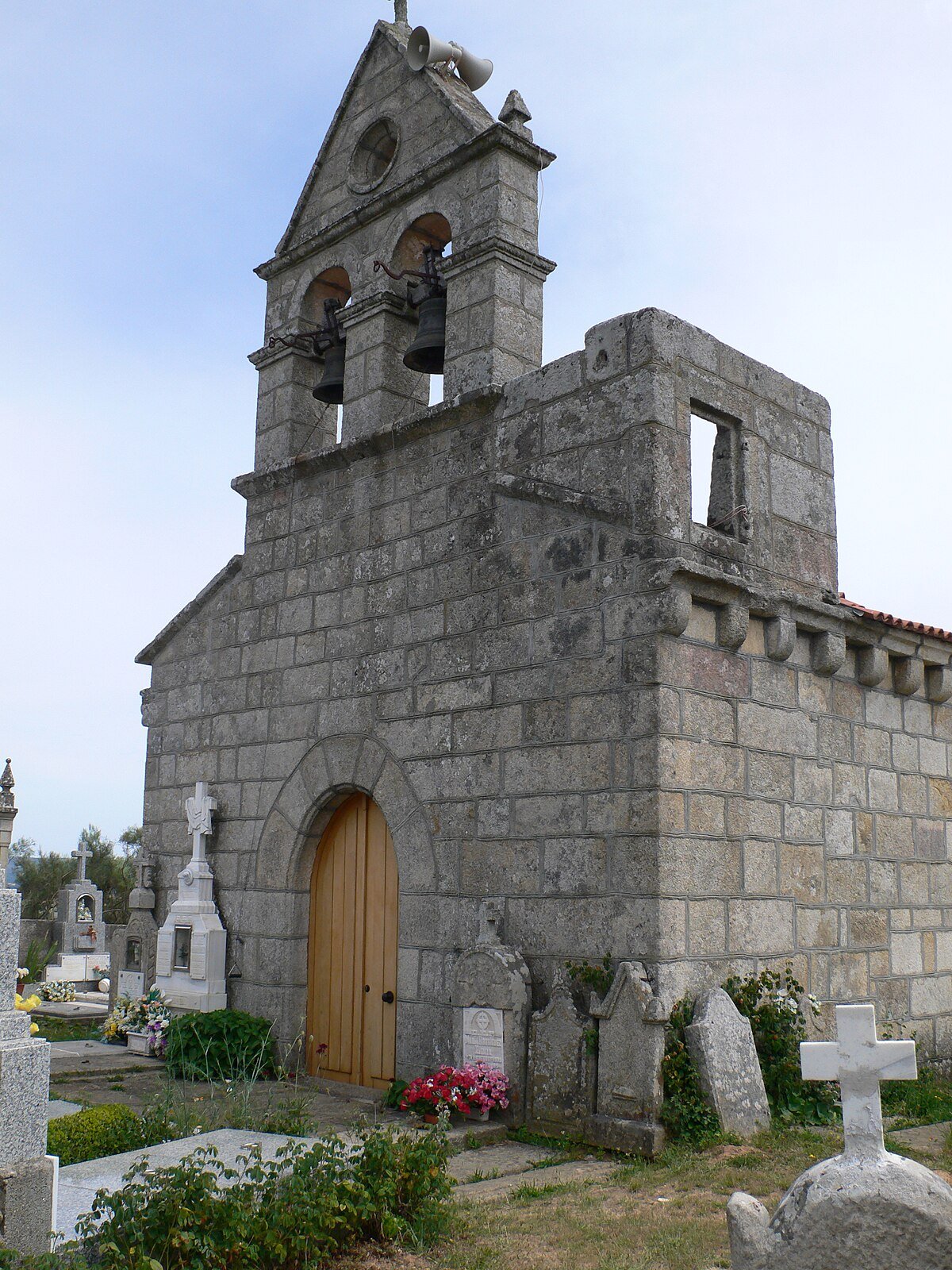
Next to the church of Santiago stands an old communal oven built of dark stone, once used for baking bread for the whole neighbourhood. Even now, up close, there lingers the dry scent of old ash typical of wood-fired ovens long gone cold. It is a quiet reminder of how life here revolved around shared spaces and practical routines.
Where the Mámoas Sleep
Several mámoas have been recorded within the municipality. These prehistoric burial mounds appear as small rounded rises among the ferns. At Penas de Randín some of the most visible examples can be found, although many lie half hidden by vegetation. Signposting is limited. Instead, reddish dirt tracks wind between chestnut and oak trees.
In autumn the ground fills with split shells and damp leaves. Walnuts fall with a sharp knock against the earth, and the air carries the scent of humus and turned forest soil. It is a landscape that shifts subtly with the seasons rather than dramatically.
A circular walking route passes through this area, linking several small villages such as Fachado and Cebreiro, among others. Taken at an unhurried pace, it can be completed on foot in a few hours. The terrain presents no major difficulties, though carrying water is advisable. In Aguioncha there is a well-known spring where the water runs very cold even in summer. It is still common to see local residents filling large bottles there.
A Border in Name Only
A few kilometres away lies Tourém, already in Portugal. The so-called Camino Privilegiado crosses this stretch of frontier without any real change in scenery. The same meadows enclosed by low stone walls, the same cattle, the same mid-morning quiet.
At the former border post there is now barely any movement. An occasional car passes. Someone stops for coffee. Little else happens. People on both sides understand each other without effort. In this part of Galicia, the raya, as the Spanish-Portuguese border is often called, was never a rigid line.
The castelo da Picoña embodies that ambiguity. For centuries its administration shifted several times between neighbouring crowns. Meanwhile, the surrounding villages continued much as before: bread baked in wood-fired ovens, homemade red wine, cattle moving slowly along the tracks. Political control might change on paper, yet daily life kept its own rhythm.
When to Go, and What to Bear in Mind
April and May are usually the most pleasant months for walking in the area. The hills turn green, heather begins to flower and the stronger summer heat has not yet arrived. Mornings can start with mist, but when it lifts the landscape opens up all at once.
Summer brings a noticeable change. In August many former residents return to the village and cars with Portuguese number plates head up towards the castelo. There is more noise and movement than during the rest of the year.
It is worth remembering that the pace of life remains rural. Early morning is active. Around midday, almost everything pauses. Later in the afternoon the village stirs again as the sun begins to drop. Arriving at two or three in the afternoon may mean finding many doors closed.
At one end of the village stands a pazo known as the pazo de los Tejada, now largely silent. A pazo is a traditional Galician manor house, typically associated with rural nobility. Here, green shutters shift in the wind and knock with a hollow sound. From this point the plain of the Limia stretches out in long fields, intensely green when the cereal crop is growing.
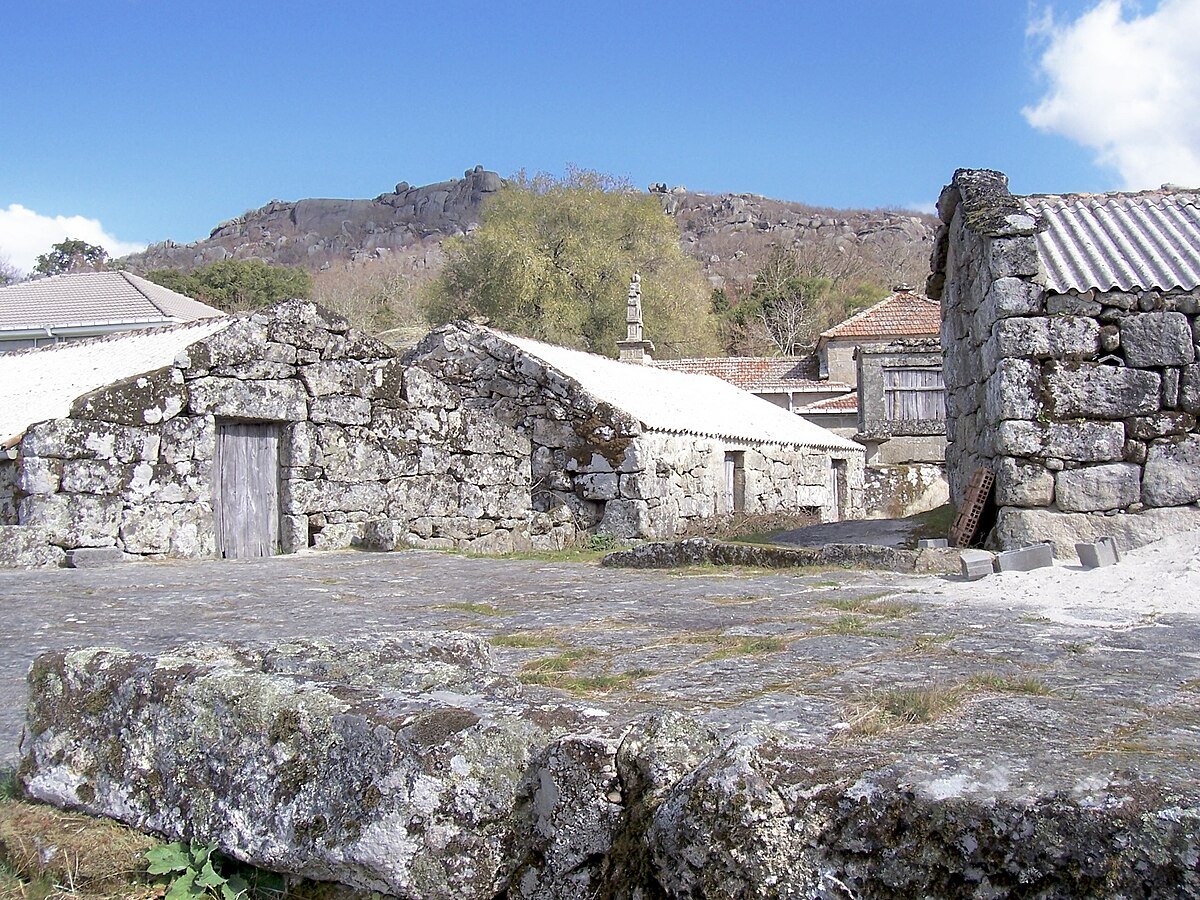
The houses in Calvos de Randín follow the same pattern seen across much of A Limia: grey granite walls, slate roofs and hórreos raised on stone pillars. These elevated granaries were designed to keep grain dry and safe from animals. Some remain in good condition. Others lean gradually with time. The stone endures almost everything: the damp climate, the long winters and that border which, in truth, never fully existed.