Full Article
about Lobios
Hide article Read full article
At the Southern Edge of Ourense
Some places look like forgotten corners on the map. Lobios has a touch of that feeling. Drive south through the province of Ourense and the valley narrows, the mountains close in, and before long Portugal appears across the river as if it had always been there.
The village itself is small and not especially lively. Lobios works better as a base than as a destination in its own right. From here you reach the Parque Natural Baixa Limia–Serra do Xurés, the hot springs of Río Caldo and a scatter of rural parishes where daily life still follows an unhurried rhythm.
Anyone arriving in search of a packed historic centre full of monuments will have chosen the wrong spot. Plans here tend to be simpler: a car to move around, boots for walking and enough time to stop by the water when it feels right.
Río Caldo and the Hot Springs
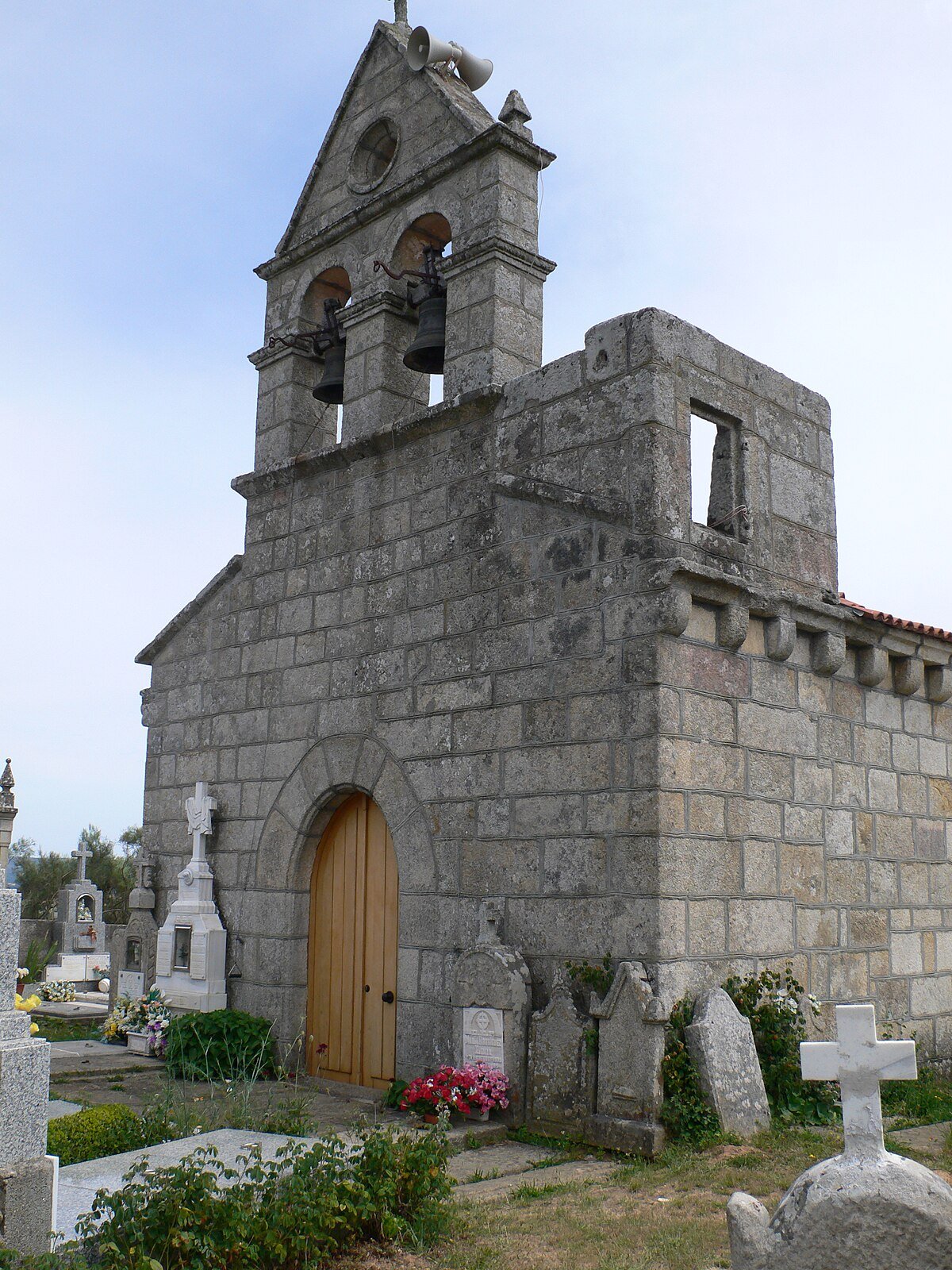
Much of the activity around Lobios revolves around Río Caldo. It is a small settlement with just a few streets and the stone church of Santa María, built in dark, sober granite. Beyond that, there is little bustle: a handful of locals, cars heading towards the spa, and walkers setting off along nearby paths.
The most curious feature lies underground. In this area hot water rises naturally to the surface. For some time it has been channelled into thermal pools and small spots where the river runs warm. Some areas are adapted for visitors, while others remain more natural. People approach quietly, test the temperature with a foot and decide whether to step in.
The contrast is part of the appeal. A walk in the hills can end immersed in hot water, with the Limia river flowing alongside.
Walking in the Xurés
The Parque Natural Baixa Limia–Serra do Xurés covers much of the municipality. The landscape is defined by granite outcrops, slopes covered in scrub and stretches of woodland that occasionally open onto broad valleys.
There are plenty of marked routes, although the quality of the signage varies depending on the section. Some paths are wide and easy to follow, former livestock tracks or forest roads. Others narrow between dense vegetation and require more attention to avoid missing a marker.
This is rewarding country for unhurried walking. Long-distance treks are not essential. Even a short stroll leads into quiet areas where the main sounds are water and wind moving through the trees.
Lindoso Reservoir and the Border
A few kilometres away lies the Lindoso reservoir. Several points along the road allow you to stop the car and simply look out over the scene. The water sits between mountains and, in the distance, Portuguese territory comes into view.
It is not somewhere that demands hours of activity. The reservoir suits a pause, a short walk to stretch your legs and a moment to take in how the terrain shifts along this stretch of the frontier.
Mist is common in this area and changes the atmosphere quickly. Mountains disappear from sight and the surroundings fall quieter still.
Scattered Villages and Rural Life
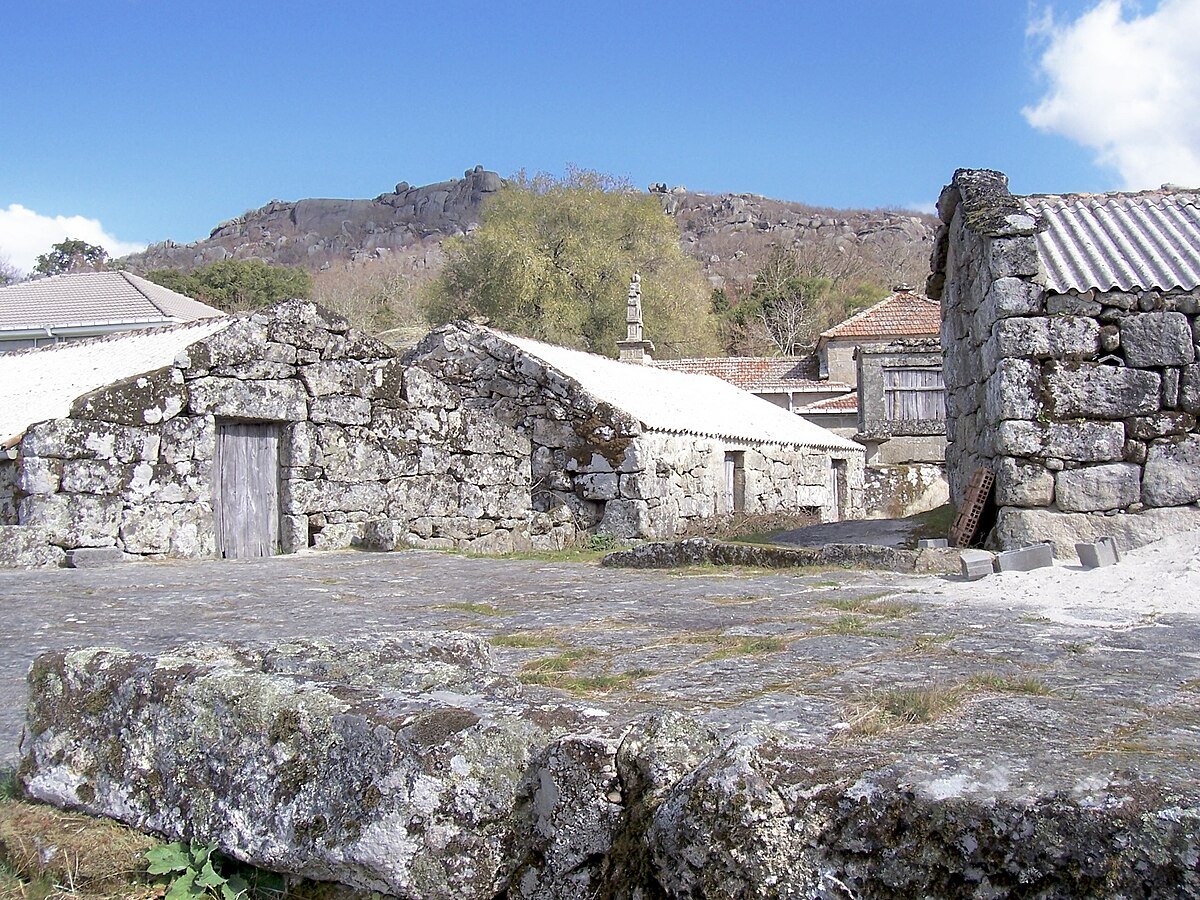
The municipality is divided into several small parishes. In places such as San Miguel do Bollo or A Igrexa, you still see hórreos, the traditional raised granaries of north-west Spain, along with moss-covered walls and stone houses topped with slate roofs.
These are not open-air museums arranged for visitors. They are working villages where people continue to live. A slow drive or a brief walk is enough to grasp how life has unfolded here for decades: small plots of land, narrow lanes and extensive woodland all around.
The sense of continuity comes from everyday details rather than from monuments. Lobios does not present rural life as a spectacle. It simply carries on.
Things Worth Knowing Before You Go
Distances can be deceptive. On the map everything appears close, but the roads twist through the mountains and some trails force a slower pace than expected.
The weather shifts quickly as well. Even when the valley feels warm, higher ground can bring a cooler breeze. A light extra layer is rarely a mistake.
In the hills you may come across garraños, the wild horses native to the area. They are usually calm and focused on their own grazing. It is best to keep a sensible distance and observe them from afar.
Mobile phone coverage is unreliable in parts of the park. Anyone heading out alone should check the route beforehand or download a map in advance.
Lobios is not the sort of place that fills an itinerary with attractions. It works in a different way. Spend time in the Xurés, sit by the river, take a hot bath if the mood strikes. By the time you leave, the impression is of having spent time in a stretch of Galicia that remains largely untamed. That feeling is harder to come by than it once was.