Full Article
about Muíños
Hide article Read full article
At eight in the morning, light slips through narrow window openings in the villages of Muíños. The smell of damp earth and old wood hangs in the air while the streets remain almost empty. At that hour, tourism in Muíños has nothing to do with organised plans. What emerges instead is the slow rhythm of the place: hens crossing a track, the sound of running water nearby even when it cannot yet be seen.
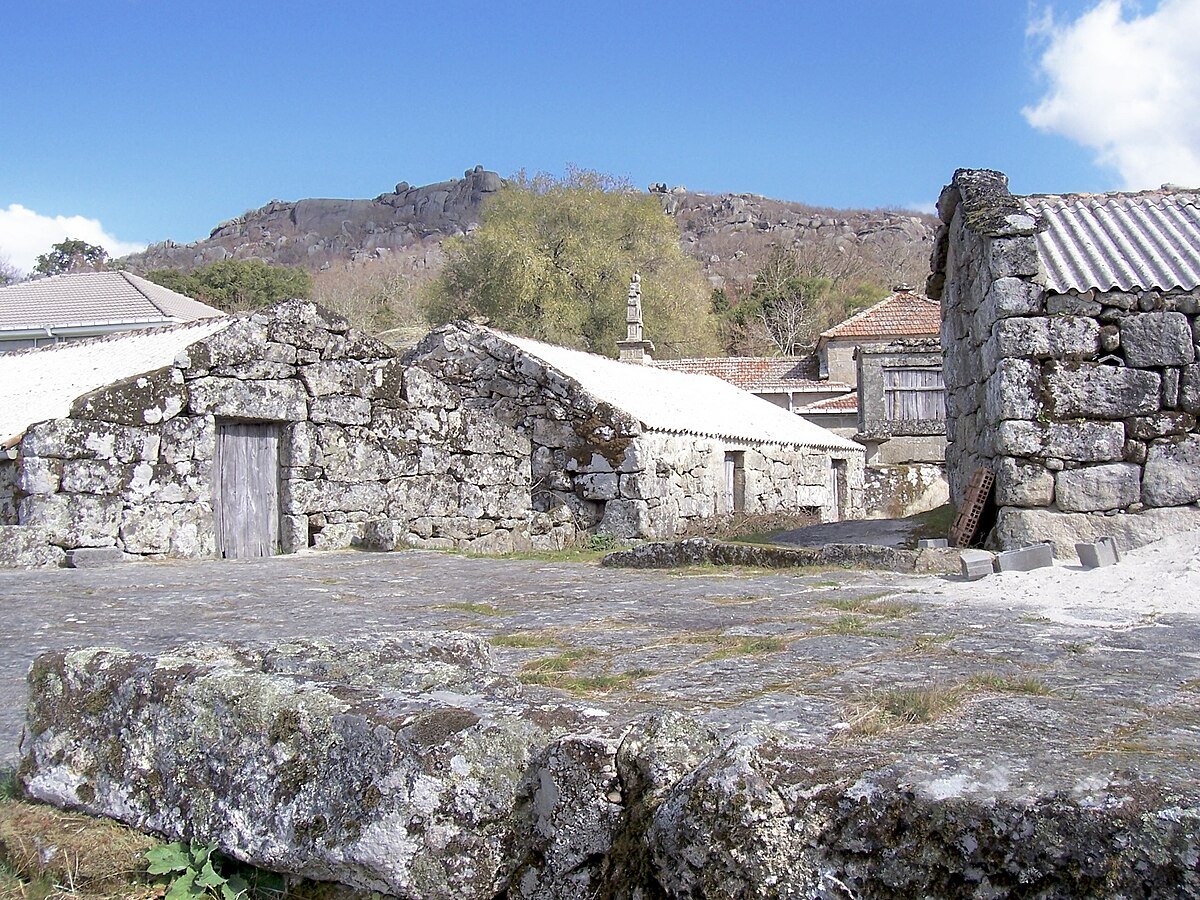
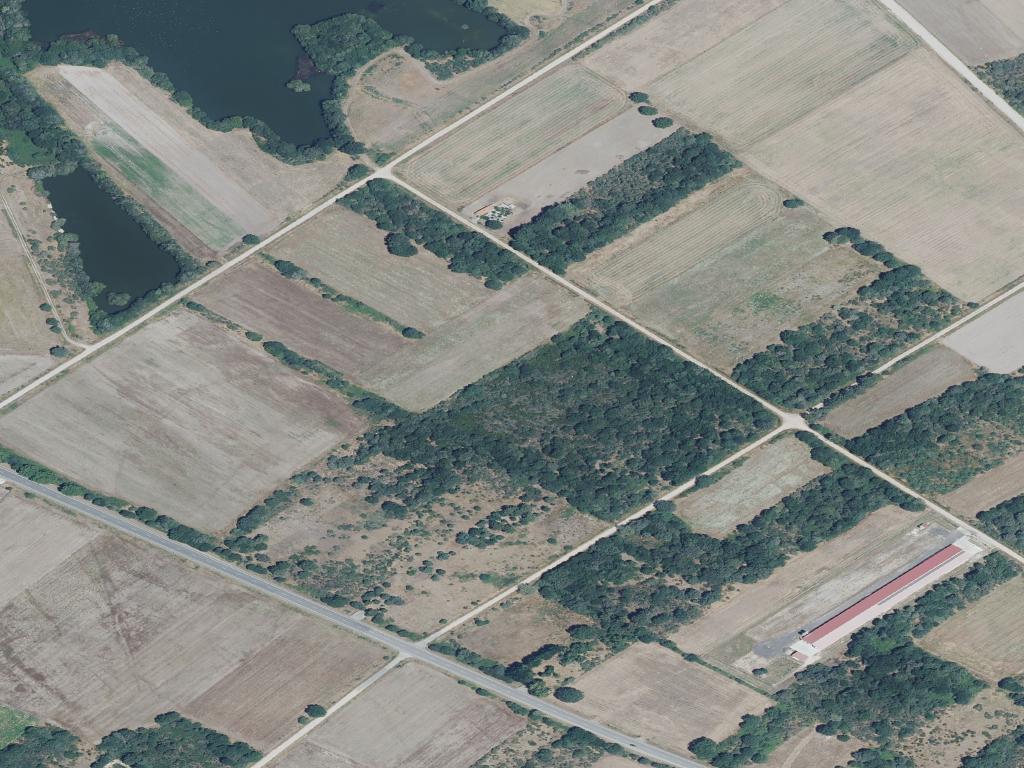
The municipality spreads out in a scattered way, with villages separated by meadows, low hills and rural tracks. There is no compact centre that gathers everything together. The low population density is immediately noticeable. Attention settles on practical details: granite hórreos, traditional raised granaries typical of Galicia, their wood silvered with age, stone crosses at crossroads, fountains and washing places still in use in some spots.
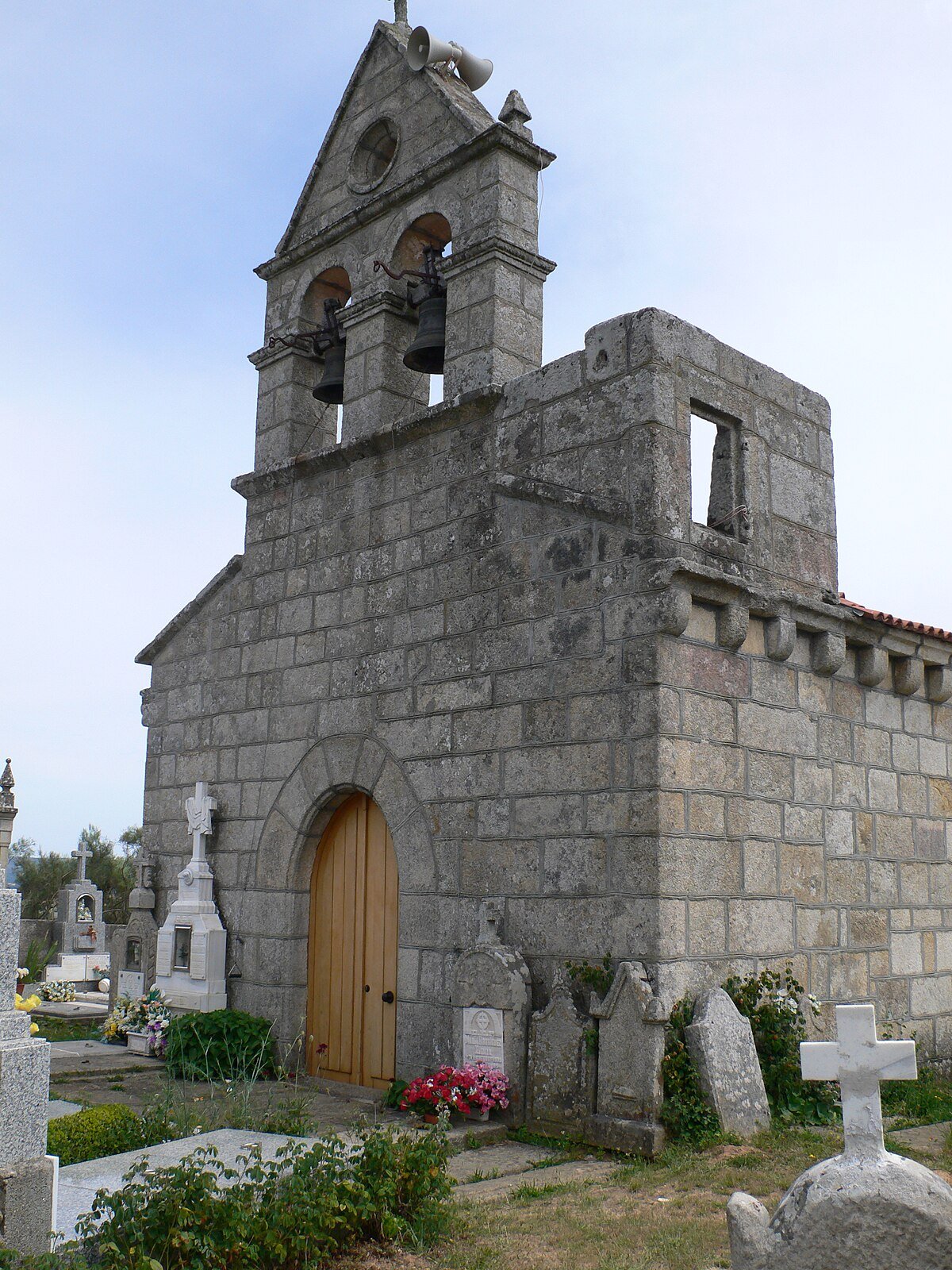
The parish church of Santa María, in the village of Muíños itself, is plain. Rubble stone walls, a simple bell gable and little else. It works as a reference point when arriving by road and trying to get oriented in a territory where settlements appear without much apparent order.
Villages linked by paths
Walking along rural paths reveals how life is organised here. In places such as Piñeira or Barral, narrow streets run between stone walls, leading to small vegetable plots and two-storey houses with dark tiled roofs. Some buildings still hold traces of old water mills near the streams.
After spring rain, the streams run stronger and the sound of water accompanies the walk for long stretches. In autumn, the surrounding hills change colour. Chestnut and oak trees shift from green to ochre, and among the fallen leaves mushrooms appear for those who know how to recognise them.
Looking out over A Limia
The natural setting opens towards the region of A Limia. There are forest tracks and simple trails crossing oak woods and areas of low scrub. They are not always signposted, so it is worth keeping track of the return route or marking it on a phone.
In some places, the land rises enough to offer a view of the valley stretching north. These are not formal viewpoints. Sometimes it is just a clearing in the trees or a bend in the path where the view suddenly opens up. On a still day, the only sounds are the wind moving through leaves or the dry snap of branches underfoot.
A municipality without a central square
One thing that often surprises visitors is that Muíños does not function as a single compact village. The population is widely spread and there is no main square where daily life gathers. A visit is more about linking nearby settlements: Vilar do Monte, Portela da Cañiza and other small places that appear along the local road.
Between one and another, small scenes unfold. A dog watching from the entrance of a house, someone watering plants beside a fountain, sheep slowly crossing a dirt track. These moments form much of what there is to see.
How long to spend
With only a few hours, it makes sense to stay in a single village and walk without rushing. In Muíños itself, a couple of streets are enough to find hórreos, stone doorways and courtyards where agricultural tools are still kept.
With a full day, several nearby villages can be linked, such as A Cerqueira, Barral or A Portela, moving between them by car and walking short sections. What tends to stand out often lies in between: a mill half covered by vegetation, a small bridge over a stream, an old path that still shows wheel ruts worn into the stone.
Access and walking conditions
On the map it may look straightforward, but there are steep slopes and tracks that turn muddy after rain. Footwear matters more than it might seem. Boots with a firm sole make a noticeable difference when exploring without worrying about slipping.
When it rains, wet stone on walls and paths becomes slippery. On those days, it is better to move between villages and avoid longer routes through the hills.
When to go
The transitional seasons tend to show the landscape with greater nuance. In spring, streams carry water and the meadows are intensely green. In autumn, the hills fill with browns and reddish tones, and in some houses the air already carries the smell of firewood.
Summer brings long days, though midday heat can be strong in the open areas of A Limia. Starting early or heading out later in the afternoon changes the experience noticeably. In winter, damp conditions are common, so shorter walks and waterproof clothing are advisable.
In the end, Muíños is best understood without searching for monuments or fixed itineraries. The place works as a mosaic of villages, rural paths and everyday gestures. The visit is about slowing down and looking around: moss-covered stone, orderly vegetable plots beside houses, and paths that fade into old oak woods.