Full Article
about Os Blancos
Ocultar artículo Leer artículo completo
The church bell in Vilariño Frío strikes seven, though dawn is still a rumour. A tractor coughs once, then settles into its route between stone barns. No one appears, yet the village is awake: lights blink on behind granite walls, wood smoke knots above slate roofs, and the valley smells of cows and damp earth. This is Os Blancos before the guidebooks arrive—mainly because they never bothered.
At 700 metres, the municipality sits higher than most of Galicia, and the altitude writes the rules. Summers stay mild enough to walk at midday; winters hand the landscape to hoar-frost and a fog so thick you can taste iron in the air. Weather fronts slide in from the Atlantic, meet the first ridges of the Macizo Central, and decide to stay for coffee. Local farmers check three forecasts before cutting hay; even then they keep a jacket on the gatepost.
Stone, chestnut and working noise
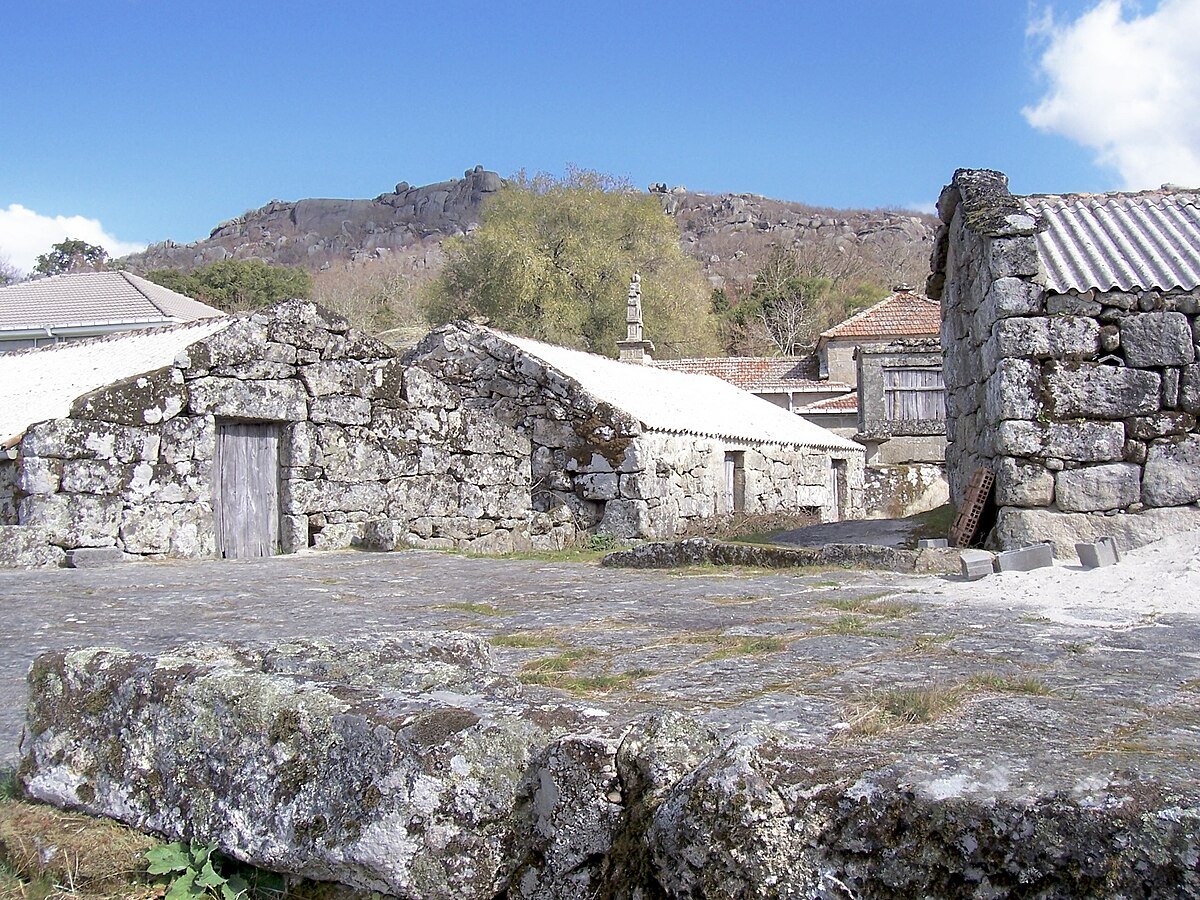
Forget polychrome plazas and souvenir flags. Os Blancos is a scatter of hamlets—Vilariño de Limia, Cualedro, A Pobra—linked by lanes barely two tractors wide. Granite defines everything: houses, hórreos on stilts, the low walls that box every field. The stone is the colour of wet ash, darkened by lichen and centuries of rain. Against it, the autumn carballeiras (oak stands) flare copper and rust, while chestnut branches rattle with last night’s windfall.
There is no high street, no ticket booth, no “interpretation centre”. What you get instead is a mesh of public footpaths that farmers still use to move cattle or check calves. Walk one: the track from A Pobra to the cruceiro de San Xoán. It is hardly three kilometres, but the gradient sneaks up, and the stones turn slick after the slightest shower. Halfway, a stone cross leans where three parishes once met; moss has erased the carved date, though 1789 is just readable if you wipe away the rain. Pause here and the only soundtrack is a blackbird and, somewhere below, the hydraulic hammer of a distant digger replacing a drainage pipe. Rural Galicia is not a museum; it is a repair job that never ends.
When lunch depends on the potato calendar
Mealtimes follow the fields. If it is harvest week, restaurants open when the last trailer is unloaded—sometimes two-thirty, sometimes not at all. The regional staple is cullin de patacas: beef shin, local potatoes, a bay leaf and more time than most urban kitchens allow. The meat comes from calves that grazed the same flood-plain you crossed on the way in; the potatoes carry the PGI mark “Pataca de Galicia”, a label invented partly to stop supermarkets shipping cheaper imports from France. Expect to pay €12–14 for a portion that defeats one hungry walker; house wine from O Ribeiro adds another €2.50. Chestnuts appear in October, first roasted over open braziers at the San Simón fair, later stewed into desserts with lemon peel and anisette.
Where to eat? There are only three places licensed to serve outsiders, none of them signed from the main road. O Pulpeiro do Limia occupies a former hay store in Vilariño Frío; phone ahead because the owner doubles as the local plumber and may be fixing someone’s boiler. If the door is locked, drive eight minutes to A Pobra and look for a neon beer sign that only lights up when the generator feels like it. British visitors will recognise the mood of a Yorkshire Dales pub at closing time: talk is slow, television absent, payment usually cash.
Rights of way, and dogs who know the rules
Maps suggest a lattice of paths, but rights of way are informal. A farmer will wave you through a field of rye; the next gate may be padlocked because bull calves have moved in. Stick to the vehicle tracks and no one minds. Dogs are tied up nine times out of ten, but the tenth is tied to a very long rope and has spent years perfecting the lunge. Carry a stick only for confidence; a calm “buenos días” works better than brandished aluminium.
In October the hills turn into an unofficial supermarket for fungi. Families head out at dawn with penknives and baskets, meeting at agreed coordinates like military patrols. The prized boletus edulis (here called pancha) fetches €40 a kilo in Ourense markets, so outsiders wielding cameras instead of knives are watched with polite suspicion. Photographers are welcome; pickers need a local godparent.
Getting here, and away again
The closest city is Ourense, 45 minutes by car on the A-52, then 20 minutes of regional road that narrows with every parish boundary. Public transport exists but feels theoretical: one bus leaves Ourense bus station at 07:15, returns at 14:00, and is cancelled if the driver’s back plays up. A hire car from Santiago airport (two hours) gives more freedom; fill the tank in Verín because village pumps close at 19:00 and do not accept foreign cards.
Accommodation is limited to four rural houses, each with three bedrooms maximum. Expect stone floors, wood-burning stoves, Wi-Fi that flickers when the fog is thick. Prices hover around €70 a night for the whole house in low season, rising to €95 at chestnut time. There is no hotel, no campsite, no swimming pool—just the river Limia for a brisk plunge if you enjoy 14-degree water and invisible currents.
Weather that edits the day’s plan
Rain can arrive horizontally in March; July brings thunderstorms that crack off the granite like rifle shots. Check the Meteogalicia app at breakfast, then look again at lunch because Atlantic fronts accelerate over the plateau. Even in August, dusk temperatures drop to 12 °C; pack a windproof jacket and trousers you do not mind shredding on gorse. Farmers judge strangers by their footwear: wellies earn a nod, city trainers a concerned stare.
Winter access is generally open, but a week of east wind can glaze the bends above 600 m; snow chains become compulsory with no notice. If the weather closes in, the road to Ourense is salted first, the side valleys not at all. A white-out Tuesday in February can mean staying put until Thursday—locals will lend milk, bread and even a spare room, but they will also beat you at cards for matchsticks and expect you to lose graciously.
Leaving without a postcard
Os Blancos will not deliver the dopamine hit of coastline or cathedral. What it offers is a calibration exercise: five days here and the smartphone battery lasts three, conversations lengthen, the night sky reappears in stages. You may depart with nothing more Instagram-ready than muddy boots and a pocket of chestnuts. That, for once, is exactly the point.