Full Article
about Porqueira
Ocultar artículo Leer artículo completo
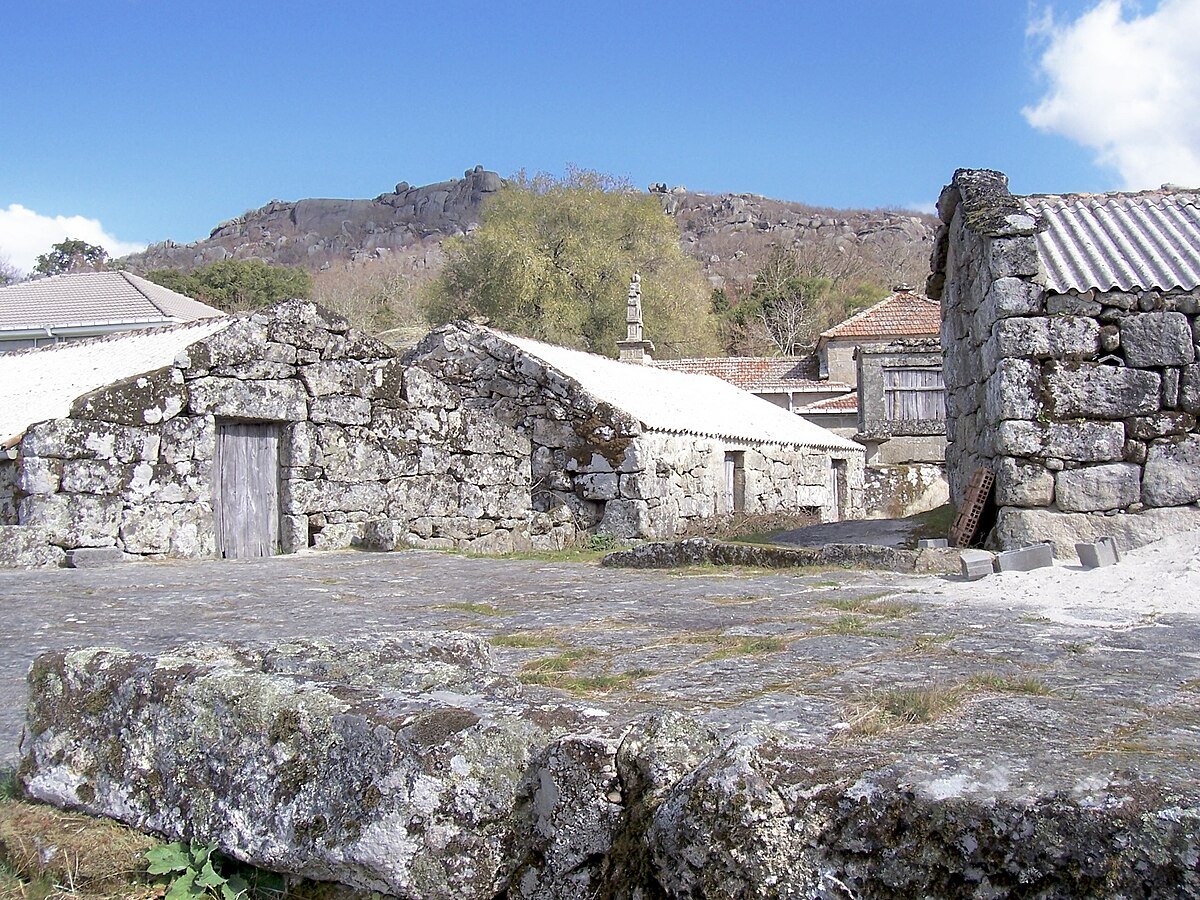
The stone granaries rise from the earth like primitive spacecraft, their squat legs supporting weathered structures that have stored corn and rye since someone's great-great-grandfather hauled the first rocks into place. These hórreos aren't museum pieces behind ropes—they're working buildings, some still in use, others sliding gradually back into the soil from which they came. In Porqueira, a municipality scattered across the flat agricultural basin of A Limia, this is what passes for sightseeing: functional architecture that refuses to become heritage, set amid fields that were once a lake bottom.
The Geography of Absence
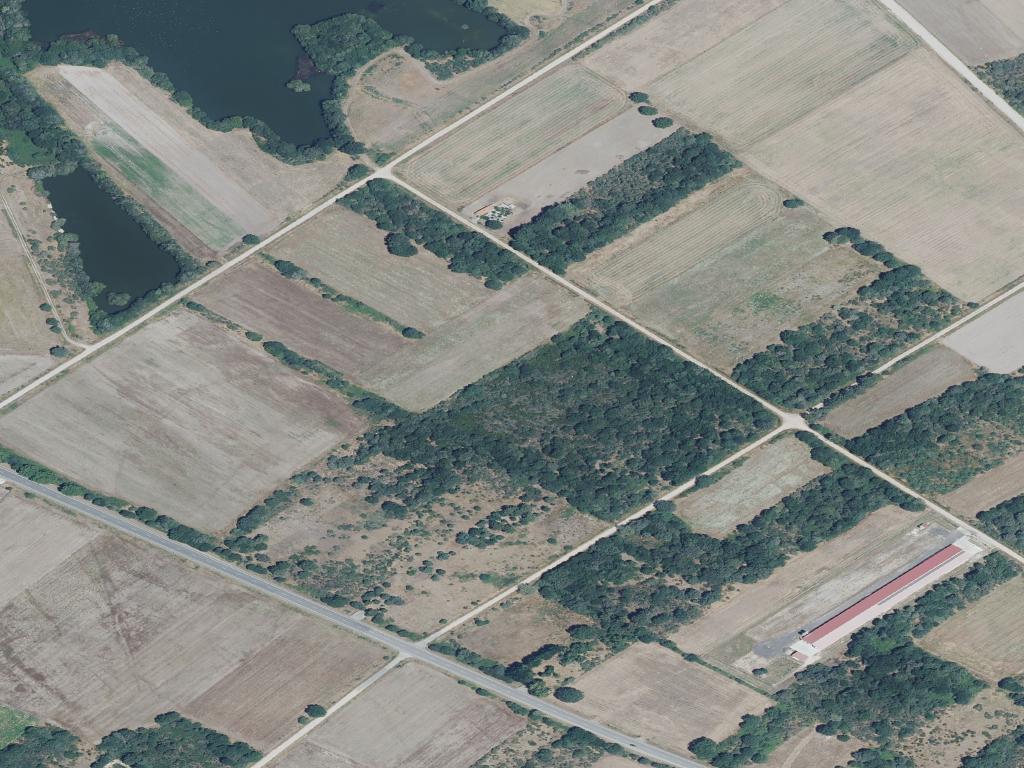
Everything here sits on the bed of Lagoa de Antela, drained in the 1950s to create some of Spain's most productive farmland. The absence of that vast wetland shapes every view—an horizon so level you can watch weather systems march across it like armies. At 650 metres above sea level, the air carries a sharpness that surprises visitors expecting Galicia's usual coastal softness. Frost arrives early and lingers late; morning mist pools in the hollows, then evaporates to reveal a landscape that feels more Dutch than Spanish.
This isn't a village in the conventional sense. Porqueira comprises forty-odd hamlets strung along minor roads, each clutch of houses separated by fields of potatoes, maize or the region's prized white beans. The council headquarters sits in Carballo Seneiro, but even that barely qualifies as a centre—one bar, one pharmacy, and a petrol pump that closes early. Navigation requires either a detailed map or blind faith in the agricultural GPS of local farmers, who'll wave you down farm tracks with the confidence of men who've never needed signposts.
Walking Through Worked Land
The best approach is to park where the tarmac ends and follow the tractor ruts. A circular route linking Carballo Seneiro, A Igrexa and O Pino takes roughly two hours, passing three stone hórreos, a crumbling cruceiro and enough farm dogs to keep you alert. The paths are public—Galicia's right-to-roam laws see to that—but they thread between private plots, so stick to the margins and close every gate. After rain the clay soil clings to boots like wet cement; in August the dust rises in clouds that coat your throat. Neither condition lasts long, but both remind you this is active farmland, not a landscaped park.
Elevation gain measures in single metres, yet the walking isn't effortless. Distances deceive: that church spire visible two kilometres away requires a dog-leg around irrigated fields, adding twenty minutes. The compensation comes in the details—a Victorian-era fountain still used by cattle, a wayside shrine where someone fresh-placed flowers, the sudden realisation that the only sound is a tractor's distant drone. Spring brings lapwings and the return of storks to rebuild nests on telegraph poles; autumn turns the maize stubble into a playground for barn owls.
What Remains When the Water Left
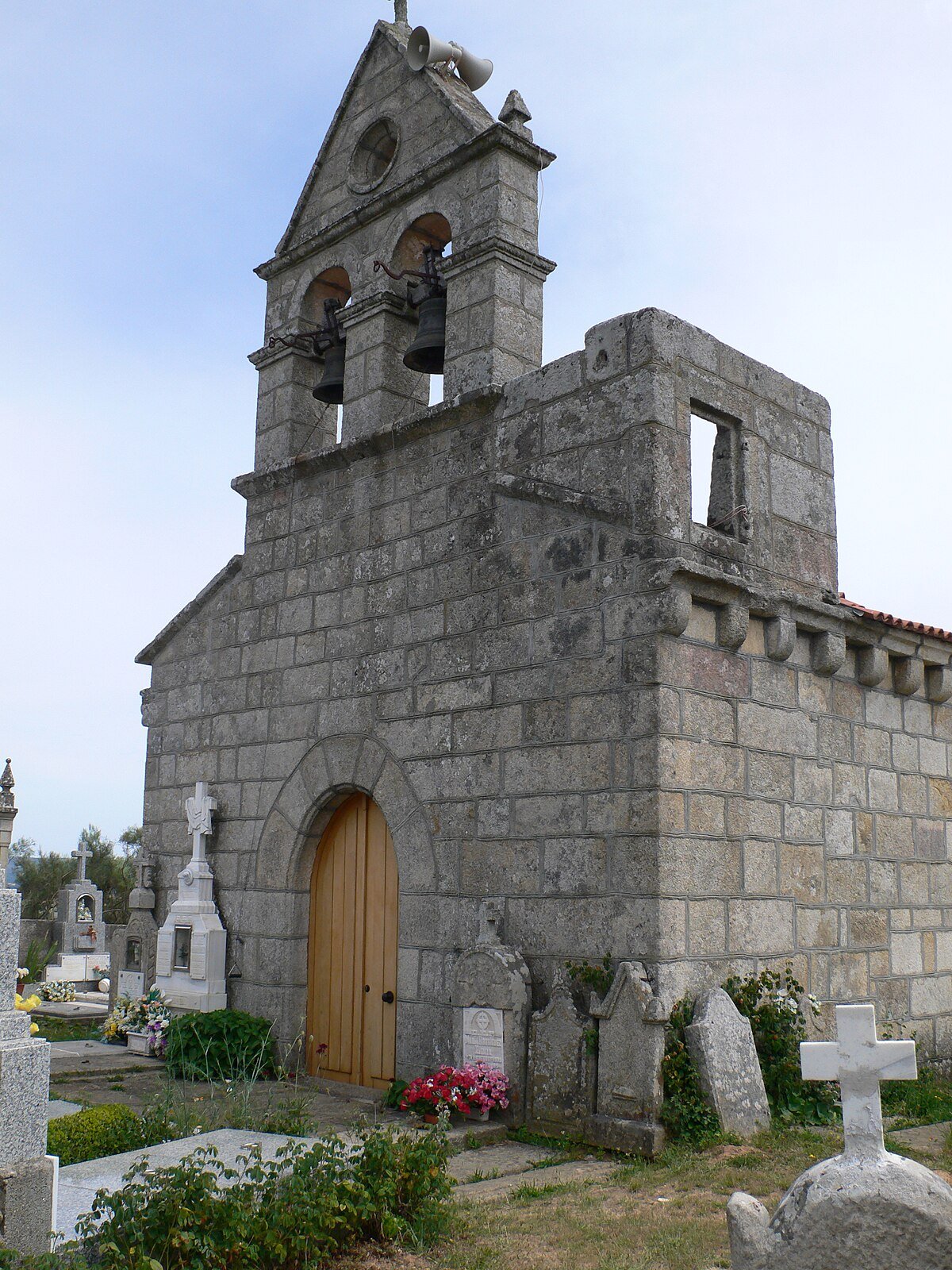
The parish churches won't feature in architectural guides. Small, rectangular, built from the same granite as the walls, they served communities who measured wealth in hectares rather than artistic patronage. Step inside Santa María de Carballo Seneiro and you'll find an eighteenth-century altarpiece whose paint flakes a little more each winter, plus the usual gallery of local wedding photos that double as parish records. The cemeteries tell clearer stories: headstones bearing identical surnames spaced three generations apart, the occasional Brazilian flag marking return from economic exile.
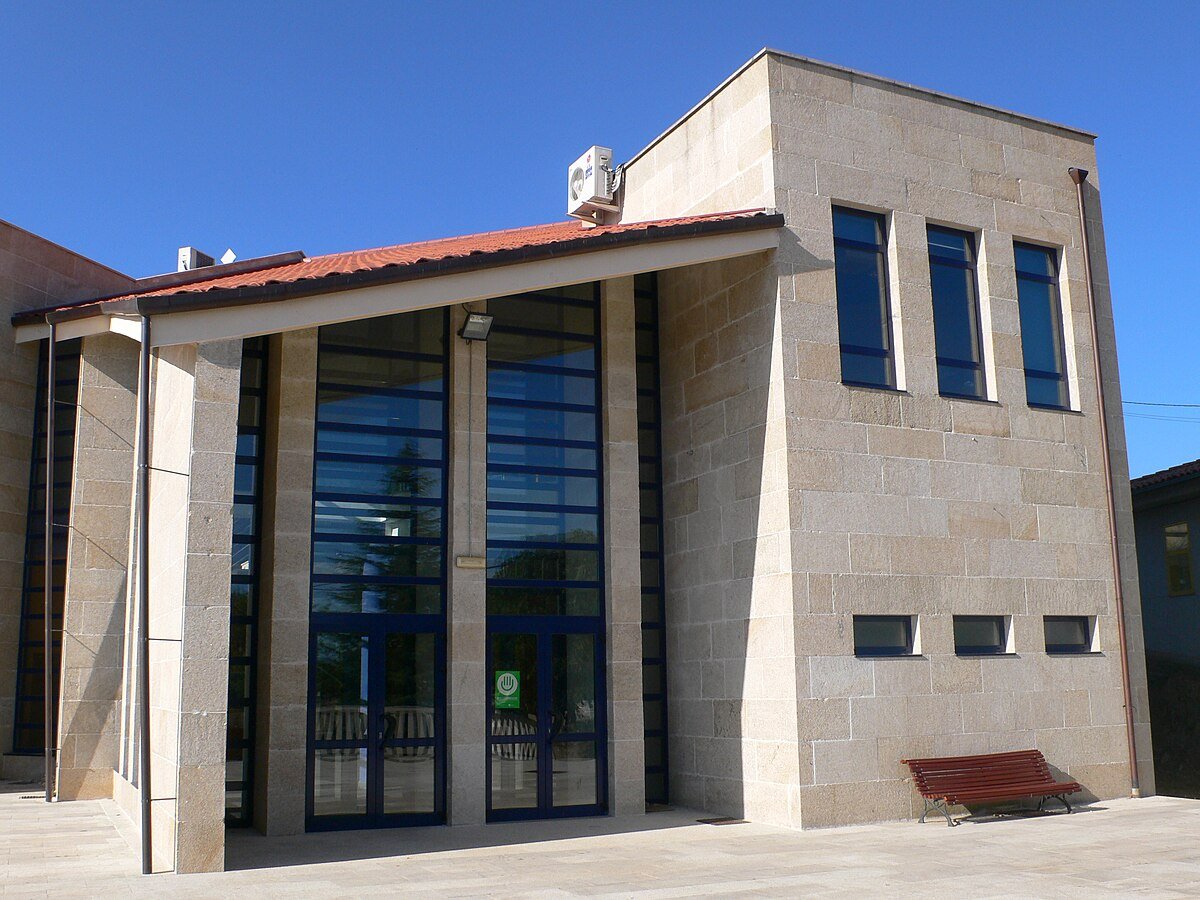
More revealing are the abandoned structures—an hórreo missing half its roof, a stone cross tilted like a drunk sentinel, the concrete foundations of a dairy that closed when EU quotas bit. These ruins aren't picturesque; they're simply what happens when maintaining something becomes more expensive than letting it go. That practicality defines Porqueira more than any promotional brochure could. Even the new builds—prefabricated cow sheds, aluminium silos—sit alongside their stone predecessors without pretence of harmony.
Eating and Sleeping (or Not)
There are no restaurants within the municipal boundary. The bar in Carballo Seneiro serves coffee and beer from 7 am, plus bocadillos filled with local ham if you arrive before the lunchtime rush finishes at 3 pm. For anything more substantial drive ten minutes to Xinzo de Limia, where Mesón O'Pazo does a three-course menú del día for €12 that includes wine and bread. Accommodation is similarly limited: Hotel A Torre on the edge of town offers functional rooms at £45 a night, though guest reviews consistently mention thin walls and the owner's indifference to hospitality norms. Better options lie in Xinzo—Pazo de Ventosela occupies a sixteenth-century manor with prices from £80, including breakfast featuring the region's tetilla cheese.
Self-catering makes more sense. The Tuesday market in Xinzo sells vegetables grown within sight of the stalls, plus honey from beekeepers who'll wax lyrical about the therapeutic properties of their particular field of beans. Buy supplies, pack a knife, and picnic beside the Arnoia river where it loops lazily through the southern edge of the municipality. Just don't expect picnic tables—flat rocks serve the purpose, and the cows won't mind sharing.
When to Come, When to Stay Away
April and May transform the basin into a patchwork of green shades so vivid they seem artificially enhanced. Bean fields flower white, potato drills create geometric patterns, and the temperature hovers around a civilised 18°C. October brings harvest stubble and the smell of burning pyres, plus morning mists that photographers dream of. Both seasons deliver the bonus of empty roads—summer tourists head for the coast, winter visitors stick to city museums.
July and August are brutal. The sun reflects off pale soil with the intensity of a magnifying glass; shade exists only in the narrow channels between stone walls. Walking becomes a dawn or dusk activity, the hours between best spent anywhere else. Winter brings its own challenges—when snow falls (and it does, several times most years) the municipality's lack of gritting equipment becomes apparent. Roads remain white until the sun melts them, which can take days in January's weak light.
Getting Here, Getting Around
Public transport stops at Xinzo de Limia, six kilometres distant. Two buses daily connect with Ourense, itself two hours from Santiago by train, but timings suit commuters rather than visitors. A hire car collected at Santiago airport reaches Porqueira in ninety minutes via the A-52 and OU-301, the last stretch narrow enough to make you grateful you didn't upgrade to that SUV. Petrol stations accept UK cards without issue; phone signal disappears in the hollows but returns on the ridge roads.
Driving here requires recalibration. Tractors have right of way, always. Farmers will halt in the road for a chat—wait patiently or face the silent treatment that lasts the length of your stay. Speed limits feel theoretical when every corner might conceal a loose cow, but the local police know every registration number and will flag down strangers doing 55 in a 50 zone.
The Value of Lowered Expectations
Porqueira won't change your life. It offers no epiphanies, no Instagram moments, no stories to trump fellow travellers' tales of cathedral spires or Michelin meals. What it does provide is the increasingly rare experience of rural Europe continuing its cycles without reference to visitor convenience. Come prepared to walk without destination, to observe without agenda, and to accept that the most dramatic moment might be watching fog lift from a bean field at sunrise. Manage that, and the flatlands reward you with a quieter kind of memory—one that surfaces months later when someone mentions Galicia and you find yourself thinking of stone legs straddling a field, still holding their wooden belly aloft after two centuries of harvests.