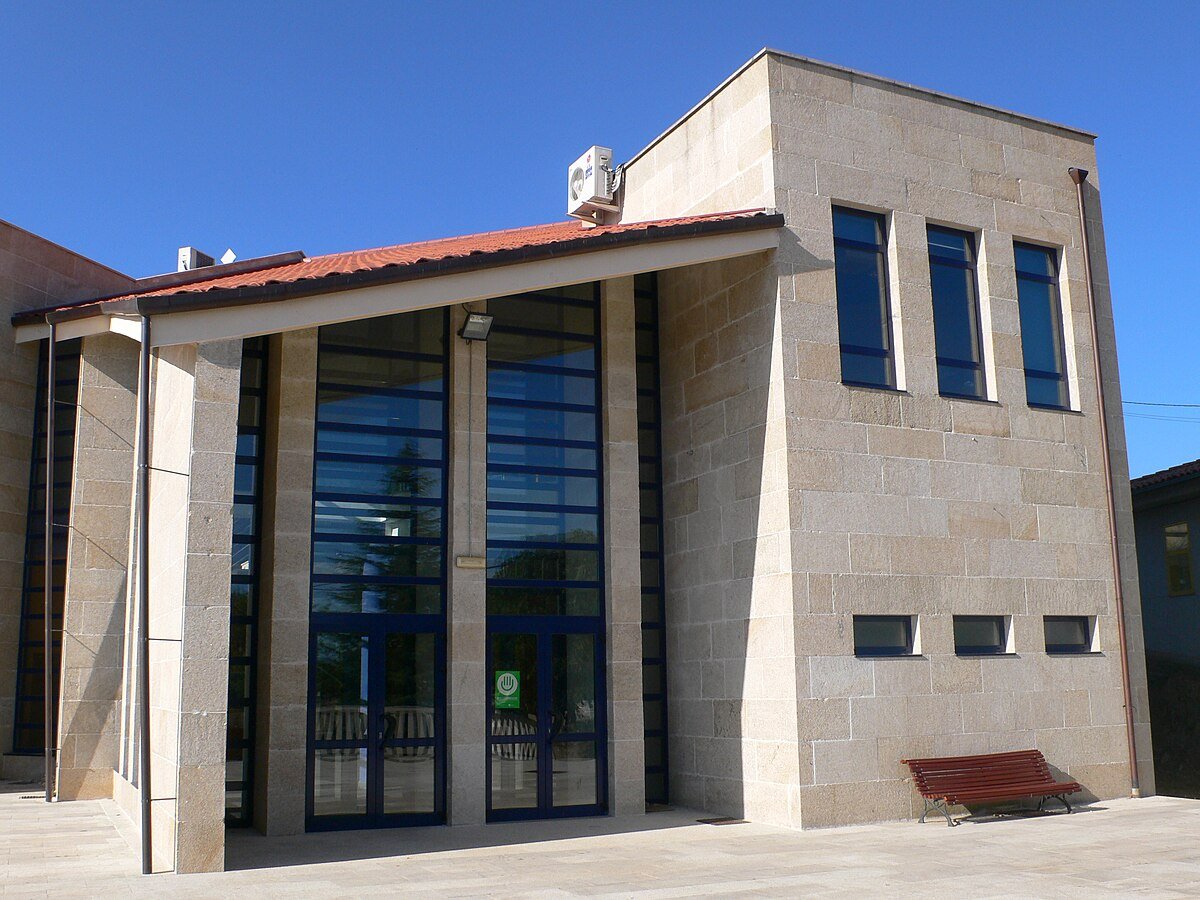
Casa do concello de Sarreaus.JPG
Galicia · Magical

Sarreaus

The first thing you notice is the horizon. At 650 m above sea level the air thins just enough to sharpen every edge, and the Limia plain unrolls li...

1,068 inhabitants · INE 2025
m Altitude

Why Visit

Best Time to Visit

summer

Full Article
about Sarreaus

Ocultar artículo Leer artículo completo

The first thing you notice is the horizon. At 650 m above sea level the air thins just enough to sharpen every edge, and the Limia plain unrolls like a bolt of green tweed all the way to the Portuguese mountains. Sarreaus sits on the northern lip of this upland bowl, a scatter of granite houses and working farms rather than a chocolate-box cluster, and the sense of space is almost unsettling if you’ve arrived from Galicia’s usual ravines and coast-hugging towns.

A Landscape Shaped by Absence

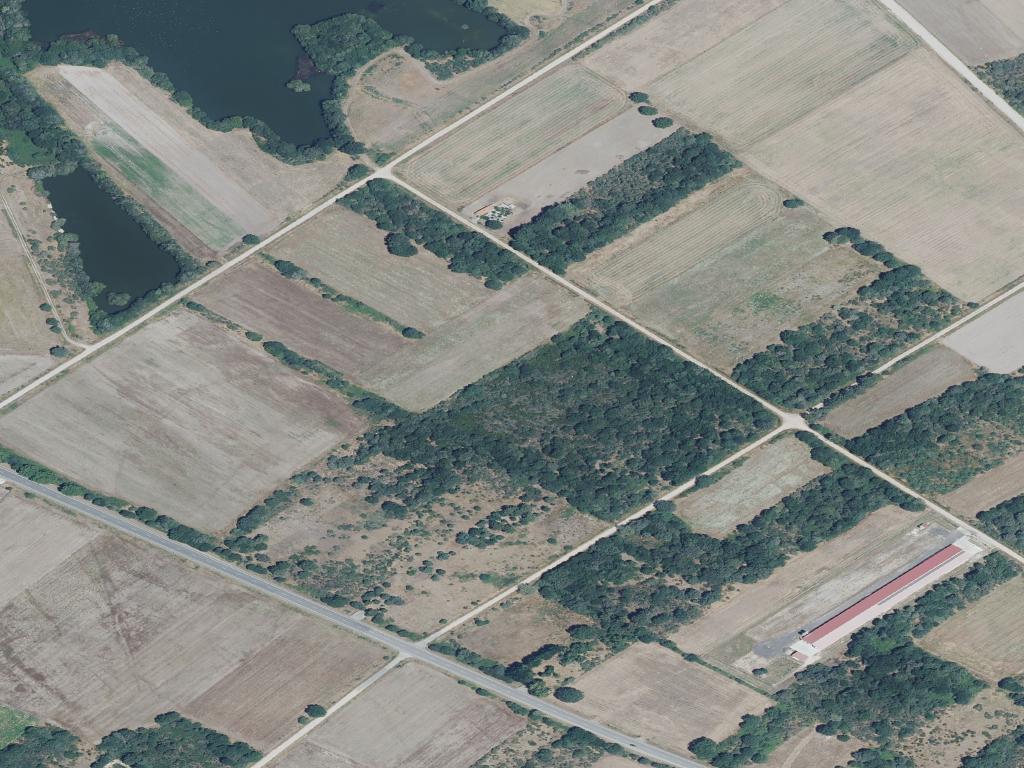
There is no lake. A century ago the Antela lagoon—once Spain’s largest freshwater body—stretched for 1,800 hectares east of the village. Drained in the 1950s to create new farmland, it survives only in irrigation ditches, in place names such as A Lagoa, and in the spongy feel of the ground after rain. Knowing the story changes the way you read the fields: long straight drains, sudden poplar windbreaks, the odd boat-shaped stone trough now filled with potatoes. Pick up the free leaflet (Spanish only) at the parish church and the aerial photographs inside show water ghosts overlaid on today’s patchwork of maize and rye.

Because the plain is open, weather arrives without warning. A May morning can begin with frost on the grass and end in 24 °C sunshine; by October the wind carries the smell of bonfires from vineyards forty kilometres away. Bring layers, and if you plan to walk between hamlets—Raimonde, A Pousada, San Vicente do campo—start early; shade is scarce and the reflectivity of pale granite turns mid-summer afternoons into natural griddles.

Stone, Work, Tractor

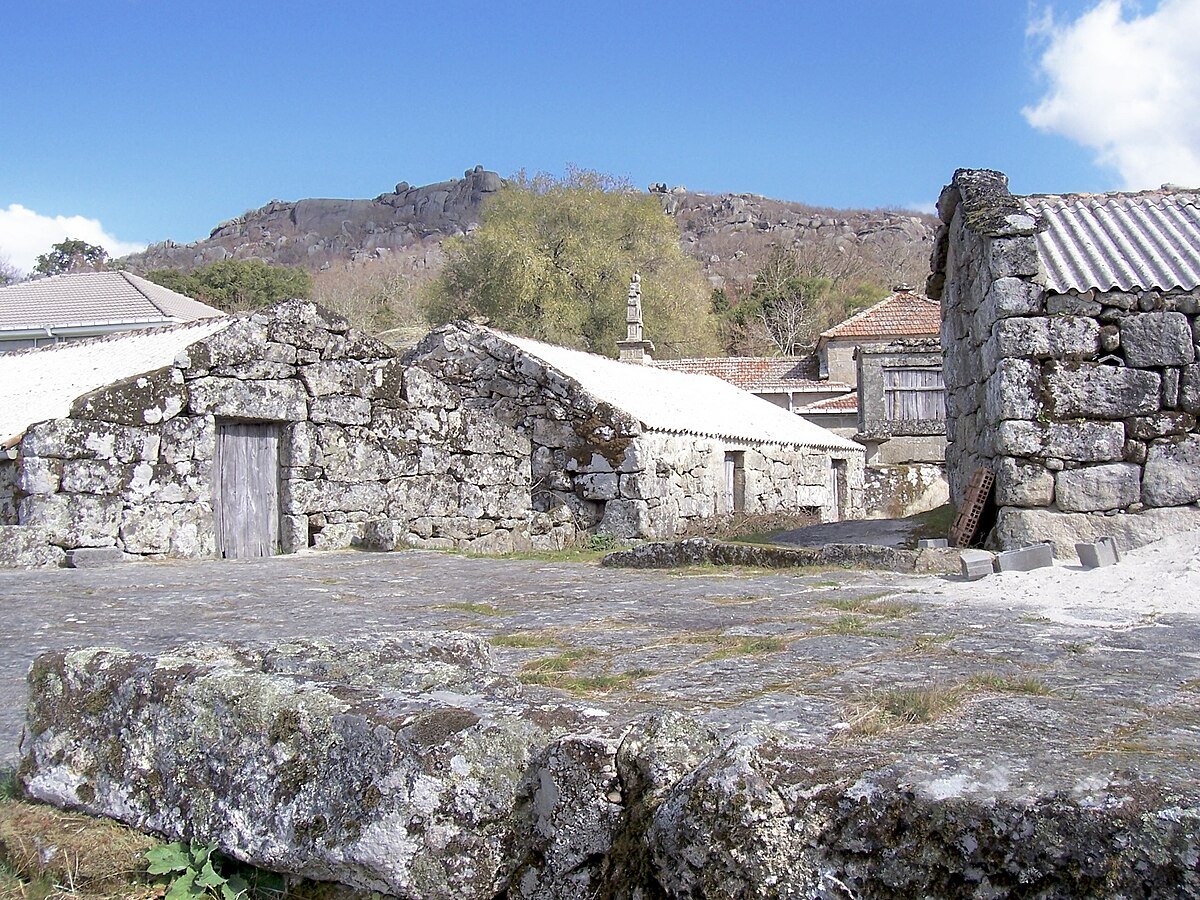
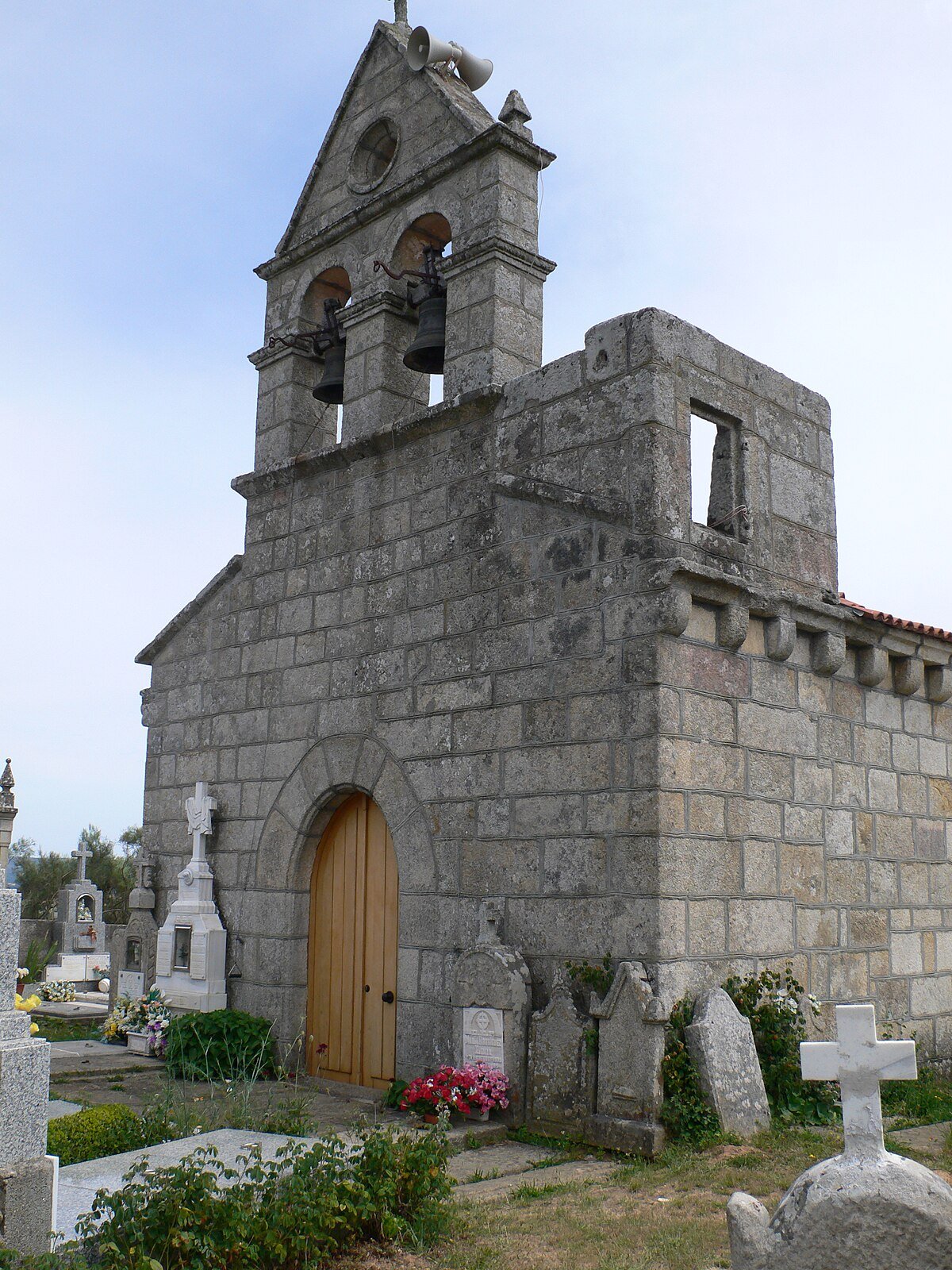
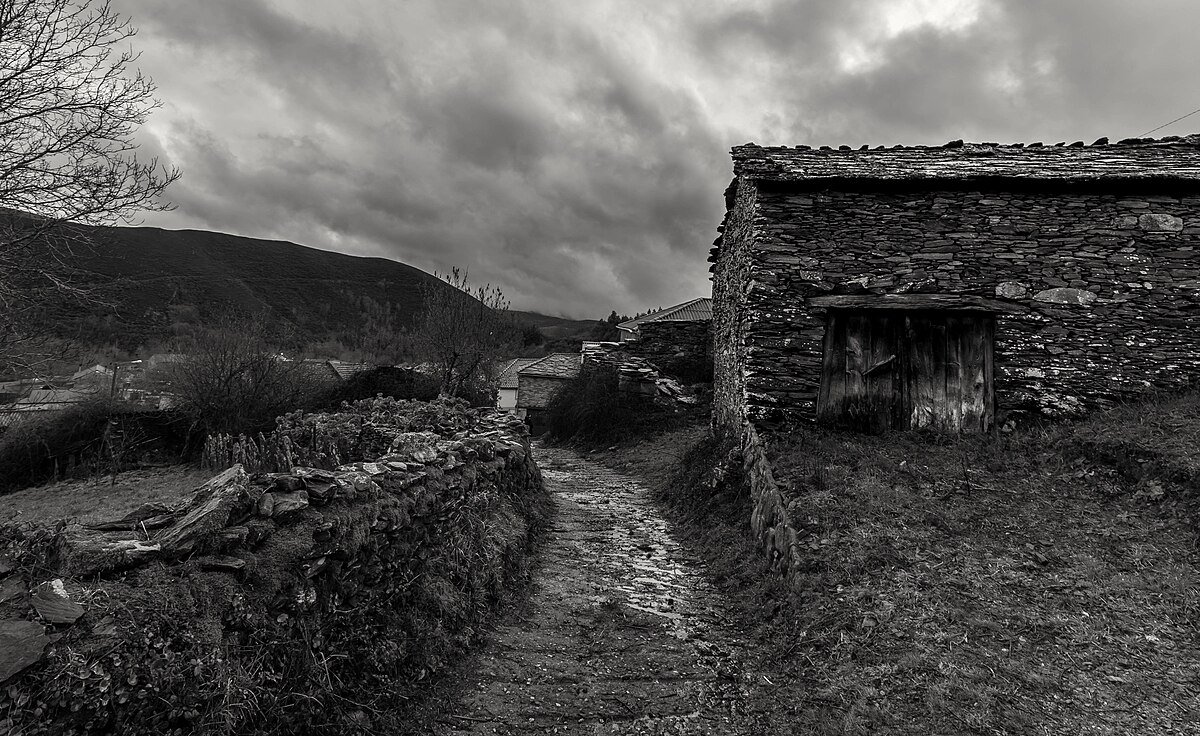
Sarreaus has never bothered with prettification. Farmyards open straight onto the road, diesel pickups park beside seventeenth-century cruceiros, and a shiny galvanised silo can loom behind a moss-coated hórreo on stone stilts. This mingling is the village’s real architecture trail. Start at the simple Romanesque church of San Salvador (keys from the house with the green railings, no fixed hours) and walk east along the OU-536 for exactly 400 m. On the left you’ll see a portal dated 1764 still used as the main entrance to a cattle shed; opposite, a 1950s hay barn has been patched with corrugated fibre-cement the colour of week-old snow. No tickets, no guides—just the evidence of how buildings adapt or don’t.

If you need a looping route, follow the paved lane signed “Castro” uphill behind the cemetery. After 1.2 km the tarmac gives way to a stone track that crests a low ridge. From here the plain spreads north–south like a living map: dark squares of recently turned earth, the silver thread of the railway to Ourense, and the blunt silhouette of the Manzaneda ski station 35 km west. Turn left at the lone eucalyptus and the descent drops you back onto the OU-536 at Couso, total time 45 minutes, boots optional in dry weather.

Food that Forgives a Drizzle

The only public bar-restaurant is Couso Galán, a roadside house with a tractor-width front door and a menu that changes with the day’s deliveries. Octopus arrives rubber-free because it is frozen at sea then thawed in the sink out back—Galicia’s open-secret trick. Order pulpo a la gallega (€12) and the waiter will ask “¿El normal o el picante?”; the “spicy” version is merely confident, not incendiary. Lacón con grelos tastes like a Sunday roast that has wandered south: salt-cured pork shoulder simmered with potato and turnip tops, the broth served first as soup. Pudding is optional; almond tart from the nearby monastery of Oseira is denser than the mass-produced Santiago slices hawked in the capital, and a glass of local Ribeiro white—served, charmingly, in a chipped bowl—costs €1.80. English is limited; pointing works.

Shopping is more erratic. The Coviran supermarket opens 09:00–14:00 and 17:00–21:00 except when it doesn’t. Bread arrives at 10:00 and is usually gone by noon. There is no cash machine; fill your wallet in Ourense or Verín before you leave the main road.

When the Plain Empties

August surprises first-timers. The village population swells to maybe 1,200 as emigrants return from Madrid and Barcelona, yet the fields fall silent because farmers down tools at 13:00 and don’t resume until 18:00. British visitors who expect life after supper find only cicadas and the occasional quad bike. Come in late April instead: meadows are green enough to hurt your eyes, the night temperature still demands a jumper, and you can breakfast outside without slathering on repellent. Alternatively, mid-October brings stubble fires and the annual magosto, a chestnut roast in the school playground where cider flows from plastic drums and children paint their faces with soot. Tourists are welcomed, photographed, then left alone—exactly the right ratio.

Winter has its own rules. At 650 m snow is not unknown; the OU-536 is cleared quickly but the minor road from Vilar de Santos becomes a toboggan run. Accommodation shrinks to a handful of heated cottages—Aldea Couso Rural is the only outfit with a reliable website and English correspondence. Weekends are booked by Spanish walkers tracing the Camino Sanabrés, so mid-week rates drop to €70 a night for a two-bedroom stone house with log fire and unlimited chestnuts.

Getting Here, Getting Out

Santiago airport is 110 km away, a straight 75-minute dash on the A-52 toll road (€11.20). Car hire is almost compulsory: there is one bus a day from Ourense, timed for market errands rather than sightseeing, and it does not run on Sundays. Petrol appears 18 km east at the OU-536 junction; ignore the gauge at your peril. If you are foot-slogging the Camino, Sarreaus sits 21 km east of Ourense on stage 27 of the Sanabrés route—far enough that beds are free and showers stay hot.

Worth it?

Sarreaus will not hand you a tidy list of sights to tick off. What it offers is a rare Galician largeness: big sky, slow tractors, stone that has not been sand-blasted for the weekend trade. Come if you are happy to walk three kilometres for a ruined cruceiro and a pocket of silence. Leave early if you need cathedrals, craft beer, or someone to explain things in received pronunciation. The plain will still be there tomorrow, unchanged and unbothered.

Key Facts

Region
Galicia
District
A Limia
INE Code
32078
Coast
No
Mountain
No
Season
summer

Livability & Services

Key data for living or remote work

2024
ConnectivityFiber + 5G
TransportTrain nearby
HealthcareHospital 23 km away
EducationElementary school
Housing~5€/m² rent · Affordable
CoastBeach 18 km away
Sources: INE, CNMC, Ministry of Health, AEMET

Planning Your Visit?

Discover more villages in the A Limia.

View full region →

More villages in A Limia

Traveler Reviews