Full Article
about Xinzo de Limia
Hide article Read full article
A town that wakes up loud
Xinzo de Limia does not always match first impressions. A winter Saturday might suggest a quiet Galician town, the kind where traffic is sparse and most of the sound comes from a nearby bar. That assumption quickly falls apart during entroido, the local carnival.
On those weekends, the streets fill with people dressed as pantallas, one of the most recognisable figures of the celebration. Their outfits are striking and slightly unsettling at first glance, with white shirts, red capes and smiling masks. Bells hang from their waist or chest, and the noise follows them everywhere. One local summed it up bluntly: if it already sounds loud, wait until the following Sunday.
Entroido here stretches over several weeks, and the town leans fully into it. The atmosphere feels continuous, as if one long celebration has simply been divided into Sundays. Anyone walking through Xinzo during this period will hear the constant clatter of bells and see pantallas moving through the streets, enforcing tradition in their own particular way.
The land of the “quarter kilo”
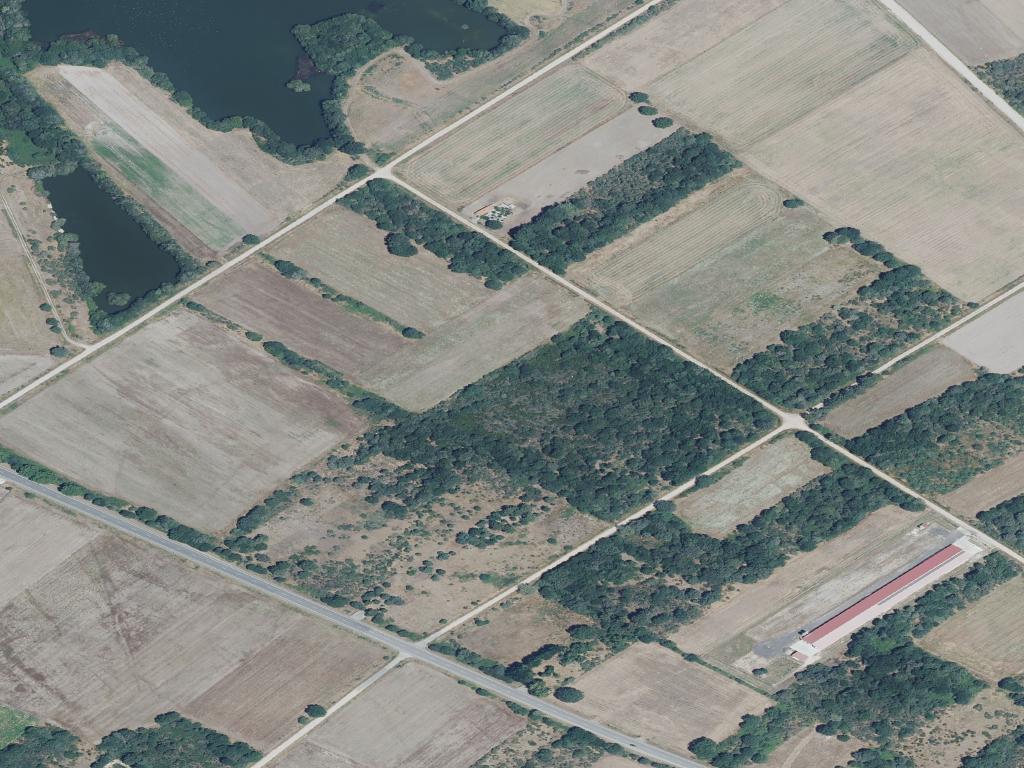
Xinzo de Limia sits in the comarca of A Limia, an area defined by something unusual in Galicia: a broad, flat plain. The landscape opens up, with long stretches of dark, fertile soil that have been cultivated for decades. Much of that land is dedicated to potatoes, and the crop shapes daily life more than visitors might expect.
Conversations often drift towards the harvest. In a bar, a casual mention of potatoes can turn into a detailed discussion within minutes. The tone resembles a debate about football, except the focus is on soil, yield and cooking qualities.
The Pataca de Galicia has held recognised quality status for years, and in A Limia that distinction carries weight. Locals speak about their potatoes with precision. One explanation comes up often: those grown here contain more starch, which makes them particularly well suited to stews. The comparison to describing a powerful engine does not feel far off when you hear it explained at the bar.
Food brings those claims into focus. A cocido arrives with potatoes that split open at the touch of a fork. Cachelos appear alongside dishes with sauce, soaking up flavour in a way that justifies the local pride. The cooking might seem simple at first glance, yet the result explains why the ingredient is defended so strongly.
Driving through the area reinforces the point. Fields stretch out in large, dark rectangles, and tractors move steadily across them. The scale of cultivation becomes clear without much effort.
Five Sundays of entroido
The entroido in Xinzo unfolds over multiple Sundays, and that extended rhythm defines the town for weeks. The structure feels familiar in a way, like a childhood event that keeps going longer than expected until it becomes the norm.
At the centre of it all stands the pantalla. Each one wears the same core elements: white blouse, red cape, a smiling mask and a collection of bells. They also carry inflated pig bladders, used to “mark” anyone not in costume. The idea might sound amusing until it happens to you.
When groups of pantallas move together, the sound builds into a steady metallic roar. It resembles a herd passing through the streets, except every step is deliberate and part of the ritual. What stands out most is how natural it feels to everyone around. The noise becomes the background of daily life during these weeks.
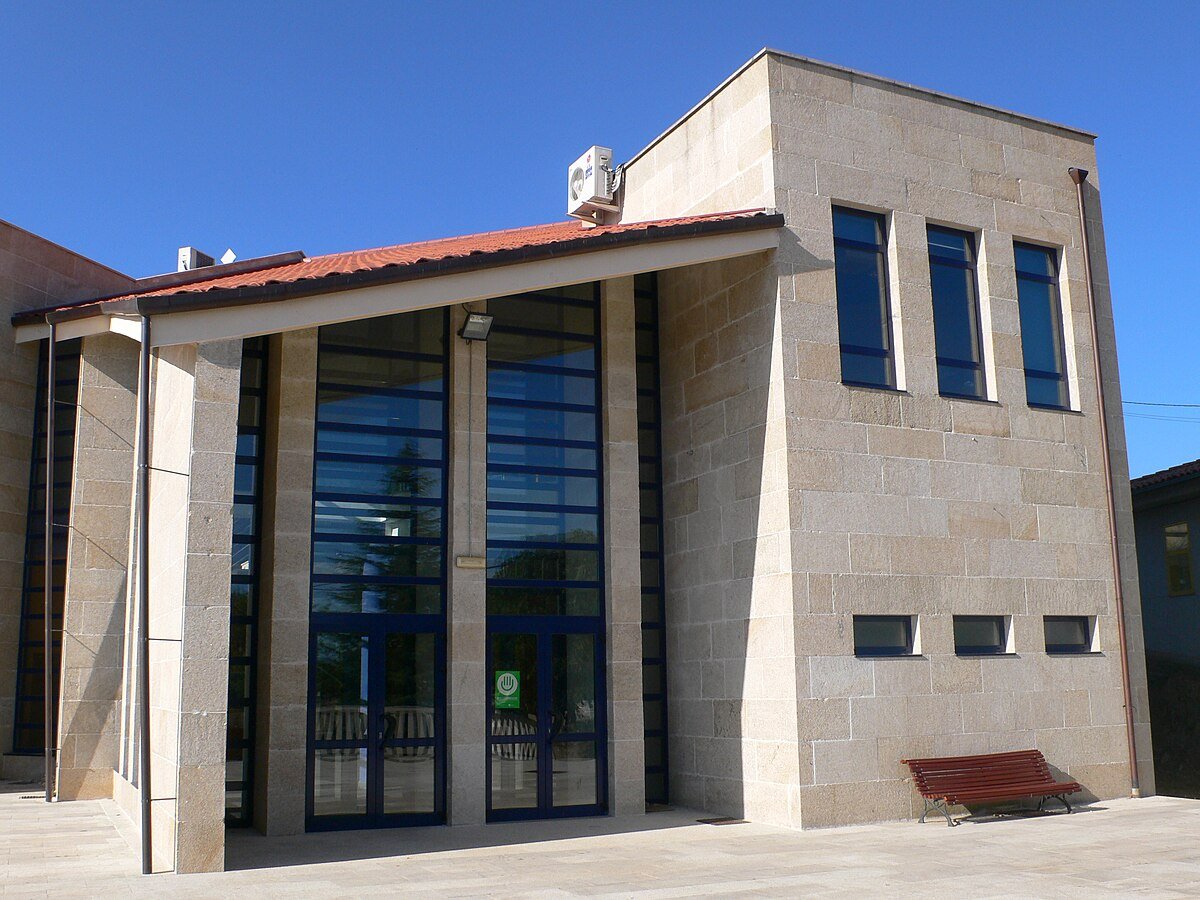
For anyone wanting to understand the tradition beyond the spectacle, the Museo Galego do Entroido offers context. It is located in the Casa da Cultura and, although not large, it brings together historical costumes, photographs from past decades and explanations of how the carnival developed here. The visit helps connect what you see in the street with a longer story that the town continues to maintain.
Barrio de Abaixo and the art of conversation
After spending time among pantallas, a quieter moment becomes appealing. Many people drift towards the Barrio de Abaixo, a short street where several bars sit side by side. Locals often refer to it as the “wine route”.
The appeal has little to do with appearances. This is not a place designed for photos or quick stops. It works more as a social space where conversations stretch out and repeat over time. Regulars return to the same stools, often for years, and the rhythm of the place reflects that continuity.
It is easy to end up in a long discussion with someone who knows the town inside out. Topics circle back to familiar ground, and potatoes inevitably make an appearance. Opinions differ on whether those from A Limia are better boiled or roasted, and the debate can carry on without urgency. One remark captures the mood: there is no need for much entertainment when the door is open and people keep coming in.
Walking the plain of A Limia
The setting around Xinzo shapes how the area is explored. A Limia’s plateau creates a landscape that feels more open than other parts of Galicia. Forested hills give way to wider horizons, and the sky takes up more space.
Walking here tends to be straightforward. The terrain is gentle, with long paths that suit both walking and cycling. Some routes follow older connections between villages in the comarca, now used at a slower pace. The experience does not revolve around dramatic scenery or steep climbs. Instead, it is about steady movement through fields, with a sense of openness that defines the region.
A short distance from the town, traces of earlier periods appear. The surroundings of the monastery of Trandeiras and the Torre da Pena stand as reminders that this plain has long been a place of passage. These sites add another layer to the landscape without changing its overall calm.
When to go
Outside the entroido season, Xinzo de Limia settles into a quieter rhythm. The town has around ten thousand inhabitants, and daily life centres on agriculture, local commerce and services for the surrounding area.
Summer brings the fiestas patronales, with open-air celebrations and a lively atmosphere in the town’s squares. Similar energy appears during romerías in nearby areas when the weather turns warm.
Then there is the potato harvest. Towards the end of summer and into early autumn, activity increases across A Limia. The movement in the fields becomes more noticeable, and the importance of the crop is visible everywhere. At times, events or gatherings take shape around the product, drawing people into the town and reinforcing the connection between Xinzo and the land that surrounds it.