Full Article
about Cervo
Hide article Read full article
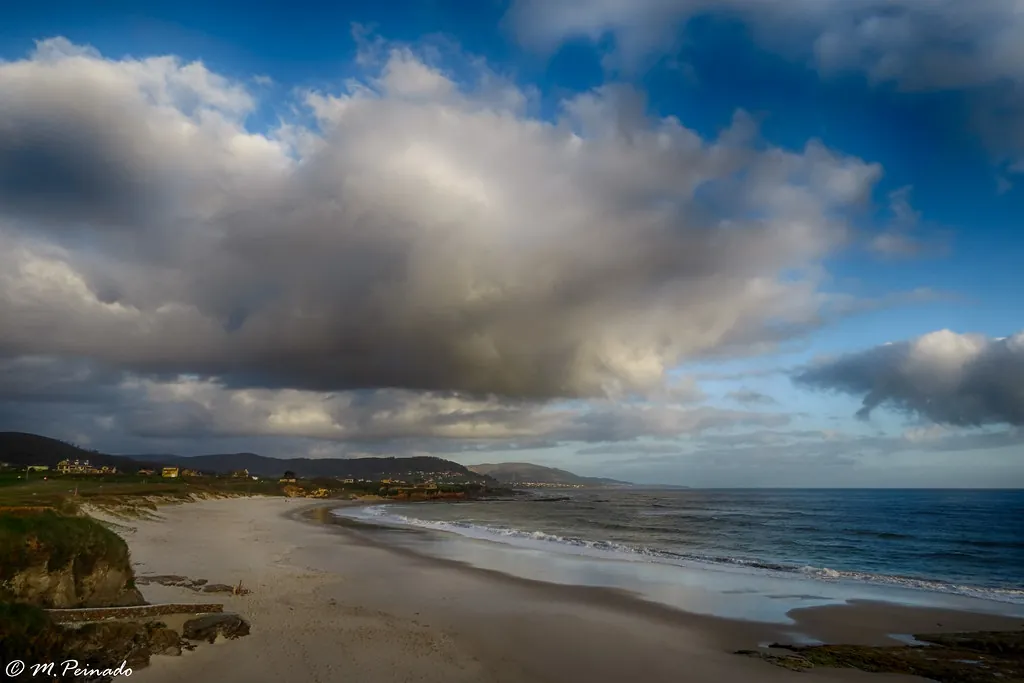
The smell of dried seaweed hits before the sea comes into view. The road bends, squeezed between two slate walls, and suddenly San Cibrao appears: harbour cranes, fishing boats tied up along the quay, pale houses with dark roofs facing the Cantabrian Sea. For many visitors, tourism in Cervo begins like this, with hardly any transition between hillside and coastline. Late in the afternoon the air carries salt, and if the wind blows in from the dock there may also be the scent of sardines grilling somewhere nearby.
San Cibrao is the maritime face of the municipality. Cervo itself, the historic centre, lies a few kilometres inland among meadows and narrow roads. Many people arrive along the coast and do not realise that the municipal boundaries stretch into the interior, following small valleys and rivers.
The Siren on the Rocks
On Praia do Torno, Maruxaina watches from her rock. She is not the gentle fairytale mermaid: the bronze figure has a serious expression, almost defiant when the sea is rough. Waves crash against the base and spray sometimes reaches the promenade.
The story is woven into local imagination. According to legend, Maruxaina appeared on stormy nights, singing to confuse sailors. Over time the town transformed the tale into a celebration. In summer there is usually a recreation of the myth on the beach: music, people gathered on the sand, and a siren entering the water by torchlight while children shout from the shore. The exact date changes each year, but it tends to fall in the height of summer, when the nights still invite people to linger by the sea.
Early in the morning the scene is different. Fishermen check their nets and walkers cross the damp sand as the tide comes in.
Following the River to Sargadelos
The Camiño Real begins behind the church of San Xoán. The stone steps are worn smooth in the centre, as if each generation had placed its feet in exactly the same spot. Before long the path turns damp and green. The River Xunco runs alongside, bordered by alders, and on the slope there are traces of old mills.
In autumn the ground is covered in chestnut leaves that cling to the soles of shoes. It is not a bad time to walk here. There are fewer people and the river runs stronger.
Halfway along stands the Sargadelos waterfall, a short but steady drop where the rocks have been polished by years of current. Local residents often come at weekends in good weather. Around midday a shaft of sunlight cuts through the ravine and lights up the water for a while.
A little further uphill is the former Sargadelos ceramics factory, still operating today. The complex combines industrial buildings, workshops and cultural spaces linked to the area’s ceramic tradition. There is sometimes artistic activity or temporary exhibitions, particularly in summer, when some workshops stay open later and their interior lights are visible from the square.
A Harbour That Sets the Pace
San Cibrao remains a working port. At certain times of day the quay is busy: crates of fish being moved, engines starting up, gulls fighting over scraps. It is not necessary to wake at dawn to see boats returning and activity building around the harbour.
By mid-morning the mood shifts. People stroll along the breakwater, retirees lean on the railing looking out to sea, children cycle along the promenade.
From the O Torno viewpoint the shape of the harbour is clear, and just beyond lie the Os Farallóns islands: three dark rocks rising from the water. On bright days they seem close; in fog they disappear completely. Below there is also a group of concrete blocks and an old naval artefact displayed outdoors that invariably catches the eye of passers-by.
When to Go, What to Expect
September is often a good time to visit Cervo. The sea still holds the warmth of summer and the coast settles back into a calmer rhythm. In July and August, particularly at weekends, the seafront and beaches can become quite busy.
Winter brings a complete change of scene: strong winds, rain driven almost horizontally and waves striking the breakwater. Anyone coming at that time of year should wear shoes with good grip, as the wet slate on some streets is more slippery than it looks.
Now and then, in the town squares at night, the ritual of the queimada appears. A cauldron, aguardiente, sugar and blue flames lighting up the faces gathered around. It is not always announced and does not follow a fixed timetable. When it happens, the sweet, burnt smell lingers in the air for a while. The queimada is a traditional Galician drink and ritual, often associated with spoken incantations, though here it simply emerges as part of local life.
Leaving early, with the sun still low, offers another side of Cervo. Light comes in from the sea and turns the façades golden for a few minutes. Gulls skim over the rooftops. In the harbour there is only the gentle knocking of hulls against the quay: tac, tac, tac. A small sound that, here, marks the start of the day.