Full Article
about Foz
Hide article Read full article
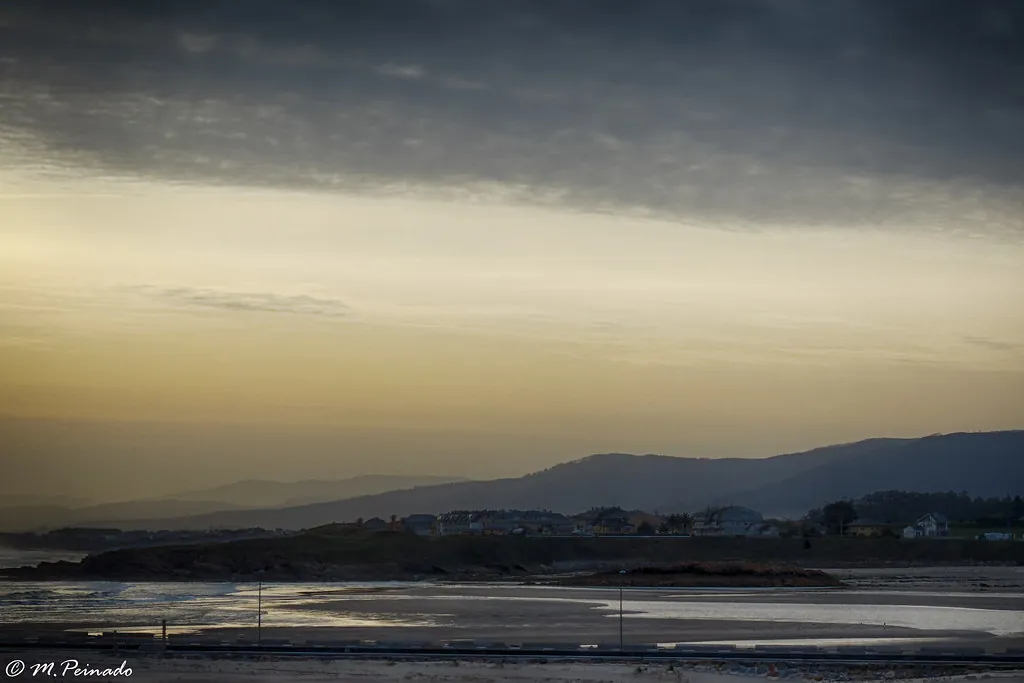
Seagulls wake you before any alarm clock. It is not that they are especially loud, but in Foz the early morning silence is so dense that every sound seems to bounce off the façades. From a window near A Rapadoira beach, the Cantabrian Sea looks like a sheet of grey metal being polished with each wave. At half past seven on an August Tuesday, the sand is already stirring. A father drags a bright blue cool box across the cool surface, two surfers walk with their boards tucked under their arms as if they were everyday bags, an older woman gathers seaweed into a wicker basket. No one rushes. Time here is measured more by the tide than by the clock.
Salt air and paprika by the harbour
Heading down to the port early feels like stepping into a kitchen that opens straight onto the sea. The smell arrives first: salt spray, diesel from boats starting up and, now and then, warm pimentón drifting from an open window. On the quay, neighbours discuss the day’s catch as they unload crates. Someone lifts a silver bonito that still flickers with movement, the morning light flashing off its skin like a mirror.
At that hour there are few passers-by. The scene belongs mostly to weathered hands, light wool jumpers even in summer, and conversations that move easily from the weather to the price of fish. The wind that comes in from the ría, the tidal estuary that shapes Foz, often carries a chill.
Caldeirada is the dish that sums up this stretch of coast. Here it is usually a thick fish stew, with potatoes that break apart in the pot and pimentón staining everything a deep red. It is eaten slowly, with bread close at hand and a window open towards the harbour. Long menus and elaborate presentations are not the point. In many places the cooking revolves around whatever has come in that day.
San Martiño de Mondoñedo, ancient stone by the ría
A few minutes from the centre, among meadows and scattered houses, stands the basilica of San Martiño de Mondoñedo. Despite the name, it is not in the town of Mondoñedo, as many assume, but here in a parish of Foz. The road approaches quietly and then the small complex opens up: the Romanesque church, open ground around it and a handful of trees shifting in the north wind.
For centuries it was an episcopal seat and is often described as one of the oldest cathedrals in Spain. Inside, the air carries the scent of damp stone and extinguished wax. The Romanesque frescoes preserve unexpected colours, greens, ochres and muted reds. The painted figures look out from the walls with the fixed expressions typical of medieval art.
Several paths leave from here and climb towards the hills. One leads to the so called fountain of A Zapata. The walk is not long, though after rain it becomes slippery and mud clings to your shoes. Local tradition says that San Gonzalo lost a shoe here and that water sprang from the ground at that spot. The fountain still flows, half hidden among low vegetation and moss-covered stones.
The castro of Fazouro facing the sea
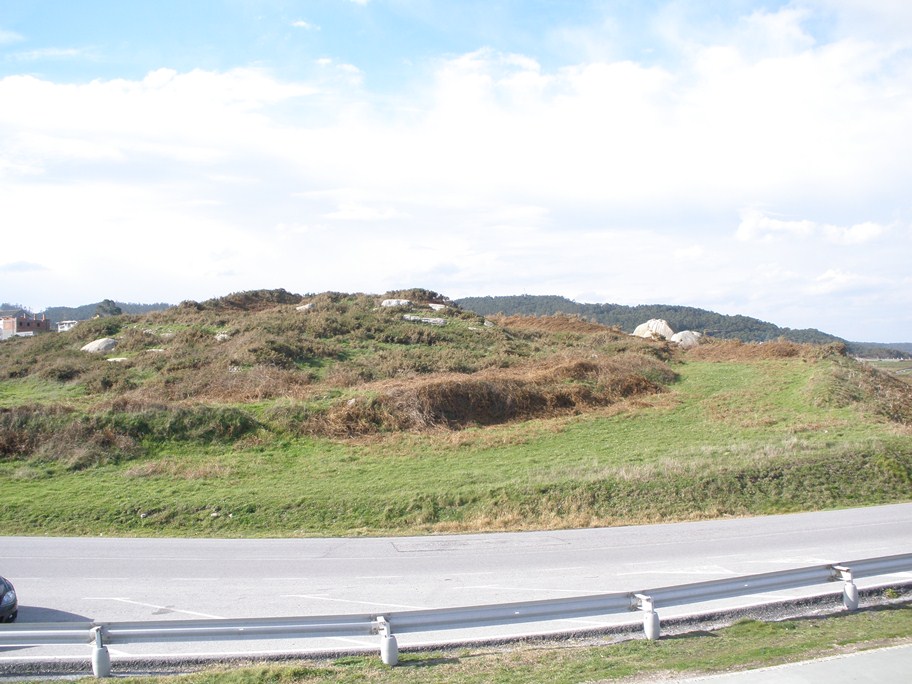
The castro of Fazouro occupies an unusual position for this type of settlement, almost touching the sea. In Galicia, a castro refers to an Iron Age hillfort or fortified village, typically inland or on elevated ground. Here, the circular houses look out over a small cove of pebbles and the open Cantabrian. On some days the wind blows hard and carries the scent of dried seaweed.
It is one of the few coastal castros in Galicia that have been excavated and can be explored with relative freedom. The stone walls trace the outlines of the dwellings and, if you pause for a moment, the choice of location becomes clear. From here the coastline and the movement of the nearby ría are easily observed.
Towards sunset, local residents often arrive by bicycle or simply to sit for a while on the grass. The sea shifts colour every few minutes. The sound of the waves covers almost any conversation, creating a sense of distance even when others are close by.
Walking beside the ría
One of the most common walks in Foz follows the course of the river, linking the port with quieter stretches of the estuary. The path is almost entirely flat and can be done on foot or by bicycle. At times it passes alongside small vegetable plots, at others beneath trees that in autumn drop chestnuts and damp leaves that crunch under trainers.
Along the way there are still traces of old mills. In some, a rusted metal wheel remains in place. When the air is still, there is the faint smell of wet wood.
If your visit coincides with the weekly market, usually held in the morning, you will find stalls selling fruit and bread, and chestnuts once the colder weather arrives. It is a good moment to pick up something simple and then head down to eat it while looking out over the ría.
When to go and what to bear in mind
September is often a good time to come to Foz. The sea still holds the warmth of summer and the beach begins to feel more spacious as the crowds thin out. In the mornings, surfers in wetsuits head into the water. By late afternoon, people fish from the rocks and dogs race across the wet sand.
August brings a noticeable change in atmosphere. At weekends many cars arrive and parking near the beach can become complicated. On those days, an early start makes a difference. Before ten, the light is soft and the sand is still only half occupied.
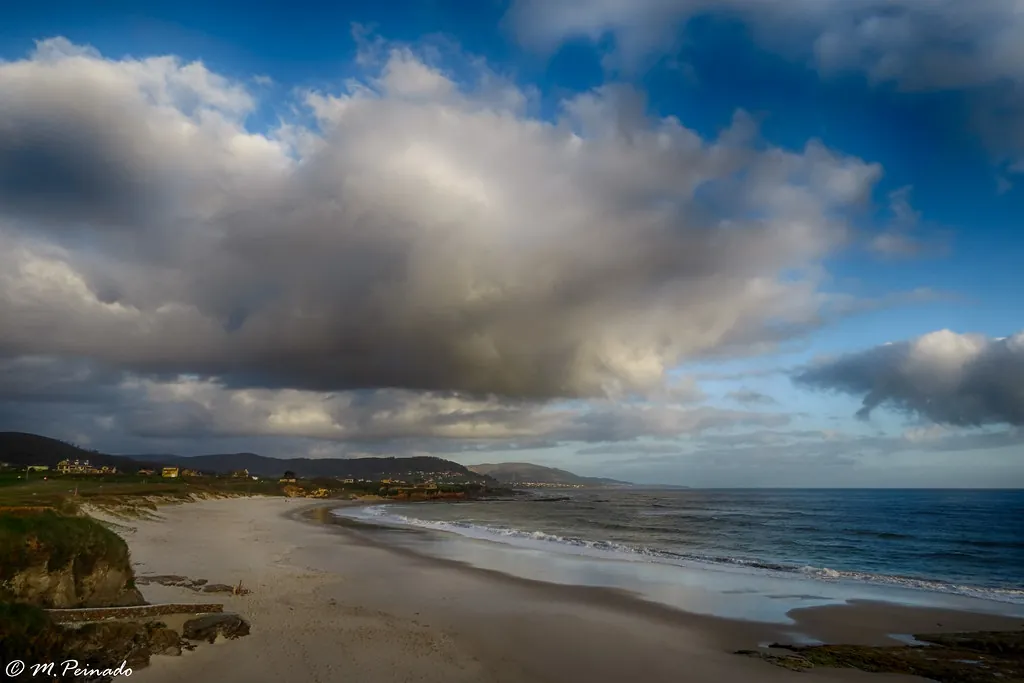
Llas beach is the longest and most open in the area. Like A Rapadoira, it forms part of daily life in Foz, a place where the horizon is wide and the weather sets the rhythm. Whether the sky is clear or the grey sea blends into the air, the pattern remains steady. Boats head out, waves roll in, conversations drift between port and market. In Foz, the details are small but constant, and the tide keeps time.