Full Article
about O Valadouro
Ocultar artículo Leer artículo completo
The stone walls start before you've properly left the main road. Not the neat, postcard sort—these are working walls, moss-covered and patched with slate, holding back earth and cattle rather than tourists. O Valadouro doesn't announce itself with a grand entrance; it simply begins, somewhere between kilometre markers that seem to multiply as the road narrows.
This is Galicia's interior logic made manifest: a municipality of 2,000 souls spread across parishes so dispersed that neighbours might live twenty minutes apart. The valley floor sits at 400 metres, low enough for chestnut trees to flourish but high enough that Atlantic weather systems lose their temper here. Mobile signal drops out entirely in pockets—not the marketed 'digital detox' experience, simply the reality of geography meeting economics.
The Architecture of Function
Santa María de Miraz anchors the southern approach, its parish church solid and unadorned against the hillside. Inside, the stone floors wear smooth from generations of parishioners rather than visitor traffic. The church door stands open because people still use it—weddings, funerals, Sunday mass—not because someone's staged an 'authentic experience'.
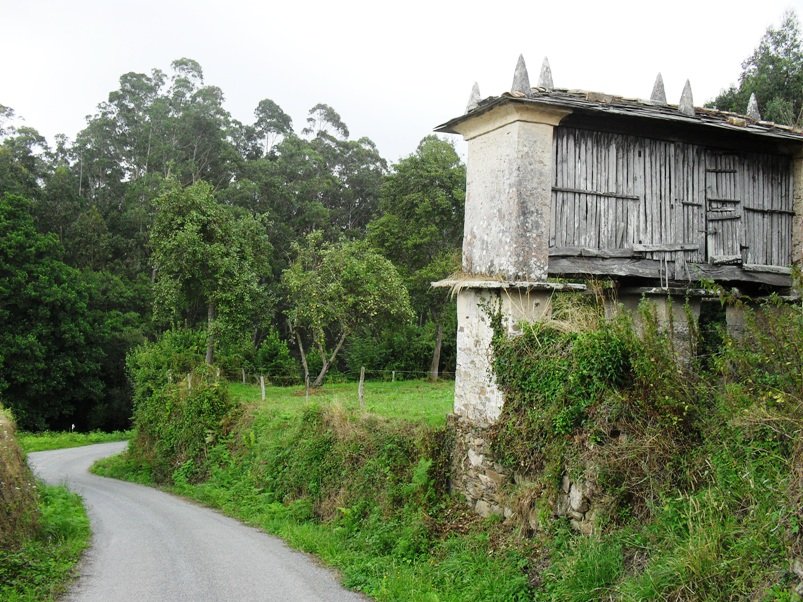
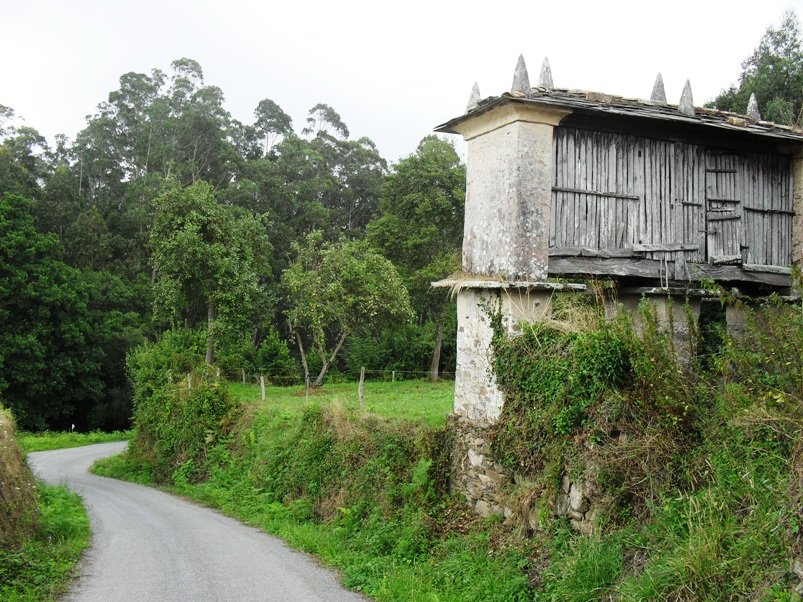
Beyond Miraz, the settlement pattern reveals itself: stone houses clustered where slopes allow, each with its hórreo raised on stilts against rats. These grain stores aren't museum pieces—they're still loaded with last year's chestnuts, still repaired when slate tiles slip after winter storms. In A Carreira, chickens patrol the lanes properly. In O Outeiro, someone's washing flaps beside a parked tractor. Fontán's houses sit so close to the road that passing cars slow automatically, drivers raising fingers from steering wheels in rural acknowledgement.
The working nature of it all becomes clearer when wet weather hits. Roads that felt merely narrow transform into waterlogged challenges. That track to see the traditional hay barns? It becomes a stream. The council grades these lanes annually, but Galician rainfall doesn't respect municipal schedules. Come prepared, or don't come at all.
Moving Through Empty Space
Walking here requires recalibration. Distances on maps prove meaningless when elevation changes and cattle grids enter the equation. The official hiking trail count stands at zero—deliberately so. Instead, a web of farm tracks connects parishes, used by locals moving stock or checking fences. These paths demand proper navigation skills: OS-level map reading, downloaded GPS tracks, the confidence to backtrack when a junction offers three equally unpromising options.
Cyclists face additional complexity. The tarmac surfaces vary from adequate to agricultural within single kilometres. Gravel sections appear without warning, usually where winter landslips made maintenance uneconomic. Mountain bikes cope; road bikes suffer. The gradients rarely exceed 8%, but they accumulate relentlessly across valleys where every descent demands a corresponding climb.
Spring brings the best conditions—wildflowers in the hedgerows, manageable temperatures, tracks firm enough for progress. Autumn offers chestnut foraging and mushroom hunting, though early mist can linger until midday. Summer heat builds surprisingly; this inland location lacks coastal breezes. Winter turns serious quickly—elevation means frost when coastal Galicia stays mild, and those narrow lanes ice over where trees block low sun.
Eating What Grows Here
Food arrives through conversation, not menus. Knock on the right door and someone might sell you a wheel of cow's milk cheese, aged six months in their cellar. The beef comes from animals that grazed the slopes you're walking across—small-scale producers who finish maybe twenty animals annually. Chestnuts appear in October, sold from farm gates with handwritten signs and honesty boxes that still function because everyone knows everyone else's vehicle.
The village centre—such as it is—hosts one café that opens sporadically. Otherwise, self-catering becomes essential. Lugo lies 84 kilometres south; the drive takes ninety minutes minimum on roads that refuse straight lines. Stock up before arrival, or plan regular trips back to civilisation. The Vila Do Val hotel offers dinner to residents, but TripAdvisor UK reviewers warn it's "about an hour's drive north of Lugo" for good reason—you're not popping out for alternatives.
When Villages Throw Parties
Summer patronal festivals transform individual parishes temporarily. Each settlement selects its weekend, hosting mass followed by processions where residents carry saints' statues through lanes barely wide enough. The verbena—evening street party—features music played at conversation-stopping volume, plastic cups of wine poured from boxes, and dancing that continues until someone remembers tomorrow's farming starts early.
October's San Lucas fair brings livestock trading back to the valley. The format shifts annually—sometimes proper agricultural show, sometimes village fete with extra cattle. Checking dates beforehand proves essential; arriving for a livestock fair that happened last weekend disappoints everyone, particularly if you've driven ninety minutes from Lugo expecting action.
These events function as extended family gatherings rather than tourist attractions. Visitors welcome themselves through behaviour—standing respectfully during religious elements, joining processions at the rear, buying drinks at village bars rather than expecting organised hospitality. The reward comes through inclusion: invitations to join family tables, explanations of local history, perhaps directions to someone selling homemade chorizo.
The Honest Assessment
O Valadouro demands a particular mindset. Search TripAdvisor and you'll find 249 reviews total—not per attraction, but for the entire municipality. One Expedia user summarised it accurately: "a really small town with almost nothing." They're not wrong, though 'town' misrepresents the scattered reality.
This place suits travellers comfortable creating their own structure. The valley rewards those who stop without agenda—pulling over where prades glow green after rain, watching clouds shadow work across slopes, accepting that the most interesting discovery might be a conversation about chestnut blight with someone rebuilding a drystone wall. It frustrates checklist tourism comprehensively.
Come with realistic expectations. Mobile coverage fails regularly. Restaurants barely exist. Weather changes fast. Roads challenge nervous drivers. But accept those parameters and something emerges: a working Galician valley continuing centuries-old patterns, largely indifferent to whether you understand them. The mobile signal might drop out, but other connections become possible—between landscape and livelihood, tradition and contemporary necessity, visitor and host who meet as equals rather than service providers.
Just remember to fill the petrol tank before leaving Lugo. And maybe download offline maps. The valley will handle the rest.