Full Article
about Valadouro
Hide article Read full article
The bells of Ferreira ring early, their echo slipping between low houses before drifting upwards towards O Cuadramón. In winter, when the sky is clear, the outline of the Serra do Gistral can be made out from the square, sometimes streaked with a line of snow that looks as though it has been drawn in chalk against the grey. The air often carries the smell of burning wood and warm bread, a scent that still lingers in places where the wood-fired oven remains part of daily life.
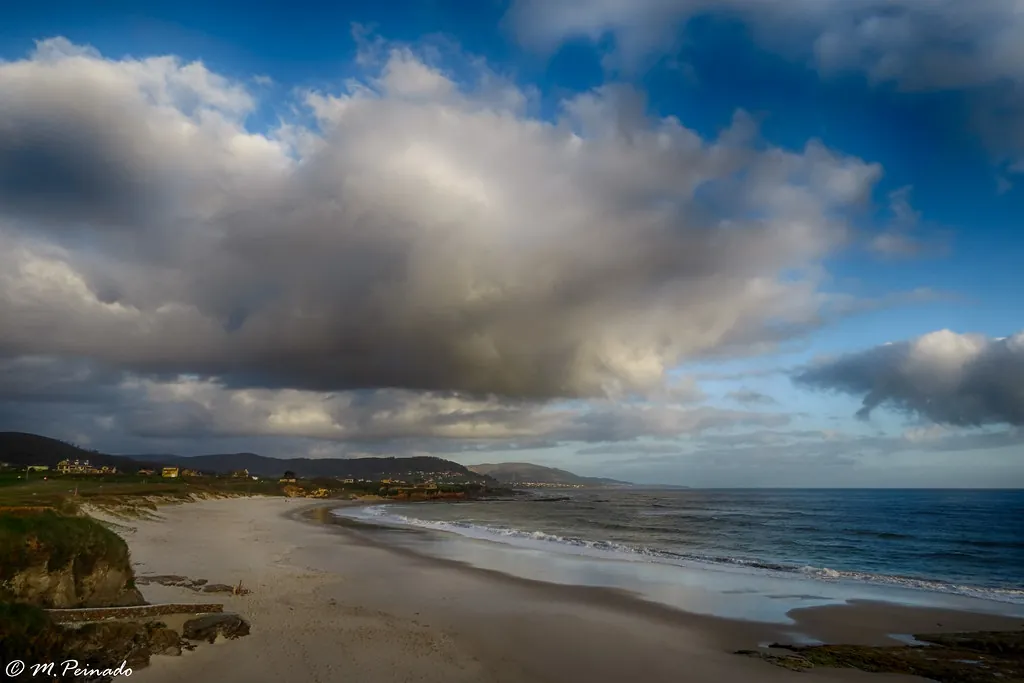
Valadouro lies inland from the Galician coast in the region known as A Mariña, an area of valleys and rounded hills that feels shaped as much by weather as by time. This is not a destination built around attractions. It is a place where routines continue at their own pace, and where the landscape does much of the talking.
When Time Moves Slowly
The day in Valadouro begins without hurry. Shutters rise gradually and the first coffees appear once the village is already awake. Near the town hall, conversation stays low and familiar topics resurface: the weather, the price of bread, whether enough rain has fallen on the Gistral.
Ferreira, the municipal capital, can be crossed on foot in a matter of minutes. Yet between one street and the next there are corners where the afternoon seems to linger. The neo-Gothic church stands above the rest of the village, its slender spires clearly visible. Construction lasted for decades, something still remembered locally, and although the building has long been finished, it retains a faint sense of recent work. The pale stone has not entirely aged beneath the damp skies of A Mariña.
Life here unfolds in small gestures: neighbours pausing to talk, doors left ajar, the steady rhythm of familiar routines. There are no grand monuments competing for attention. The atmosphere comes from repetition and from the way the village sits within its valley.
Climbing and Descending: An Inland Coast Landscape
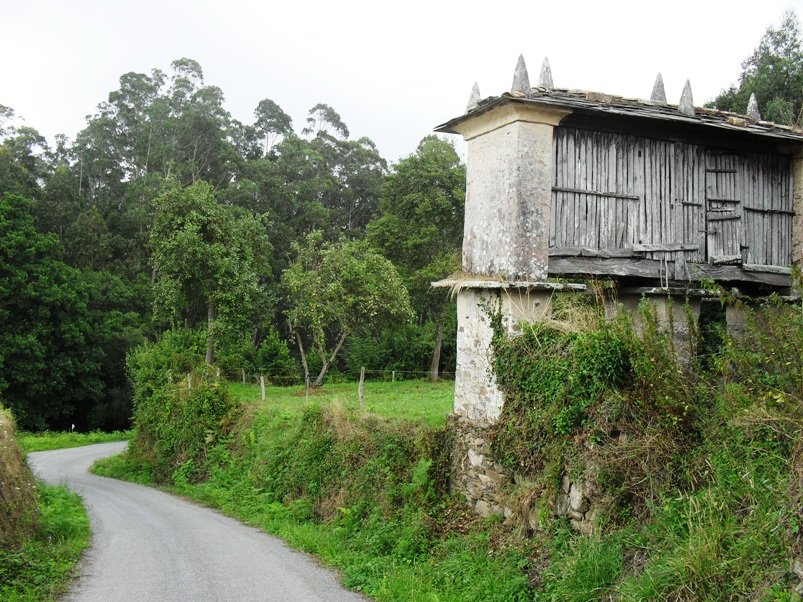
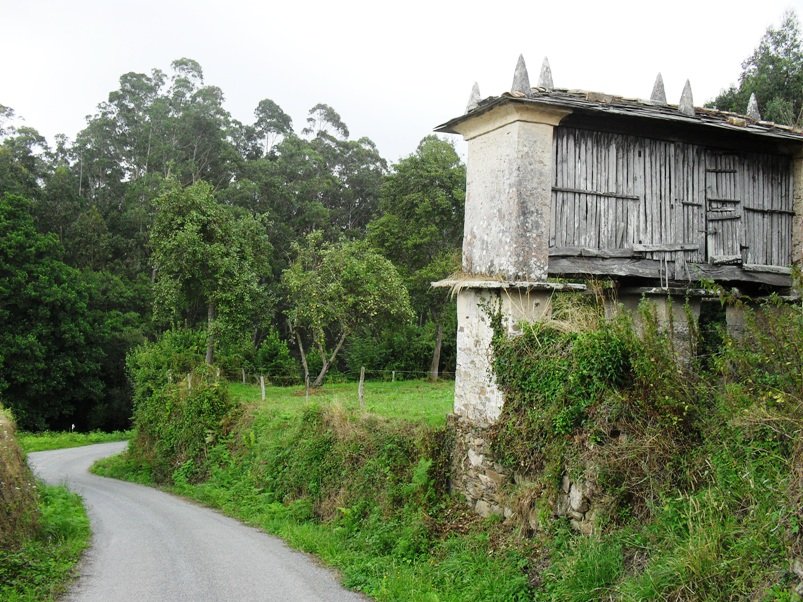
The road that climbs towards O Cuadramón narrows without much warning. As it gains height, the valley opens out behind you. Small meadows appear in irregular shapes, slate roofs cluster together, and a thread of smoke rises from the occasional chimney.
It is not unusual to come across horses on the hillside. They are not entirely wild, since they belong to local farmers, but they move with the calm assurance of animals that know the road is as much theirs as anyone’s. At times they stand still in the middle of the tarmac, watching approaching cars with such composure that drivers have little choice but to slow down.
From the top, on a clear day, much of A Mariña comes into view. White villages are scattered across the landscape. Rivers curve as they descend towards the Ría de Viveiro, and beyond them a strip of sea marks the horizon. The sense of distance is striking, though nothing feels hurried or dramatic.
Descending from O Cuadramón into the Serra do Gistral, the Pozo da Onza appears. The waterfall is not always audible from afar; it depends on the season and how much water is flowing down from the hills. In winter and spring the sound can fill the valley. The drop is around fifteen metres, spilling over rocks coated in dark moss.
Access is straightforward but not heavily developed. The path is earth underfoot, with exposed roots and mud after rain. Sturdy footwear with a good sole is advisable. The setting remains simple, shaped more by water and stone than by human intervention.
Ancient Traces in the Landscape
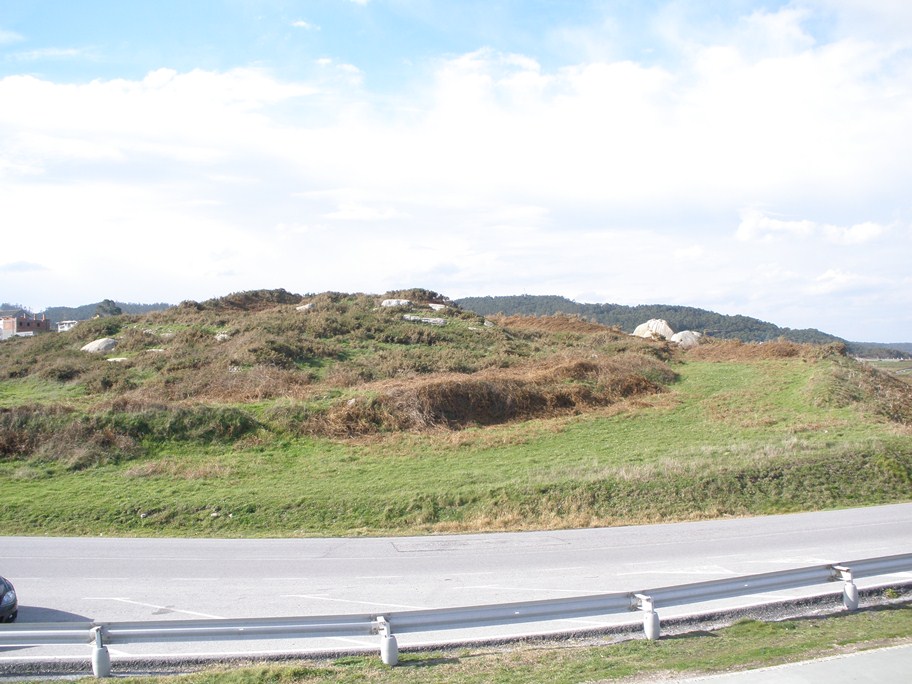
In places such as Chao da Cruz and As Penas do Carballido, remains from the Palaeolithic period have been found. There is little in the way of signposting and much can pass unnoticed by anyone not specifically looking for it. Stones lie mixed into field boundaries or scattered across meadows, blending into what appears to be an ordinary rural scene.
Archaeologists have carried out various campaigns of work here, yet on the ground there are few obvious clues left behind. The sense of antiquity comes less from visible structures and more from the knowledge that these valleys have been inhabited for far longer than first impressions suggest.
In the parish of Santa Cruz, residents have long reported fragments of ancient pottery turning up when the soil is disturbed. They appear while ploughing or after heavy rain. Some speak of Roman pieces, small reddish shards or sections of rim that end up stored in drawers at home alongside old coins or tools. These are modest finds, easily overlooked, but they hint at a deep continuity of settlement.
Valadouro does not present its history in grand displays. It emerges quietly, in fragments and scattered remains. The past here feels embedded in everyday ground rather than separated from it.
When to Go, and What Not to Expect
Spring is often the best time to walk in the area. The meadows turn a vivid green and the edges of the roads fill with wildflowers. Days grow longer and the heat has not yet set in. Summer brings a livelier atmosphere, particularly when residents who live elsewhere return to the village.
It helps to arrive with a clear sense of where you are. There are no souvenir shops and no streets lined with terrace cafés. Accommodation is limited and village life continues according to its usual rhythm. If it rains, which happens fairly often, the only option may be to wait for the shower to pass while watching people come and go without much fuss.
Valadouro works best when that rhythm is accepted. Driving slowly along the valley roads, stopping where it feels right, listening to the water in the streams after rainfall. The most interesting moments are not signposted. They appear simply as the road bends and the landscape opens out once again.