Full Article
about Xove
Ocultar artículo Leer artículo completo
The tide chart matters more than the train timetable in Xove. Ask at the bakery counter and the woman slicing pan de barra will tell you whether Lago beach is a football-pitch-sized sweep of sand or a narrow strip you can cross in twenty strides. She’ll also warn you, in the same breath, not to park on the slipway at Morás harbour unless you fancy explaining yourself to a forklift driver unloading crates of percebes.
This is the Costa da Mariña without the souvenir stalls. The council hasn’t quite decided whether to market itself, and the 5,000 residents seem happy to keep it that way. You’ll hear Galician in the bars, a smattering of Spanish from summer-returning teenagers, and almost zero English. That alone feels radical after the packaged Costas.
The Shoreline Rules
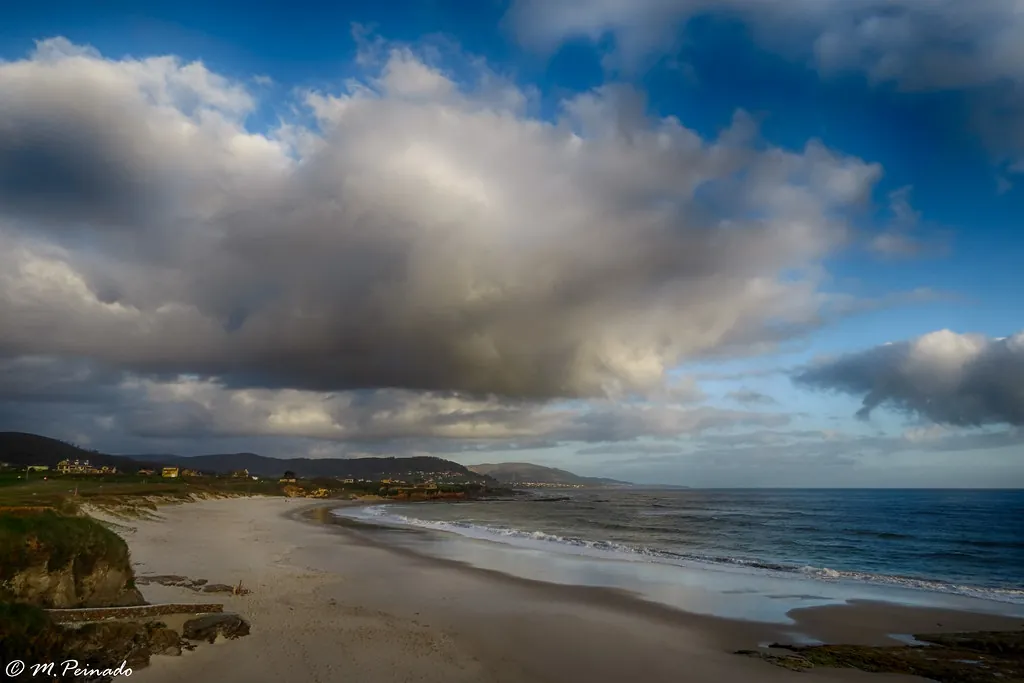
Start at Lago, five minutes west of the village centre. When the moon pulls the water out, the sand reaches across the bay like a newly revealed continent; cockle-pickers appear in wellies, stooping and scanning. When the moon pushes back, the same bay shrinks to a crescent and the lifeguard packs up early. The red flag means business: Atlantic swell can churn up rip currents that even competent swimmers underestimate. Board-riders congregate on westerly days, but there is no surf school shack, no board hire. If you haven’t brought your own wetsuit, you’re a spectator.
Smaller Esteiro beach sits behind a headland, ten minutes further by car. The cliff blocks the worst of the wind, so on blustery August afternoons it fills with multi-generational Galician families who’ve been claiming the same patches of sand since the 1970s. They arrive with cool boxes, folding tables and empanada gallega sliced into neat squares. Arrive after 11 a.m. at high summer and you’ll circle the lane for parking; come in late September and you might share the cove with two dog-walkers and a retired fisherman reading El País in the sun.
What Passes for Sightseeing
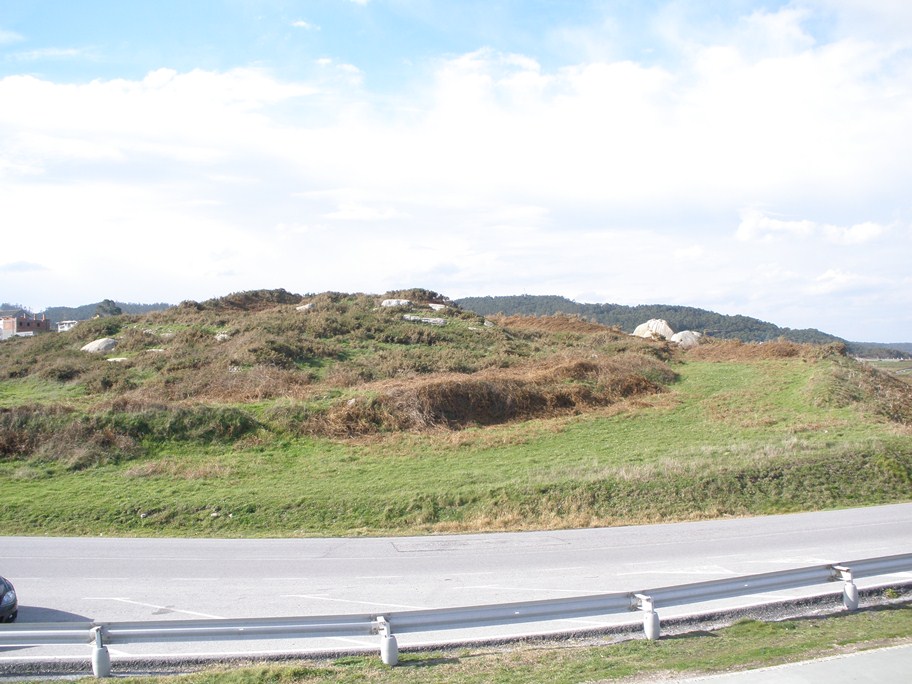
There is no postcard-ready old quarter. The parish church of Santa María is open on weekday mornings; inside, the air smells of candle wax and damp stone, and the only art of note is a seventeenth-century retablo darkened by centuries of sea-level humidity. Ten minutes uphill, the Castro de Castroxiz gives you foundations of pre-Roman walls and a vantage point that explains why someone chose the spot: 360-degree views of headlands, sea and the green patchwork of smallholdings. Interpretation boards are non-existent, so download a podcast on Iron-Age hillforts before you set off or it just looks like a lumpy field.
The working harbour at Morás is more alive. Watch for the panga painted turquoise and called A Nosa Señora; her skipper unloads sacks of almejas at 16:00 most days and hosedown starts immediately after. There is no café terrace, but the lonxa (auction shed) lets you stand at the rail and observe the rapid-fire Galician bidding if you keep out of the way of the pallet trucks.
Eating, Drinking, Closing Hours
Village bars open for coffee at 07:30 and shutter again between 16:00 and 19:00—siesta is not a myth. Order caldo gallego (greens-and-bean broth) mid-morning and you’ll get a clay bowl plus the local habit of tipping the broth onto your plate to make room for the chorizo chunks. Lunch is one course and a drink for €11–€14; dinner rarely starts before 21:00. Pulpo arrives rubbery only if you let it go cold; eat it while the purple tentacles still glisten with olive oil and pimentón. The almond-rich Tarta de Santiago is everywhere, but the version baked at Pastelería Sagrado Corazón in neighbouring Viveiro uses lemon zest and keeps the top free of the customary sugar-stencilled cross—heretical, and better.
No one expects a tip; leave the small change and you’ll hear a quiet "graciñas". Cards are accepted, yet anything under €10 can trigger a hunted look. Carry a €20 note and you’ll survive.
Moving (or Not) Without a Car
A hire-car collected at A Coruña airport reaches Xove in 75 minutes on the AP-9 and LU-540. Without wheels, the landscape contracts sharply. Monbus runs three daily services from Lugo; the last bus back leaves at 18:30, so a day trip is feasible only if you don’t mind sprinting from sand to seat. Taxis exist but must be booked the previous evening—expect €25 for the ten-minute hop to Viveiro. Cycling is heroic; coastal lanes are narrow, gradients reach 12%, and the wind never blows favourably in both directions.
When the Weather Won’t Cooperate
Even in July sea mist can roll in and drop the temperature to 16°C. Bring a windproof jacket and something warm for the evening; shorts alone will exile you to the hotel radiator. Rain arrives horizontally, so umbrellas are useless—opt for a hood. The compensation is light: Atlantic storms polish the rock pools to silver and send waves thudding against the Esteiro cliffs with a drama the Mediterranean never manages. Photographers get their best shots ten minutes after the rain stops, when the clouds rip open and yellow gorse reflects the sudden sun like roadside lamps.
Festivals Without the Fuss
Third weekend of July is San Ramón, patron of fishermen. A marquee goes up on the frontón wall, a orquesta plays covers of 1990s Spanish pop, and the verbena lasts until 04:00. Admission is free, beer is €2.50 a plastic cup, and no one checks ID because everyone knows whose son you are—even if you’re British and plainly lost. The Romaría de San Roque three weeks later involves a slow procession, bagpipes (gaitas) and the ritual carrying of a small wooden saint to bless the fields. Both events are aimed at locals; visitors are welcome but not marketed at, which makes a pleasant change from paying €15 to enter a fenced feria.
Leaving Without Regret—Or Maybe With One
Xove doesn’t sell itself, and that is precisely its appeal. You won’t leave with a snow globe or a fridge magnet. You might, however, depart wondering why British seaside towns stopped smelling of salt and seaweed and started smelling of doughnuts. The village offers little to tick off, plenty to slow down for, and a coastline that answers only to the moon. Pack the tide chart next to your passport; everything else is negotiable.