Full Article
about Ribadeo
Hide article Read full article
A Border Town with Its Own Rhythm
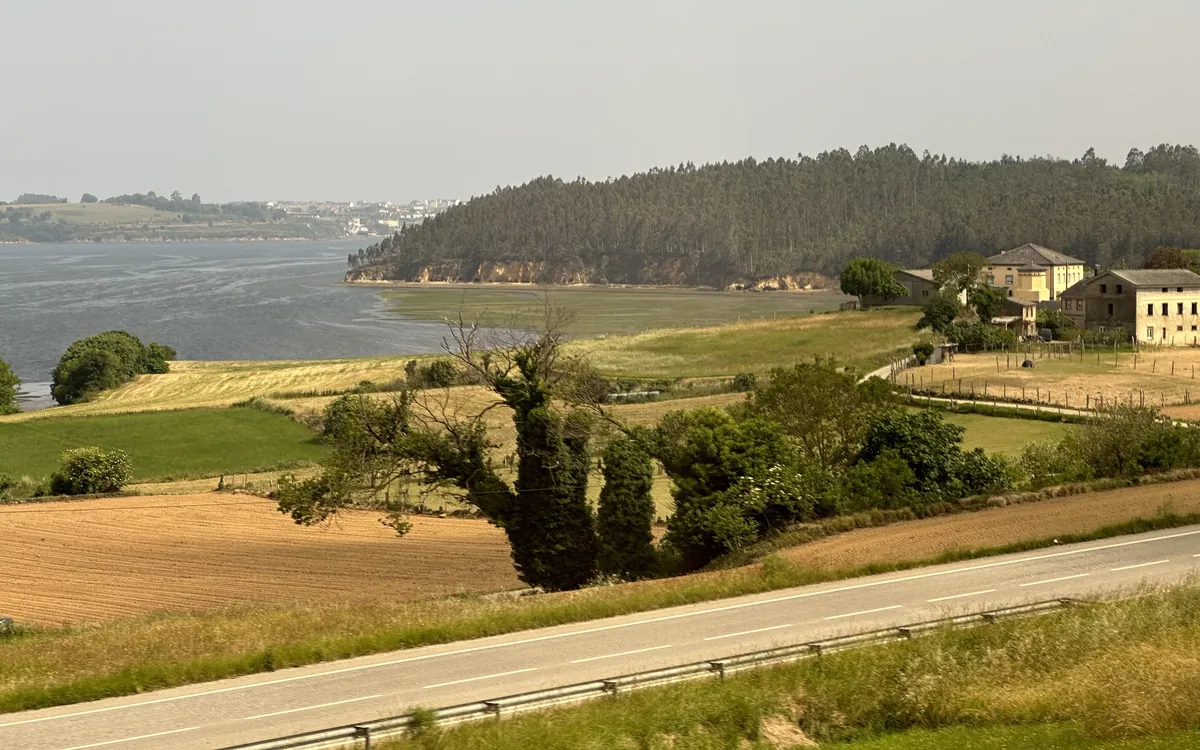
Ribadeo sits right on the edge of Galicia, pressed against the Ría del Eo and facing Asturias across the water. That position shapes the place in quiet ways. You hear it in the speech, see it in the houses and notice it on the plate. It is not unusual for Galician and an Asturian lilt to mix in the same conversation.
The town unfolds quickly. A walk down the slope of A Cuesta del Ferrol leads into a square that feels closer to a Castilian town than a typical Galician port. Around it stand several casas de indianos, homes built by emigrants who returned from the Americas. Some are carefully maintained, others show their age and could do with attention.
The historic centre does not take long to cover. The church of Santa María del Campo has a Gothic portico that invites a brief look rather than a long visit. The convent of Santa Clara appears along the way and often ends up as a quick photo stop. Fragments of the medieval wall survive in a street, scattered and easy to miss if you are not looking for them.
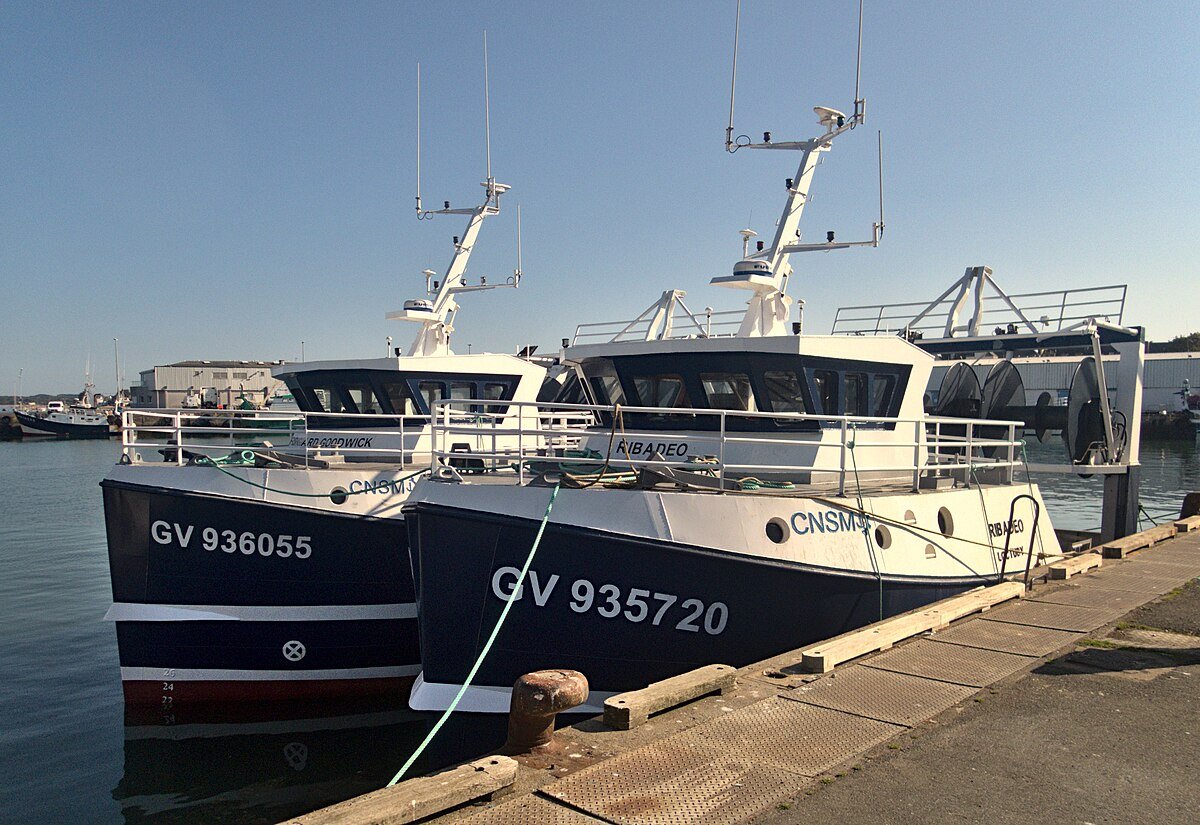
Down by the water, things feel more alive. The harbour draws people in a way the monuments do not. There are locals out for a stroll, teenagers fishing with simple rods, and the steady smell of salt that rises and falls with the tide.
As Catedrales and the Pull of the Coast
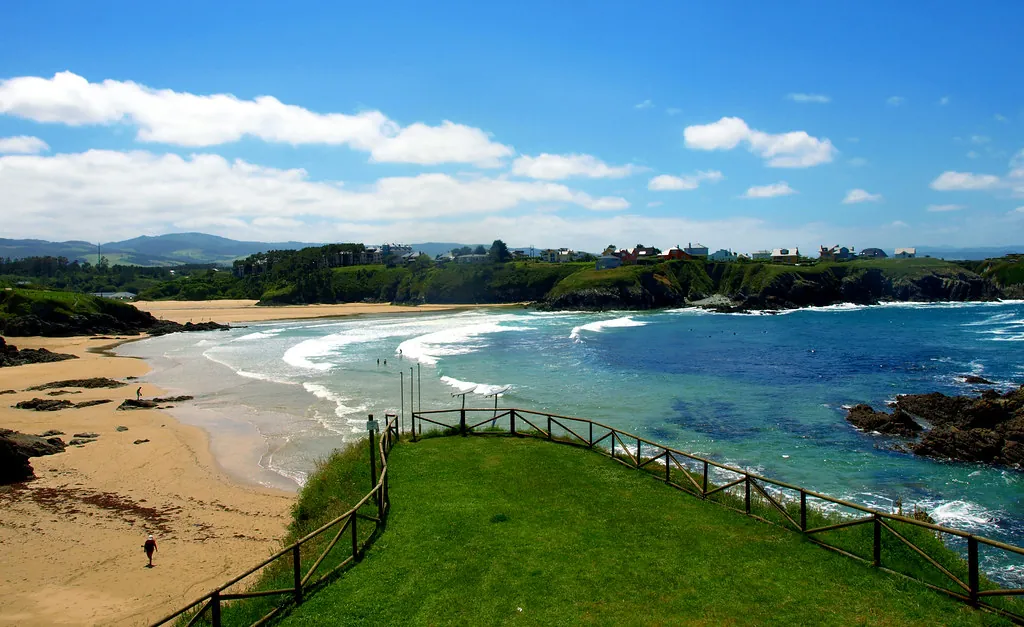
Many people arrive in Ribadeo for one reason: the beach of As Catedrales. In summer, access to the sand is often controlled through a reservation system to limit numbers.
The tide matters here. At low tide, it is possible to walk between the large rock arches that give the beach its name. They are impressive in scale, though that sense of size shifts when the sand fills with people taking photos. At high tide, much of that space disappears under the water.
Even in August, the sea remains cold. As the tide begins to come in, staff signal for visitors to leave the beach, and people move back up towards the access paths.
If the timing is flexible, September tends to feel more manageable. There is less traffic on the approach roads, and the walk along the sand comes with more breathing space.
Eating in Ribadeo
Food here reflects the same mix found in the town itself. Octopus, a staple across Galicia, is prepared differently in Ribadeo than in the inland areas. It is usually more cooked and served in another style. It works well enough, but it is not quite the same as in the traditional octopus regions further inland.
A more reliable approach is to head to the market in the morning. At times, seafood has just been landed, and locals buy it directly there. It gives a clearer sense of what is coming in from the coast that day.
One of the local dishes is pote ribadense. It is straightforward food made with potato, cabbage and pork fat, known as unto. Filling and common in the area, it reflects the kind of cooking tied to everyday life rather than special occasions.
There is also the bollo de San Xoán, a seasonal bake that appears around June. Outside that period, it is simply not around, so timing matters if it is something you want to try.
A Detour Worth Taking
While many cars head straight towards As Catedrales, fewer make their way to the Faro de Pancha. From the port, it is about three kilometres. The route is signposted and alternates between asphalt and rocky stretches, so standard walking shoes are enough.
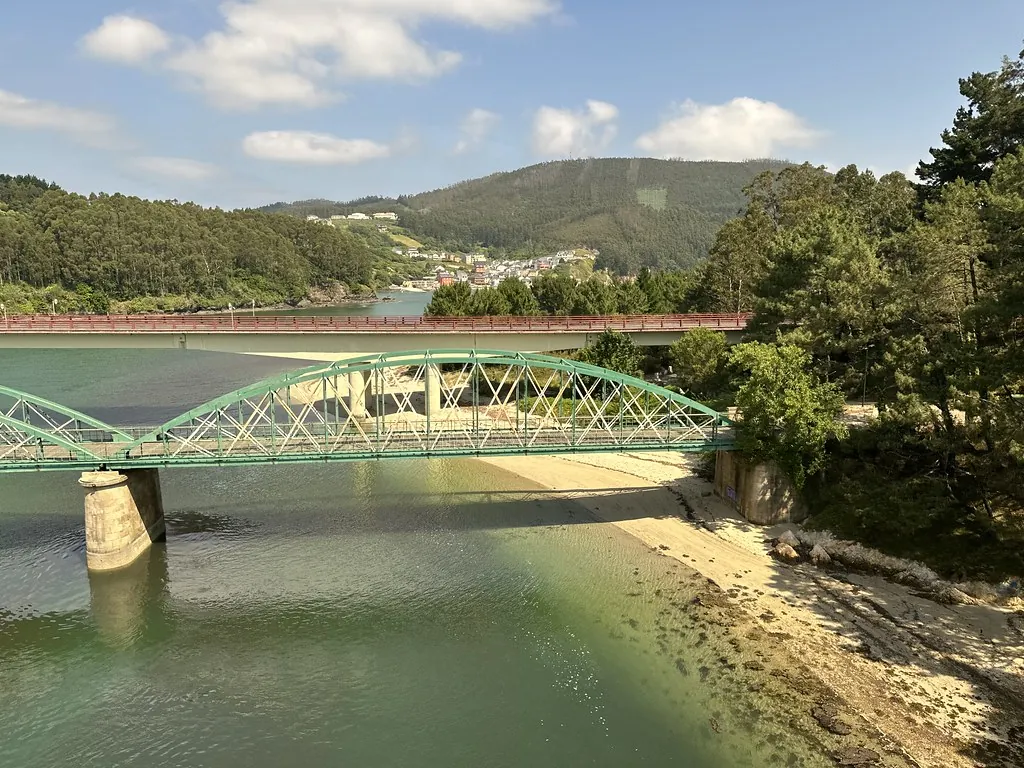
At the lighthouse, the view opens across the entire Ría del Eo. Galicia lies on one side, Asturias on the other, with the river running between them and a bridge visible in the distance. It is a simple scene, but it gives a clear sense of where Ribadeo sits.
If there is still time afterwards, the path can continue down towards O Cargadoiro. This old mineral loading structure extends into the estuary like a narrow pier. Rusted iron, ageing beams and layers of graffiti define its appearance. It tends to draw those interested in photography.
Getting Around Without Overthinking It
Parking can set the tone for a visit. Early in the day, there is usually space near the marina. Later on, finding a spot close to the centre becomes more difficult.
The coastal motorway links Ribadeo with Asturias and the rest of A Mariña. On the national road, speed checks are common, so driving tends to be steady rather than fast.
There is a panoramic lift that goes up towards A Atalaya, though it is not always working. When it is out of service, the walk up takes only a few minutes.
Rain is frequent in this part of Galicia, and when it arrives, the beach loses its appeal. On those days, it makes more sense to walk around the harbour, cross the bridge into Asturias or continue along the coast to nearby towns.
Ribadeo fits easily into a single day. A walk through the centre, a look across the estuary, a trip to the coast, then on to the next stop. It works well as a pause between Galicia and Asturias, without asking for more time than that.