Full Article
about Viveiro
Hide article Read full article
Where the Landro Meets the Cantabrian Sea
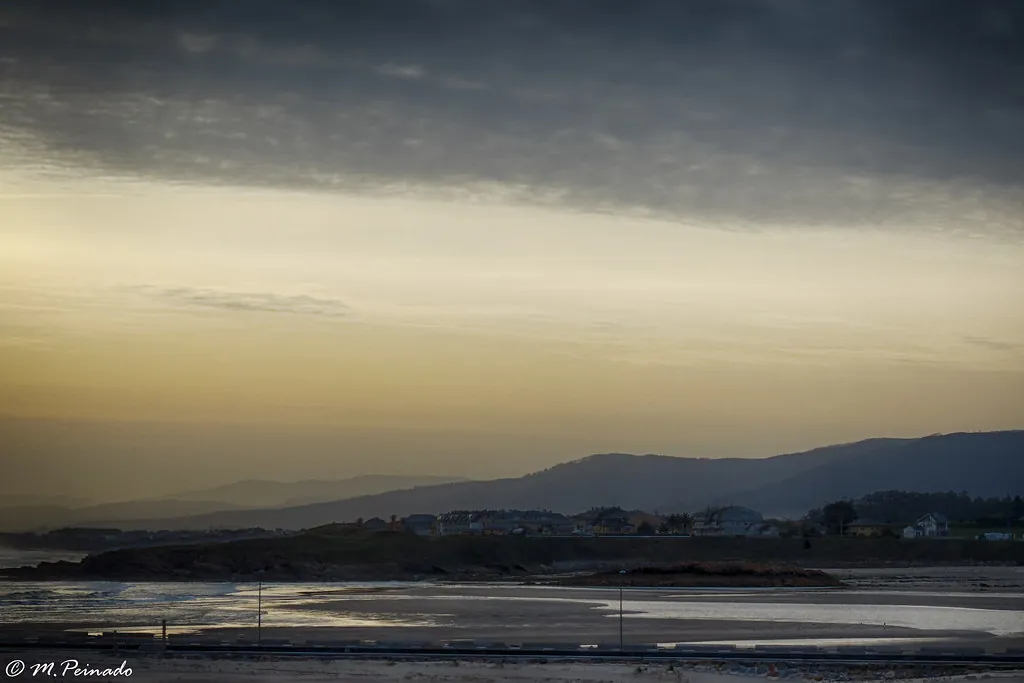
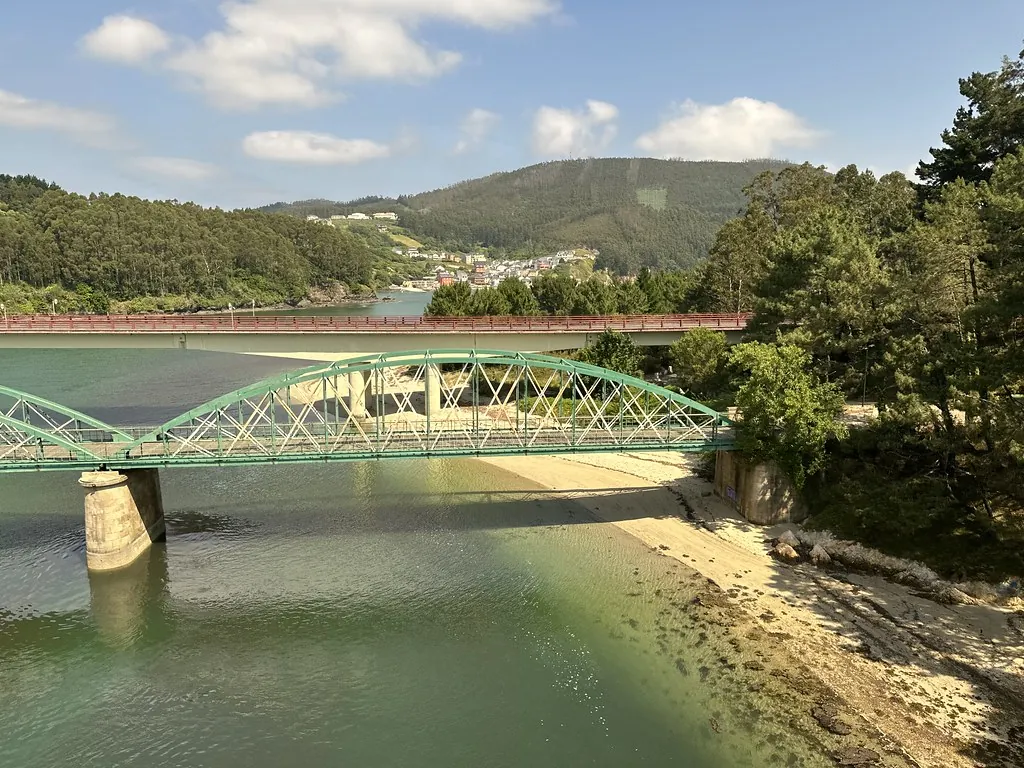
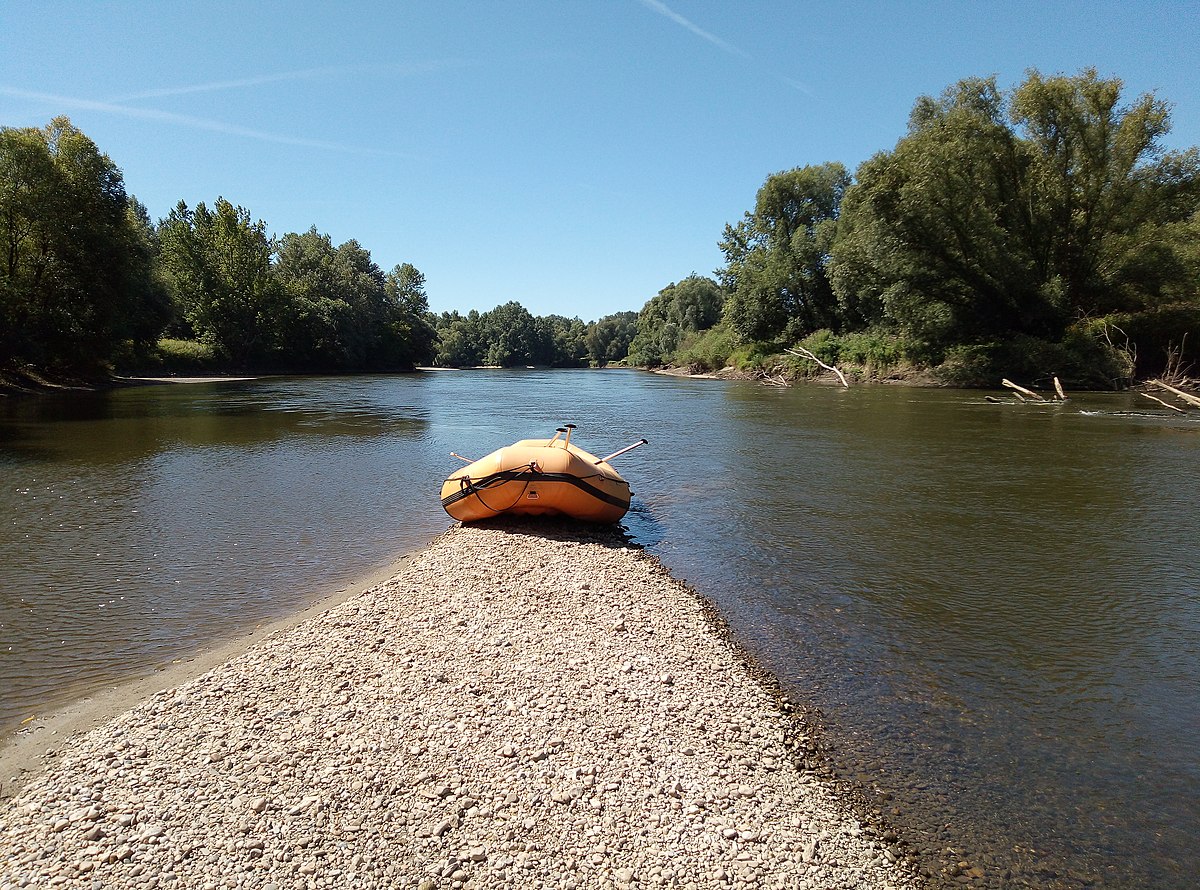
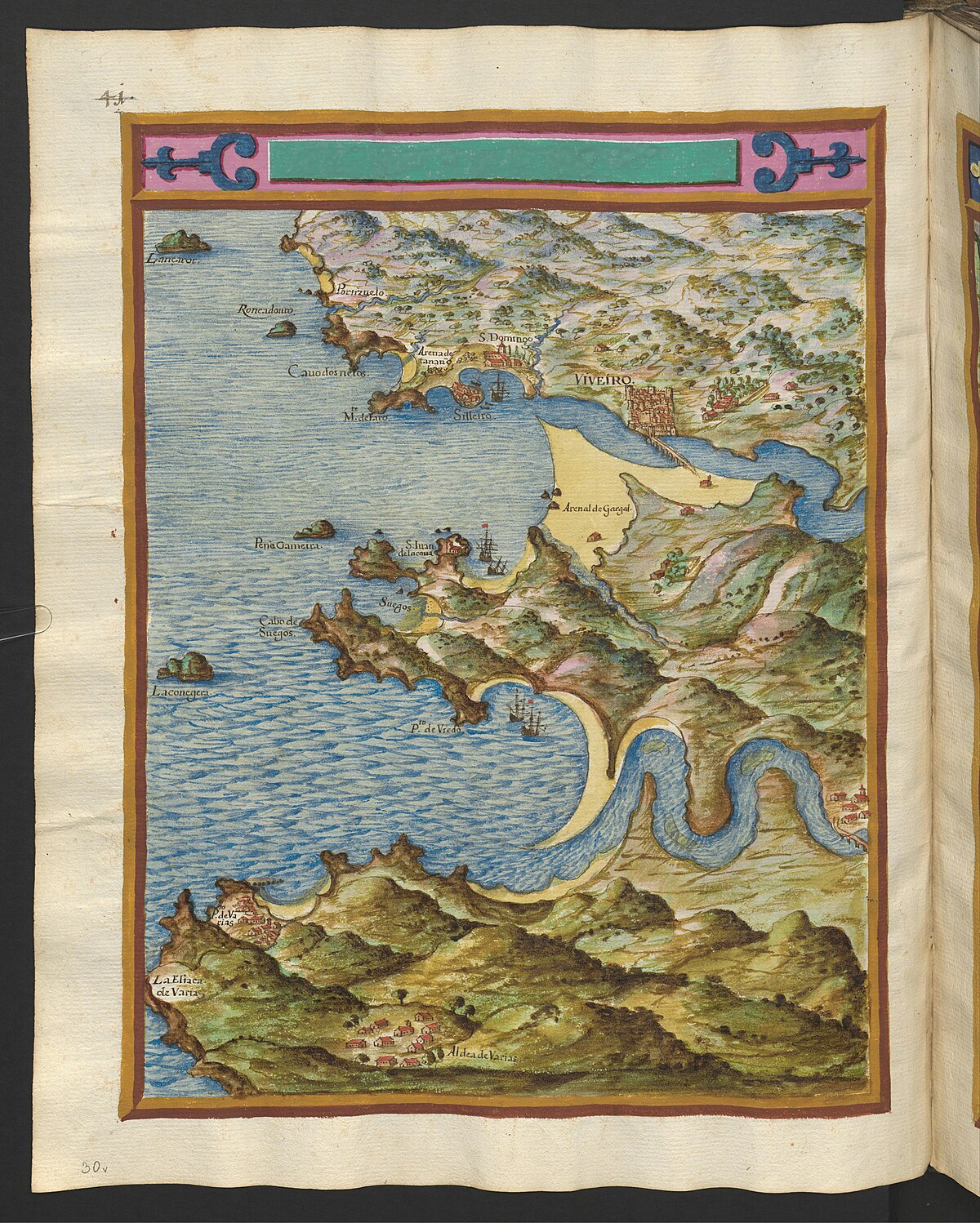
Tourism in Viveiro often begins at the ría del Landro, where the river widens before meeting the Cantabrian Sea. The town grew at precisely this point: a sheltered natural harbour and a waterway that linked the coast with the interior of Lugo province. The layout of the old quarter still follows that logic. Narrow streets, tall houses and a plan that repeatedly turns back towards the water.
From the waterfront promenade, the relationship with the estuary is easy to grasp. Hipped roofs line up facing the ría, and the urban skyline retains something of its former life as a working port. For centuries, Viveiro was an active centre of maritime trade. Much of what stands today in the town centre dates from that period of prosperity, when the harbour connected this corner of A Mariña Occidental with commercial routes along the Cantabrian coast.
The sense of water as both boundary and opportunity runs through the town’s history. The Landro was not simply a scenic feature but a route inland, and the sea brought exchange and wealth. Even now, walking through the historic centre, there is a constant awareness of the estuary just beyond the next street.
Walls That Could Not Hold Back the Sea
Medieval Viveiro preserves three of the original gates from its town walls, something relatively unusual in Galicia. The best known is the Puerta de Carlos V, a solid granite arch that recalls the town’s status as a walled settlement from the Middle Ages. The fortifications were not conceived as grand monuments. They were practical structures intended to protect a port that already mattered within Cantabrian trade networks.
Some inscriptions refer to the year 1217, although the date is given according to the Hispanic Era, an older system of reckoning used in medieval Spain. This suggests an early construction or modification of the enclosure. Whatever the exact chronology, the walls served several purposes at once: defence, control of commerce and a defined entrance into the town.
Parts of the old layout are still perceptible today. In certain stretches, houses lean directly against surviving sections of wall. Many of the present buildings date from the 17th and 18th centuries, when maritime trade and the river’s resources brought renewed prosperity. Salmon fishing on the Landro was especially important during those centuries, adding to the town’s income and shaping its daily life.
The result is a historic centre where layers of time sit close together. Medieval gateways lead into streets framed by later houses, all of it oriented towards the harbour that first justified the walls.
A Convent Above the Estuary
On higher ground within the urban area stands the convent of Santa María de la Concepción. The Conceptionist nuns settled here in the early 17th century. The choice of site was deliberate: from this position, much of the ría and the rooftops of Viveiro can be seen.
Beyond the building itself, what stands out is how closely it is woven into local life. Devotion to the Virgen de la Misericordia remains strong in Viveiro. Each first Friday of March, the town celebrates the Día das Tres Grazas, a longstanding local tradition that fills the chapel and the surrounding streets.
Within the convent grounds there is also a grotto dedicated to Lourdes, built in the early 20th century. It is not conceived as a monumental structure but as a simple expression of faith. Today the complex functions partly as an educational centre, so religious life, school activity and historical memory share the same space.
This mix reflects a broader pattern in Viveiro, where historic buildings are not isolated relics but continue to form part of everyday routines.
When Holy Week Transforms the Town
Semana Santa in Viveiro holds notable importance within Galicia. Its distinction does not lie primarily in the antiquity of all its sculptures, many of which are relatively recent, but in the continuity of the rituals and the involvement of the local community.
During those days, the rhythm of the centre shifts. Traffic disappears from many streets and movement becomes pedestrian. Processions follow routes that are documented from the Early Modern period, tracing a path through the same streets that have witnessed them for centuries.
One of the most recognised moments is the Procesión del Silencio. The town is left almost in darkness. The dominant sounds are footsteps on the paving stones and wax dripping from candles. With the ría so close, there is often the scent of the sea in the air, a reminder that even in the midst of religious ceremony, Viveiro remains a port town.
The scale of participation gives these days their character. Residents do not simply observe; they take part, maintaining a tradition that continues to shape the town’s identity each year.
The Eucalyptus That Saw It All
A few kilometres from the centre lies the Souto da Retorta, a small woodland planted at the end of the 19th century. Here grows “O Avó”, a eucalyptus tree often cited among the tallest in Spain.
The record itself is less significant than the context. This woodland was part of an experimental plantation connected to the introduction of eucalyptus in Galicia, a species that would go on to alter the landscape of many districts. The presence of O Avó is therefore a reminder of a turning point in how the region’s countryside developed.
A short, straightforward path runs through the site. It is not a dramatic forest in the classic sense, yet it allows a close look at the scale of these trees and offers insight into how eucalyptus became integrated into the Galician landscape.
From this area, a walkway follows the course of the Landro back towards Viveiro. The river moves calmly between damp vegetation and former industrial spaces, recalling a time when water powered mills and small workshops. The Landro appears here not as a scenic backdrop but as a working river with a long economic history.
Arriving in Viveiro and Exploring the Area
Viveiro stands on the coast of A Mariña Occidental. The A‑8 is now the most direct route for those arriving from Lugo or from the direction of Ribadeo and Ferrol.
The historic centre can be explored easily on foot. Streets are compact and distances short, making it straightforward to move between the old gates, churches and waterfront.
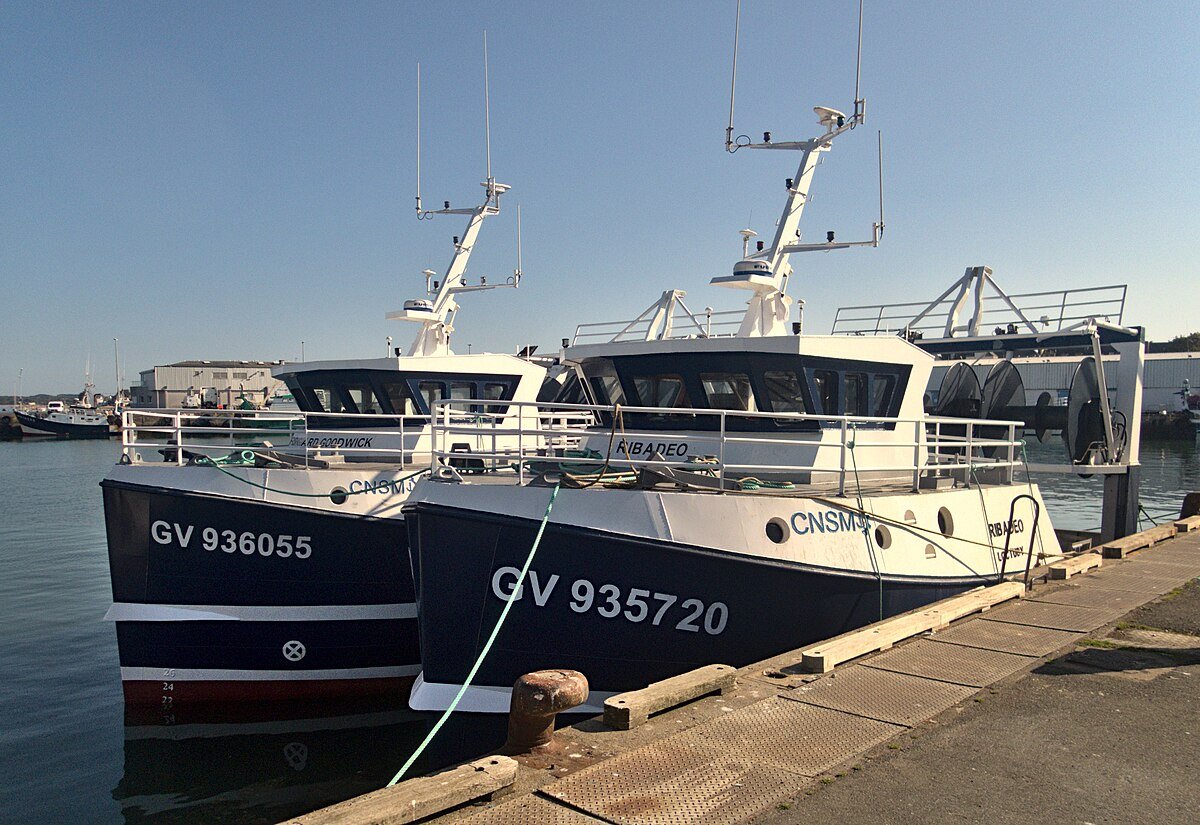
For a broader view of the ría, Monte San Roque lies nearby and offers a wide panorama over the estuary and the port. Close at hand is also Celeiro, one of the most active fishing ports along this stretch of coast. A walk to the quay makes it clear that, despite the weight of summer tourism, Viveiro continues to maintain a close relationship with the sea.