Full Article
about Baños de Molgas
Ocultar artículo Leer artículo completo
The chemist in Banos de Molgas still sells one-litre plastic jugs labelled “agua medicinal” for 65 cents, filled straight from the thermal spring behind the counter. Customers arrive with empty lemonade bottles, screw the tops on tight, then shuffle back to their cars—mostly 15-year-old Seats with blankets across the back seats. Nobody takes a photograph. This is simply the weekly pharmacy run for people who have soaked in these waters since childhood and see no reason to stop now.
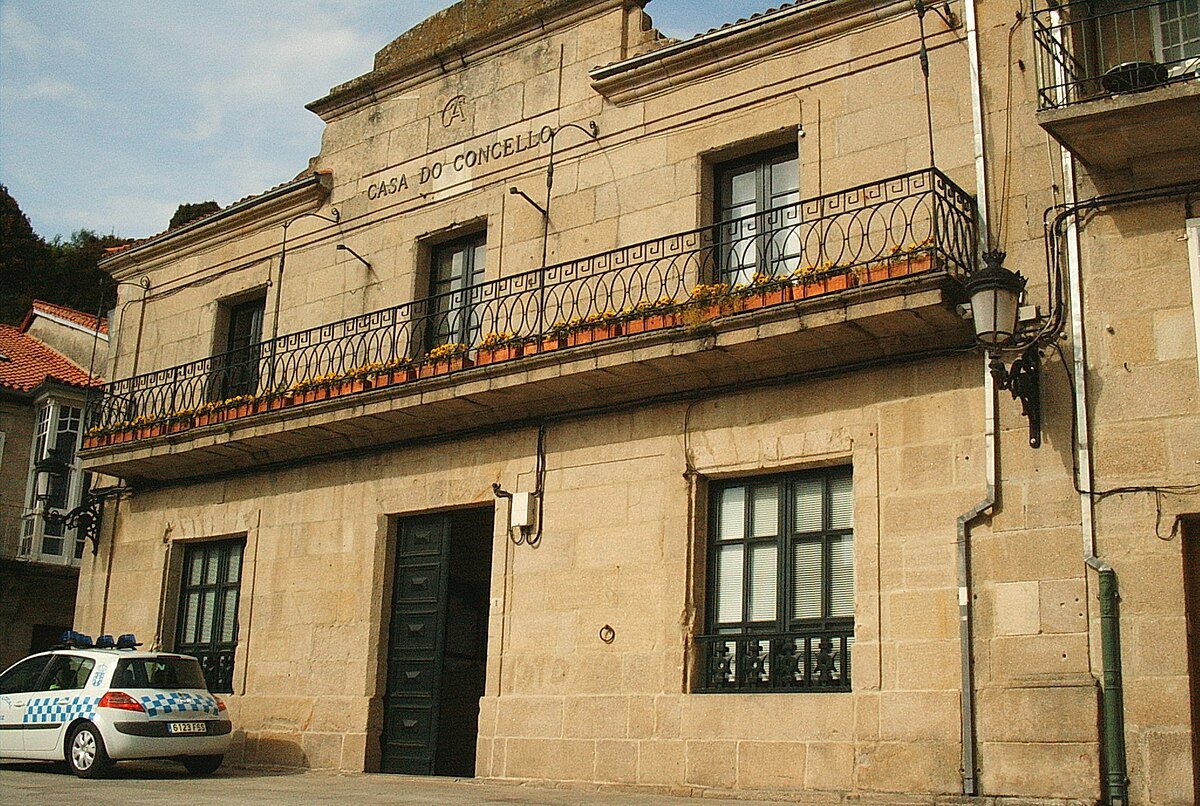
Welcome to the Galicia that guidebooks skip. The village—barely 1,700 spread across scattered hamlets—sits 55 minutes’ drive east of Ourense in a fold of hills that smells faintly of eucalyptus and wood smoke. Romans were the first to pipe the 38-degree sulphur water into stone tanks; the current Balneario de Molgas, a two-star cream-brick building from 1972, keeps the custom alive with €10 day passes and a no-frills indoor pool that smells of eggs and damp towels. Expect NHS hydro-pool, not Champneys.
Water, chestnuts and muddy boots
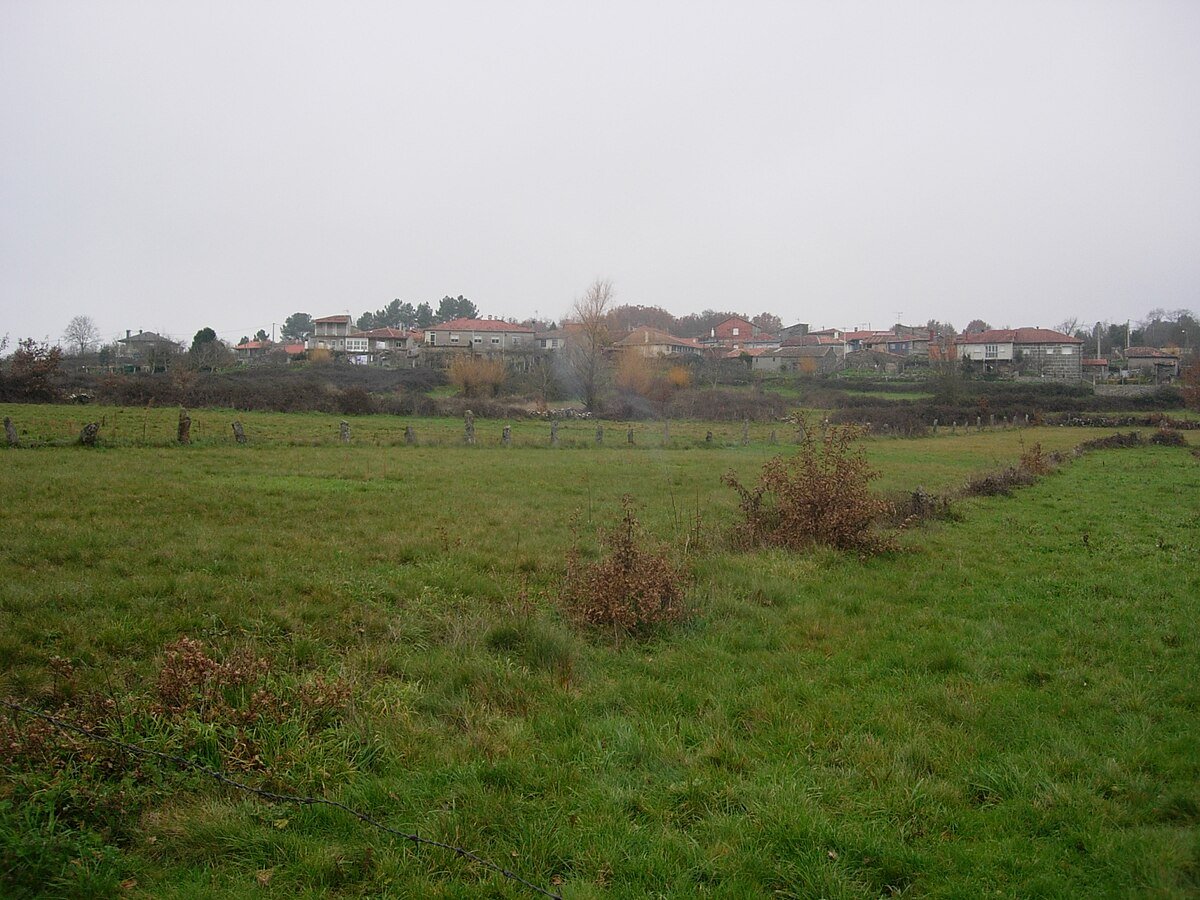
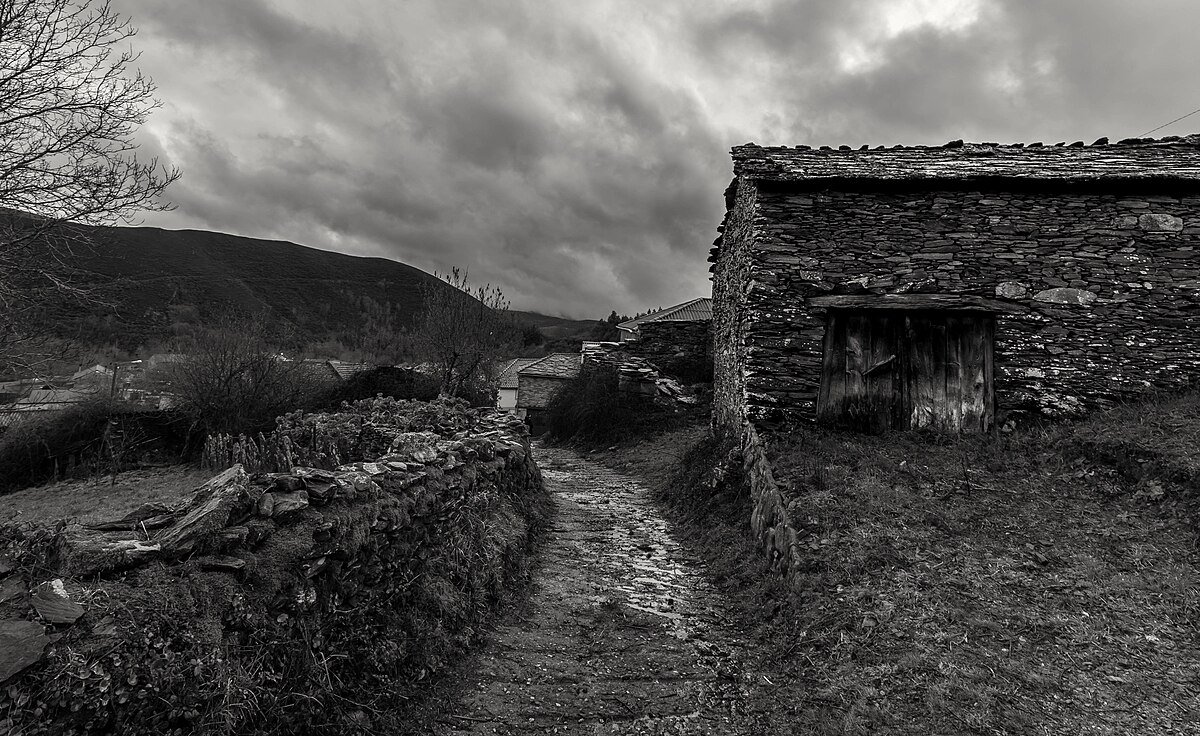
The thermal water is only half the story. The rest is woodland, pasture and the stone hórreos (granaries) that still store last autumn’s chestnuts. Between October and early November the valley turns the colour of burnt toffee as sweet chestnut leaves drop; locals spend weekends raking the glossy nuts into wire baskets and stacking them on every porch to dry. If you walk the unsigned lane from the church of Santa María to the hamlet of Outariz (45 minutes, wellies advised after rain) you pass three working hórreos, two cruceiro crosses and nobody at all—except perhaps a farmer on a quad bike who will raise two fingers from the steering wheel in silent greeting.
The walking is gentle but muddy. Tracks follow old mill races—hence “Molgas”—and skirt smallholdings where cabbages grow higher than your knees. There are no viewpoints, no Instagram platforms, just the sound of water sliding under stone bridges and, occasionally, a tractor reversing to a barn. Maps.me shows paths, but mobile signal is patchy; download the route before you leave the village or you’ll end up circling a field of bemused cows.
When the shops shut, they really shut
Banos de Molgas has one supermarket, one bakery, two bars and zero cash machines. The nearest ATM is eight kilometres away in Xunqueira de Ambía—fill your wallet before arrival. Lunch is served 13:30-15:30; if you arrive at 16:00 the kitchen is closed until 20:30 and the barman will shrug as if you asked for caviar. Order caldo gallego, the local broth of greens and potatoes, and specify “sin lacón” if you’d like it without the customary hunk of pork. Vegetarians survive, but only with advance planning.
Evenings are quiet. The single hotel bar shuts at 22:30; by 23:00 the only light comes from the vending machine in the Balneario foyer and the occasional Guardia Civil patrol coasting through to check nobody has blocked the spring entrance with hire-car wing mirrors. Bring a book, or learn to enjoy the sound of water echoing in the darkness.
A car is not optional
Three buses a day link the village with Ourense—none on Sunday—and the last return taxi costs €35. Fly into Santiago de Compostela (Ryanair and BA from London Stansted and Heathrow), pick up a rental car, and allow 1 hour 20 minutes on the A-52 toll road. The final stretch is country lane: stone walls, free-range chickens, a sign warning “ganado suelto” that isn’t joking. In winter the pass at 700 m can be fog-bound; carry a high-visibility jacket (compulsory in Spain anyway) and drive like the locals—slowly, with headlights on even at noon.
Spring means orchids, autumn means cake
April brings wild orchids to the roadside banks and temperatures that hover around 18 °C—perfect for a 10-kilometre loop that links the villages of Xaceda and Berín, passing an abandoned water-powered sawmill where great mossy beams still lie stacked. October is chestnut season: every bar serves tarta de castaña, a dense, treacly wedge closer to Yorkshire parkin than Spanish sponge. Buy an extra slice for the journey; it keeps for three days wrapped in a napkin and travels better than chorizo.
Summer is hotter than you’d expect for northern Spain—32 °C in the shade—and the thermal pool becomes a social club for retirees from Valladolid who spend three weeks on doctor-prescribed “cures”. Rooms at the Balneario are clean but dated; ask for a south-facing balcony if you want to sun-dry your swimming costume. Air-conditioning is listed but often “temporarily out of order”; a fan appears if you ask nicely in Spanish.
What you won’t find—and might miss
There are no souvenir shops, no guided tours and no English spoken at the spa reception. The young woman who checks your temperature before you enter the pool will patiently repeat “bañarse máximo 20 minutos” until you understand, but she won’t switch languages. Download Google Translate offline and remember “agua caliente” means hot water, not a polite request for assistance.
If you need nightlife, head 25 minutes west to Allariz, where medieval streets fill with weekend tapas crawls. Banos itself trades on early nights and the certainty that tomorrow the spring will still smell of sulphur, the bakery will open at 07:30, and someone will already be queueing with an empty plastic bottle.
Stay two nights, walk one morning, soak once, and leave before you start recognising the dogs by name. Banos de Molgas doesn’t do drama; it simply keeps the water running and the chestnuts drying on the porch, indifferent to whether you post it online or not.