Full Article
about Rianxo
Hide article Read full article
Rianxo, sin postureo
Rianxo es como el primo de pueblo que tiene una casa genial pero nunca hace falta que te lo diga. Llegas, aparcas donde puedes (que no siempre es fácil), y en diez minutos ya estás saludando a gente en la calle como si llevaras años yendo. No es un lugar que te golpee con su belleza monumental; es más bien el tipo de sitio donde el ambiente te envuelve sin que te des cuenta.
Se nota que aquí la vida gira en torno a la ría. El olor a mar, las barcas, las voces en la calle... todo tiene un ritmo marcado por la marea y la pesca. No es un decorado, es su día a día.
Tres nombres que son bandera
Para un pueblo de este tamaño, Rianxo tiene un peso literario descomunal. Fue cuna de tres pilares de la cultura gallega: Manuel Antonio, Rafael Dieste y Castelao. Este último te sonará de los libros del colegio, pero ver su casa natal cambia la perspectiva.
La vivienda de Castelao está en pleno centro, una construcción de piedra sobria con balcón de hierro y una placa. Lo que más me llamó la atención no fue la casa en sí, sino darme cuenta de que el hombre creció mirando esta misma ría de Arousa. Desde esa ventana se forjó buena parte del imaginario gallego moderno. Es una lección de humedad y genialidad.
Cerca está el museo de escultura contemporánea. Es pequeño, nada pretencioso. Tiene unas cuantas piezas que o las entiendes al momento o te quedas un rato dándole vueltas. Me gustó ese silencio.
Canecillos con sorpresa y pazos reconvertidos
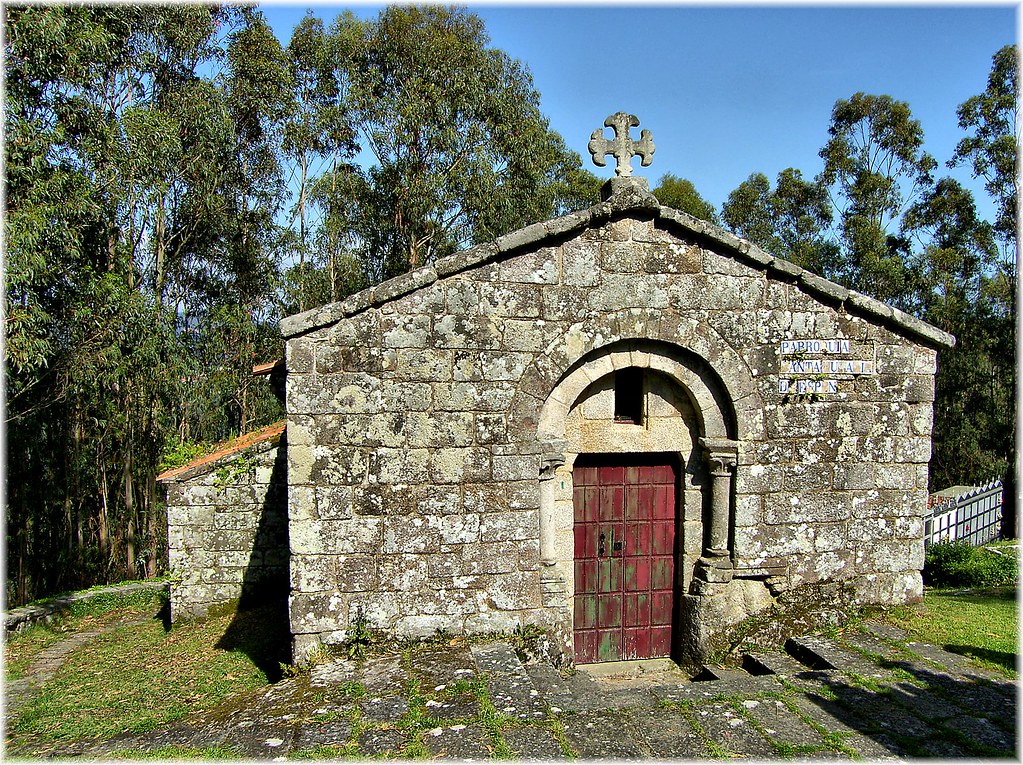
La iglesia de Santa Columba, vista desde fuera, parece otra iglesia gallega más: piedra, líneas sencillas, construida para aguantar mil inviernos. Pero levanta la vista.
Justo bajo el alero están los canecillos, esas piezas de piedra tallada que sostienen el tejado. Y algunos tienen unas figuras... digamos que muy expresivas. No es algo raro en el románico por aquí, pero siempre sorprende encontrártelo en la fachada de una iglesia. Es ese detalle inesperado que hace sonreír.
El Pazo do Martelo cuenta otra historia. Se ve que empezó siendo una torre medieval y le fueron añadiendo cosas con los siglos hasta quedar a medio camino entre casa señorial y fortaleza pequeña. Ahora está protegido como patrimonio, una huella más de las muchas capas de historia que tiene esta zona.
Xoubas, memoria y subida a los petroglifos
Si comes en Rianxo, comes pescado. Punto. Los mejillones aquí saben a lo que tienen que saber: a mar puro. Y las xoubas (que son como sardinas pequeñas y sabrosas) tienen hasta su propia fiesta gastronómica, como pasa en medio Galicia.
Pero hay otra celebración que mola más: una feria que recrea cómo era la vida aquí a principios del siglo XX. La gente se viste con ropa de la época y monta puestos por el casco viejo. No parece un espectáculo para turistas, sino como si el pueblo decidiera recordar juntos cómo eran sus abuelos.
Para estirar las piernas, sube hacia las parroquias de alrededor. En las laderas hay petroglifos prehistóricos, como los de Os Mouchos o Rianxiño. Son espirales y formas geométricas grabadas en la roca desde hace milenios. A veces cuesta verlos si no da bien la luz; otras veces, con el sol rasante, saltan a la vista.
Y en Araño verás un hórreo enorme. De los grandes-grandes. Parece un barracón largo levantado sobre decenas de pies de piedra. Verlo así, solo en medio del campo, impone.
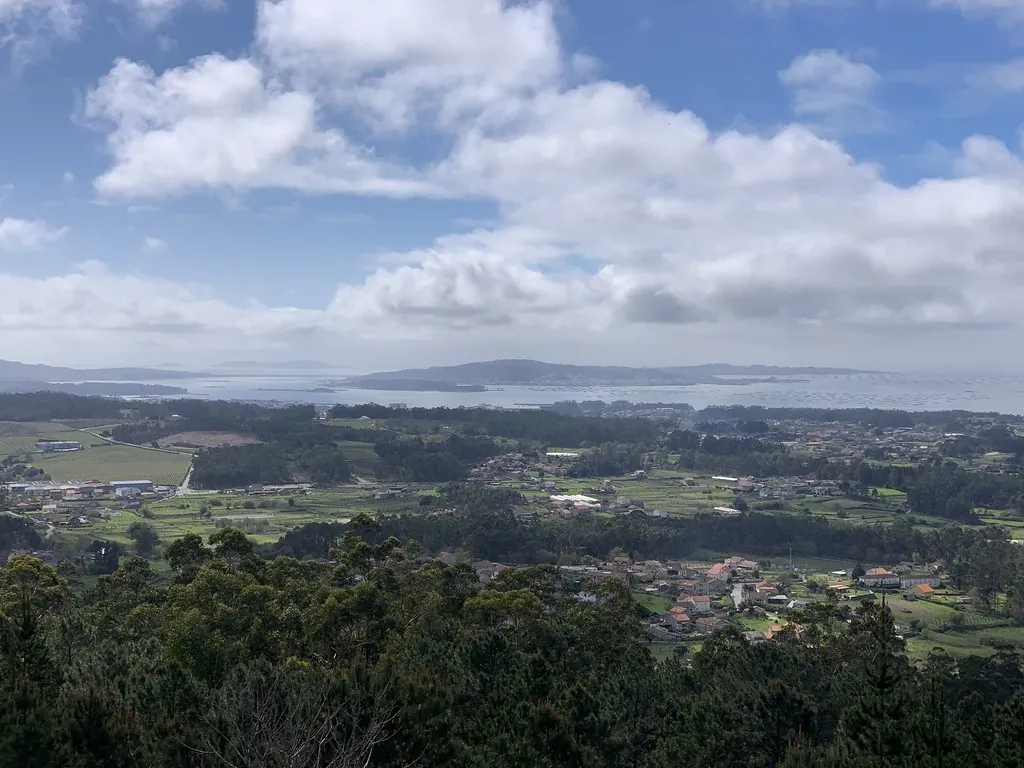
La cuesta para llegar hasta estas zonas existe, como casi todo lo bueno en Galicia viene con un poco de desnivel incluido. Pero cuando llegas arriba y tienes toda la ría a tus pies, se te olvida al momento.
Un par de cosas prácticas
En verano olvídate de meter el coche hasta el puerto si no quieres perder media mañana buscando hueco. Déjalo cerca de la entrada del casco antiguo y recorre a pie. Las calles son estrechas y empedradas; están hechas para caminar, no para circular.
La mejor época? Muchos gallegos te dirán mayo, junio o septiembre. En pleno agosto se llena, se pone más animado, y puede costar encontrar mesa donde comer sin reserva. Si coincides con las fiestas mayores, la plaza se llena de música, gente bailando y familias enteras hasta altas horas. Ahí ves a Rianxo en su estado puro: con los pies en sus tradiciones y completamente vivo