Full Article
about Ribeira
Hide article Read full article
A port that gets on with it
Some ports look like a film set. Others work flat out like a garage floor at peak hour. Ribeira belongs to the second group. Early in the morning, on the quay at Aguiño, a man in a peaked cap calls out numbers while holding up a goose barnacle the size of a thumb. The rhythm is fast, closer to a car auction than anything romantic: hands go up, someone clicks their tongue, another nods without a word. No paper, no calculators. In a few minutes, dozens of kilos of fresh percebes, taken from the rocks at Cabo Corrubedo barely an hour earlier, have changed hands. If the idea is to find a very “Galician” Galicia, Ribeira delivers it straight, no introduction.
The ría that feeds a town
Ribeira is not just a town, it is the main hub of the Barbanza peninsula, and it shows. Streets seem to run downhill towards the harbour, as if everything gravitates to the place where the work happens. You see terraces with fishermen having breakfast in yellow waterproofs, refrigerated vans coming and going with the urgency of taxis at a busy station.
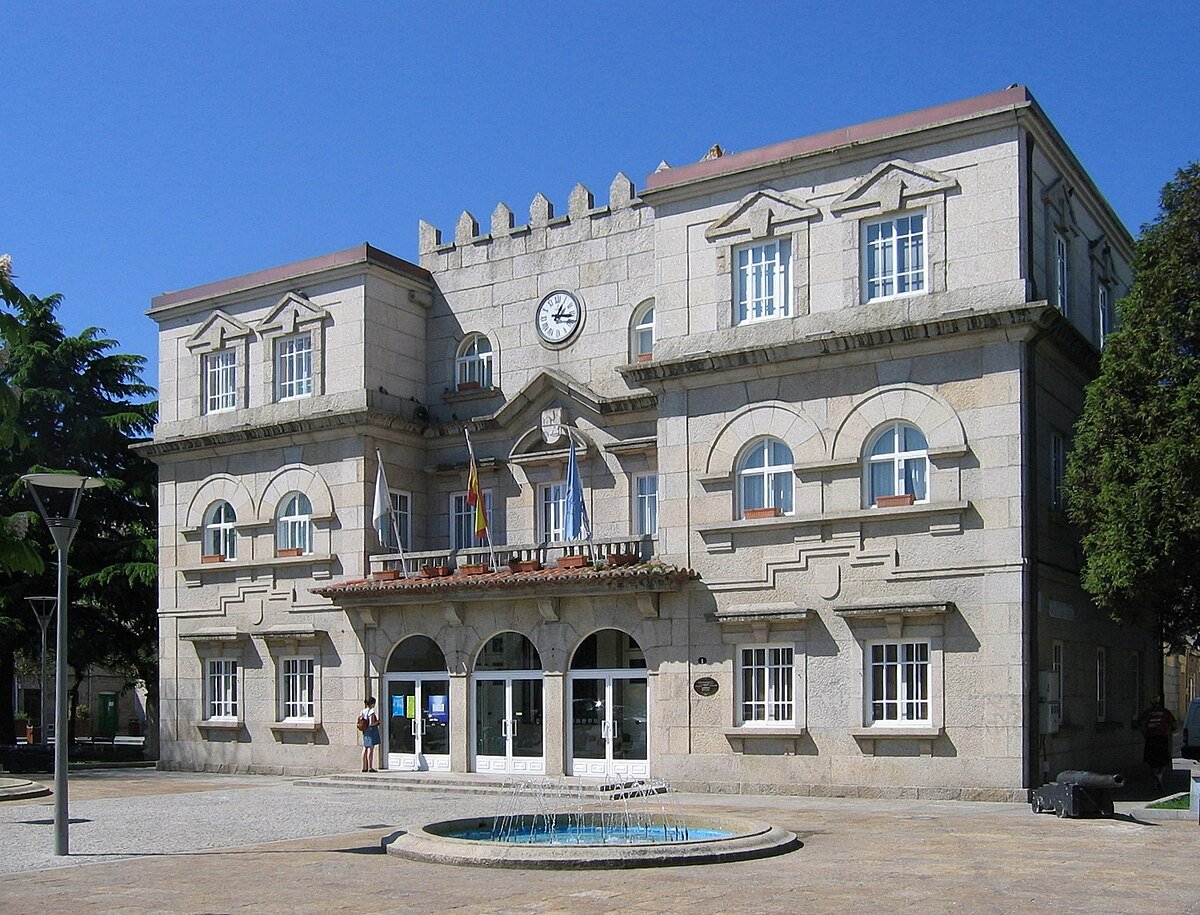
There is no polished old quarter presented like a display case. Instead there are cranes, the fish market, and the smell of seaweed when the tide drops. With around 27,000 residents, it is one of the most populated municipalities in the province of A Coruña, yet it feels larger. The port of Santa Uxía de Ribeira, its official name since the 1980s, shifts fish in volumes that resemble a wholesale market on a busy day. Tuna, sardines, percebes, cockles leave daily for destinations across much of the continent.
The change comes quickly once you leave the seafront and take the road towards the Parque Natural del Complexo Dunar de Corrubedo. The shift is almost abrupt, like stepping out of a noisy auction into a library. In about ten minutes, aluminium boats give way to the largest mobile dune in Galicia. It is a moving mass of sand that advances a few metres each year, swallowing pines and even part of what used to be a campsite.
The landscape can feel slightly disorienting. There are dunes that seem borrowed from somewhere else, lagoons with birdlife, and an Atlantic that arrives with real force. Walking barefoot for a stretch is possible, but a jacket is a good idea. The wind has the same bite in July as it does in January.
Walking is the way to read it
Ribeira makes more sense at walking pace. The Sendeira do Complexo Dunar runs for about five flat kilometres. Think of it as a long promenade, but set among sand, lagoons and low pines. It looks straightforward, yet the sand finds its way into your shoes as if it had a mind of its own.
For a look further back in time, the castro da Cidá sits a short distance from the interpretation centre. There are circular houses dating from the 4th century BC, open views over the ría, and above them a small facho from the 18th century that once served to warn of enemy ships. It feels like switching channels with a remote: the Iron Age and the 18th century on the same hill.
The crossing to the island of Sálvora is a different plan altogether. It requires permission from the Parque Nacional das Illas Atlánticas and a bit of organisation. Boats usually leave in the morning from the port of Ribeira. On the island there is a lighthouse, a large pazo now used as a hostel, and a small settlement that has been abandoned since the 1970s, when living there became too difficult.
Walking around Sálvora has an unusual atmosphere. Empty houses, fallen eucalyptus trees, paths that end at the sea. It can feel like entering a place left half in order decades ago.
What actually ends up on the plate
In Ribeira, food follows the harbour. It is that simple. When they are in season, roughly from March to August, percebes command high prices. The reason is easy to grasp once you try them: they taste like concentrated sea, and eating them has a ritual feel, a bit like opening sunflower seeds but with saltwater involved.
If percebes are out of reach, there are other options coming from the same ría. Caldeirada de bogavante appears on menus, as does pulpo á feira with cachelos, or empanada de berberechos. In the bars by the port, a very Galician habit still shows up: you order a slice of empanada and the person behind the counter asks if you want it warmed, the way a mother might reheat a leftover tortilla.
For dessert, tarta de castañas del Barbanza sometimes makes an appearance. It is denser than the well-known Santiago cake, closer to a thick cream that holds its shape on the plate. With coffee, it goes down easily.
Festive days without a stage set
The Entroido in Ribeira has that touch of disorder found in small-town carnivals where no one is thinking about photos for social media. The “Meco” is burned, a large figure that represents winter. Picture a giant scarecrow dressed in everyday clothes, as if an entire wardrobe had been thrown on top of it.
It is carried through the streets and ends up on a bonfire. Meanwhile a charanga plays, octopus is served, and people linger outside talking even if the temperature drops.
In summer, the Festa da Dorna takes over. Traditional boat races are held in the ría, with wooden vessels prepared by whole families. Older generations work on the hull, younger ones take the oars, and from the shore people watch with a drink in hand. The scene has something of an improvised regatta about it, informal and closely tied to the place.