Full Article
about Ponteceso
Hide article Read full article
At five in the morning, the boat from Corme cuts across the ría with a sharp crack. The percebeiros, goose barnacle fishers, grip the ropes as if they were extensions of their own arms, people who know every fissure in these cliffs because they grew up watching them. From the harbour wall, the beams of their head torches look like small suns flickering over the black water. Tourism in Ponteceso reveals something quickly: the day starts early here, and almost always around the sea, which feeds the town and occasionally demands its share in return.
The scent of the sea drifting upriver
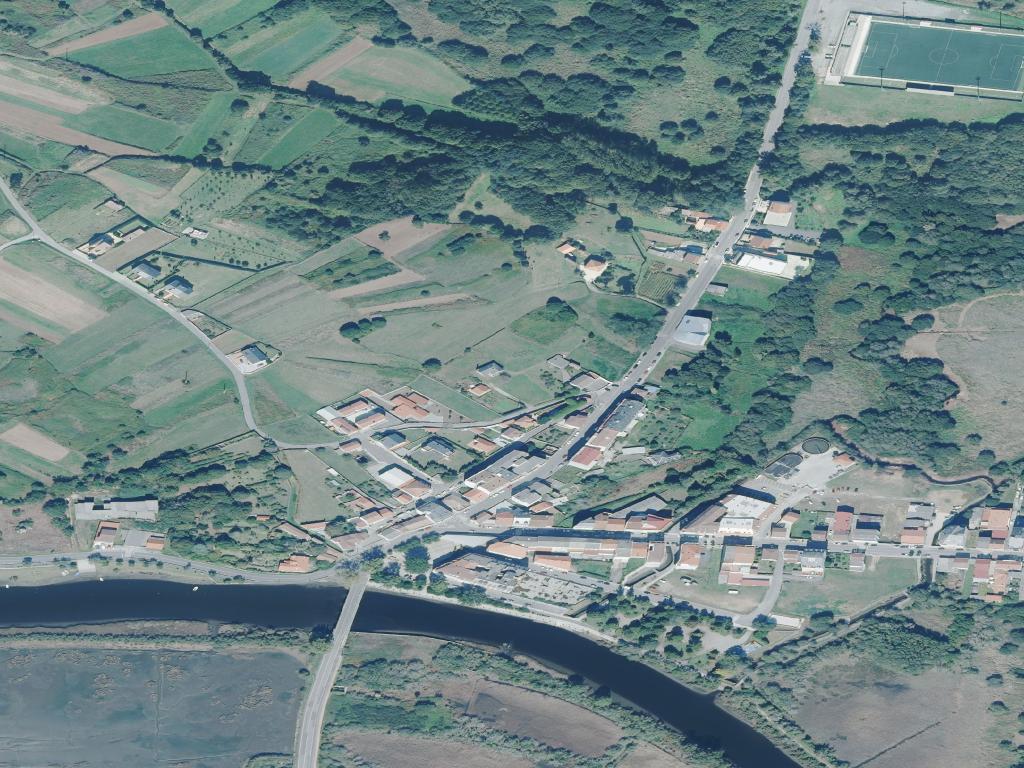
The Anllóns winds between reeds and alders before opening into the ría de Corme e Laxe. On the bridge at Ponteceso, built of stone with several arches and rebuilt in the 19th century over earlier crossings, the salty air mingles with the smell of damp earth. Go early, before the traffic gathers, and you can hear the water sliding under the arches and the hollow thud of a boat nudging the pontoon.
A footpath follows the river along several stretches. The walk is gentle, without steep gradients, and it changes depending on the sky. Some days the water appears dark green. On others, when the tide pushes in and the wind ruffles the surface, it turns almost grey. It is best taken slowly, with shoes that will not slip. The dampness here clings to the stones.
In the houses near the ría, rooftops sound different when rain begins to fall. Slate sends back a fine, steady tapping. At certain hours of the morning, washing still hangs on lines, shifting in the moist breeze that rises from the estuary.
This is a landscape that does not need grand gestures. The river does the work quietly, marking out the valley and shaping daily life as it goes.
When the cliff becomes a viewpoint
The climb to the Torre do Faro makes itself felt in your legs. The path rises gradually towards the crest of the hill, and the final stretch is a staircase that requires a steady pace. At the top, the view opens all at once.
From this high point, the shape of the ría de Corme e Laxe becomes clear, like an arm of water reaching inland. To one side lie cultivated fields divided into small plots. To the other, the open sea stretches out towards cabo Roncudo, where the swell strikes dark rock. On clear days, coastal villages stand out distinctly, and small boats can be seen moving slowly near the shallows.
The white tower itself is not ancient, yet it has formed part of the hill’s outline for decades. When fog rolls in, which happens often enough, it almost disappears completely, leaving only the wind pressing against its walls.
If you make the climb, choose a day with good visibility. In heavy cloud, you can barely see beyond a few metres and much of the meaning of the place is lost. Up there, perspective is everything: the river, the fields and the Atlantic all arranged in a single sweep of land and water.
Hillforts watching over the valley
Several castros remain on the surrounding hills. These are Iron Age hillforts typical of north-west Spain, not restored enclosures or curated archaeological parks. Instead, they appear among grass and low walls that still trace circles on the ground.
The castro of Nemeño, for example, preserves part of its defensive ditch and makes it easier to understand how these settlements once dominated the Anllóns valley from above. From that vantage point, the river looks like a ribbon slicing the green in two. When the wind picks up, the sound of tall grass drowns out almost everything else.
Closer to the coast, around Roncudo, there are also rocks marked with ancient engravings. These are simple carvings, cup marks and grooves cut into the stone. No one can say with certainty what purpose they served. Sometimes rainwater gathers in the round hollows, making the patterns easier to see.
What stands out is how all this coexists with everyday life. Cultivated plots press up against the remains of the castros, and cattle graze nearby. Archaeology here is not fenced off from the landscape. It forms part of it, folded into the same hills that carry crops and livestock.
A harbour scented with goose barnacles
In summer, the harbour at Corme shifts pace for a few days. Traditionally, a festival dedicated to the percebe takes place, celebrating the shellfish pulled from the rocks of Roncudo when the sea allows it. Tables are set up near the quay, and the scent of boiled seafood mixes with bay leaf and oregano.
Many visitors arrive from elsewhere, yet neighbours from across the comarca also gather. People eat standing up, conversations stretch on, and someone will inevitably produce a pandeireta, a traditional tambourine, or a gaita, the Galician bagpipe. No stage is needed for music to begin.
Beyond the festival, the harbour is often best understood when the boats return and unload their baskets. Then you hear crates knocking against the quay and the quick exchanges between sailors, still wearing waterproof gear speckled with salt.
Ponteceso does not reveal itself in a rush. It helps to rise early at least once, to walk along the river while the ría is still calm, and to head to the coast with enough time to stand and watch the sea without hurrying. If you come in August, weekdays are usually quieter. At weekends, the movement increases noticeably, especially around Corme and the beaches.
Even if the morning begins with a clear sky, it is wise to carry a jacket. In this part of the Costa da Morte, the weather changes quickly. The light can shift in a matter of minutes, the wind can turn, and the same stretch of water that looked green at dawn may appear slate-grey by midday.
In Ponteceso, sea and river set the rhythm. The Anllóns draws the land towards the estuary, the ría opens to the Atlantic, and daily life moves between the two. Those who spend time here begin to notice the details: the echo beneath the bridge, the outline of the Torre do Faro in clear air, the faint engravings filling with rain. Nothing shouts for attention, yet everything is present for those willing to look closely.