Full Article
about Abegondo
Hide article Read full article
A reservoir that few people think about
Tourism in Abegondo tends to catch people off guard. It feels a bit like walking into a friend’s house and discovering that the coffee machine they use every morning supplies half the neighbourhood. The Embalse de Abegondo‑Cecebre creates a similar effect. A large part of A Coruña drinks water that comes from here, yet when you arrive for the first time there is no obvious sense of strategic importance. What you see instead is a calm landscape that rarely demands attention.
Abegondo is not the kind of place that greets visitors with a checklist of attractions. There is no beach and no historic quarter that appears on glossy calendars. What defines it is the reservoir itself, a broad sheet of water that from certain viewpoints looks more like a closed estuary than a man‑made lake.
Many people glimpse it briefly from the motorway linking A Coruña and Betanzos. The drive crosses a viaduct and, suddenly, water opens up between rounded hills. If you take the time to stop along the tracks that slope down towards the shore, the atmosphere changes completely. There is silence. Herons stand by the water’s edge. The scent of eucalyptus hangs in the air, as it does almost everywhere in this part of Galicia.
The whole area forms part of the Reserva de la Biosfera de las Mariñas Coruñesas. The title sounds formal, even grand, yet on the ground it translates into meadows, damp woodland and a strong sense of rural life only a few kilometres from the city.
Food that follows the seasons
Cooking in Abegondo reflects what has long been prepared in the inland areas of A Coruña province. Caldo gallego, the traditional Galician soup, appears regularly, made with grelos, the slightly bitter turnip tops typical of the region. Boiled potatoes accompany many meals and prove more filling than they first appear. When the time comes for the annual pig slaughter, homemade chorizo takes its place on the table.
Octopus, or pulpo, usually features during the municipality’s larger fiestas. Temporary tents go up and the smell of paprika drifts through the air before you even reach the main square. It is common to hear debates about where the best pulpo is served, often narrowed down to a particular parish or a relative’s house. In Galicia these discussions are taken seriously.
Then there is the tarta de castaña. Despite the name, it resembles a moist sponge enriched with chestnut cream more than a typical birthday cake. The texture is dense and substantial, yet it goes down surprisingly well after a plate of caldo gallego. Chestnuts have long been part of the local diet, and here they find their way into a dessert that feels rooted in the landscape.
Walking between water and stone
Abegondo works best at a gentle pace. Several marked paths run around the Embalse de Abegondo‑Cecebre and through nearby parishes. They do not aim for spectacle. Instead, they offer steady, uncomplicated walks through a setting shaped by water and agriculture.
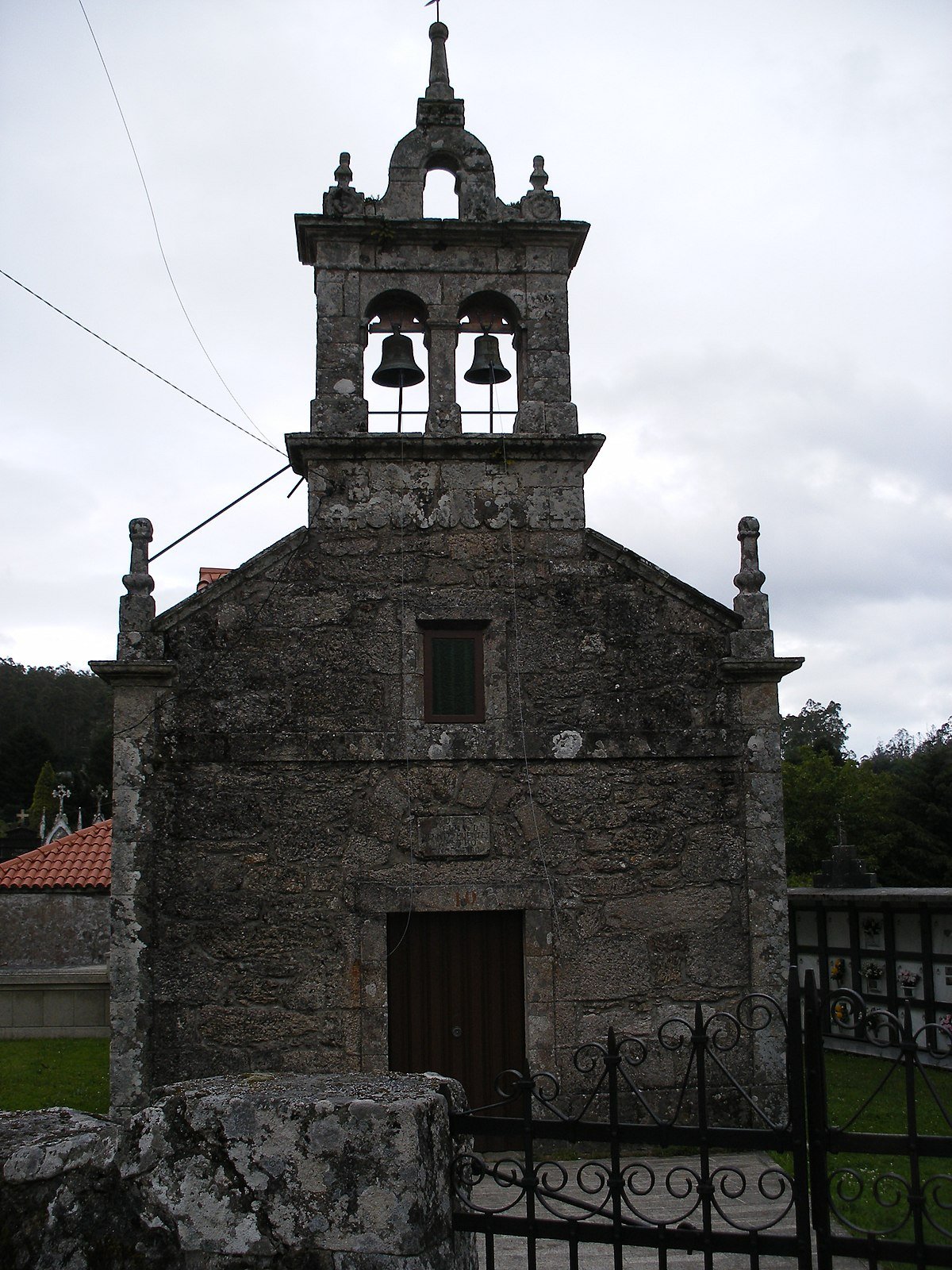
One route passes a series of stone cruceiros and small rural churches. Cruceiros are traditional Galician stone crosses, often placed at crossroads or near churches. This is not a monumental trail packed with grand buildings. It is the sort of walk where details gradually emerge: a cross covered in moss, an old wall edging a field, a narrow path threading its way between meadows.
Other paths stay close to the water. Viewpoints have been installed along certain stretches, together with areas set aside for birdwatching. With patience it is possible to spot a good number of birds, particularly waterfowl that use the reservoir as a resting area. Binoculars help, but they are not essential. The simple act of walking beside the water justifies the outing.
For those who prefer a different rhythm, horse‑riding routes are sometimes organised along the reserve’s tracks. The pace is slow, moving through pasture and low woodland. It offers a quiet way to cover ground and to experience the landscape from a slightly higher vantage point.
Parish festivals and a life split between town and country
The calendar in Abegondo follows the pattern common to many Galician municipalities. Summer brings parish fiestas that shape the season. Some parishes hold romerías, traditional celebrations that combine an open‑air mass, a procession and a long communal meal. Tables seem to appear in the countryside almost out of nowhere. Bagpipes play. Churrasco grills over charcoal. Entire families spend the afternoon together.
During the summer months there is also usually a youth‑focused festival near the reservoir, with concerts and activities on the water. The atmosphere feels closer to a large verbena, an open‑air village dance, than to a major music festival. It remains local in character, tied to the place rather than designed as a large‑scale event.
Like many inland municipalities in the province, Abegondo has seen part of its population move towards the city over the years. A Coruña lies very close, and many people live between two worlds. They work in the city and return here in the evening. That daily movement explains why some tracks feel busy during the week while others seem completely empty.
Reaching Abegondo is easiest by car, particularly if the aim is to explore the smaller roads that lead down to the reservoir. Public transport exists but remains limited, and much of the appeal lies in the freedom to stop where a narrow lane turns towards the water.
Those who come should give the Embalse de Abegondo‑Cecebre time. Late afternoon suits it well. Mist often drifts in, something quite common in this area of Galicia. As it thickens, the rounded hills begin to fade and the water turns still, almost mirror‑like. The scene carries a slight edge of unease, yet it lingers in the memory long after the visit ends.