Full Article
about Curtis
Hide article Read full article
At seven in the morning, Teixeiro smells of bread. That is not a metaphor. The bakery on the corner opens before the rooster crows, and inside there are already lorry drivers with their first cortado, a short espresso with a dash of milk. They debate whether it is raining or whether it is “about to rain”, in that particular Galician way of assuming it probably will.
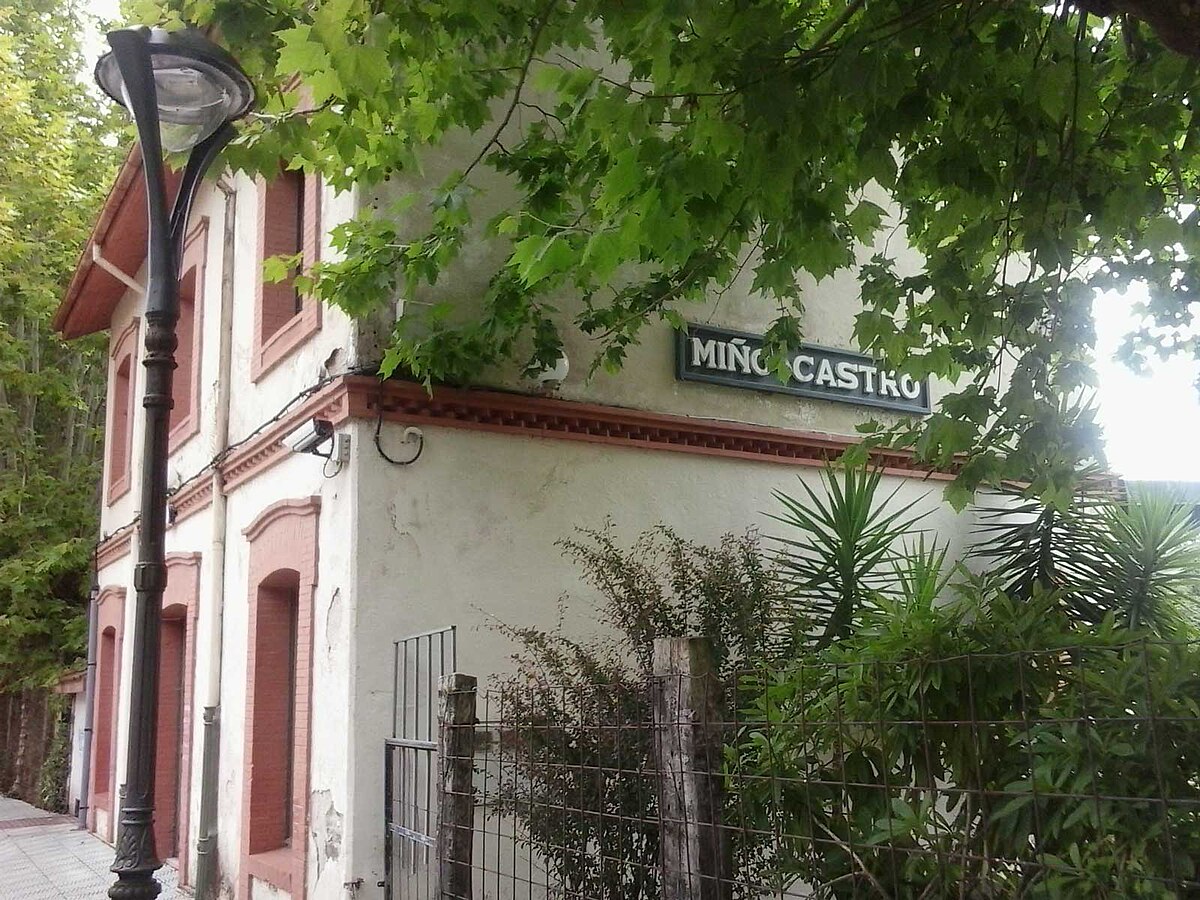
Curtis does not have city walls or a postcard-perfect old quarter. It has a 19th-century railway station. It has four bars where you are recognised by your third visit. There is also a sign reminding you that you are inside a biosphere reserve. That sets the tone. The place does not try to impress. It simply grows on you.
When cheese makes the headlines
In May, the village often smells of sheep’s milk. That is when the Feria del Queso takes place. Here, cheese is discussed as if it were a serious public matter.
This is no quick market. There is a competition, tastings and long conversations about pasteo, the grazing that shapes flavour and texture. On that day, neighbours bring out their Sunday clothes. Cheeses are judged with the concentration of an exam hall.
If you visit, avoid the obvious question: which one is the best? Every family has a favourite and will defend it like a coat of arms.
The usual approach is to ask for a small piece, something along the lines of “give me a little bit, there’s still dinner later”. Even so, you will end up trying more than one.
The fair is less about buying and more about talking. Opinions are exchanged with care, and there is an unspoken understanding that taste is tied to memory, land and habit. For anyone unfamiliar with rural Galician fairs, expect a social occasion first and a commercial one second.
The mountain that never makes the postcards
The Ruta de la Cova da Serpe begins gently. At first the path runs between eucalyptus trees. Then the terrain opens up and the sierra comes into view.
Mobile signal fades quickly. Within minutes, there are no more notifications. The route is around eight kilometres long, though it stretches if you stop for every unusual mushroom that appears along the way.
The cave itself is more a crack in the rock with water than a cavern you can explore. The interest lies in the story. Local tradition says that a huge serpent guarded a treasure here. A farmer managed to take it. In return, he promised not to tell anyone.
He told.
The treasure vanished, of course. It sounds like the kind of tale invented to explain why nobody has ever found anything.
At the top there are wide views across several parroquias, the rural parishes that structure much of Galicia. The landscape even shifts towards another province. A nearby hill looks uncannily like a reclining elephant.
There are no stalls along the path and no neighbours selling bottles by the trail. Anyone heading up should come prepared and self-sufficient. The appeal is precisely that sense of open space, with little intrusion beyond the wind and whatever story you choose to believe about the serpent.
The train that stopped for a king
In the late 19th century, Alfonso XII stepped off the train in Curtis. He had come to inaugurate the station. Local history adds that he took the opportunity to light a cigarette while the locomotive took on water.
Trains still stop here today, a handful of times each day, with the unhurried delay many associate with the Galician railway. The station building is low and built of red brick. Inside, there is the scent of old wood and something else besides: the memory of departures.
Many people left from this platform bound for the Americas, carrying a trunk and provisions for the journey. The station holds that quiet weight. It is not grand, yet it feels significant in a way that is hard to measure.
On a Sunday afternoon the place is almost empty. A neighbour might pass by, rubbish bag in hand, casting a silent, curious look at anyone lingering without a clear reason. The rhythm is slow, the movement sparse. Curtis does not stage its history. It simply continues around it.
Nabizas and other reasons to return
In winter, while other parts of Spain talk about calçots, here the conversation turns to nabizas. They even have their own festival.
A nabiza resembles a thick leek. The flavour sits somewhere between chard and cabbage. In this area it is cooked in various ways. Sometimes with chorizo, sometimes with cod, sometimes sautéed with garlic.
Do not expect souvenir shops or novelty T-shirts. What you are more likely to find is someone offering “un chin”, a small helping. You accept out of politeness. Then another dish appears.
If there is still room, the tarta de Curtis arrives. It usually contains walnuts, local honey and a touch of cinnamon. The taste calls to mind older kitchens, recipes that predate written instructions.
Food here is less about display and more about continuity. The nabiza festival follows that pattern. It celebrates an ingredient that elsewhere might pass unnoticed, treated instead as something worthy of its own day and table.
Curtis does not work as a place to tick off a list. It works better without haste.
Park near the station. Walk for a while. Watch how the landscape shifts between parroquias, how small changes in elevation alter the view and the feel of the air.
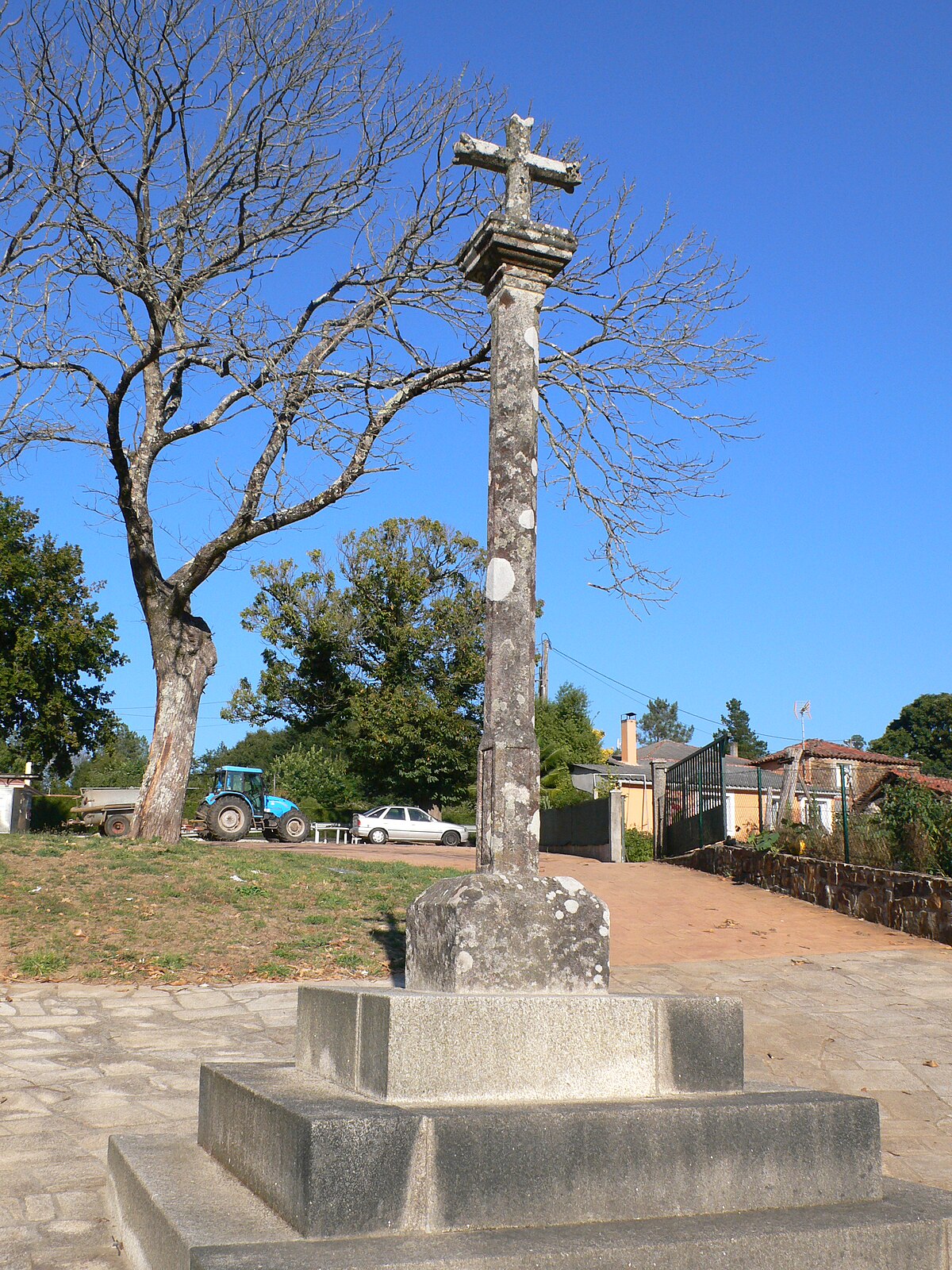
If it starts to rain, look for a house with a light on. There is a good chance someone will tell a local story. Perhaps about how long it took to raise the cruceiro de Paradela, a traditional Galician stone cross, or about the unusual deal the sculptor struck to finish it.
When the sound of the train returns, the thought of staying a little longer may follow. To see whether the serpent of the cave decides to hide another treasure. Or simply to wake the next day and find that Curtis smells of bread all over again.