Full Article
about Irixoa
Hide article Read full article
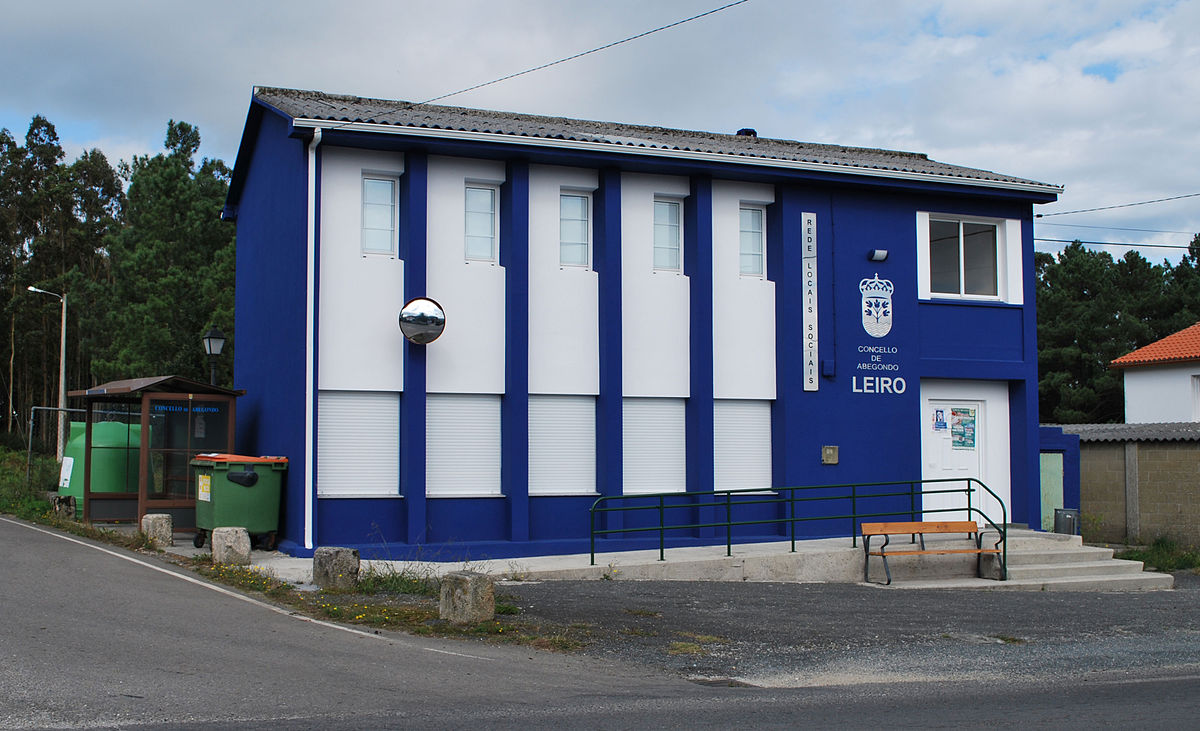
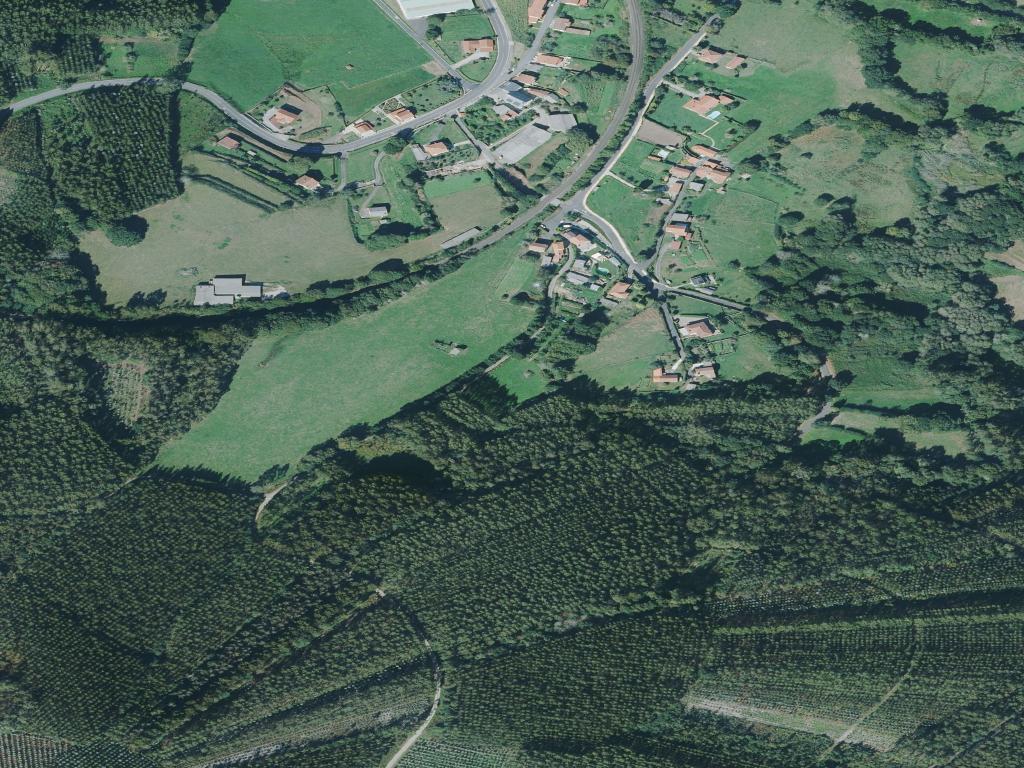
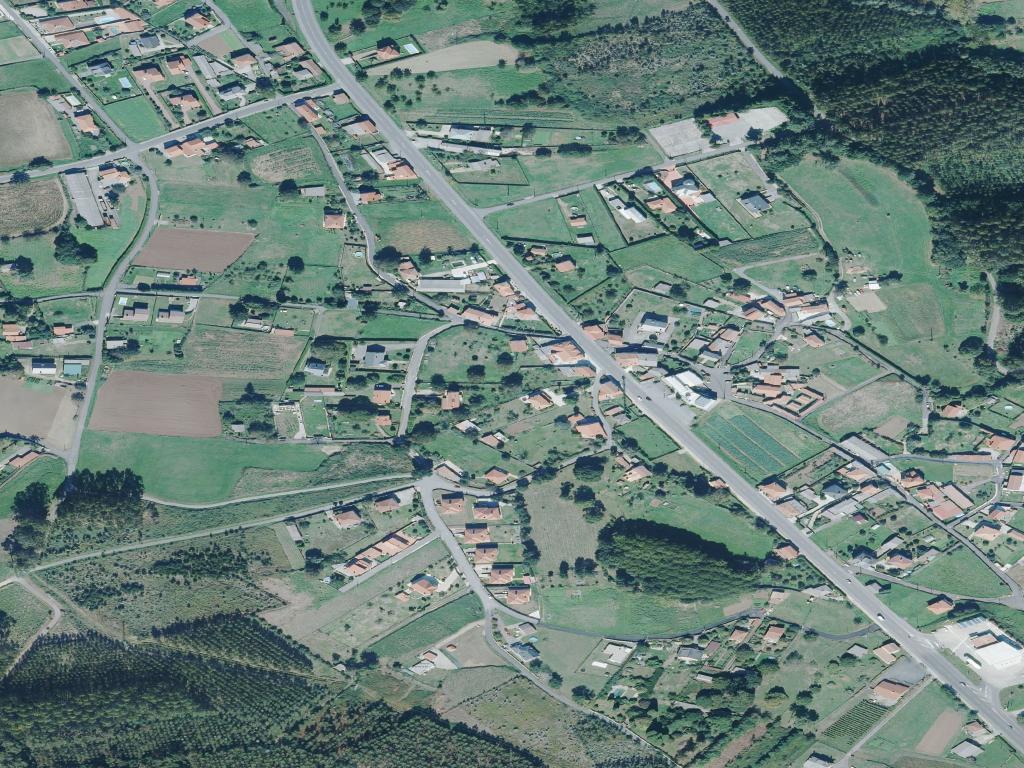
The bells of Churío strike eight while the sun is still hidden beyond the Mandeo valley. Mist hangs low, caught in the tops of the oaks, and the clearest sound is that of cows shifting inside stone byres. Tourism in Irixoa begins at this blue-grey hour, when the tracks are still damp and the houses remain closed. Days start early here, spread across parishes and hamlets that occupy a broad stretch of meadowland and oak woods, with granite houses scattered through the comarca of Betanzos in Galicia.
There is no obvious dividing line between daily life and a visit. The rhythm belongs to the place itself, and anyone arriving simply steps into it.
Between Meadows and Stone Walls
A walk along the local lanes makes it clear this is not a stage set. The stone walls are thick with real moss, the kind that slips slightly under your fingers if you lean on it. Wooden fences darken where the rain lingers, and the air shifts with the hours: damp earth in the morning, freshly cut grass when someone has passed with a tractor, wood smoke as evening begins to fall.
Many houses still function as they always have. Log stores are full, hens roam freely in the yard, and tools hang from iron hooks marked by old rust. When two cars meet on a narrow track, it is common to see a quick lift of two fingers from the steering wheel. The gesture is not designed for outsiders; it is simply how people acknowledge one another in a place where almost everyone ends up sharing a mutual acquaintance.
For walking, closed shoes are advisable even in summer. After several days of rain, some stretches turn muddy with ease. The terrain is rural and working, not manicured, and that is part of its character.
A Gentle Ascent to Monte de San Antón
Monte de San Antón is reached by a dirt track that gains height gradually through oak, gorse and bramble. The climb is neither long nor especially demanding. It feels more like a steady walk in which the landscape opens out little by little.
At the top there is a clearing with stone tables and the remains of old structures, including an old oven. When the air is damp, a faint scent of long-settled smoke still clings to the stones. From here, the Mandeo valley appears divided into irregular plots, with pale tracks winding between deep green meadows.
On clear days, looking south, the outline of Pico Sacro can usually be made out in the distance. Yet the strongest impression at the summit is not visual but auditory. Wind moves through the oak leaves, a branch creaks, and occasionally a bird of prey cuts quickly across the sky.
It is a quiet height, without barriers or interpretation panels. The appeal lies in the space itself and in the sense of the valley spreading below.
Water in the Mandeo Valley
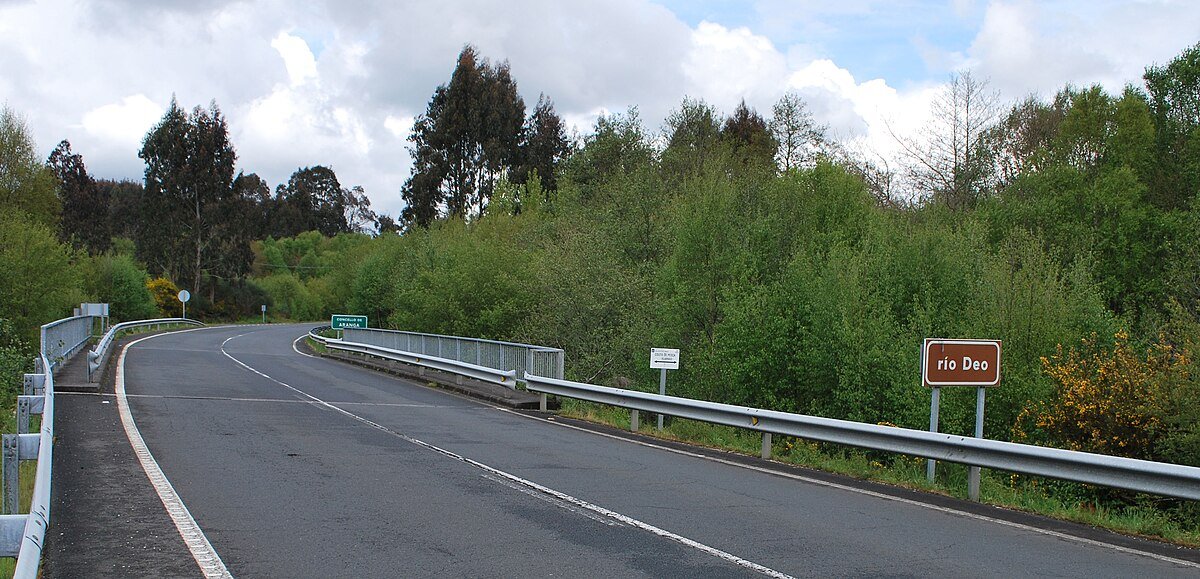
Several small streams run down through this area and eventually feed the Mandeo. In places the water forms modest cascades over granite blocks covered in lichen. They are not large waterfalls, nor are they signposted. Often they are reached via paths used by local residents or by following old mill routes.
Near the river, remains of traditional mills can still be found: walls half hidden by vegetation and stone channels that once directed the current. In summer, when the flow drops, some of the deeper pools are used for a quick dip, something fairly common in the surrounding hamlets.
In the area known as Xelas, the Mandeo widens and traces slow curves between the meadows. Early in the day, when mist lingers above the surface, the river seems to breathe at its own pace. Grey herons can sometimes be seen standing motionless at the water’s edge, waiting for movement below.
Water shapes the landscape quietly here. It does not dominate, but it is always present, slipping between fields and under small bridges, gathering strength as it goes.
Romerías and the Return of Summer
Several parishes in Irixoa maintain romerías, traditional religious festivals dedicated to saints such as San Cosme, San Antón and San Lorenzo. They are usually held at the end of summer, when many residents who live elsewhere return to the village for a few days.
During these celebrations, religious images are carried in procession along the paths that connect nearby hamlets. Around them, outdoor meals are organised and music fills the open spaces. A romería is both a devotional act and a social gathering, rooted in local custom rather than designed as a spectacle.
This is also when the local roads feel busier. Cars line the verges, houses that remain closed for much of the year suddenly show lights in their windows at night, and long conversations continue in the church atriums after mass.
The calendar is not arranged with visitors in mind. These are festivals of the place itself, and that is precisely why they retain the atmosphere of reunion among families and neighbours. Anyone present during those days witnesses something lived rather than staged.
Getting There and Choosing the Season
The most direct way to reach Irixoa is usually via Betanzos, continuing afterwards along regional roads that head inland. The final kilometres are narrow and often without a hard shoulder, so driving calmly is advisable. It is not unusual to encounter tractors or livestock crossing.
Late summer and early autumn are often good times to explore the area. There is still enough daylight for walking, and the hills begin to carry the scent of damp leaves and wood smoke. In August, the heat can build in the middle of the day, and insects near the river make their presence felt.
In winter the landscape changes markedly. There is more water, more mud and a darker shade of green across the fields and woods. Waterproof footwear becomes essential. The experience then is less about clear views and more about texture and sound: rain on leaves, swollen streams, boots pressing into soft ground.
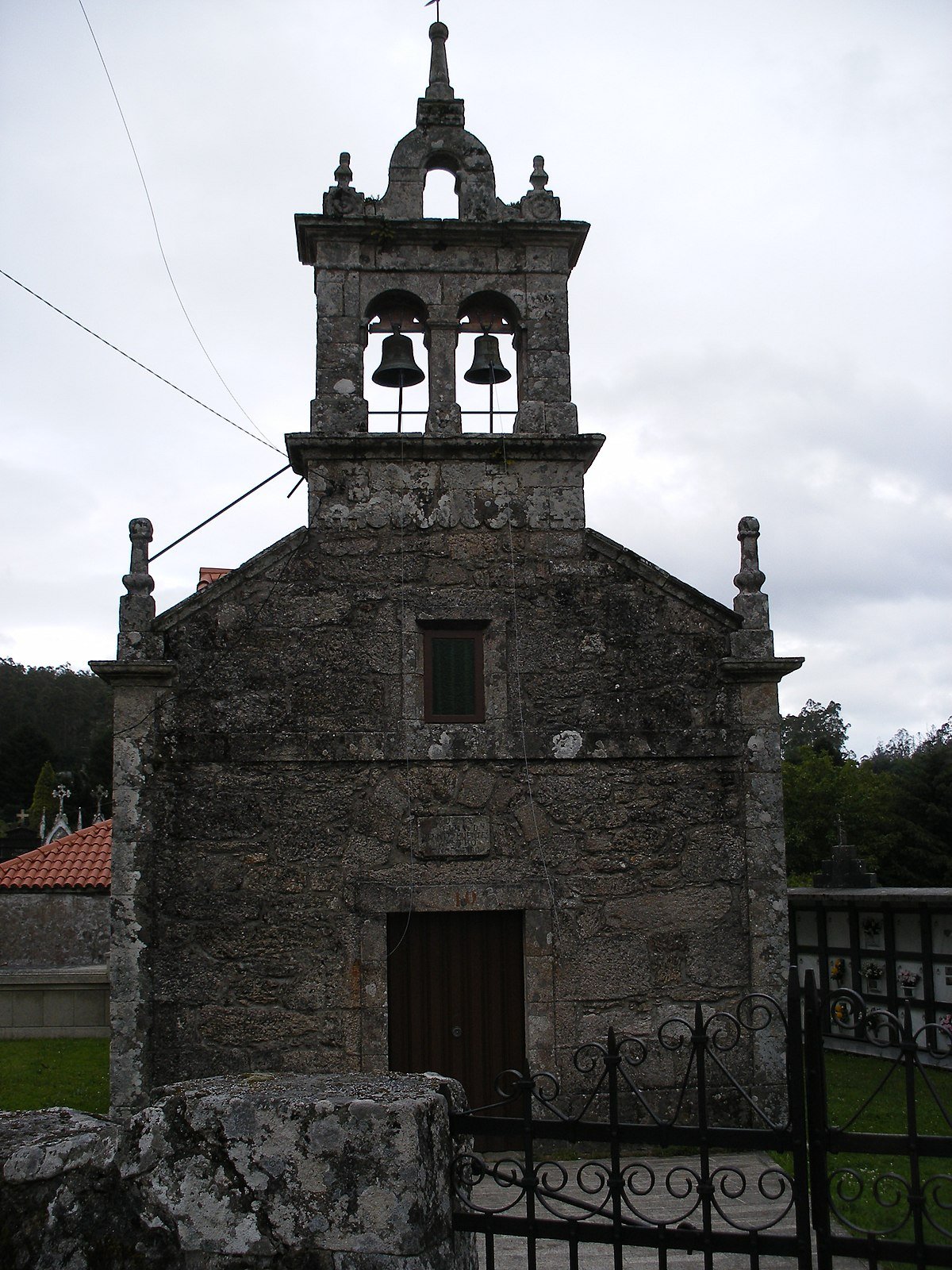
Tourism in Irixoa does not revolve around landmarks or attractions in the conventional sense. It unfolds in parish churches, in clearings on Monte de San Antón, along the bends of the Mandeo at Xelas, and on narrow tracks bordered by moss-covered stone. It asks for time and attention rather than a checklist.
By eight in the morning, the bells of Churío have already marked the start of another day. The mist begins to lift from the valley, the oaks sharpen into view, and the routines continue. Anyone passing through becomes, for a while, part of that same quiet rhythm.