Full Article
about Miño
Hide article Read full article
The smell of sweet onion reaches you before the alameda comes into view. It is midday in mid-August, when Miño celebrates its festival dedicated to the onion, and black iron pans smoke gently beneath the poplars. A woman in a flowered apron turns a tart with the practised movement of someone who has done this for years. Sugar caramelises and mixes with the juice of onions grown between the rivers Lambre and Baxoi. In Miño, tourism can mean moments like this: a particular smell, a wide pan over a low flame, local people tasting with the tip of a fork.
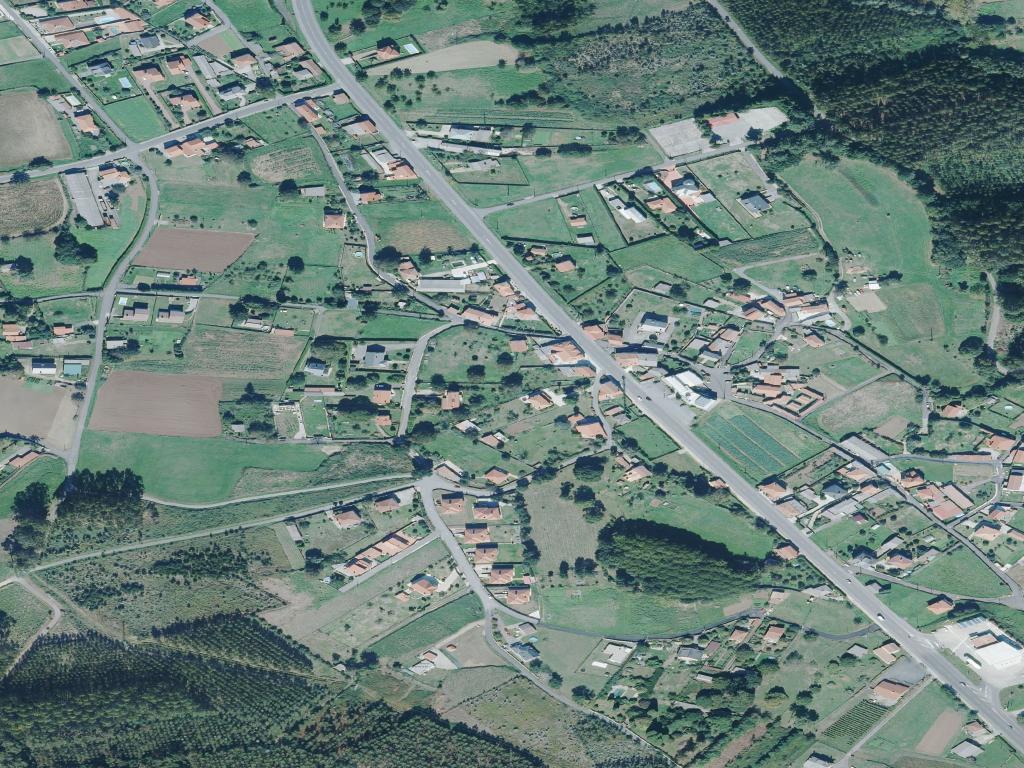
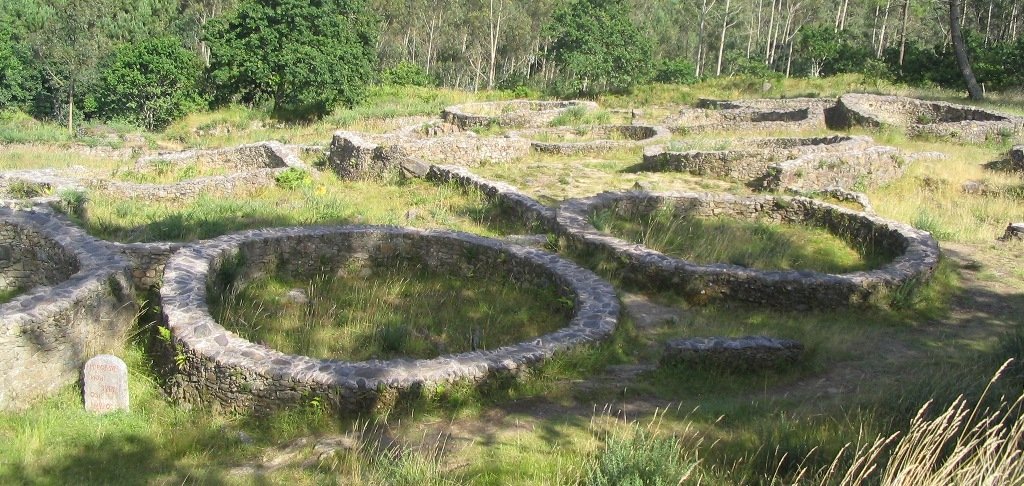
Miño faces the ría de Betanzos, an inlet of the Atlantic, and has done so for centuries, although the municipality only adopted its current name at the beginning of the 20th century. Before that it was known as Castro, a place name repeated across Galicia and usually linked to ancient settlements. Today it is one of the municipalities gaining the most population in the area, something visible in the newer housing developments that have spread around the beach.
Where the Sea Becomes a River Mouth
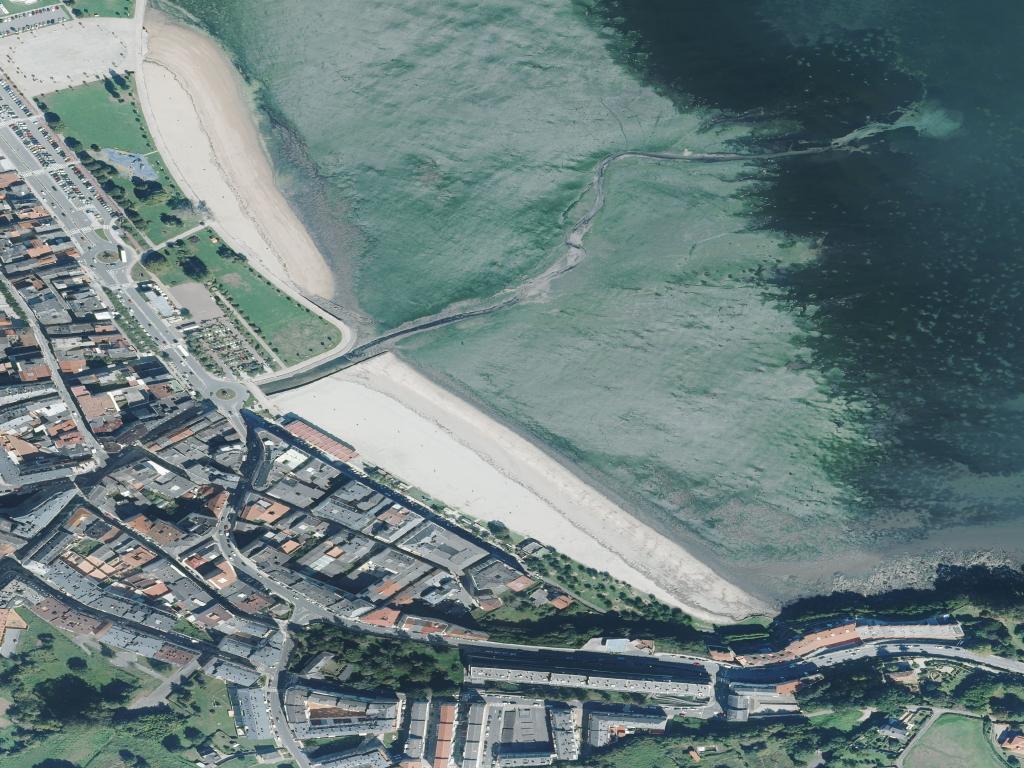
Praia Grande curves around the edge of the ría. At low tide, pools remain where fresh water from the rivers mixes with salt water, and children search for crabs in the dark sand. At high tide, the sea rises almost to the promenade and turns the greenish shade typical of the ría’s deeper waters.
By mid-afternoon the light changes quickly. The casas de indianos, houses built by those who emigrated to the Americas and returned with enough money to make an impression, glow a vivid yellow. From the area of Perbes, following the seafront promenade, the ría opens fully towards Betanzos. On some days the wind carries the smell of seaweed and, further out where mussel rafts can sometimes be seen, the scent of freshly harvested mussels.
Miño’s relationship with the water is constant. The town sits at the meeting point of tides and rivers, and its coastline shifts with the seasons. The Atlantic wind rarely drops completely and leaves a trace of salt in the air.
Three Rivers, One Stretch of Sand
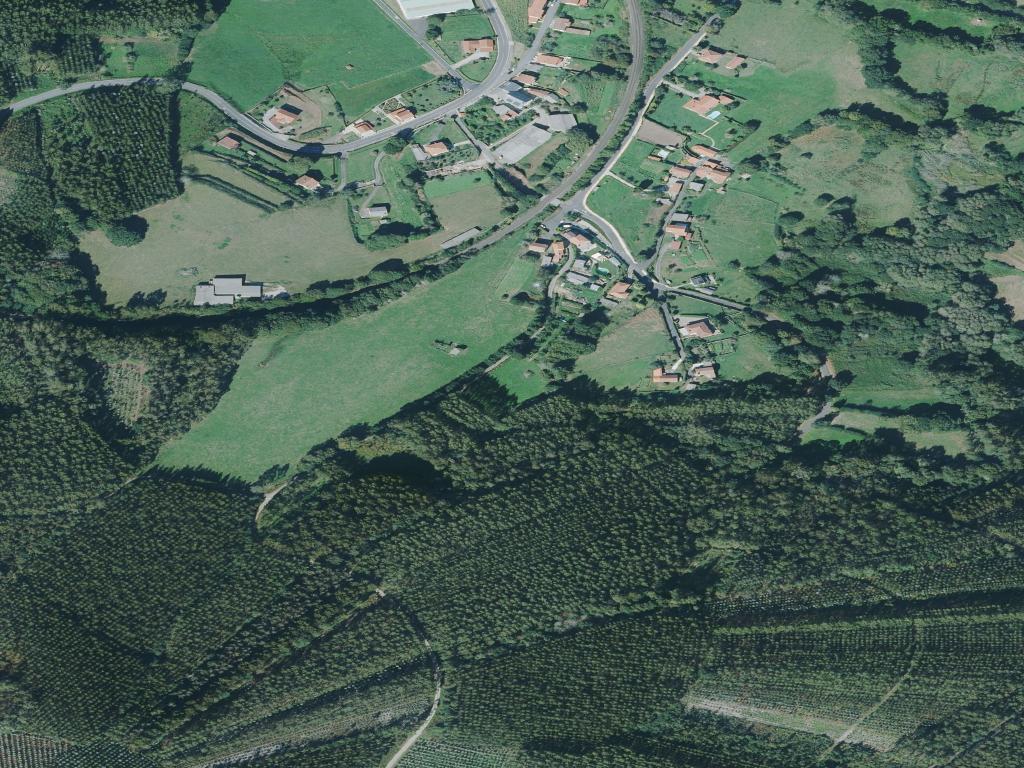
The Lambre flows down from the hills of Oza and enters the ría in a broad, calm course. The Baxoi crosses orchards and meadows before reaching the sea. The Xarío appears and disappears depending on how rainy the winter has been. Together, the three have shaped a strip of sand and rounded pebbles that changes with each storm.
A footpath linking Miño with Ponte do Porco runs close to the water in several sections. Early in the morning, shellfish gatherers can still be seen walking with their wooden tools over their shoulders. At the end of the promenade lies Praia da Alameda, edged by a small stone wall that separates the sand from fields where maize is still planted.
The medieval bridge of Baxoi forms part of the Camino Inglés, the English Way to Santiago de Compostela. Pilgrims from northern Europe once arrived by sea and continued on foot from ports along this coast. The bridge visible today is generally dated to the medieval period, though it has been repaired over the centuries. Its granite slabs are worn smooth by the steady passage of walkers. Below, the river alters with the seasons: in winter it runs dark and fast; in spring it sounds clearer, skipping over the stones.
The Bells of Vilanova
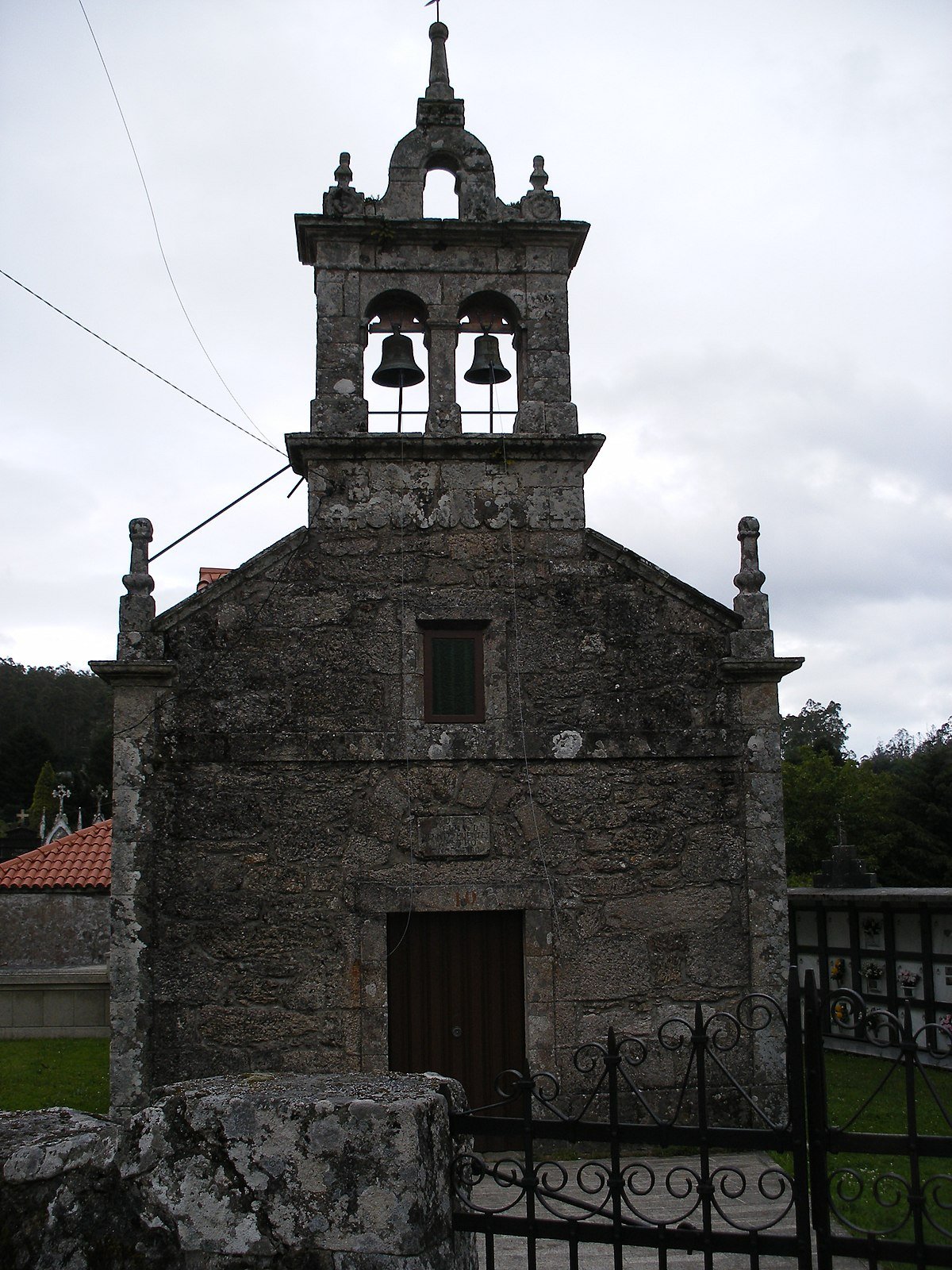
The church of San Xoán de Vilanova stands on a small rise, surrounded by low houses and vegetable plots. Its origins are usually placed in the 11th century, making it one of the oldest Romanesque churches in the area still used for worship. Inside there is a smell of damp and cold stone, the kind that clings to clothes after stepping back outside.
At midday, when the sky is clear, light filters through the high windows and draws pale circles on the worn flagstones.
Summer brings several romerías, traditional religious festivals, across the parishes of the municipality. During the romería of San Paio, which traditionally falls at the end of August, the image of the saint is carried in procession towards the sea. It is not an especially noisy celebration. The wind and the soft sound of footsteps on sand are more noticeable than anything else.
Choosing the Moment
On weekdays, particularly in June or September, Miño moves at a different pace. At weekends in July and August many cars arrive from A Coruña and the beach promenade fills quickly. On Praia Grande it becomes difficult to find a wide patch of sand, and the smell of sun cream overtakes the scent of seaweed left by the tide.
On a Tuesday in June the scene shifts. The water remains cold, as it does across much of the Golfo Ártabro, but the beach feels open and the sound of the sea carries further than conversation.
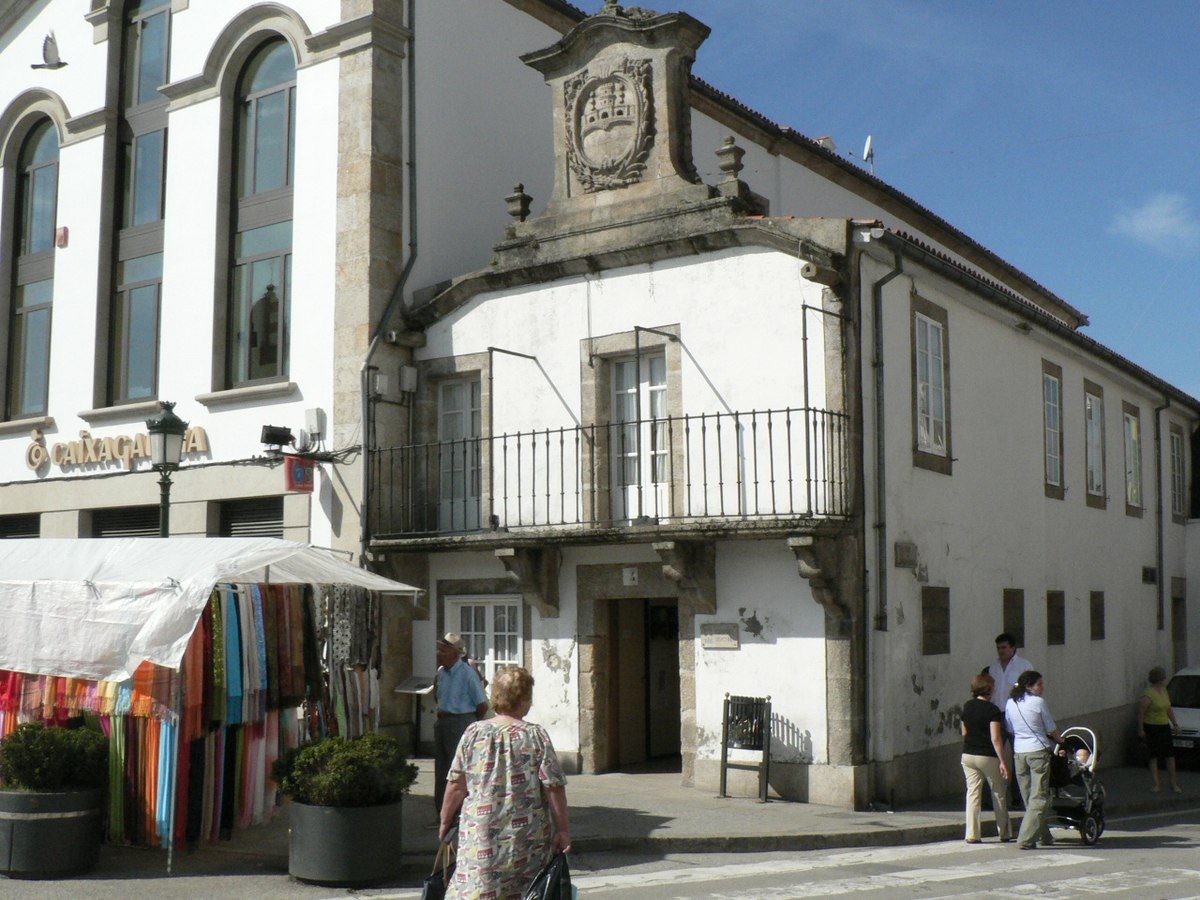
The Sunday morning feirón, held in the alameda, offers a compact summary of the surrounding countryside. Recently cut grelos, the leafy greens typical of Galicia, appear alongside onions still clinging to the soil and shellfish from the ría brought in at first light. Older women carry their money tied in a knotted handkerchief at the wrist and chat in Galician while weighing vegetables.
Towards midday the stalls begin to pack away. Tarpaulins are folded, crates loaded back into cars, and the alameda returns to its usual calm.
Miño is perhaps best understood sitting on the wall at Praia Grande as the tide goes out. The water retreats slowly, leaving dark patterns on the damp sand. The rivers continue to flow into the ría as they always have. The Atlantic wind, never entirely absent here, adds the final touch, a salty tang that lingers on the lips long after leaving the shore.