Full Article
about Oza-Cesuras
Hide article Read full article
A valley shaped by river and parish
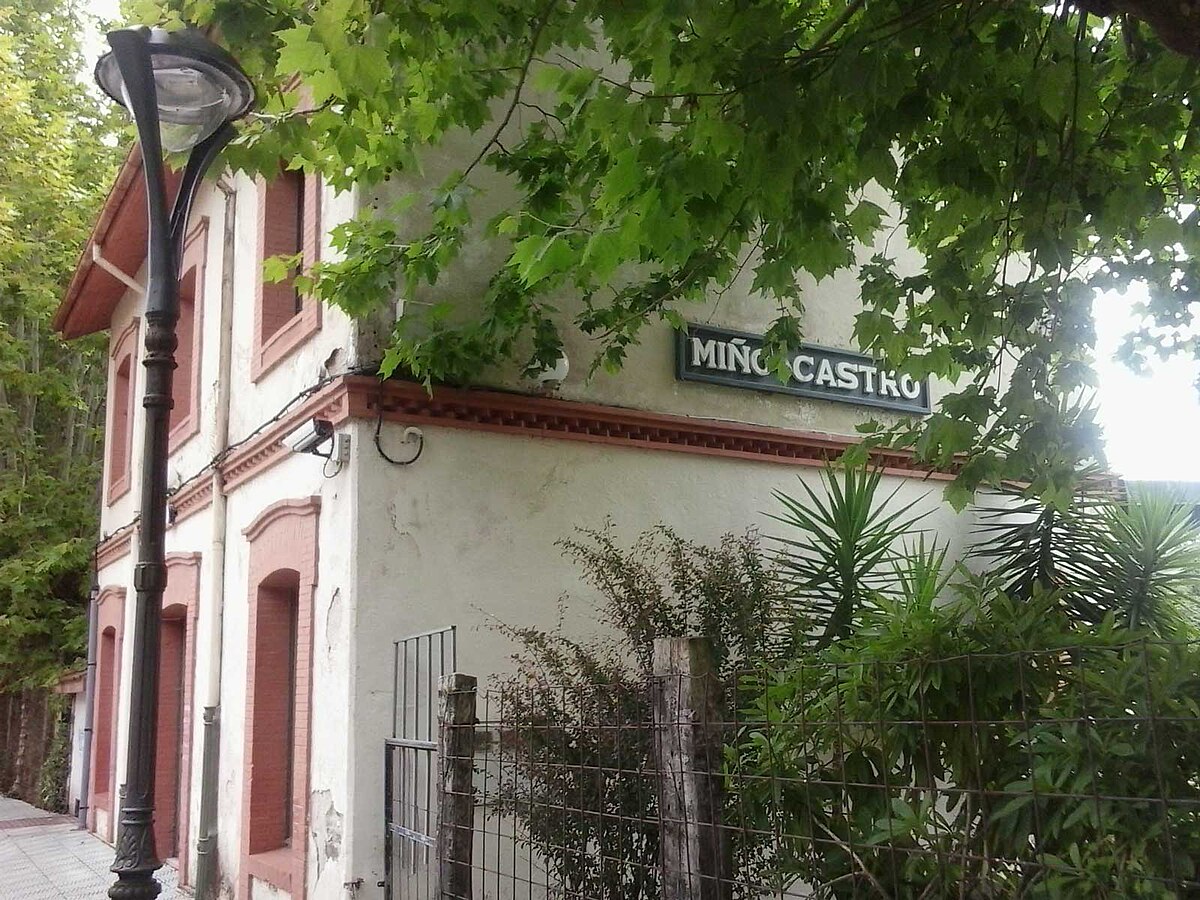
To understand Oza-Cesuras, look past the map. The railway has stopped in this valley for over a century, long before the 2013 merger formally joined Oza de los Ríos and Cesuras. The administrative change followed a reality already lived here. What defines the area is more tangible: the course of the river, the old road that shadows it, and the network of parishes organised around their churches. Just over five thousand people live across dozens of small settlements, a structure of rural life in inland Galicia where the land’s logic still matters more than any official boundary.
The Mandeo valley
The Mandeo carves a green corridor between the inland ranges of A Coruña and Lugo. Small streams run down its sides, creating modest waterfalls that appear on few maps. One known locally is A Rexidoira, a short walk from the road near Oza. The waterfall isn’t dramatic, but the approach feels used: a dirt path, constant damp, and stones placed to cross the stream when it swells.
The agricultural landscape holds. The rural exodus here was gradual; from the 1970s many left for Switzerland or the coast, but family farms kept working. You still see livestock, kitchen gardens, and plots of maize or potatoes. Production goes to nearby areas and the markets in Betanzos. Tourism exists, but it doesn’t set the rhythm.
San Salvador de Cines
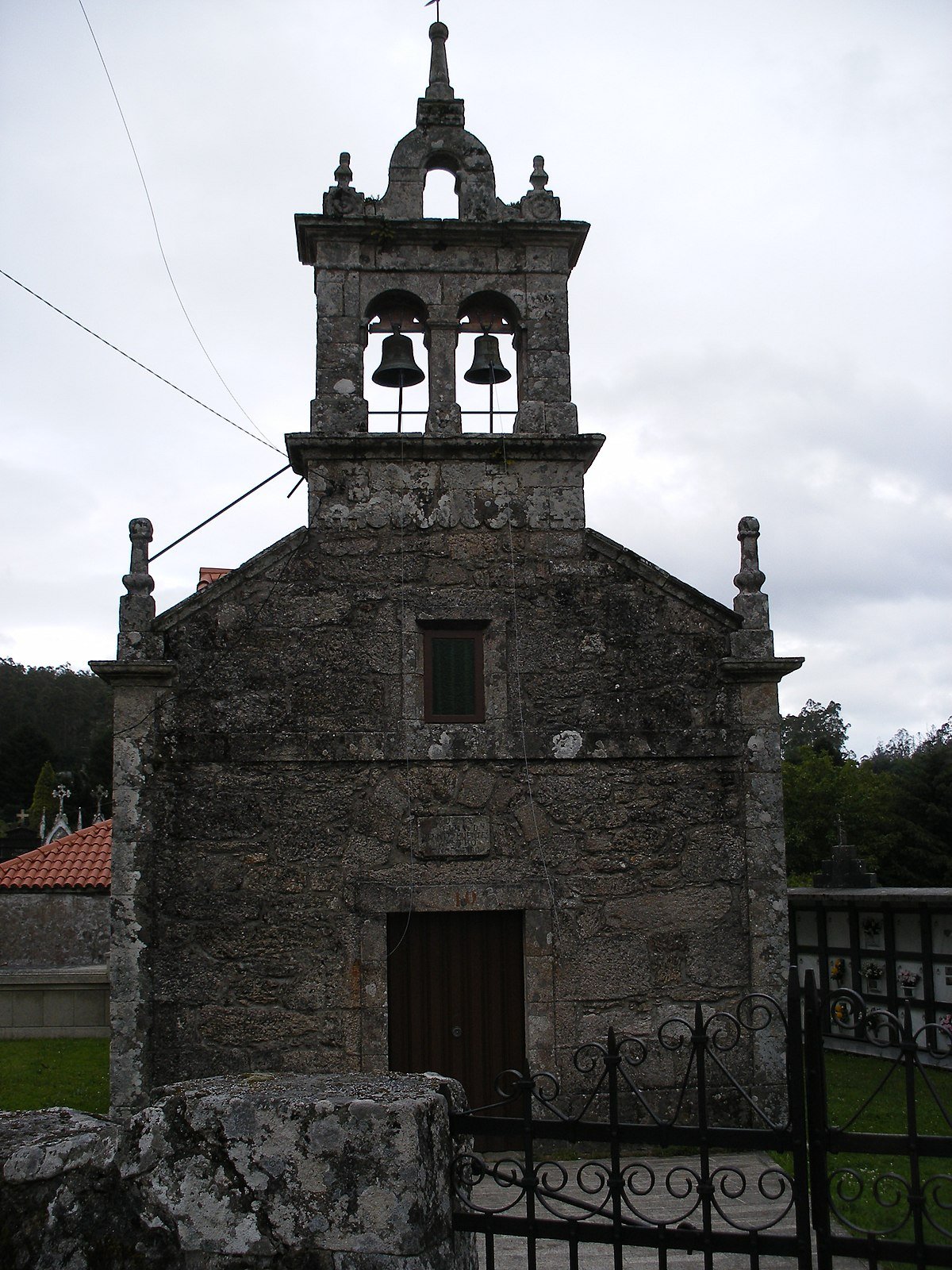
The monastery of San Salvador de Cines appears in early medieval charters, tied to donations from local nobility. What remains today is mostly the church. The current building shows later alterations, though it keeps the logic of rural monastic architecture: a single nave, stone darkened by damp, an austere interior.
Its position is what gives it context. The church sits on higher ground overlooking the Mendo valley, near an old route that connected inland areas with the Betanzos estuary. In such places, monasteries were not just religious centres; they managed land, controlled routes, and collected income.
A local pilgrimage linked to the church still happens each December. Residents clean and prepare the interior in the days before.
The carved stone of Seselle
On the hill of Seselle, a petroglyph is carved into the rock—concentric circles. It is signposted, though the path through forestry plantations can be unclear. You find the stone and the hillside; little else.
Archaeologists are cautious with these carvings. They are common across Galicia, often linked to symbolic or ritual practices, but firm conclusions are scarce. Locally, however, the stone has its own story. Some call it “the serpent stone” and connect it to older tales from the area.
Paths through estates and oak groves
An old route runs between Oza and Mondoi, crossing former estates and patches of woodland. Several rural pazos, the historic manor houses of Galicia, stand along this stretch. The pazo of Santa Cruz maintains the classic layout: walls enclosing a garden, corner towers, large trees at the entrance. Others have taken on more practical uses over time.
You can walk or cycle it. The terrain is gentle, following paths that for centuries served as royal roads toward Santiago before modern tarmac reshaped movement.
Shorter is the walk through the carballeira of Cesuras, an oak grove used for decades as a meeting place. In spring it often hosts an outdoor gathering: improvised tables, empanadas, grills, and card games under the trees.
Cooking with the seasons
The kitchen here follows a seasonal calendar. During carnival, you find filloas de sangre, thin pancakes made with maize flour and pig’s blood, cooked on iron griddles. When grelos—the leafy tops of turnips—are in season, they are served with lacón until they’re gone.
In autumn, the surrounding hills draw mushroom foragers. Local markets often have níscalos and various amanitas in wetter years. As cold sets in, the magosto brings people together around roasted chestnuts and aguardiente.
The bica made in some homes in Oza has a particular trait: it uses lard from local pigs, which gives it a denser crumb than versions made with butter or oil. It’s a detail that points to what was available.