Full Article
about Paderne
Ocultar artículo Leer artículo completo
The tractor ahead indicates left, then right, then left again within fifty metres. This isn't indecision—it's simply how you navigate Paderne's network of lanes that braid between stone houses, cow pastures and patches of Atlantic woodland. One moment you're on asphalt wide enough for a single car; the next you're squeezing past an hórreo on stilts while a farmer leans on a gate, watching with the calm curiosity reserved for anyone who isn't clearly in a rush.
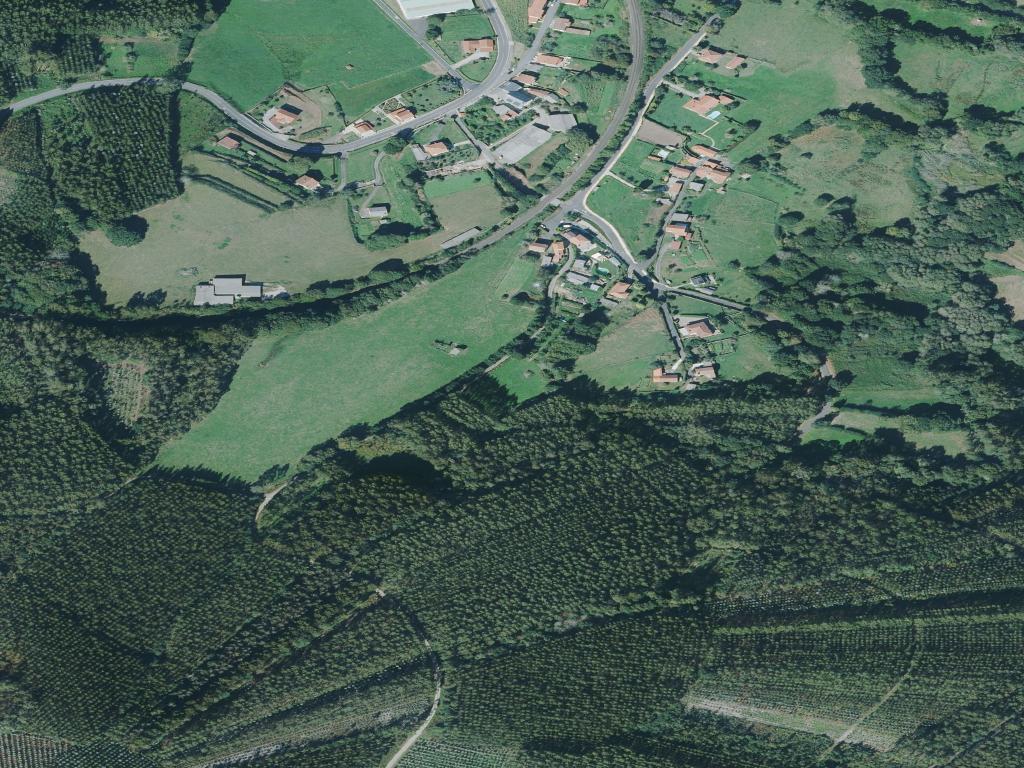
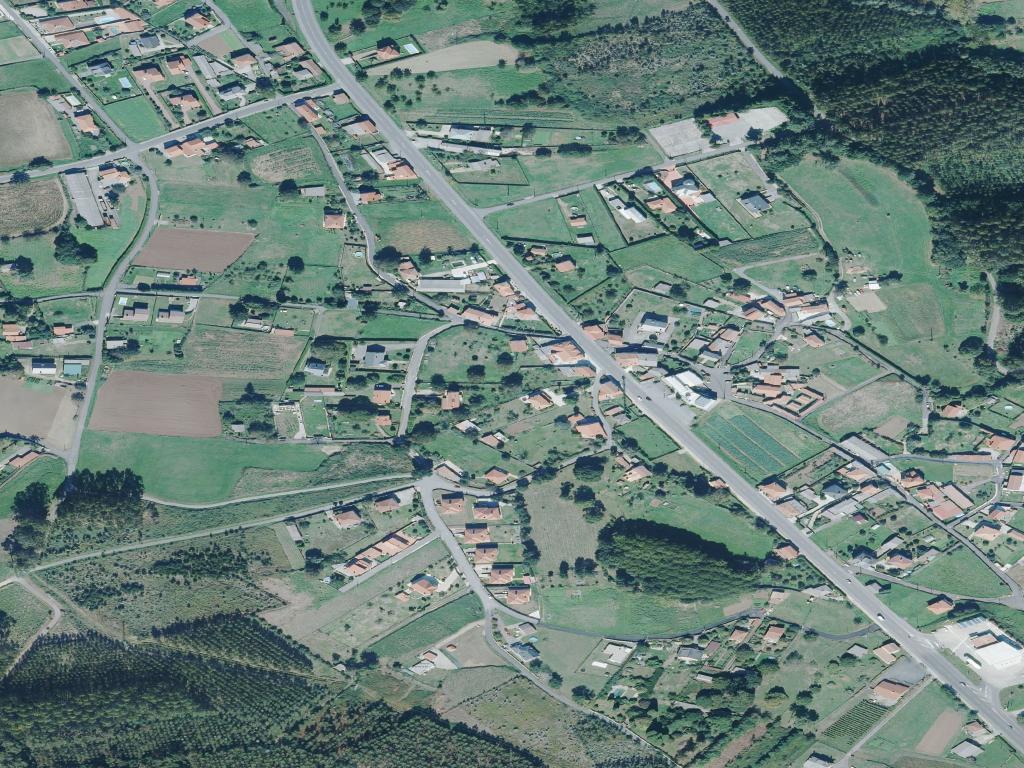
Welcome to inland Galicia, where the word "village" stretches across several kilometres of countryside rather than clustering round a postcard square. Paderne's 2,300 inhabitants live scattered across parishes whose names—Brengue, Montaos, A Igrexa—appear on finger-posts at every junction. Unlike Spain's costas, there's no sea view to anchor the horizon. Instead, folds of emerald hills rise and fall like a rumpled blanket, their summits barely topping 400 metres yet high enough to snag Atlantic weather systems that keep the grass vivid even in August.
A Landscape That Refuses to Rush
The municipality sits fifteen minutes north of Betanzos along the AC-141, a road that narrows so determinedly locals treat oncoming traffic as a social negotiation rather than a hazard. Driving here demands patience; walking rewards it. Set off from the small car park beside Santa María de Paderne church and within ten minutes you're on a pista vecinal—an unpaved farm track—passing stone crosses carved in the 1700s and granaries raised on mushroom-shaped pillars to keep rodents out. Many are still in daily use, storing last year's maize or rusting garden tools. Treat them as working farm equipment, not museum exhibits, and you'll avoid the embarrassed cough of a farmer who's caught someone posing for selfies on his grandfather's hay store.
Rain defines the rhythm. Winter arrives early; by November the lanes turn caramel with fallen oak leaves and the soil becomes the sticky brown that Galicians call barro. Standard city trainers won't survive a morning's wandering—decent tread is essential unless you fancy an unplanned slide into a ditch filled with bemused cattle. Summer, by contrast, is gentle: temperatures hover in the mid-twenties, cool enough for a fleece at dawn, warm enough to eat outside at midday provided you pick a spot out of the wind that sneaks down every valley.
What Passes for Sightseeing
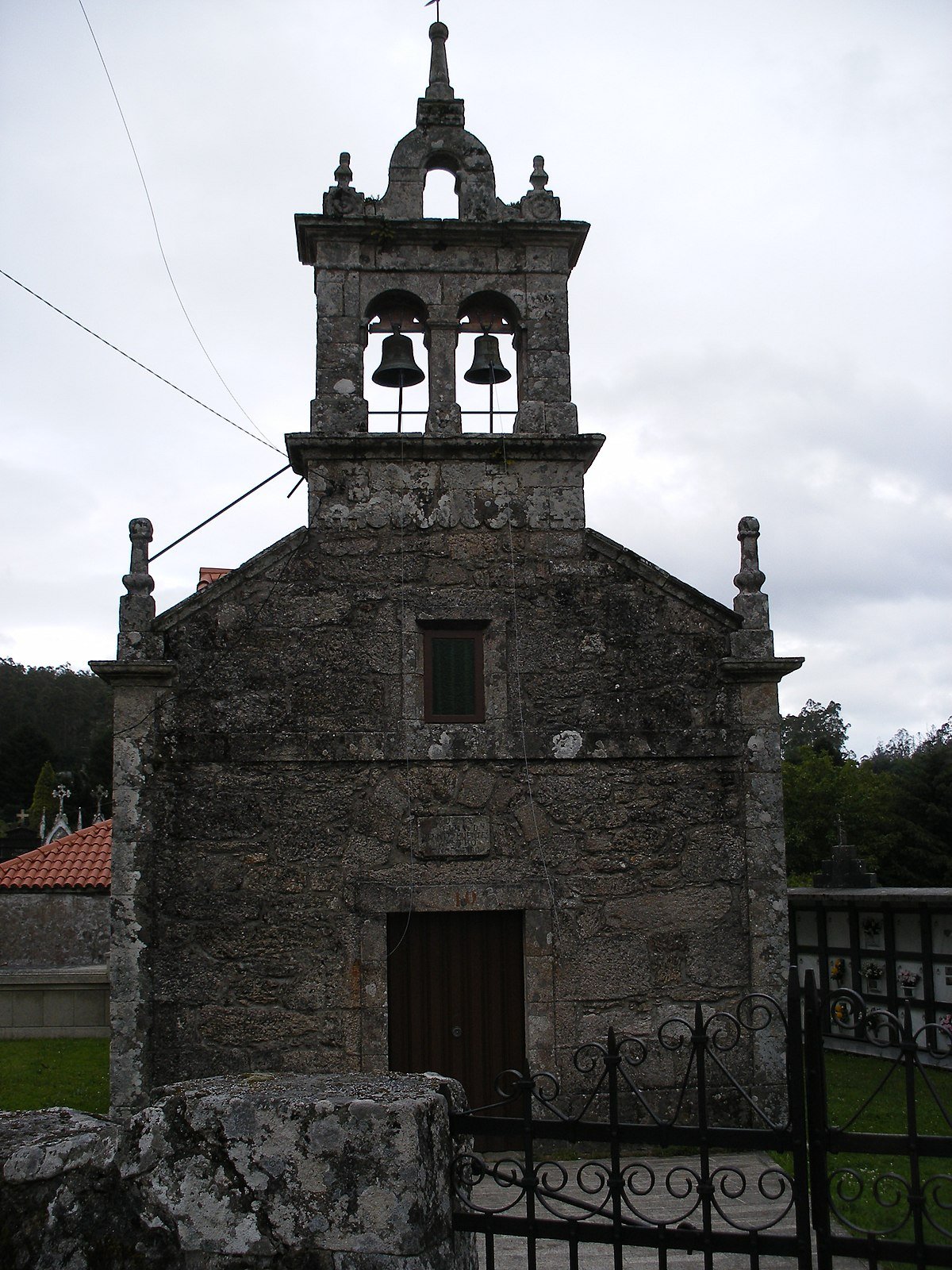
Paderne offers no ticket office, no audio guide, no gift shop selling fridge magnets. The "attractions" are functional, dispersed and sometimes locked. Start with the parish church itself: Romanesque fragments recycled into later walls, a weather-worn capital wedged above the door like an afterthought. Services are Sunday morning only; outside those hours the heavy wooden door usually stays shut. The adjacent cemetery, however, remains open, its granite tombs so closely packed you thread between them like garden paths. Plastic flowers in impossible shades of turquoise and fuchsia brighten graves that date back to the 1830s cholera epidemic—proof that memory here is tended, not curated.
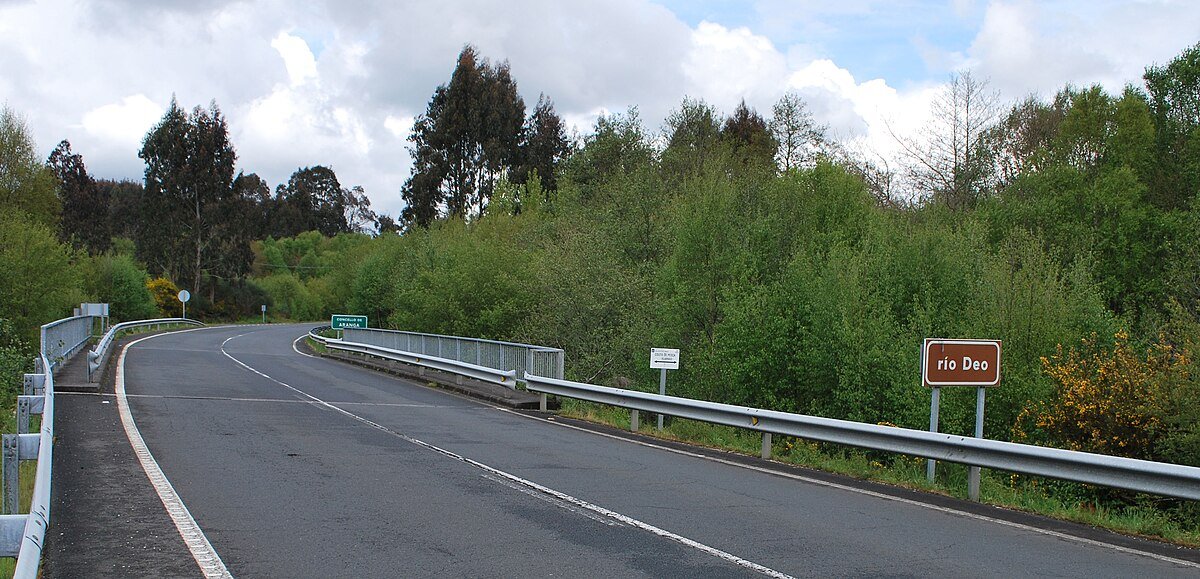
Follow the lane west for half a kilometre and you'll reach a junction where two pazos—manor houses—face off across the road. One is freshly whitewashed, its stone balustrade topped with terracotta urns; the other slumps behind a screen of self-seeded eucalyptus, windows blind with plywood. Both are private, so admire quickly, then keep moving. The real show is further on: a stone bridge over the Mero river, single-arched, probably medieval, wide enough for a hay cart but not a modern tractor. Stand in the middle and you can watch trout flicking between shadows, undisturbed by the idea that anyone might hurry across.
Working Ground, Working Plates
Agriculture shapes the timetable. Milking starts at six; by nine the roads clog with small vans delivering feed or collecting milk churns. Mid-morning is coffee time—Café Bar Central on the AC-141 does a cortado that arrives scalding, accompanied by a palm-sized croissant filled with ham and cheese. Prices feel stuck in the 1990s: €1.30 for coffee, €2 for the pastry. Lunch is two o'clock sharp; miss it and your options shrink to crisps and a stale bocadillo. The local menu del día runs to caldo gallego (a thick greens-and-bean broth), followed by pork shoulder slow-cooked with bay and pimentón, then a slice of tarta de Santiago dusted with the obligatory icing-sugar cross. Wine comes in short tumblers, white and sharp, poured from a plastic jug kept in the fridge between orders.
Vegetarians struggle. Fish appears, but usually in the form of tinned tuna tipped into a tomato salad. Vegans should pack snacks or plan the twenty-minute drive to Betanzos where at least one restaurant has discovered aubergines. On the plus side, coeliacs are quietly catered for: mention sin gluten and most kitchens will swap bread or thicken sauces with cornflour without visible panic.
Moving Through, Moving On
Public transport exists but timetables read like abstract poetry. A single bus links Paderne with Betanzos and A Coruña twice daily, timed for school runs rather than day-trippers. Miss the 14:05 and you're marooned until after six. Cycling is possible if your thighs are already acquainted with hills; gradients rarely exceed 10% but they repeat, rollercoaster-style, every kilometre. Bring a gravel tyre: tarmac suddenly gives way to packed earth littered with last winter's gravel. Hire bikes in Betanzos before you arrive—Paderne has no shop, no rental, and definitely no repair kiosk.
Drivers should fill the tank in Betanzos; the village's single filling station opens sporadically and card machines have a habit of "being out of order" when foreign cards appear. Parking is refreshingly simple: pull onto the verge wherever the hedge widens. Locals leave cars unlocked, keys on the seat—an act of trust that feels vaguely criminal to anyone used to city paranoia.
The Honest Verdict
Staying overnight means either a rural house rented by the week or the small hostal above the bakery, where rooms face the road and Saturday-night traffic thins only after the last tavern shutters at three. Wifi is patchy, mobile signal drifts in and out. If you need nightlife beyond the bar's television showing Depor highlights, A Coruña is forty minutes west; if you crave Atlantic surf, plan on fifty minutes to the nearest decent beach at Sada. Paderne doesn't apologise for either distance.
Come if you want to clock up gentle kilometres on quiet lanes, to learn the difference between an hórreo and a panera, or simply to experience Spain's daily agricultural heartbeat without a coach party in sight. Don't expect to tick off blockbuster sights or to fill an Instagram grid in a morning. The reward here is subtler: the smell of eucalyptus after rain, the lowing of cows that drift across the valley at dusk, the realisation that "nothing to see" can mean plenty to notice. Bring waterproof shoes, a sense of curiosity and time to spare. Leave the souvenir hunt for the coast—Paderne offers something harder to carry home but far easier to remember.