Full Article
about Agolada
Hide article Read full article
Morning Under the Arcades
At ten in the morning, a fine drizzle lays a veil of droplets over Os Pendellos. Beneath the stone and timber shelters, the silence carries the scent of chestnuts and tanned leather. Tourism in Agolada often begins here, under more than twenty arcades where, centuries ago, traders laid out livestock, linen or tools on heavy stone tables. Today there may be little more than an orange cat stretching between the pillars, indifferent to the cars that sweep along the national road without stopping.
Agolada does not reveal itself all at once. It asks to be walked slowly, with time to spare and boots that can cope with mud. The town stands at a crossroads between Lugo, Pontevedra and A Coruña. When the wind rises it seems to carry words away down the road. Low houses cluster close to the tarmac as if seeking shelter, while the Ferreiroa stream runs behind them, murmuring an older Latin name, Aqua Lata. Many connect that name to the origin of Agolada’s toponym: water channelled, water that never stands still.
Leather, Smoke and the San Pedro Fair
On higher ground, the former tannery has become a museum. The Museo do Couro is not a place of gleaming display cases. It feels more like a storehouse of smells. Step inside and memory does the rest: damp hide, oils, the acid once used to remove hair, smoke from the drying sheds. The sewing machines still show the wear of the hands that guided fabric and leather beneath their needles.
For a long time, leatherwork was one of the town’s key trades. Hides were processed here before travelling on to workshops in other Galician cities and, according to local accounts, further afield as well. What remains today is the memory of that craft and pieces that still surface on market days.
The main fair coincides with San Pedro at the end of June. Agolada shifts gear then. Livestock returns to Os Pendellos, conversations unfold in low voices before closing in agreement, and stalls give off the aroma of smoked sausage from early in the day. It is wise to arrive early. By mid-morning the square is full and moving beneath the arcades becomes difficult.
Those who prefer to see Os Pendellos in calm conditions should avoid the central hours of the San Pedro fair. Some years the population seems to triple and temporary stalls obscure the stone structures that define the space.
Along the River Arnego
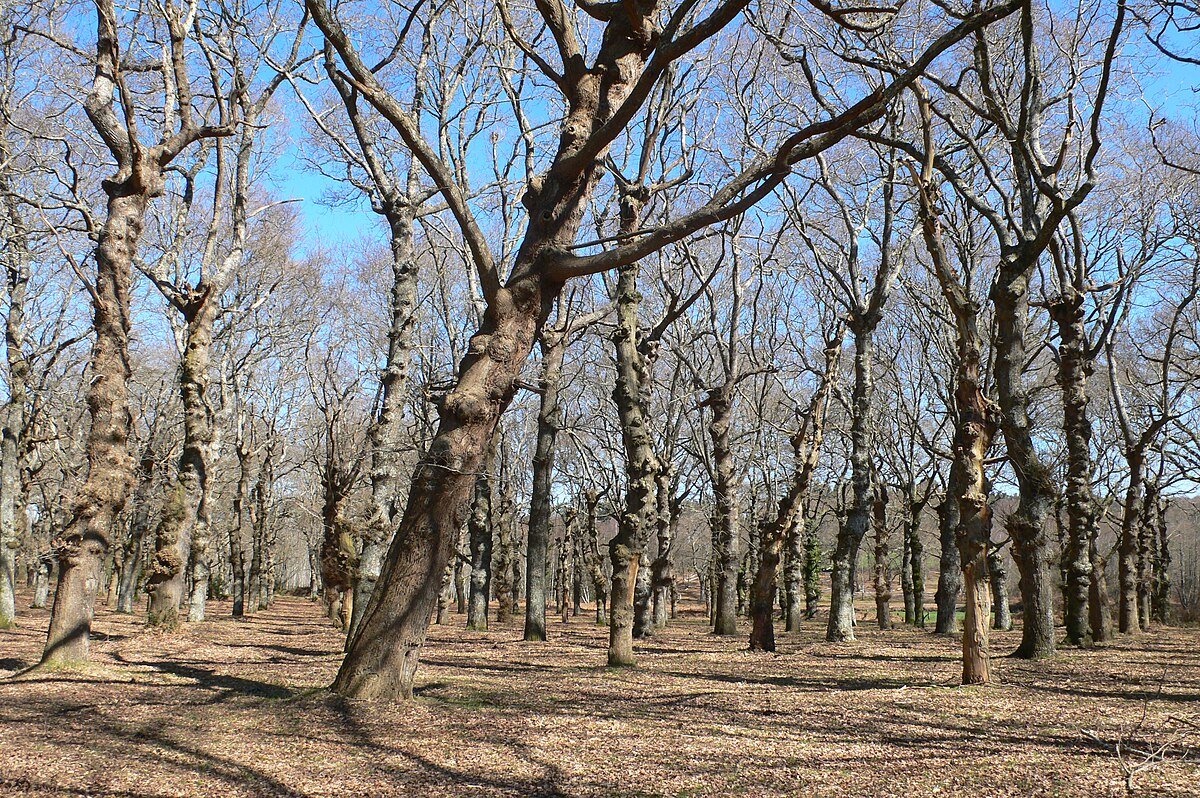
A few kilometres away, the river Arnego cuts its way through oak and yew. The usual starting point for a walk is near the recreational area of Carmoega. On Sundays the soundscape can include crackling grills and children running towards the water.
The path is flat, a mix of earth and gravel, with the river flowing steadily on the right. In the narrower stretches moisture coats the stones with moss and the ground turns soft underfoot. When you reach Pena Maior the landscape opens and light pours in. The valley seems to exhale, and the water appears to slow.
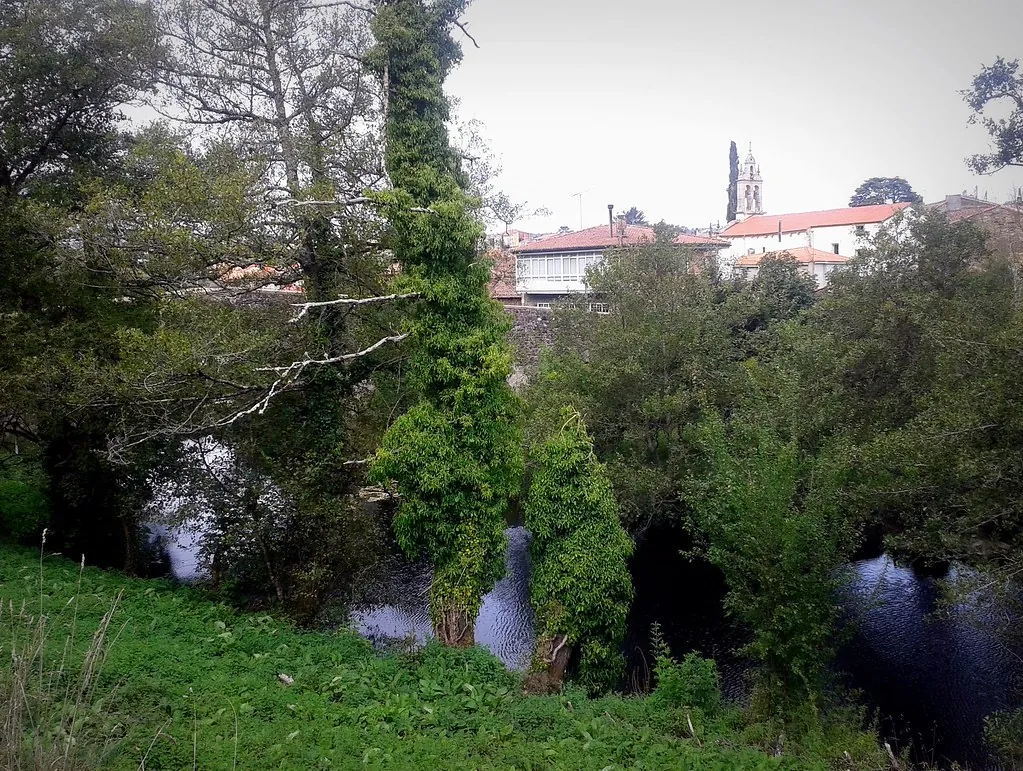
Before an old stone bridge that links villages in the area, the river forms a pool. Local tradition holds that there was a crossing here from very early times, when these valleys connected inland routes across Galicia. At dusk, if the sky is clear, the bridge’s arch is reflected in the water. For a few seconds it forms a trembling circle, broken by the current.
The Torta of Ferreiroa
In Ferreiroa, a parish associated with the well-known local torta, slate roofs and garden roses set the tone of the houses. The recipe is straightforward: custard cream, puff pastry and flaked almonds. Each family keeps its own way of preparing it.
Traditionally the torta was made for Sundays or small celebrations. It still appears in some kitchens around the municipality, often by request and without any sign outside. In the village itself, people usually know who is baking it on a given day. Asking around works better than searching for a shop window.
A Town That Moves at Its Own Pace
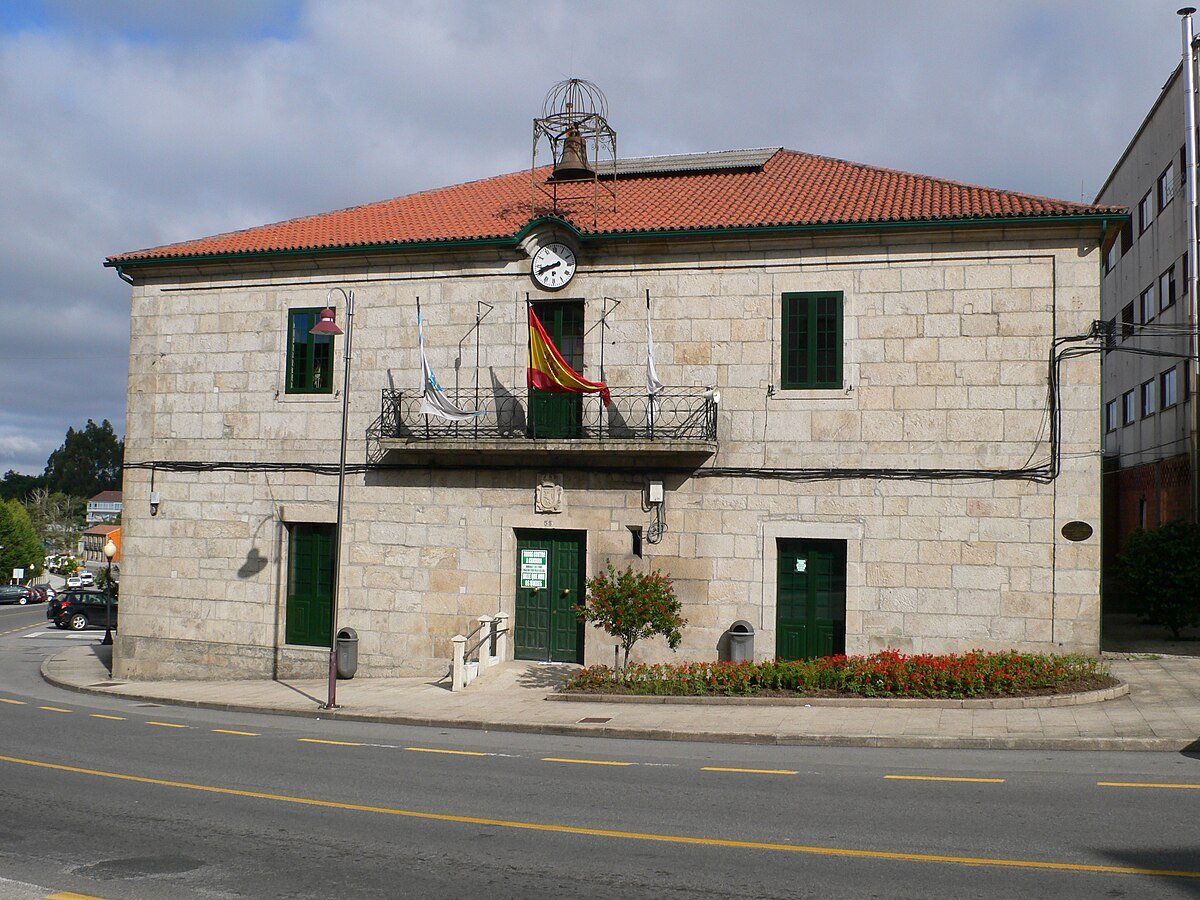
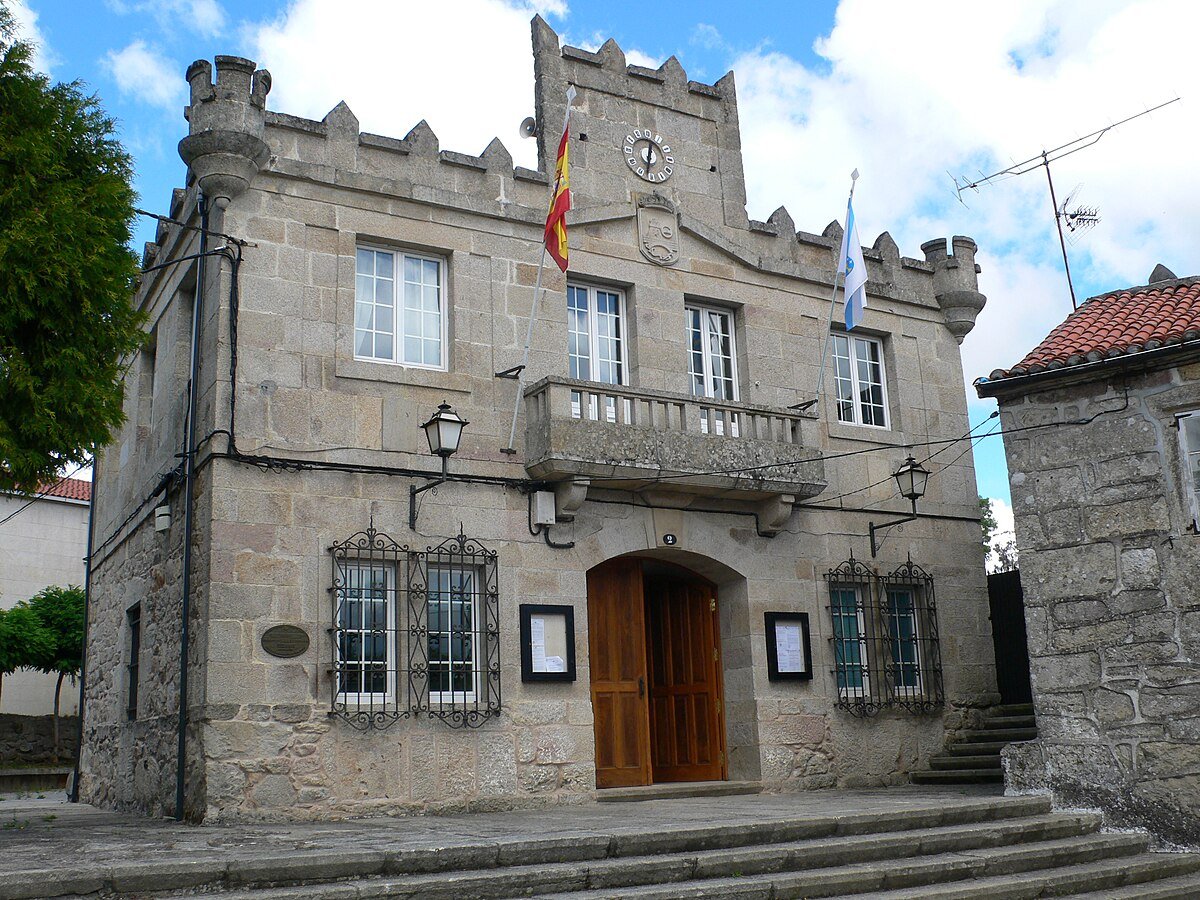
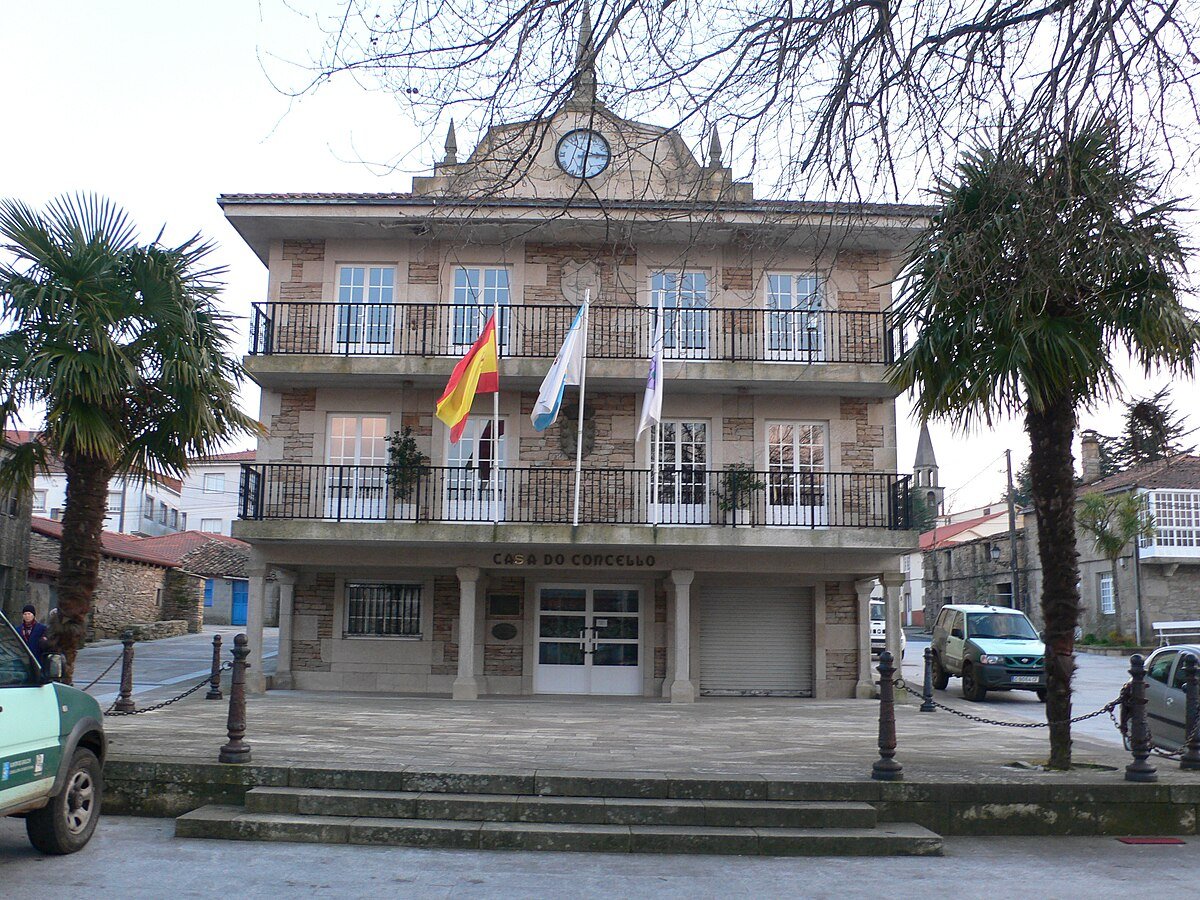
Agolada does not operate to a tightly defined tourist timetable. For orientation, the most practical approach is often to call in at the library or the town hall, where staff can point out routes and places of interest in the surrounding area.
One site that frequently comes up is the pazo de Borraxeiros. This manor house stands where an earlier fortress once rose, linked to the Irmandiño revolts that shook Galicia in the fifteenth century. From the road, the hórreo draws immediate attention. Long and raised on several pairs of stone supports, this traditional Galician grain store is one of the first features to catch the eye. Visits to the interior of the pazo are not always available, so it is sensible to check in advance.
The rhythm of the year shapes the experience of the town. In autumn, an umbrella and sturdy footwear are useful. Chestnuts fall onto the paths and their skins are crushed into small slippery balls underfoot. In May the air shifts. Gorse blooms along the edges of fields and the evenings stretch out, long enough to linger in the square as daylight fades.
As you leave, the car’s scent changes. Leather gives way to damp countryside. The national road leads towards Monte Farelo, and in the rear-view mirror the red roofs and the arcades of Os Pendellos recede. If the fine rain returns at that hour, it is easy to imagine the stone shelters once more beaded with droplets, waiting for the next fair, the next trader, the next slow morning in Agolada.