Full Article
about Dozón
Hide article Read full article
A highland patchwork in inland Galicia
Tourism in Dozón starts with a simple question: where exactly are you? This municipality belongs to the comarca of Deza, in inland Galicia, and sits at around 700 metres above sea level. The terrain is gentle rather than dramatic. Low hills roll into one another, with meadows opening between them and small clusters of houses scattered among patches of woodland. Granite is everywhere. It shapes the ground itself and appears in houses, boundary walls, and paths.
There is no compact historic centre here, no grand square framed by large buildings. Dozón works like much of rural Galicia. It is made up of small settlements linked by local roads and old tracks. A visit is less about ticking off sights and more about noticing how the land is organised and used. The rhythm of the place comes from its layout rather than from any single landmark.
A parish centre and its surroundings
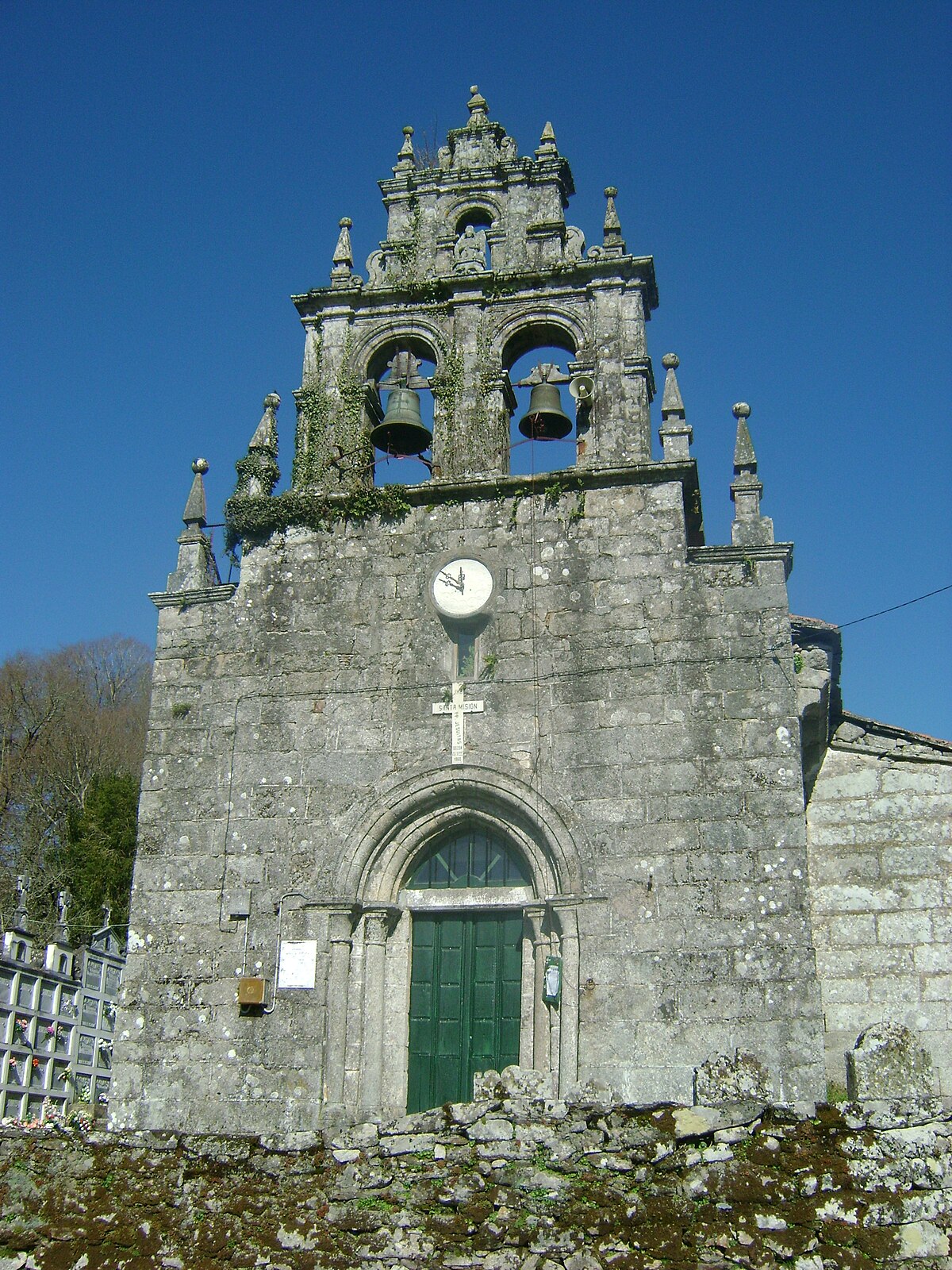
The parish church of San Martiño sits at the centre of the main settlement. The current building dates back to the 16th century, with reforms carried out in the 18th, which is typical for churches in this part of Galicia. Its interest does not come from size or ornament. Instead, attention falls on the group it forms with the cemetery and the enclosing walls. Together, they define a shared space that reflects the social structure of the village.
Around this core, granite houses spread out along the lanes. Some still have wooden balconies, known locally as corredores, usually facing south. That orientation was practical. It allowed households to make the most of sunlight and to dry agricultural produce. These details are easy to miss at first glance, yet they reveal how architecture responded directly to daily needs.
Between villages and along old paths
Much of Dozón’s character lies beyond the main nucleus, in its villages. Espiñeiro, Eiré and Viascón preserve groups of traditional dwellings where hórreos remain in use. These raised granaries, common across Galicia, were designed to store crops safely and keep them ventilated. Near the paths, small fountains appear, serving both practical and social purposes.
Connections between these places do not follow formal walking routes with signposts or marked trails. Instead, they rely on corredoiras, agricultural tracks and stretches of old stone paving. These routes are still used today to reach fields or move livestock, which gives them a sense of continuity rather than reinvention for visitors.
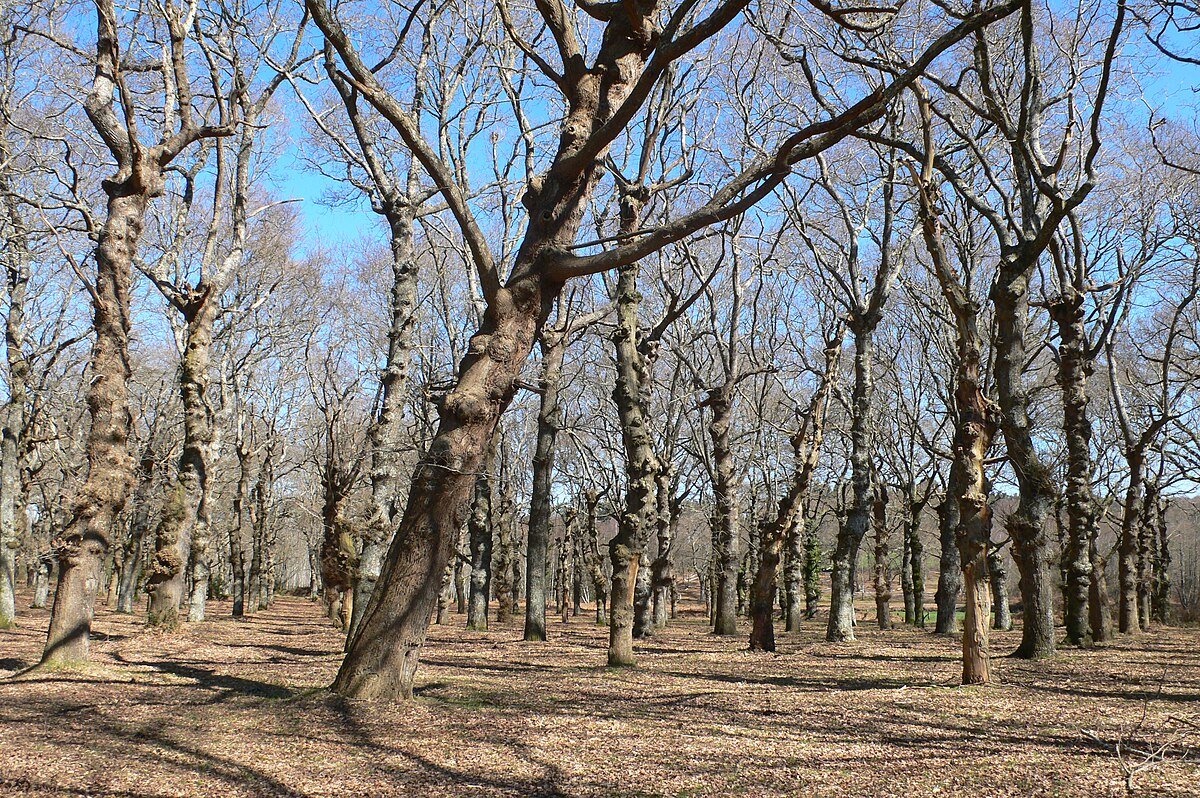
The landscape shifts gradually as you move through it. Open meadows alternate with woods of chestnut and oak. Seasonal changes are easy to read here. Autumn brings a ground covered in leaves and chestnuts. Summer makes the shade of trees especially welcome. On clear days, the gentle undulations of the comarca de Deza become visible, extending beyond the immediate villages.
Seasonal food and everyday cooking
Food in this area follows the rhythm of the land. Each season brings its own ingredients, and local cooking reflects that cycle. Autumn is the time for chestnuts and mushrooms. For much of the year, family vegetable plots continue to produce greens that end up in simple stews.
These dishes are substantial, shaped by the demands of long working days. There is little interest in elaborate preparation. Ingredients come from nearby, and recipes pass from one generation to the next with minimal change. The result is a cuisine that feels closely tied to its setting, both in flavour and in purpose.
Practical notes for a visit
Weather in this part of inland Galicia can shift quickly. Fog appears easily, especially at the beginning or end of the day, and can close in the landscape quite suddenly. When the sky clears, views open up across the hills of Deza and give a better sense of scale.
Mobile phone coverage does not always work reliably in some villages. Planning a route in advance is useful if you intend to follow smaller paths or secondary tracks. The ground stays damp for much of the year, so footwear with a firm sole helps avoid slipping.
If you only have a couple of hours
A short visit can still give a clear impression of Dozón. The area around the parish church offers a starting point, where the organisation of the main settlement becomes visible through its buildings and shared spaces. From there, it is worth driving to one of the nearby villages and walking a short stretch along the connecting paths.
On a clear day, stopping at an खुल open نقطة along a local road helps bring the landscape into focus. From such a spot, the structure of Dozón becomes easy to read: meadows, small wooded areas, and houses spread out following the curves of the terrain.
Getting there
Dozón lies within the comarca de Deza, in an area crossed by regional roads that link different parishes. Access is usually by car, which makes it easier to move between villages and pause along the rural tracks that shape the municipality.