Full Article
about Rodeiro
Ocultar artículo Leer artículo completo
The road climbs past eucalyptus plantations until the dashboard altimeter reads 650 metres and the Atlantic fog suddenly gives way to sunshine. That's when you know Rodeiro is close—an upland parish where weather systems collide and the air smells of damp oak and woodsmoke rather than coastal salt.
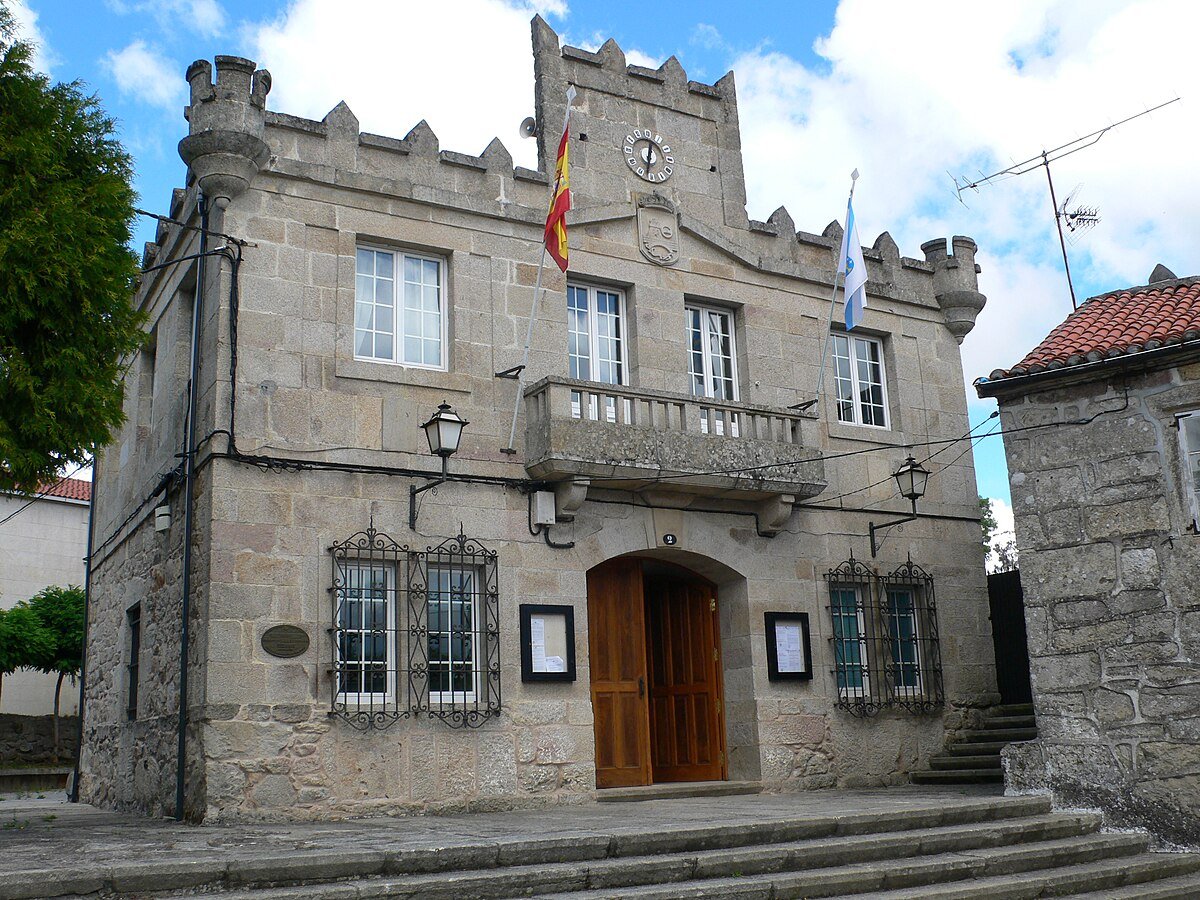
At first glance the place looks like a comma in the landscape: a church, a bar, a stone cross, done. Stay longer and the comma becomes a semi-colon; lanes fan out between cow pastures, each bend revealing a hórreo on stilts or a water trough carved in 1898. This is interior Galicia at its most straightforward—no cathedral city swagger, no coast-road glamour, just 2,600 people spread across hills that roll like a green duvet someone keeps shaking.
Altitude Adjustments
Height changes everything up here. Summer afternoons that roast the Rías Baixas stay bearable; bring a fleece anyway because night temperatures can dip below 14 °C even in July. Winter, by contrast, is serious business: the CM-533 from Ponteareas gains 400 m in the final 12 km and locals fit snow chains at the first weather warning. If you’re travelling between November and March, check the Xunta’s road alerts the night before; the pass at Alto da Fontaneira closes when drifting cattle can’t see the edge.
Rain is the default setting—1,400 mm a year, double London’s total—but it arrives in vertical, theatrical bursts rather than the British drizzle. Waterproof trousers beat jeans every time; the clay soil sticks to fabric like wet cement and will plaster your hire-car pedals if you’re not careful.
What Passes for a Centre
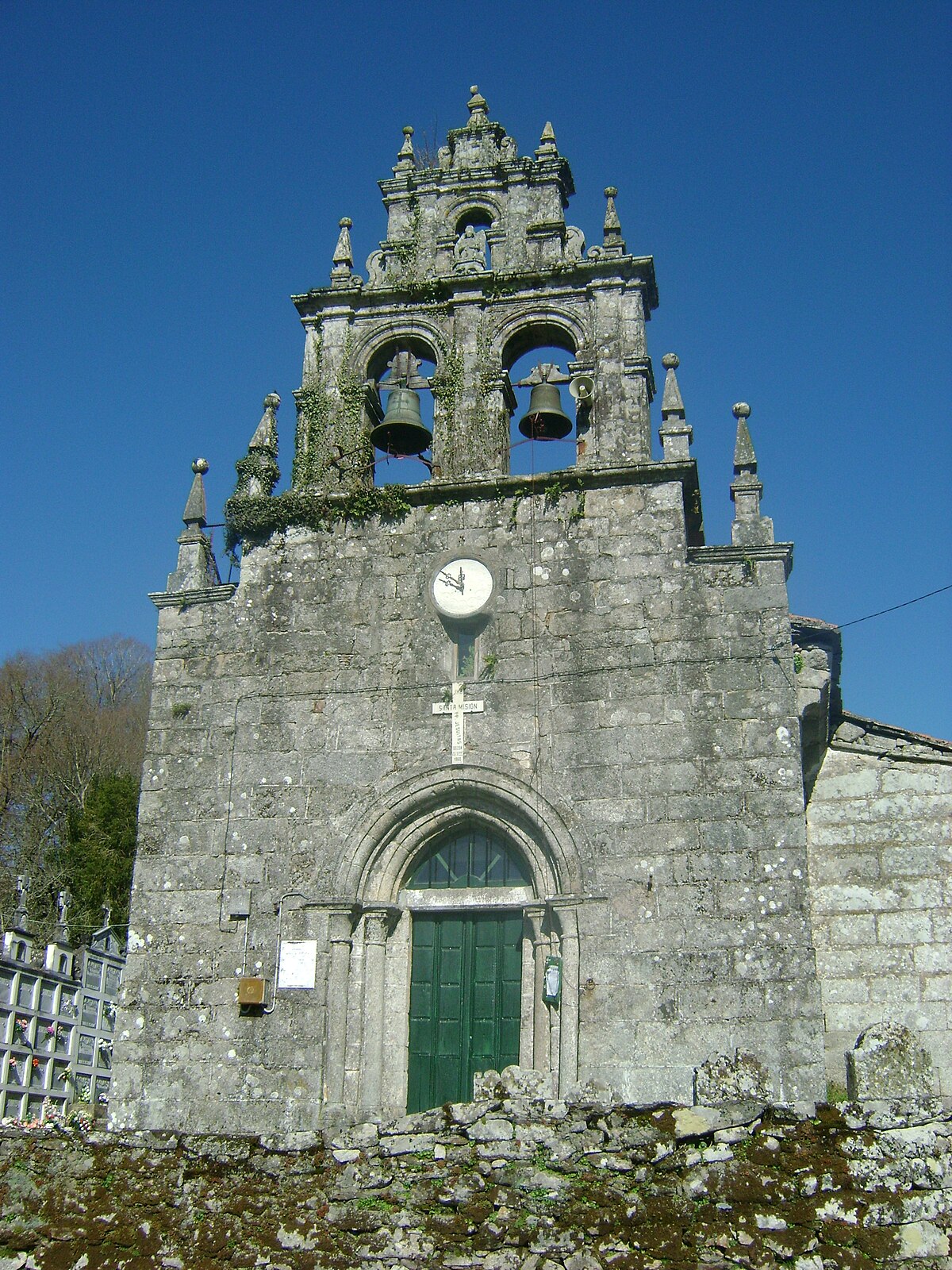
The parish church of Santa María squats on a rise above a triangle of tarmac that functions as both car park and social club. Step inside (usually open 09:00-12:00) and you’ll find Romanesque bones wearing Baroque clothes: thick limestone walls, a single nave, then eighteenth-century plasterwork that looks almost apologetic. Outside, the cruceiro—Galicia’s signature stone cross—draws every passing camera. Give it four minutes, five if the light is kind, then look past it to the map board showing the web of minor roads that actually define Rodeiro.
No souvenir stalls, no audio guide, no ticket desk. The nearest equivalent to a visitor centre is the Casa da Cultura two doors down, open only when someone remembers to fetch the key.
Walking Without Waymarks
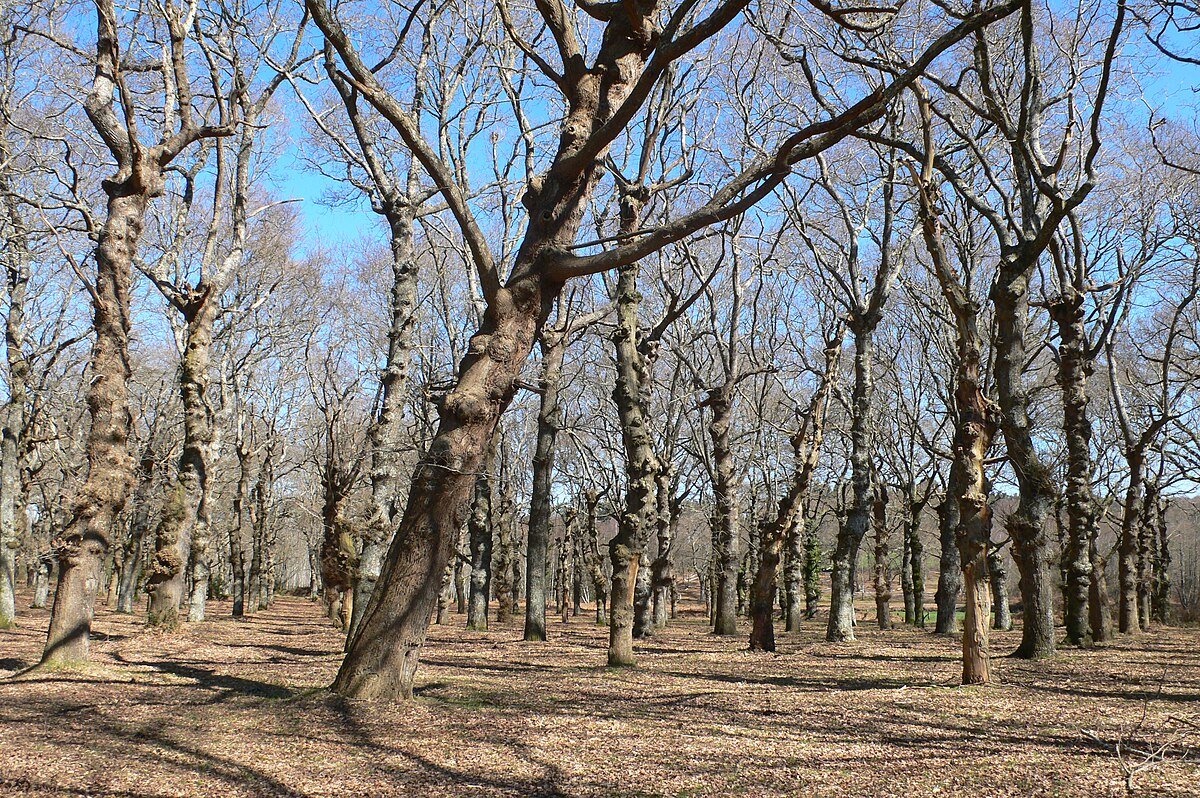
Official PR trails exist but they’re over-signed in the Spanish fashion—tiny metal disks nailed to fence posts that disappear the moment mist rolls in. Better to treat the place like a giant common: pick a lane, walk for forty minutes, turn round when you’ve had enough. The gradients are moderate—200 m of ascent on most loops—but the camino real that once carried pack mules to Ourense is now a stony track where oaks meet chestnuts and every gate seems to have a different latch mechanism.
Spring brings wild daffodils under the trees; October turns the chestnut plantations bronze and locals emerge with woven baskets for the annual castaña harvest. Stick to footpaths, close gates, and assume every field contains a dog that takes its job seriously.
Water, Sometimes
The river Arnego is more reliable on Google Maps than on the ground. After three rainless weeks it becomes a chain of tea-coloured pools linked by bare granite slabs; come back after a storm and you’ll hear it from the road. The easiest access is a lay-by 2 km south of the village—park where the N-525 crosses the valley, follow the farmer’s track downstream for ten minutes and you’ll reach a natural slab perfect for a sandwich stop. No bins, no lifeguard, no mobile signal; leave only footprints and take only photos, as the guidebooks used to say.
Food at Farm Prices
Hunger is solved in one of two places. Casa Sánchez, halfway between church and filling station, serves a weekday menú del día that costs €12 and runs to soup, entrecôte with padron peppers, wine and coffee—cheaper than a UK pub lunch and twice as filling. Vegetarians get tortilla or salad, no fuss, no surcharge. Alternatively, Casa Achacan on the edge of town will grill local veal over vine cuttings and swap octopus for chicken if you ask nicely; the owner’s daughter spent a season in Brighton and understands the word “well-done”.
Pudding is either tarta de Santiago (almond, naturally gluten-free) or crema catalana; nut allergies need advance warning because the kitchen uses almond flour liberally. Tetilla cheese arrives shaped like a breast—schoolboy humour never dies—and tastes mild enough for Cheddar addicts.
When to Bother
Come in late April and you’ll drive through corridors of gorse flowers smelling of coconut. May adds orchids to the road verges; September gives you blackberries for free pudding. August is best avoided—Spanish holidaymakers head to the coast, inland bars slash hours and the only evening action is a domino school in the café. November means mud, February means frost, March means both; choose accordingly.
Market day is Thursday morning in the square: one fruit van, one fish van, one hardware stall selling rubber boots in every size. That’s as commercial as Rodeiro gets.
The Honest Verdict
Rodeiro won’t change your life. It will, however, slow your pulse for twenty-four hours and remind you that “authentic” is just another word for somewhere with more cows than souvenir shops. Bring cash, bring boots, bring a waterproof and the patience to walk ten minutes beyond the last lamp-post. Do that and the place starts to make sense: a high-altitude pause button between the Atlantic and the Meseta, green, grazed and gratifyingly ordinary.