Full Article
about Silleda
Hide article Read full article
A Tuesday that smells of bread and onions
On Tuesdays, Silleda smells of freshly baked bread and gently cooked onions from early morning. Inside the recinto ferial, a large covered structure that works almost like a street under one roof, stalls lay out whole lacones, empanadas still giving off steam, and local cheeses wrapped in brown paper. This is not a market designed for passers-by. It is the weekly pulse of a rural district that lives off the land and that has long had one of its administrative centres here.
Nothing is dressed up for show. What is sold comes from the surrounding fields and farms. The recinto ferial hosts agricultural and livestock fairs throughout the year, and it is also where many of the area’s big food events take place. When the Semana Verde de Galicia is held, the space fills with agricultural machinery, livestock and professional visitors linked to the sector. For those days, the rhythm of the town shifts noticeably. Farming here is not a backdrop. It is the economy.
Time written in stone and water
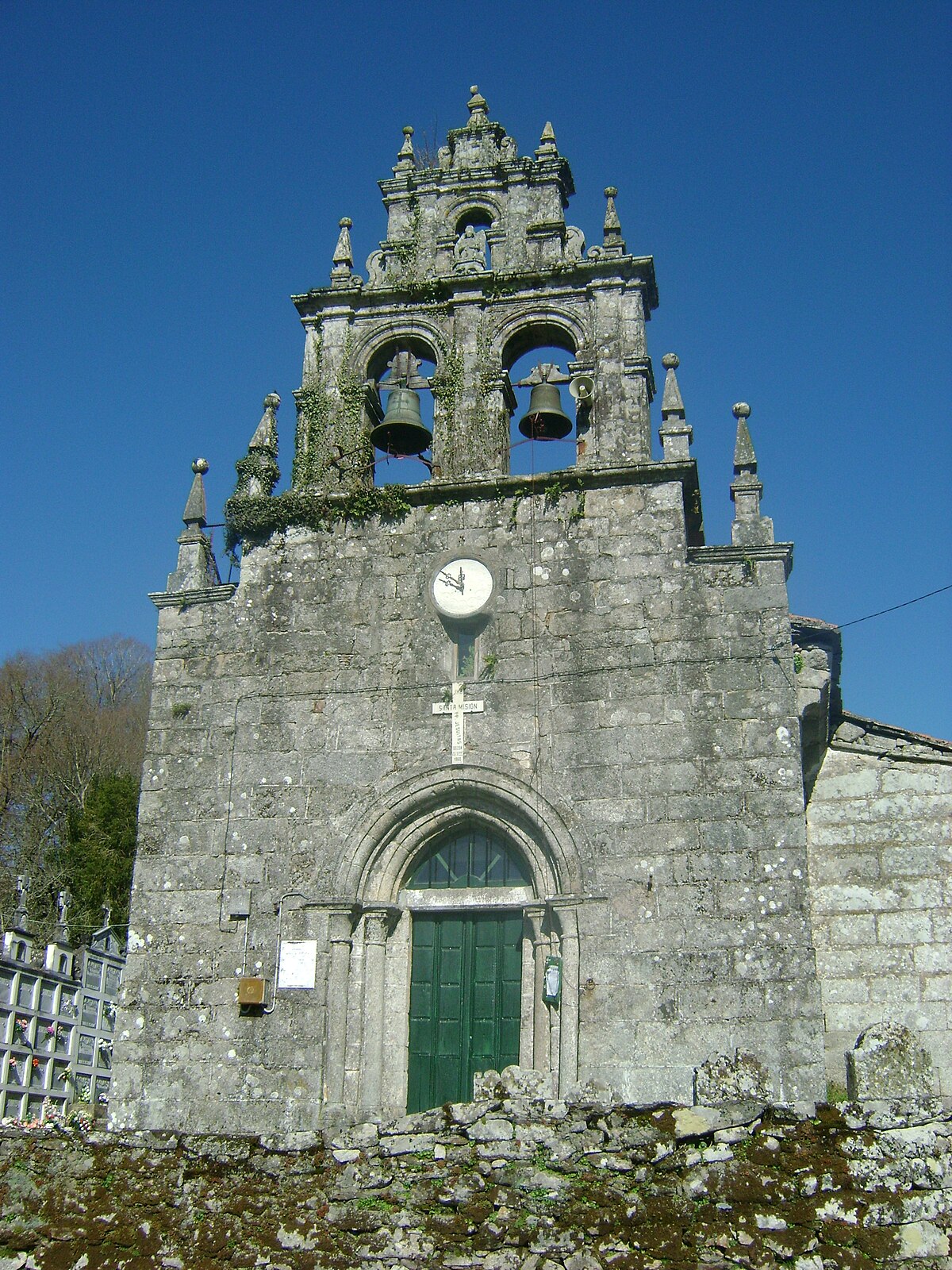
The oldest references to the place appear in medieval documents, where the name is recorded as Exilieta. One text from the late 10th century mentions land linked to the church of Santa Baia. The present parish church has been altered over time, as so many in Galicia have, yet the reference makes clear that this territory had already been organised around small agricultural communities for centuries.
The most visible historic landmark in the municipality is the Monasterio de San Lourenzo de Carboeiro. It stands in a bend of the river Deza, away from the main urban centre, and its origins date back to the Middle Ages. The Romanesque church, heavily restored, retains a clear structure: a simple nave, a semicircular apse and decoration that, while restrained, shows the sculptural language of its period. Today it is mainly visited by school groups and curious walkers. The site still feels somewhat isolated, which was probably exactly what its founders intended.
A few kilometres away lies the church of Santiago de Taboada, also rooted in the Romanesque tradition. Beside it stands an old bridge over the Deza that is still used by those exploring this part of inland Pontevedra on foot. Local residents say that knocking your forehead against the church door helps wishes come true. The stone, worn smooth at that height, suggests the custom has been around for quite some time.
Where the water finds its way
Galicia is a land of rivers and streams, and here the relief creates sudden drops that the water follows without hesitation. The Fervenza da Toxa, near Merza, is the best known waterfall in the area. A path descends through oaks and lush vegetation to a natural viewpoint from which the water can be seen falling vertically. Access is straightforward, although the final stretch is often slippery, which is common at waterfalls of this kind.
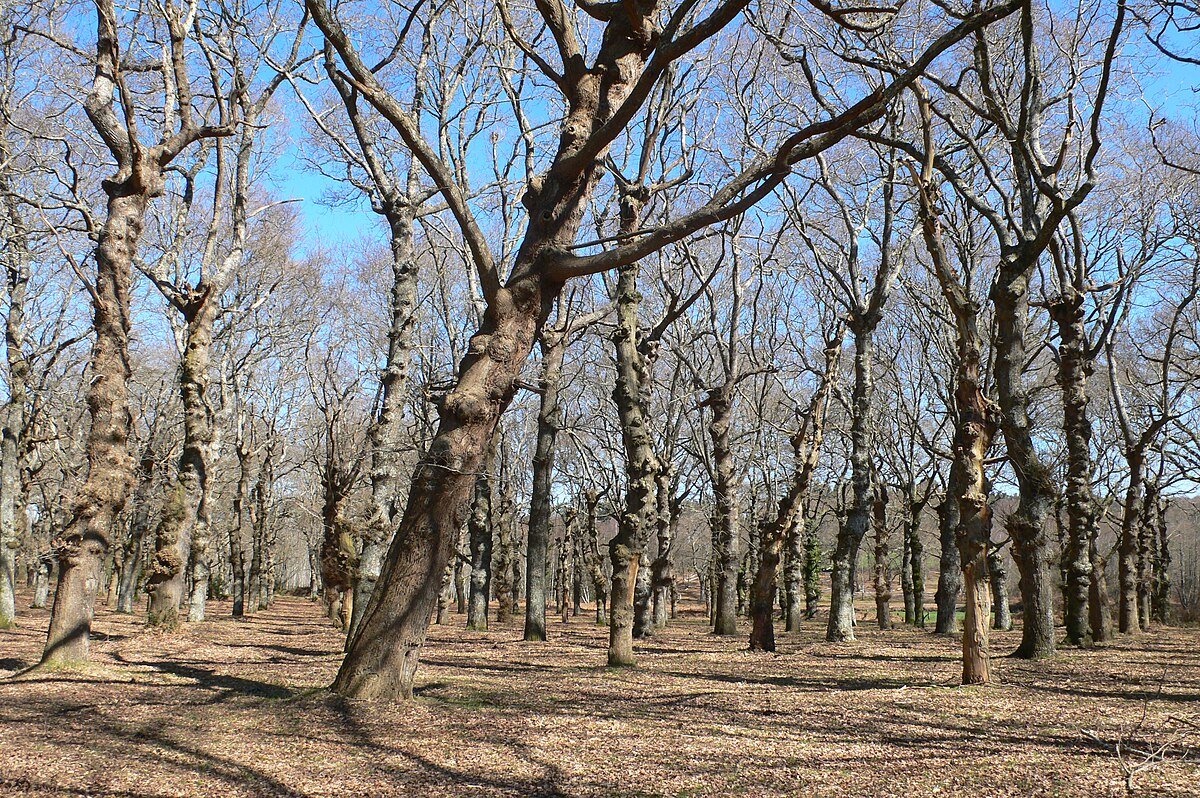
More discreet is the fervenza de Férveda, in the parish of Escuadro. The route begins in the village itself and follows small watercourses through carballeiras, traditional oak groves, and farmland. Along the way there are remains of old watermills, now covered in ferns. They are not presented as a museum or marked out formally, yet they help explain how the river was used before modern infrastructure arrived. Nearby there are also traces of ancient castro settlements, reminders that these valleys have been inhabited for many centuries.
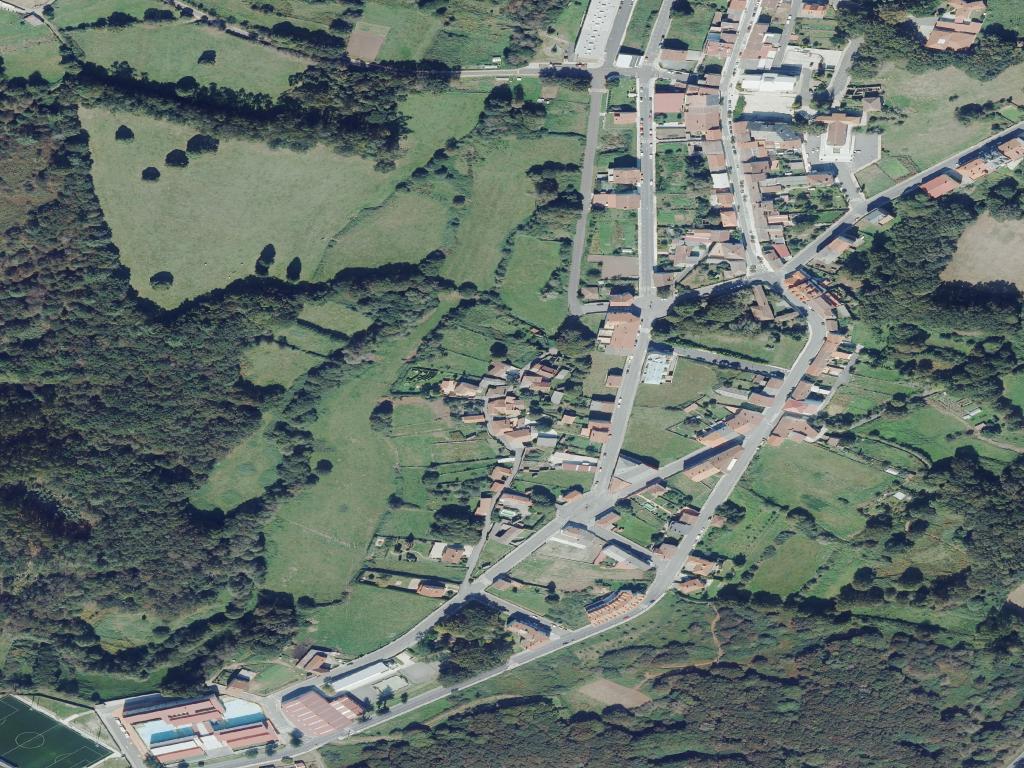
The landscape across the municipality is defined by meadows, poplar groves, scattered hamlets and the constant sound of water. Moving between parishes makes it easier to understand how everything fits together.
From the field straight to the table
Silleda’s cooking follows the agricultural calendar. Lacón con grelos, cured pork shoulder served with turnip tops, appears on many tables in winter and even has its own gastronomic celebration in the municipality, drawing residents from across the district. These gatherings are often held in the recinto ferial, the same venue used for agricultural events.
Empanadas, frequently filled with marinated meat or zorza, remain market food. They are bought and eaten while still warm, sometimes perched on a bench in the square if the weather allows. In the surrounding area, artisan cheeses are made alongside dark chestnut honey, which is common in this part of Galicia.
Food here reflects proximity. There are few intermediaries between producer and plate. Market day, food festivals and large-scale events such as the Semana Verde all underline the same idea: the countryside shapes daily life.
Exploring at a gentle pace
Silleda is best understood without rushing. The Museo do Campo brings together a wide collection of traditional tools and farming implements. After a visit, many of the objects still seen in sheds and old farmhouses become easier to recognise.
For walking, the Senda do Deza follows the river along several stretches with little change in elevation. It is not a demanding route and offers close views of the area’s characteristic scenery, from open fields to small settlements tucked among trees.
From the centre of Silleda, it is also possible to walk up to the santuario de la Saleta, set on a small rise on the outskirts. The route is short. From the top, there are views across the interior of the province, with the sierras del Cando visible in the distance when the sky is clear.
Local roads tend to be narrow and winding, so journeys are best taken slowly. Many rural churches and monuments remain closed outside religious services. Occasionally, a neighbour may have a key, but this is never guaranteed.
Silleda does not attempt to reinvent itself for visitors. Its identity rests on parish life, agricultural fairs, Romanesque churches and rivers that carve their way through oak woods. Come on a Tuesday and the smell of bread and onions will tell you most of what you need to know.