Full Article
about Ares
Hide article Read full article
Arrive in Ares at low tide and the first thing that lingers is the smell of shellfish near the harbour, the kind that hangs in the air when someone is boiling percebes, those prized Galician goose barnacles. It sets the tone straight away. This is not a place that performs for visitors. Life carries on, and you step into it as it is.
Down by the boats, a young lad might be hauling in nets while his grandmother, perched on an upturned paint bucket, calls out in Galician to remind him not to forget the bread. That small exchange says a lot about tourism in Ares. It exists, clearly, but it never quite takes centre stage.
A town that doesn’t need filters
Ares has the feel of someone who has travelled widely and come back with stories, yet still sits at the same family table as ever. There are signs of different eras on show, but nothing feels staged.
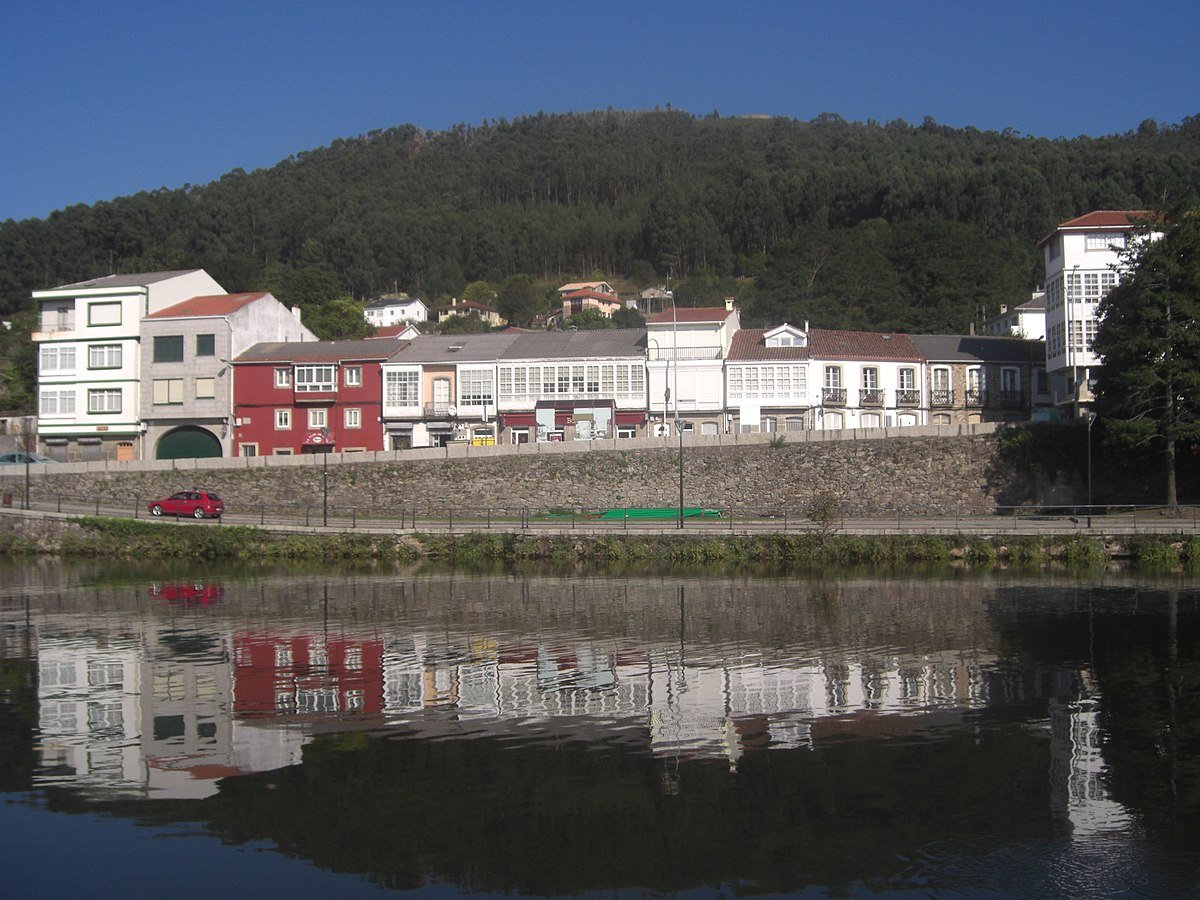
Along the seafront promenade stand indiano houses, built by emigrants who returned from the Americas, with wrought-iron galleries and pale façades. Nearby are 1970s apartment blocks, and every so often a detached house that would not look out of place in a Scandinavian catalogue. On paper, it sounds like a mismatch. In Ares, it works. Perhaps because the overriding impression is of a lived-in town rather than a carefully curated scene.
One of the small beaches pressed up against the town centre makes that clear. The houses almost touch the sand. When the tide comes in, the water creeps close to the façades. Even so, daily routines barely shift. The sea is not a backdrop here, it is woven into ordinary life.
On a terrace along the promenade, an older man has spent years sitting at the same table, watching the ría. In winter he puts on his coat and stays put despite the wind. “It’s my television,” he says, before returning his gaze to the water as if the same episode is playing again. The ría in question is the ría de Ares, an inlet of the Atlantic that shapes both the landscape and the rhythm of the town.
What’s on the table
Food in Ares reflects that closeness to the sea. Take caldeirada, a traditional fish stew common in this part of Galicia. It is not a delicate broth. The pot arrives steaming, robust and unapologetic. Fish, potatoes, olive oil and paprika, with whatever has come in that day at the local fish market. If the expectation is something light, it is worth choosing differently. If the aim is to understand how people eat here, caldeirada is a good place to start.
Octopus also appears frequently, prepared in the style associated with the ría de Ferrol. It is typically served with paprika, olive oil and boiled potatoes. The recipe will be familiar elsewhere in Galicia, yet eating it while looking out over the water gives it a particular context. The setting matters.
And then there are percebes. In season, they show up on many tables around the village. Outside those months they may still be available, though not always to the same effect. It can feel a little like meeting an old love again. It looks familiar, but the result is not guaranteed to match the memory.
Locals also speak of an almond cake with a hint of coffee liqueur. Some trace its origins back to the era of the indianos, those emigrants who returned with money and influences from across the Atlantic. Whether the story is precise or not, the combination of almond and coffee turns up often in the area.
Walking to understand the ría
To grasp the geography of Ares, it helps to walk. One of the routes people often take links several castros in the surrounding area. Castros are ancient hilltop settlements from pre-Roman times, common across Galicia. The full route covers around six kilometres. It is not especially technical, though there are climbs, so it pays to take it steadily.
From some of the higher points, the ría de Ares opens out completely. Ferrol lies in the distance, and smaller villages appear between stretches of green. The view explains a lot about how communities here are connected by water as much as by road.
For something gentler, there is a promenade that follows the edge of the ría from Ares to the nearby village of Redes. It is fairly flat and easy to cover without much thought. Redes retains the air of an old fishing village, with narrow streets and houses set very close to the water. When the tide rises, certain corners almost merge with the ría itself. The boundary between land and sea feels negotiable.
Festivals lived differently
Summer changes the tempo. Ares becomes livelier, and food once again takes a leading role. There is usually a festival dedicated to the percebe, where long tables fill and large pots bubble away. The price of shellfish varies depending on the year and the catch, so it makes sense to approach with the idea of tasting a portion rather than fixating on quantity.
Another celebration looks back to the history of the indianos. For a few days, period costumes appear, along with music and dancing in the square. Described plainly, it might sound unusual. Seen in person, it carries its own appeal, blending memory and performance in a way that feels rooted rather than theatrical.
Then comes the night of San Xoán, marked across many coastal towns in Galicia. In Ares, it follows the familiar pattern: bonfires on the beach, people jumping waves with trouser legs rolled up, and that slightly chaotic summer atmosphere when nobody is paying much attention to the clock. Fire, water and a sense of collective release shape the evening.
The aftertaste
As departure approaches, one remark tends to linger. Ares will not transform a life, someone might say, but it will leave a strange aftertaste, the kind that draws you back.
That sentiment captures the place well. There are no grand statements or dramatic landmarks to dominate the story. Instead, there is the steady presence of the ría, the mix of architectural styles that somehow coexist, the routines that continue regardless of who is passing through. Tourism in Ares does not feel like a separate layer laid on top of daily life. It moves at the same pace as everything else, tied to the tide and to what comes in from the sea.
For those willing to slow down, to sit and watch the water as if it were a programme that never quite repeats itself, Ares offers something subtle. It may be hard to define, but it tends to stay with you long after the smell of shellfish has faded.