Full Article
about Fene
Hide article Read full article
A place that smells of work and sea
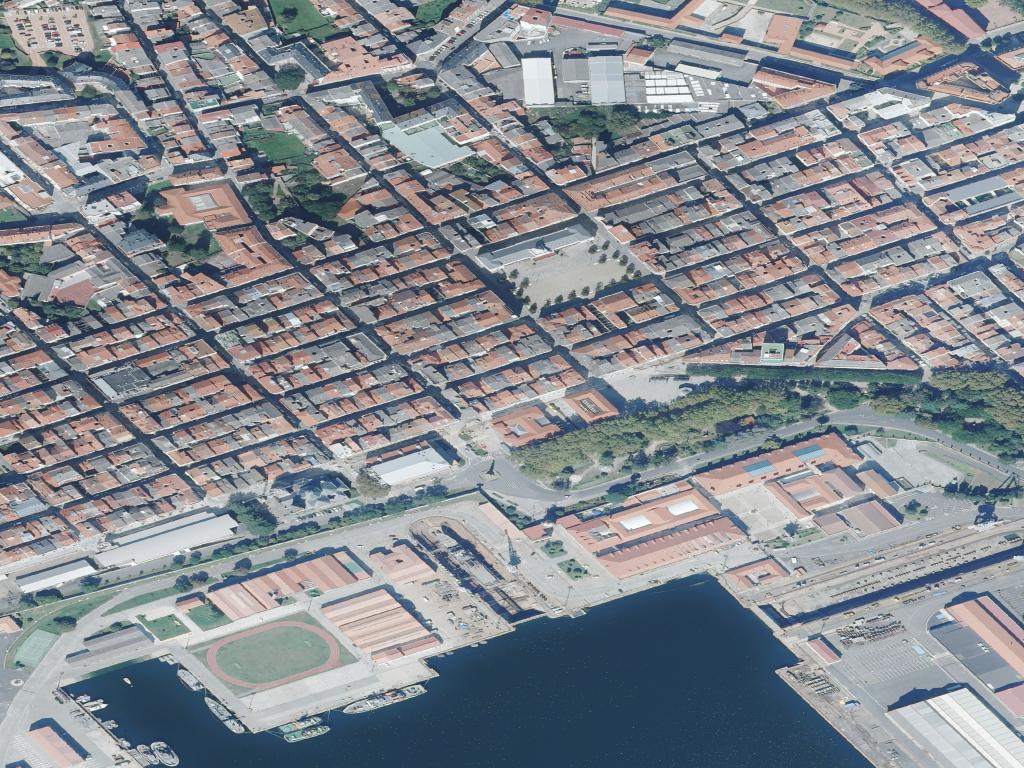
Fene smells of welding and saltwater. It’s the kind of scent that clings as soon as you step out of the car and makes you think: this isn’t your typical seaside town. And it isn’t. There are no rows of souvenir shops and no ritual of sipping cocktails by the water. Fene moves to a different rhythm, one set by the shipyards along the ría and by daily routines that carry on whether anyone is visiting or not.
This is a place where the sea is part of the job as much as the view. For decades, large ships were built here, and that industrial pulse still shapes the atmosphere. Even now, the air sometimes mixes salt with the faint trace of hot metal. It gives the town a character that feels grounded and unpolished.
The Camino de Santiago also passes through, specifically the Camino Inglés, the English Way traditionally used by pilgrims arriving by sea. In Fene it doesn’t announce itself loudly. It simply threads through everyday spaces, slipping past bars and houses as if it has always been part of the background.
Small places, loosely stitched together
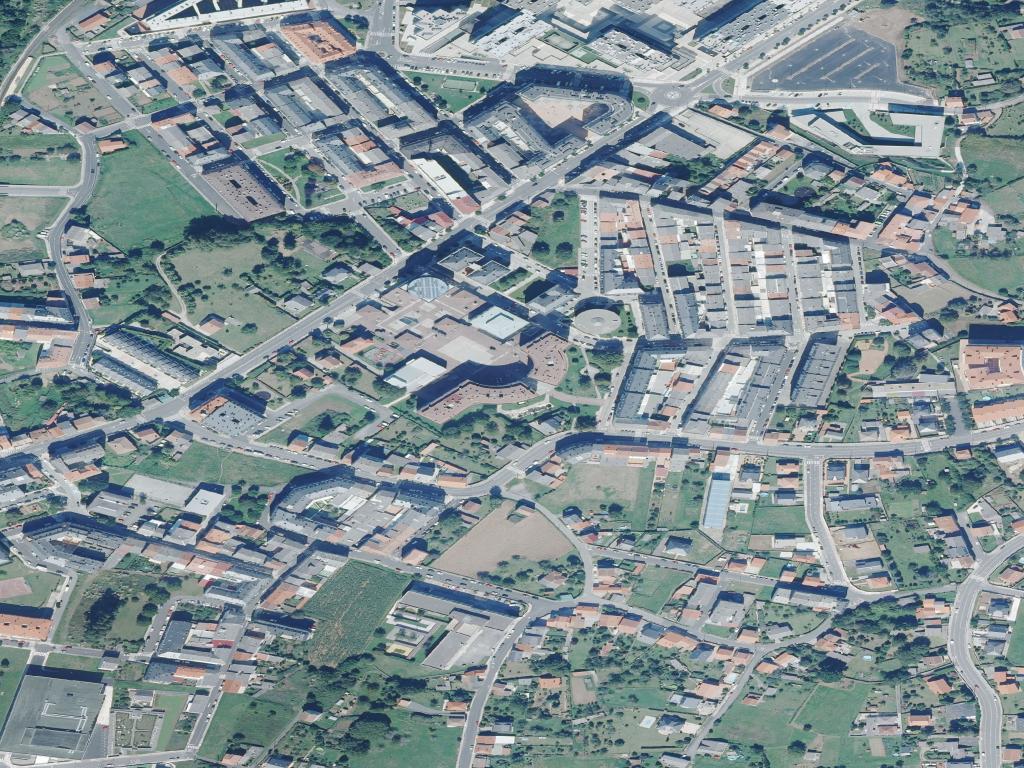
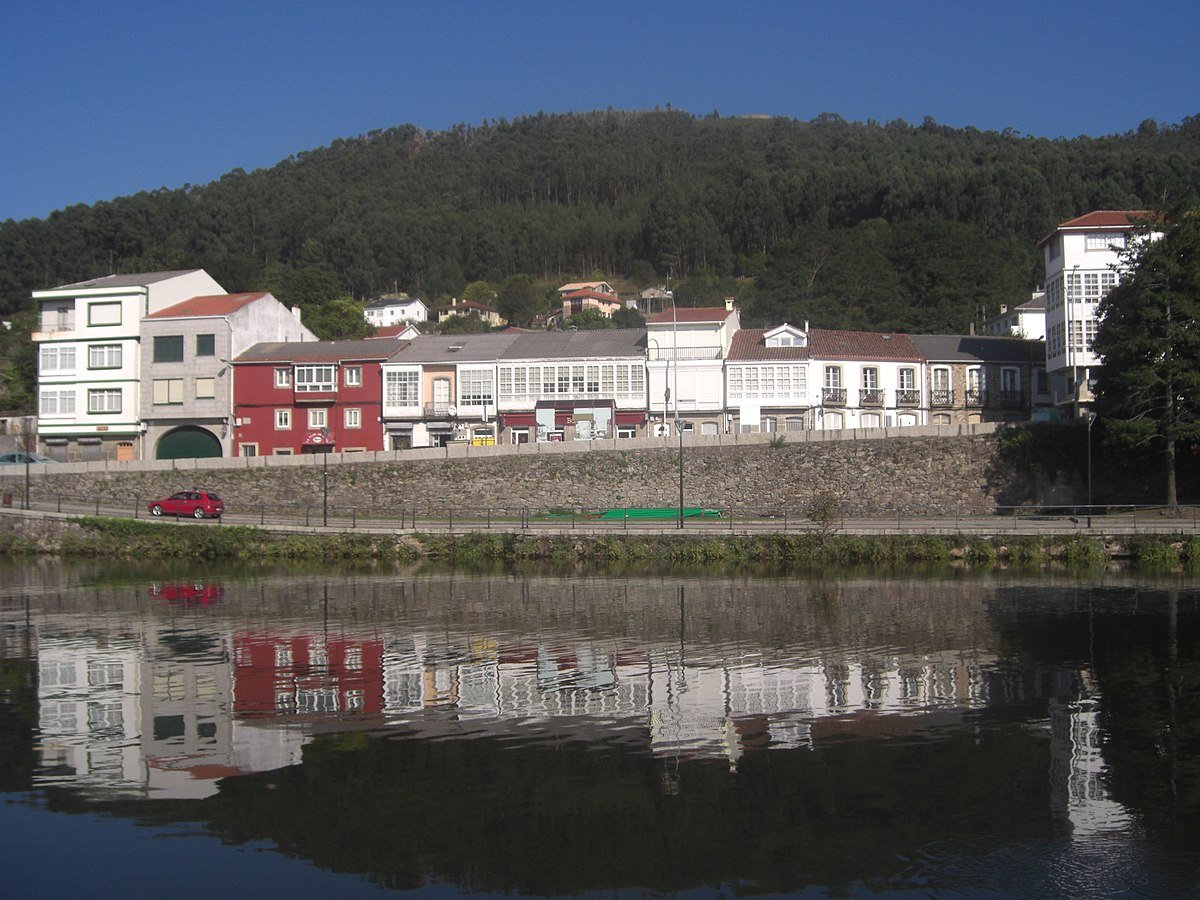
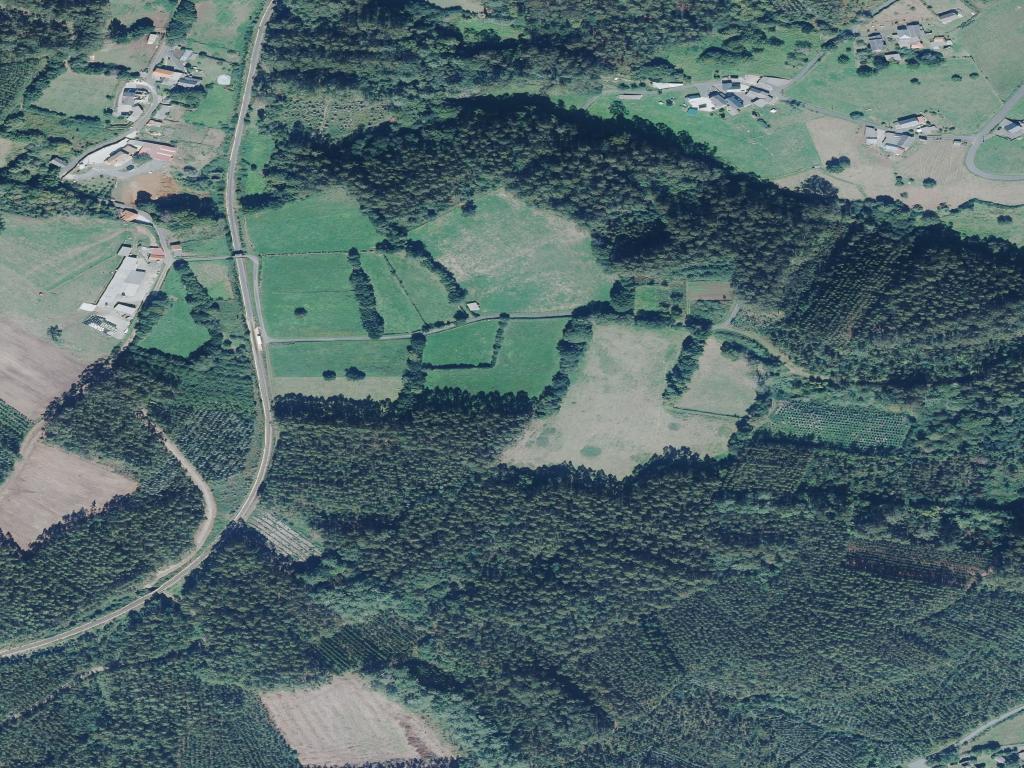
Maniños, Perlío, Barallobre. The names might sound like neighbourhood bars, but they are actually some of the parishes that make up Fene. The municipality is not one single compact centre. It feels more like a scattering of small settlements that grew side by side, each with its own identity, yet all connected along the edge of the ría.
It can seem as though someone scattered a handful of villages across the shoreline and they simply stayed where they fell. There is no single focal point that pulls everything together. Instead, the sense of place comes from the way these parts overlap and interact.
The sea is never far away. It appears in expected places, like the estuary itself, but also in quieter corners. The bridge over the Belelle river is one example. Many people refer to it as Roman, though what stands today is much more recent. Still, the name sticks, as these things often do.
Then there are the old shipyards along the ría, reminders of the years when shipbuilding dominated local life. They are part of the landscape in a way that goes beyond industry. They help explain why Fene feels less like a place that looks at the sea and more like one that has worked alongside it.
A town that takes humour seriously
Years ago, when many museums still leaned towards dusty display cases and formal collections, Fene chose a different path. It created a space dedicated to graphic humour. That idea became the museum of humour, now located in the Casa da Cultura.
Today, it may not seem unusual to celebrate cartoons and satire in a museum setting. At the time, it must have sounded like a strange experiment. That willingness to do something slightly unexpected still shows in other parts of the town.
In Parque Castelao, for instance, there is a monument dedicated to clowns. It’s an unusual tribute, recognising the craft of making people laugh, something rarely given space in public squares or gardens.
More recently, Fene has added another layer to its visual identity through urban art. Murals have appeared on walls around the municipality, some of them striking in both scale and style. One in particular, depicting an enormous cellist, gained international recognition in the world of street art. You come across it almost by surprise, its size and detail catching you off guard in an otherwise ordinary setting.
A forest tucked behind the town
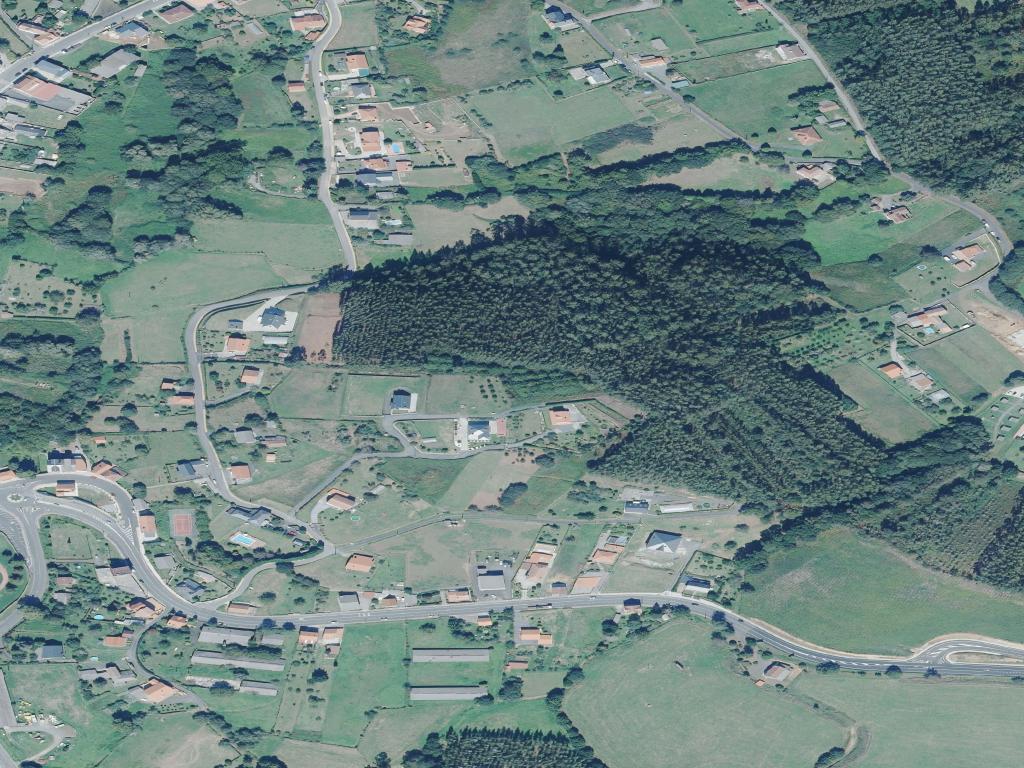
Fraga de Fene offers a sharp contrast to the industrial edges of the municipality. One moment you are passing warehouses, roads and built-up areas, and the next you are in an Atlantic woodland with damp air and shaded paths.
It doesn’t feel like a park designed for visitors or for carefully curated views. Instead, it works as a kind of shared back garden. People walk their dogs, retirees follow familiar routes, and younger residents run through the trails without turning it into a spectacle.
That everyday use is what defines the space. It isn’t trying to impress, and that is precisely why it works. The forest belongs to the town in a practical way, not as a staged attraction.
The Camino as part of daily life
The Camino Inglés crosses Fene quietly. This is not a postcard stretch of endless countryside and silence. Here, the route blends into ordinary life. It passes through residential areas, skirts parks and continues along streets where people are going about their day, heading to work or taking children to school.
Pilgrims arrive carrying that familiar mix of fatigue and good humour that builds after several days on foot. Locals notice them, but without turning their presence into a spectacle. There is no sense of performance, and no indifference either. It feels closer to how someone might be treated when passing through any neighbourhood: help if needed, otherwise everyone carries on.
That balance gives this section of the Camino a different tone. It becomes less about separation from daily life and more about moving through it.
Simple food, no fuss
Food in Fene doesn’t come with much ceremony. Caldo gallego, a traditional Galician soup, is a staple. Fish appears regularly, and empanada makes its way onto tables when the occasion calls for it. Portions tend to be generous, and the cooking doesn’t rely on explanation or reinvention.
Travel guides sometimes try to identify a single defining dish for each destination, as if every place were competing in a culinary contest. In Fene, things are more straightforward. The food reflects what has long been eaten along this part of the ría, without much need to label or elevate it.
During the summer, the municipality also hosts music festivals that are well known in the area. They bring a different kind of energy, with crowds and an atmosphere that often ends with shirts sticking to your back after hours of heat and movement.
A place that keeps its own pace
Fene is not the sort of place that revolves around a perfect photo. If anything, it resists that idea. What stays with you is something less immediate: the sense of having spent time somewhere that continues to function on its own terms.
A simple plan works best. Start around Maniños, take a walk through the Fraga de Fene, find a spot overlooking the ría and the old shipyards, and finish with something warm in one of the usual bars. In a few hours, you can get a good feel for the place.
It isn’t flawless. At times, Fene seems caught between identities, part village, part town, industrial in some corners and quieter in others. Yet that in-between state is part of what makes it interesting. Along a coastline where many places have started to resemble one another, Fene still carries the smell of metal, the presence of the ría and the rhythm of ordinary life. That combination is not especially common anymore.