Full Article
about Moeche
Hide article Read full article
A Rural Landscape in the Interior of Ferrolterra
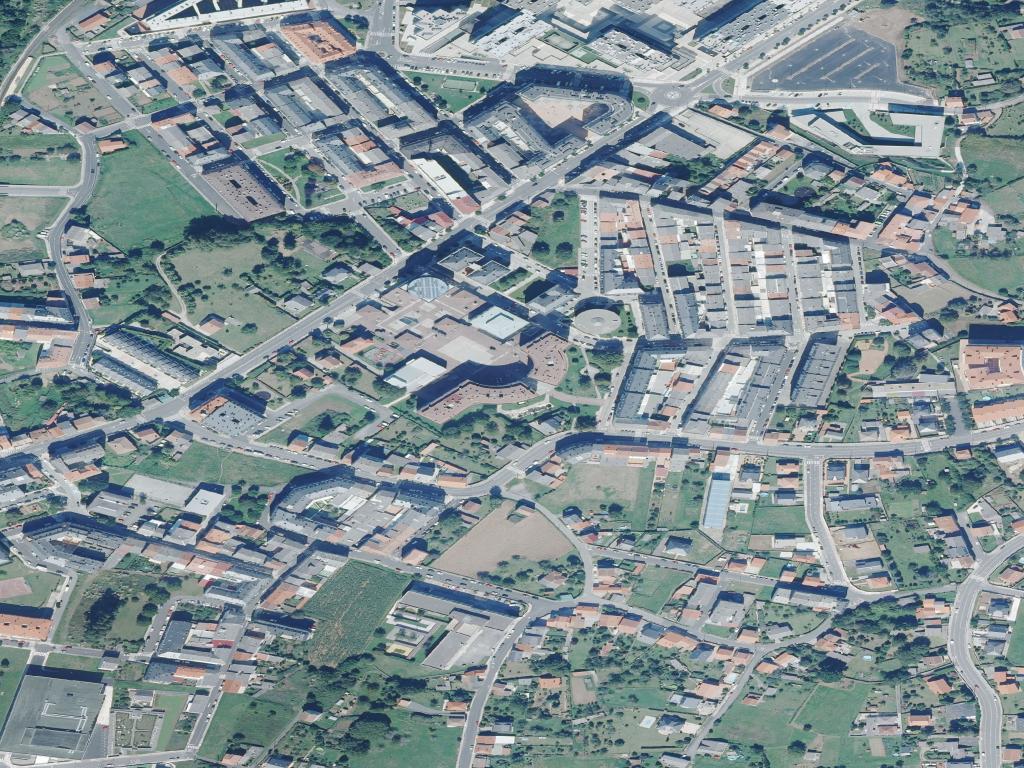
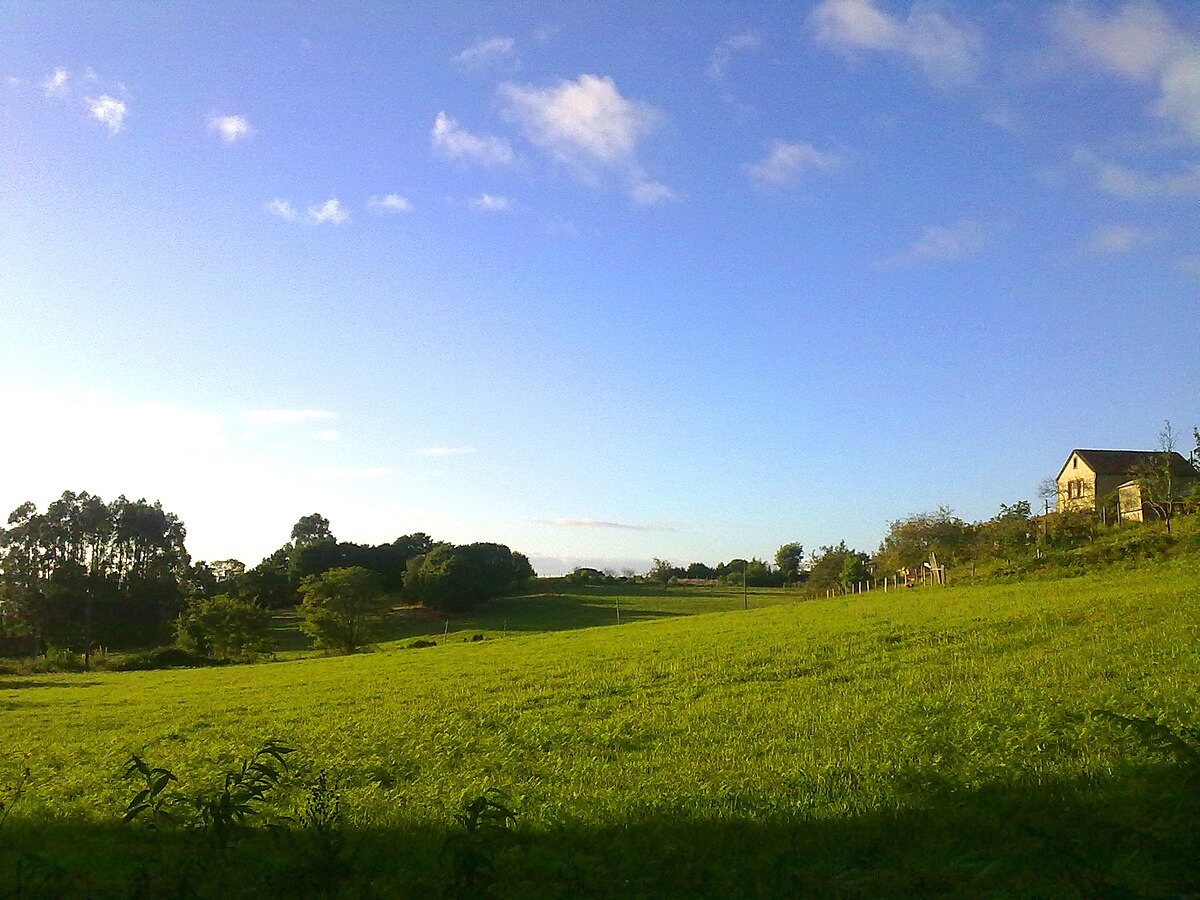
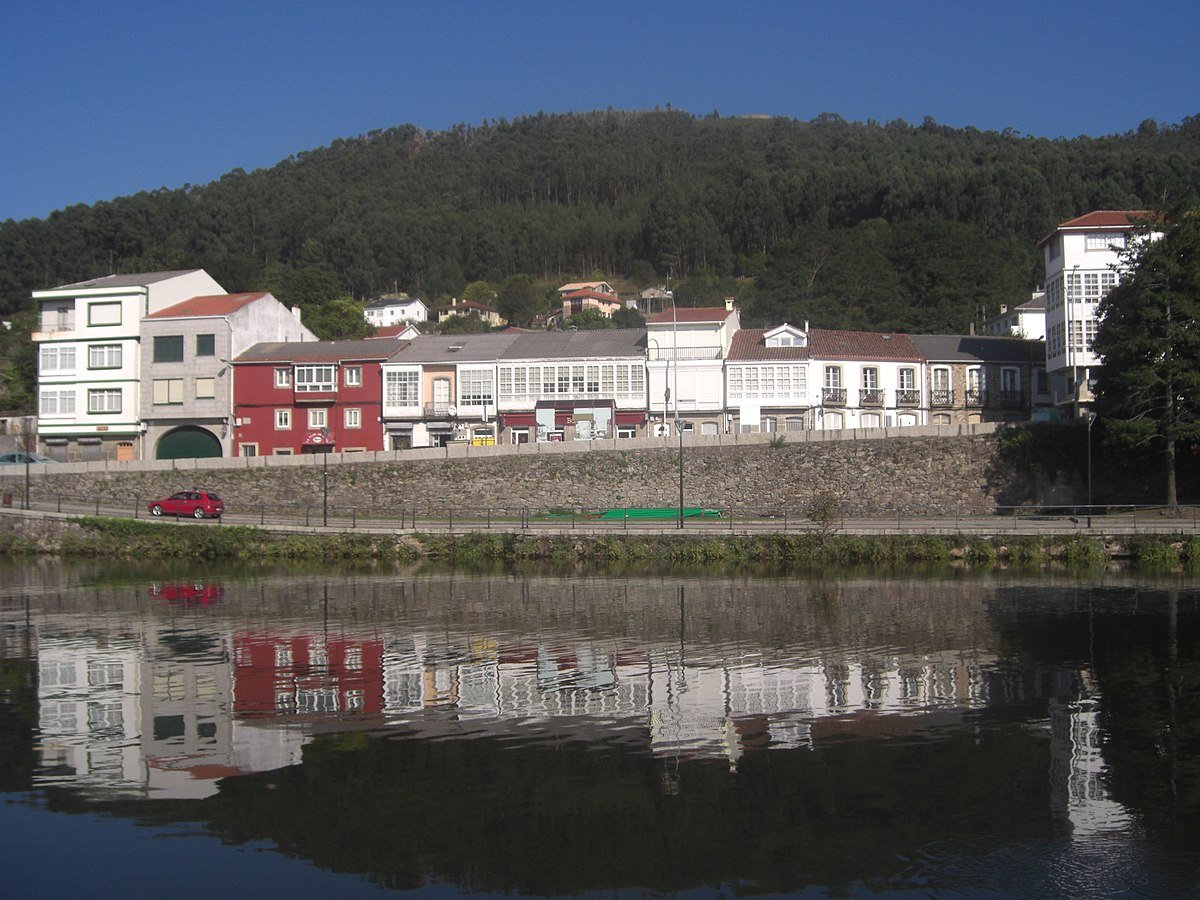
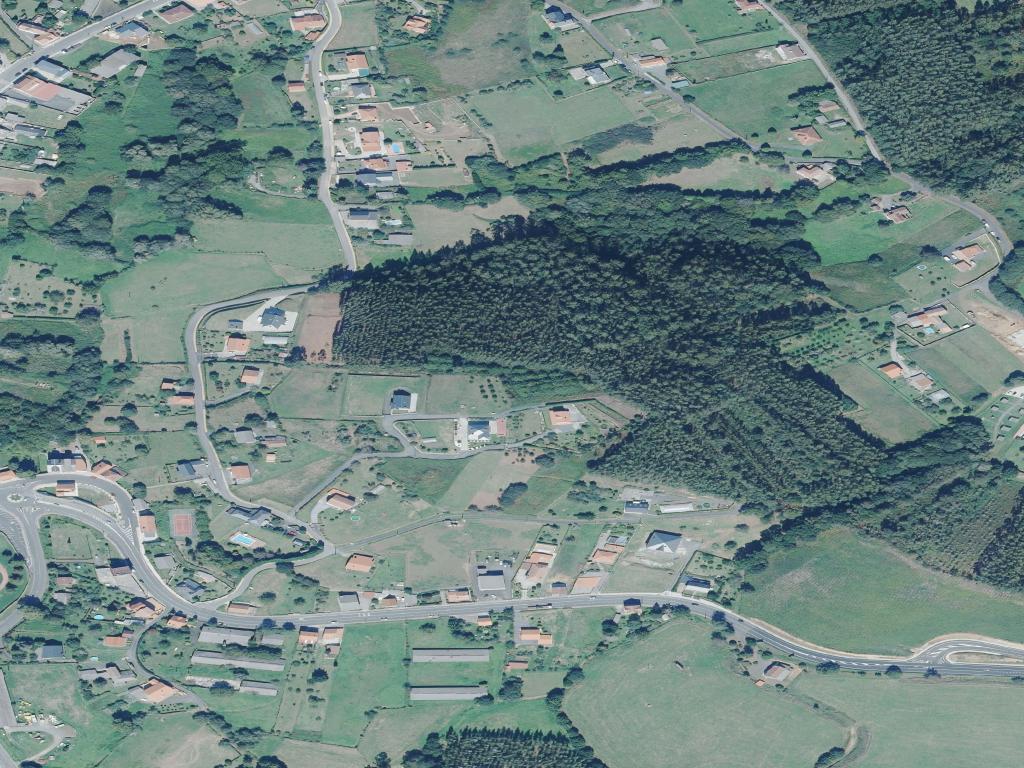
Moeche lies in the comarca of Ferrol, in the interior of Ferrolterra in northern Galicia. It is a small rural municipality with just over a thousand inhabitants, scattered across parishes and widely dispersed hamlets. This pattern of settlement is typical of this part of Galicia. Rather than a defined town centre, visitors find a patchwork of fields, narrow local roads and small clusters of houses.
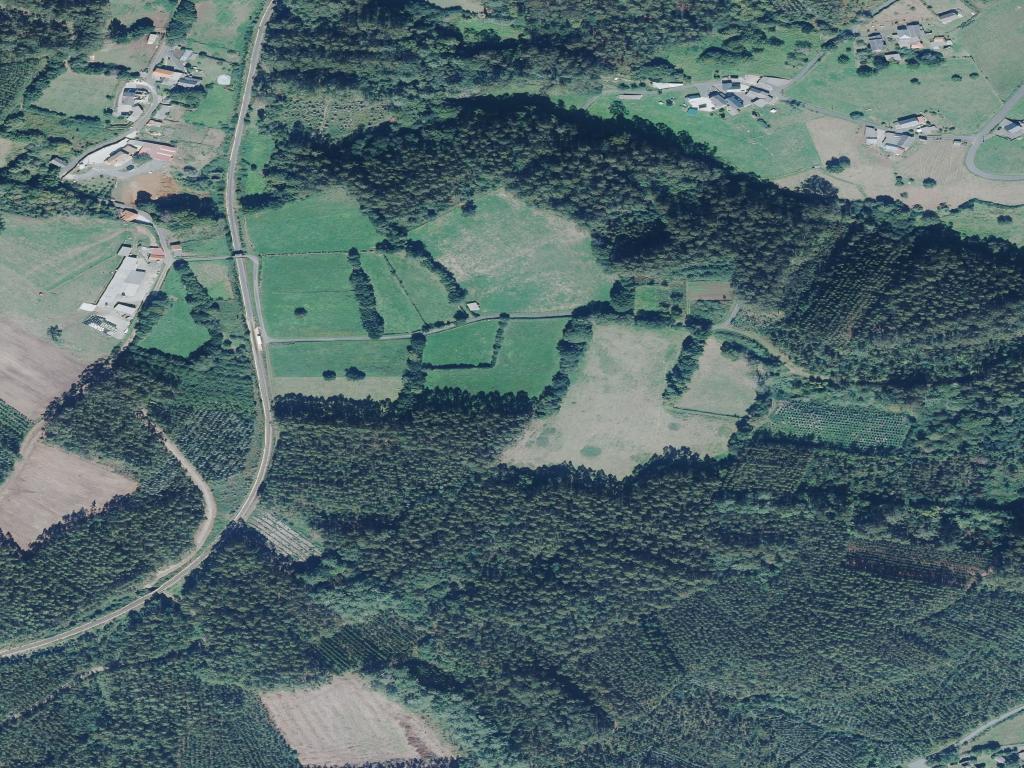
The landscape is gently undulating, shaped by low hills and short valleys. Meadows alternate with pockets of dense woodland and eucalyptus plantations. This mosaic explains much of Moeche’s traditional economy, which has long been linked to agriculture and the management of the land. It also explains the network of tracks and minor roads that connect one parish to another. Many of these routes began as paths between fields and continue to serve everyday movement across the municipality.
Anyone arriving in Moeche should not expect a compact historic quarter or a clearly marked urban core. The territory unfolds gradually, through farms, stone walls and stretches of open countryside.
The Castle That Explains Moeche
One structure provides a clear key to understanding the area’s past: the Castelo de Moeche. Of medieval origin, it stands on a small rise that overlooks the surrounding countryside. It is not a monumental fortress on the scale of some Galician castles, yet it has been significant enough to shape local history.
During the Late Middle Ages, the castle formed part of a network of seigneurial fortresses that controlled territory across northern Galicia. In the 15th century it was caught up in the Irmandiño revolts, when peasants and towns rose up against noble power and attacked many such strongholds. The building seen today is the result of later reconstructions, though its layout and defensive character remain clearly visible.
The presence of the castle helps explain why this now quiet, agricultural municipality once held strategic importance within the comarca. Its position above the surrounding land still makes that role easy to imagine.
Parish Churches and Rural Architecture
Beyond the castle, Moeche reveals itself most clearly through its parishes. Each contains small rural churches, often built in simple stone, with adjoining cemeteries and modest churchyards that continue to act as meeting points. The church of San Xoán de Moeche belongs to this tradition of sober parish temples, constructed in stone and altered at different moments over time.
Chapels and cruceiros, the stone crosses typical of Galicia, appear throughout the municipality. They stand at crossroads or at the entrances to hamlets. These elements are not isolated ornaments but part of a traditional way of organising territory and marking routes. They signal how closely faith, landscape and daily life have long been intertwined in rural Galicia.
Another common sight is the hórreo, here often known as a cabazo. These raised granaries stand beside houses or in small groupings. Some are built of stone, others of wood, with roofs of slate or tile. They are not vast or monumental examples, yet they offer insight into how harvests were once stored and protected from damp and animals.
In a few settlements, older manor houses or rural pazos can be identified. Most remain in private use and can only be viewed from the outside. Thick walls, large gateways and, in some cases, coats of arms on the façades hint at their former status within the local hierarchy.
Walking Between Hamlets
Exploring Moeche often means moving between its scattered hamlets. The simplest way to get a feel for the area is to follow the tracks and minor roads that link parishes and villages. These are not signposted walking routes in the conventional sense. They are working rural paths, still used for daily tasks and access to farmland.
Difficulty is generally low, although conditions depend on the weather. After several days of rain, some stretches become slippery or muddy, particularly on slopes and in shaded sections. The character of the landscape shifts noticeably from one parish to another. One area may open out into broad meadows, another may climb through eucalyptus-covered hillsides, while elsewhere narrow corridors of native woodland trace the line of small streams.
Progress is rarely dramatic. The interest lies in observing how the land is divided by stone walls, how houses cluster in certain spots and how paths thread between fields. This is a place where understanding grows through attention rather than through major landmarks.
Practical Considerations for a Visit
Moeche is not a destination that can be covered on foot as a single compact settlement. Distances in kilometres are short, but local roads curve and detour, so journeys can take longer than they appear on a map.
For those with limited time, focusing on the Castelo de Moeche and its immediate surroundings is a sensible approach. From there, it is possible to continue by car through nearby parishes, stopping where appropriate to observe hórreos, cruceiros or clusters of traditional houses without blocking access.
Parking requires some care. Certain entrances that seem to be public tracks are in fact access routes to private properties or farmland. After rainy periods, unpaved roads may accumulate mud and puddles, which can make driving or walking less straightforward.
Spring and early autumn are often rewarding moments to explore the area. Meadows are green and temperatures tend to be mild. In summer, the interior of Ferrolterra can become hot in the middle of the day, so it makes sense to head out earlier or wait until later in the afternoon.
Moeche does not attract visitors in search of grand monuments or a dense historic centre. Its appeal lies elsewhere, in the way the landscape functions as a whole. Dispersed hamlets, fields edged by stone walls and the web of paths that connects everything together reveal much about the rural history of northern Galicia. Time and patience allow that network to come into focus, offering a quiet but coherent picture of life shaped by land and tradition.