Full Article
about Pontedeume
Hide article Read full article
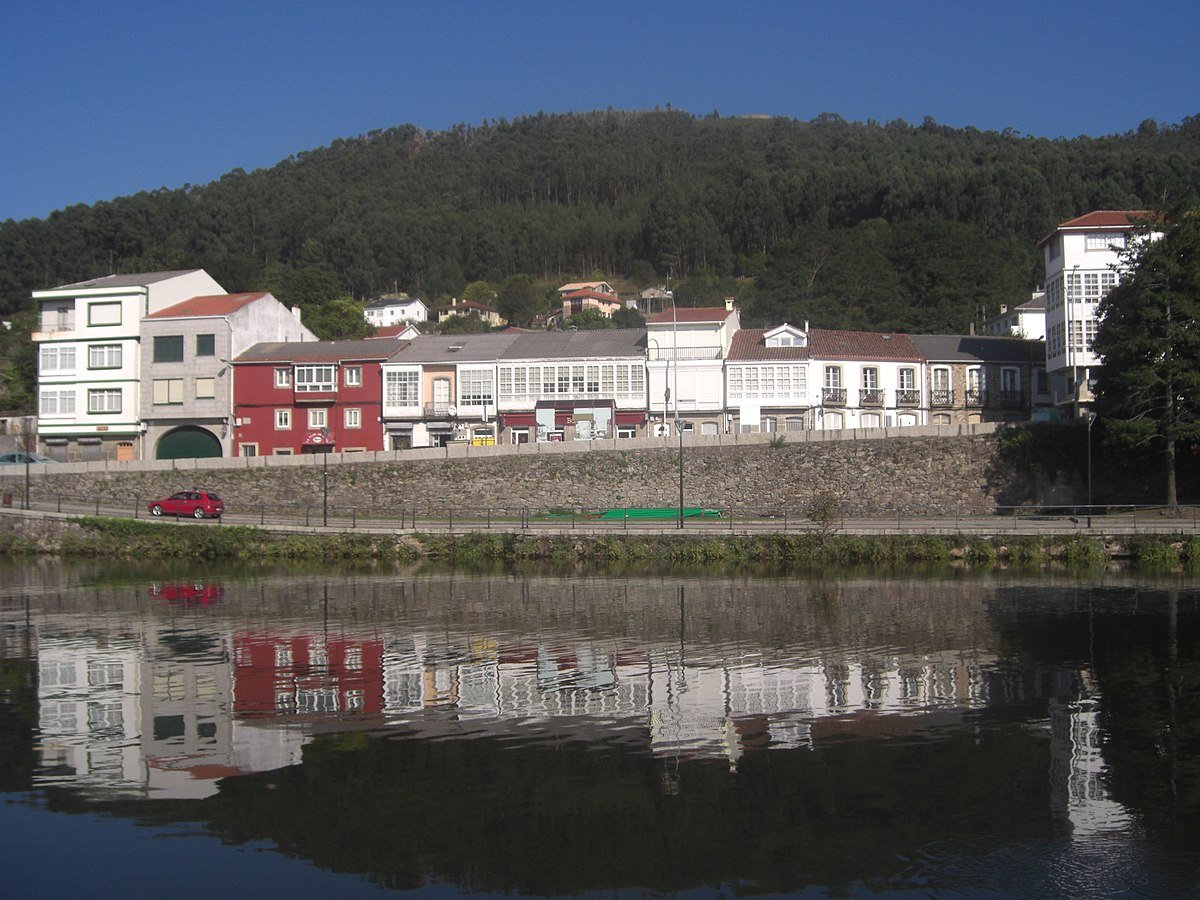
At eight in the morning on the bridge in Pontedeume, the River Eume carries a faint scent of seaweed mixed with fresh bread. Gulls call from the lampposts while the first cars cross the stone arches, tyres making a hollow sound against damp granite. Below, the water runs clear and cold, the tide not fully awake yet. On a terrace nearby, the first coffee of the day has just been poured.
A town shaped by a crossing
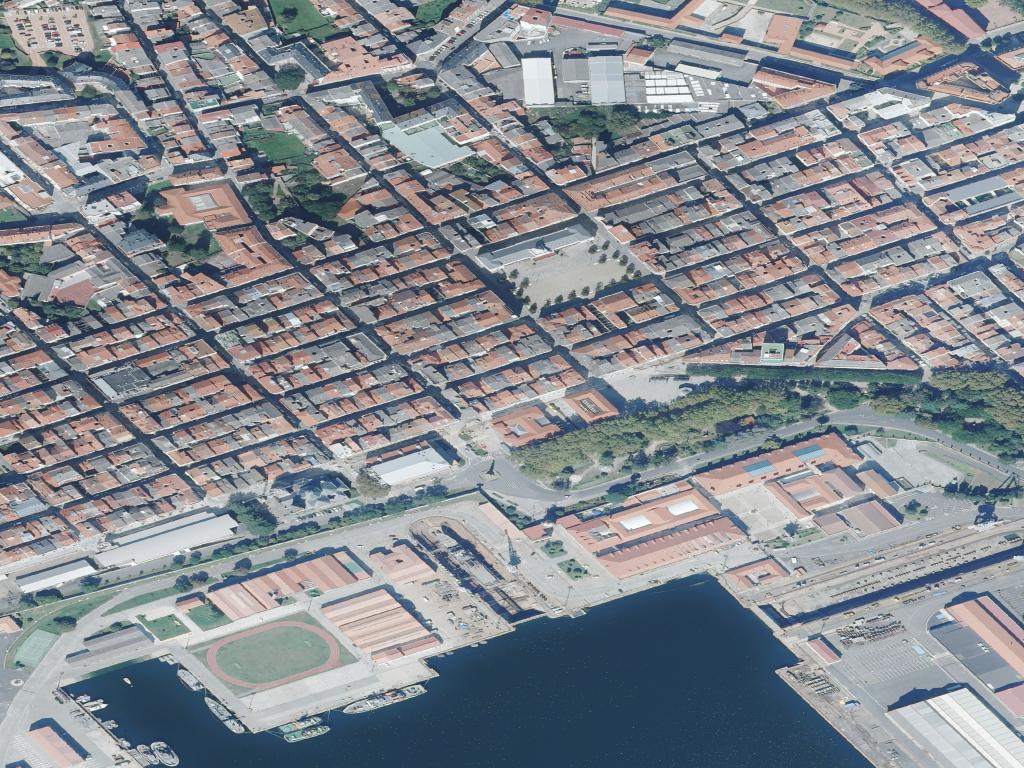
Pontedeume exists because the Eume narrows here before opening into the estuary. For centuries, this was one of the easier places to cross, and that drew in houses, trade and travellers.
In the late 14th century, Fernán Pérez de Andrade ordered the construction of a monumental bridge. Contemporary accounts suggest it approached a kilometre in length and had dozens of arches. Anyone arriving by the estuary would have noticed it. What remains today is only part of that structure. The current bridge, rebuilt in the 19th century, has fifteen arches, but it still defines the entrance to the town in the same way, linking one bank to the other.
Two unusual pieces from that medieval bridge are kept in the former Convento de San Agustín: the Oso and the Jabalí, stone sculptures that once acted as symbolic guardians of the crossing. They now sit indoors, protected from the salt-laden rain that falls here much of the year.
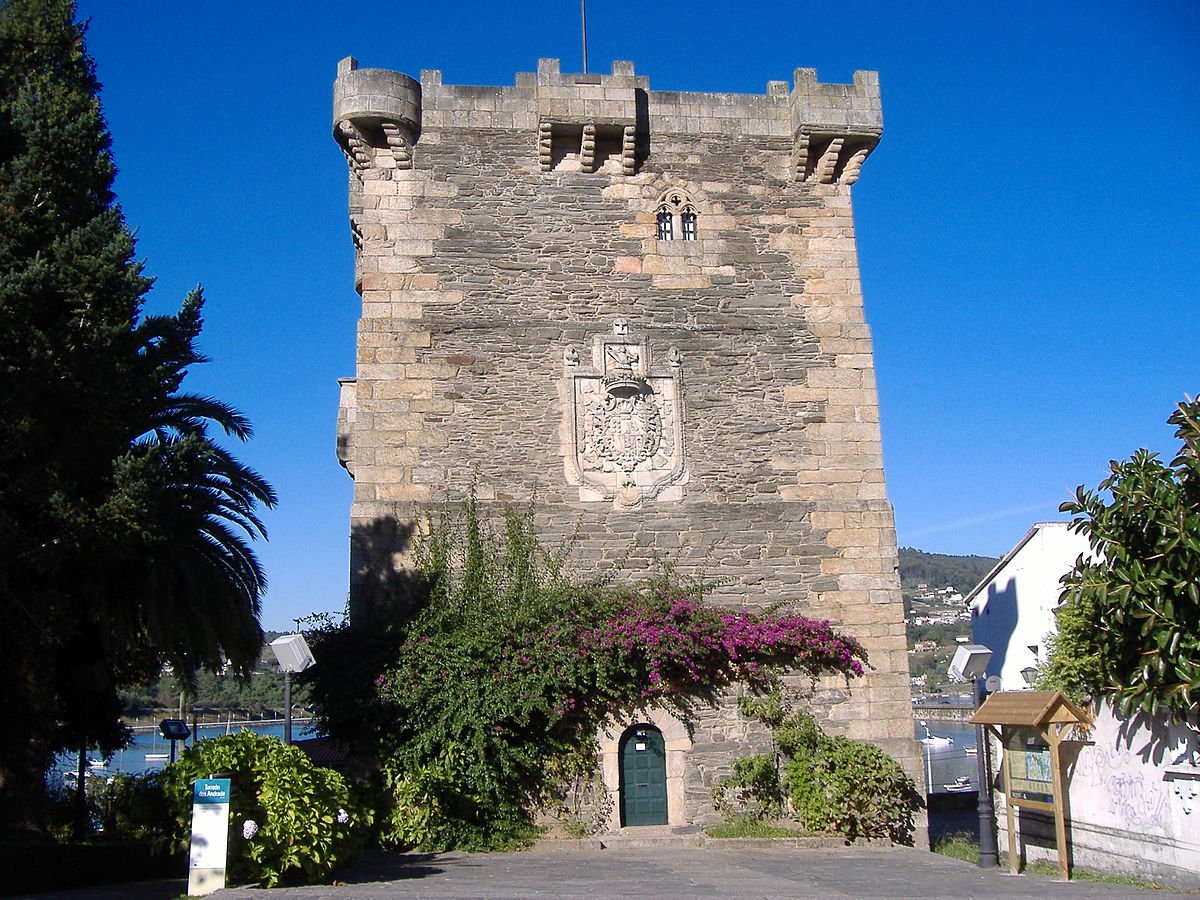
The old quarter climbs the hillside as best it can. Streets tilt steeply upwards, with narrow alleys where two people pass carefully. Balconies are painted in dark green wood, and roof tiles have been darkened by the sea air. Above it all stands the Torreón de los Andrade, a solid stone tower now used as an information point for visitors. The walk up is a climb, but the view opens calmly at the top: the estuary spreads out in grey-green tones, reeds line the marshes, and hills close in around the mouth of the Eume.
When the wind blows from the north, it carries a sharp mix of sea air and the scent from mussel rafts scattered across the estuary.
Into the forest of the Eume
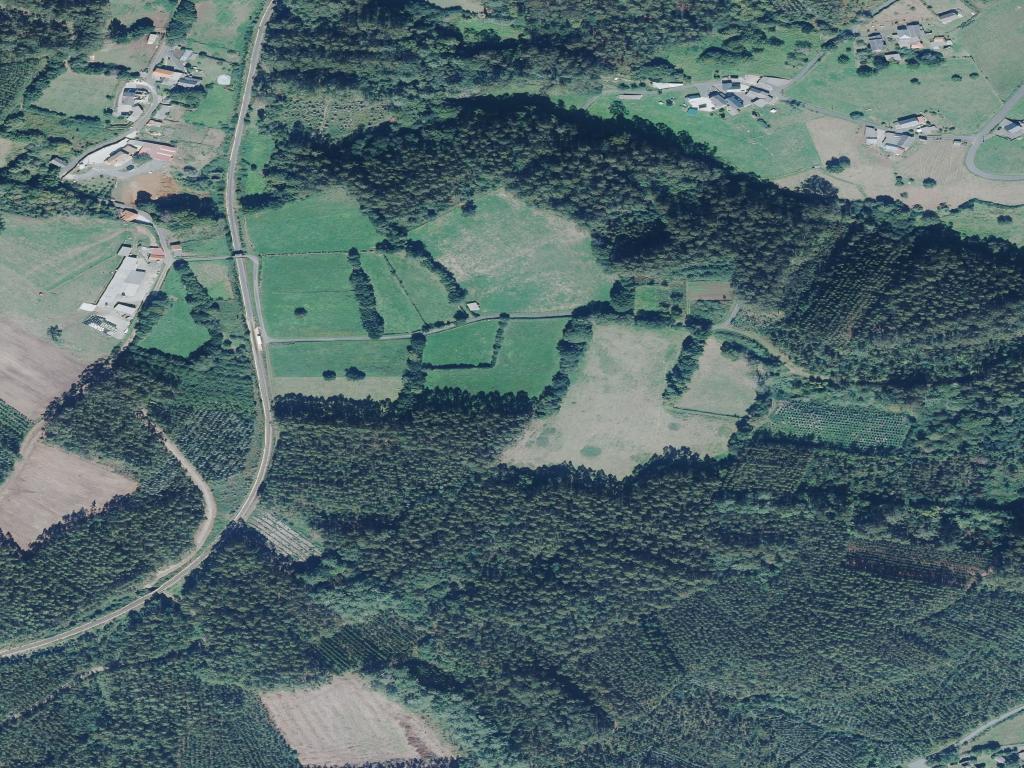
A few kilometres upstream, the valley tightens and the river begins to wind between slopes covered in dense woodland. This is where the Fragas do Eume begin, one of the largest remaining Atlantic forests in Galicia.
Entering the forest is a physical shift. Clothes pick up moisture, the ground softens underfoot, and the constant sound of water moving over stone fills the air. Light rarely falls directly. It filters through oak and chestnut trees, breaking into fragments across ferns that grow up to waist height.
One of the best-known routes follows the river towards the monastery of Caaveiro. It stretches for several kilometres, mostly in shade, with occasional inclines that make themselves known the next day. The monastery appears suddenly, perched on a rocky outcrop and surrounded by forest on all sides.
Starting early helps. By mid-morning the path becomes busier, especially at weekends in spring and summer. Carrying water is also useful. The humidity can be deceptive, and it is easy to walk for hours without realising how much effort has passed.
Market rhythms and local food
Pontedeume is not set up as a backdrop. It works as a market town. On Tuesday and Friday mornings, the central area fills with stalls and low conversations as vegetables and fish are weighed and exchanged.
The estuary still shapes what appears on the table. Octopus is common in local bars, cooked in large pots and served with paprika and oil on wooden boards. Fish pies, known as empanadas, are also typical. In some households, there is still debate over whether a cod empanada should include raisins, a discussion that can run on for quite some time.
In September, the Festas de As Peras bring the town into full celebration. For several days, music fills the streets, the smell of grilled sardines drifts through the air, and activity continues well into the night. One of the busiest moments coincides with the day dedicated to San Nicolás de Tolentino, when many locals make their way up to the Santuario do Sagrado Corazón do Monte Breamo or the sanctuary of O Soto before returning to the centre to continue the festivities.
Taking it slowly
The time of year changes the feel of Pontedeume quite noticeably. In August, the centre fills with people arriving from A Coruña or Ferrol for the day, and the streets around the bridge become crowded quickly. June and September tend to be calmer, with long days, lighter traffic and the river still carrying a good volume of water.
Early hours make a difference. Before nine, the bridge is almost empty and the estuary seems larger than it is. Light enters low across the water, and the sound of a small boat engine occasionally breaks the quiet as it heads out towards the sea.
For a view of the estuary away from the centre, the road towards Ares or Redes offers a simple option. There are places to stop along the way, and from there paths lead down through pine trees towards the shore.