Full Article
about Somozas, As
Hide article Read full article
Arriving and getting your bearings
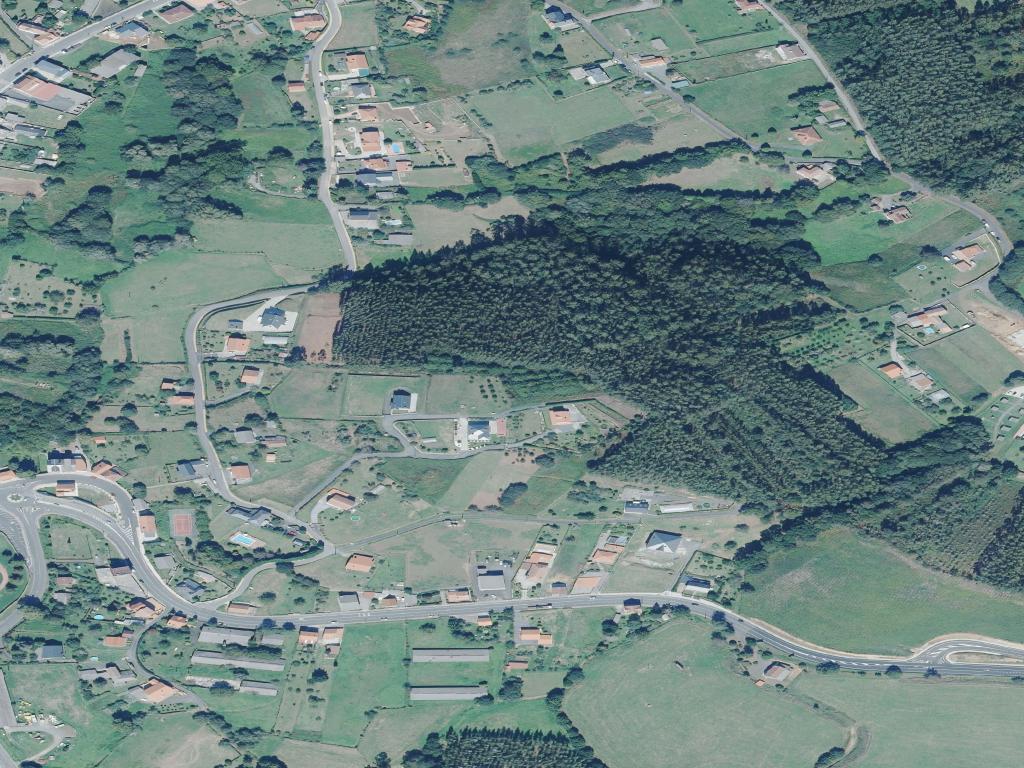
Tourism in As Somozas is easy to grasp once you get there. You park without much fuss and walk for a bit. There is no clearly defined historic centre, nor streets designed for long strolls. It is a dispersed rural municipality where the focus is on the landscape, following roads or tracks rather than wandering through a compact town.
Coming by car is the usual option. In the main settlement, it is generally straightforward to leave the car on the street unless there are local festivals or events. Day-to-day life here depends on driving. Villages are spread out, and the routes that connect them feel more like links between parishes than streets within a town.
It helps to arrive with a bit of planning. Shops are few, and opening hours can be irregular outside typical times. There are no tourist information offices waiting on every corner, and public maps are not something you will come across frequently.
A scattered place, not a central square
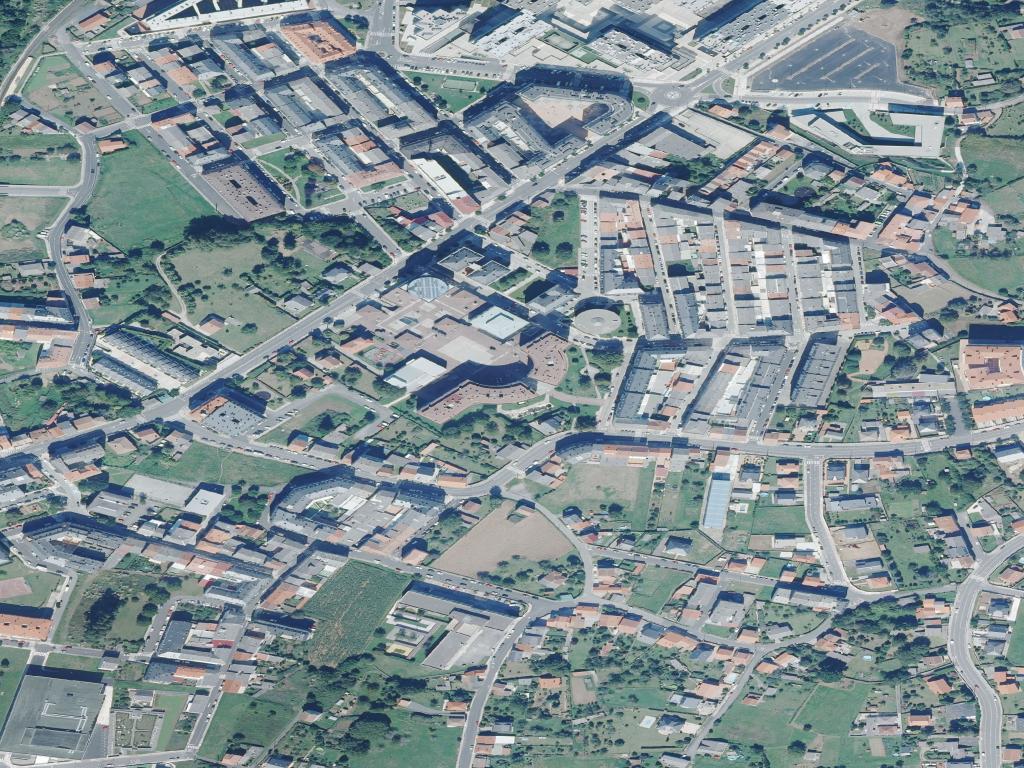
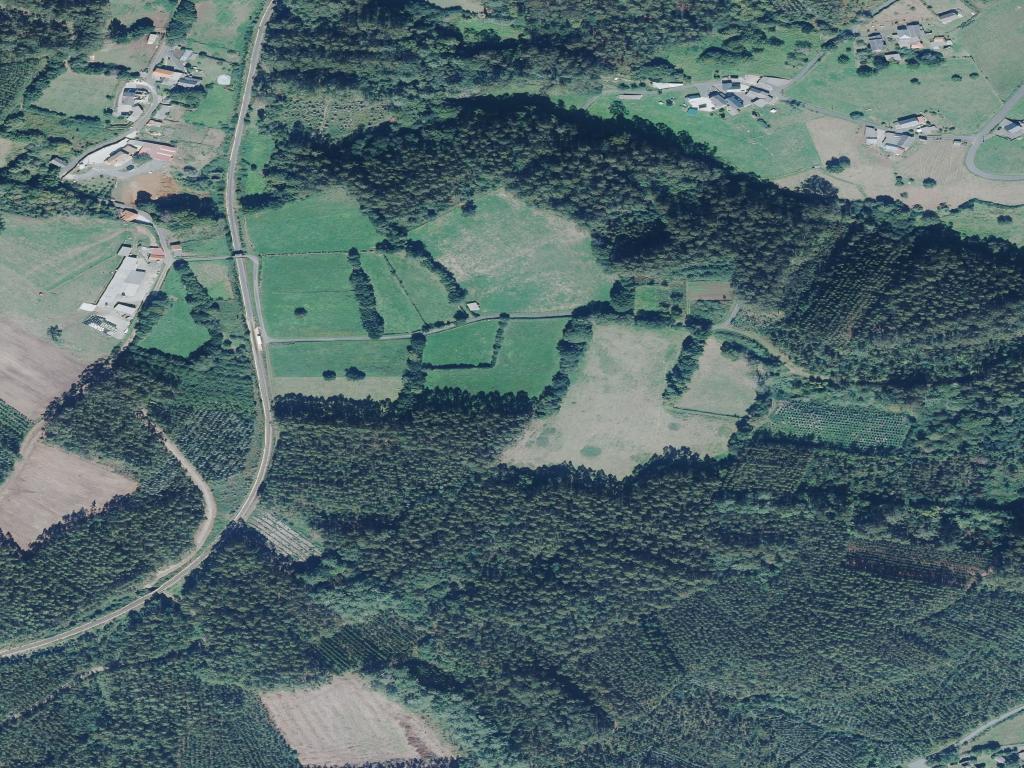
As Somozas does not revolve around a single square or focal point. The municipality is divided into parishes and small villages, each with its own cluster of buildings. Detached houses, fields and connecting paths shape the layout.
The parish church of Santa María is usually the most visible building in the main area. It is simple, in keeping with many churches in this part of Galicia. If it is open, a brief look inside is enough. There are no large altarpieces or striking decoration that demand time or attention.
Around the area, you will notice hórreos and cruceiros. Hórreos are traditional raised granaries, built to keep food dry and protected, while cruceiros are stone crosses often found at crossroads or near churches. They appear scattered rather than grouped together. Many stand on private land. Some are well preserved, others show clear signs of age without recent restoration. If you want photographs, it is best to take them from the road or from public paths.
Paths shaped by use
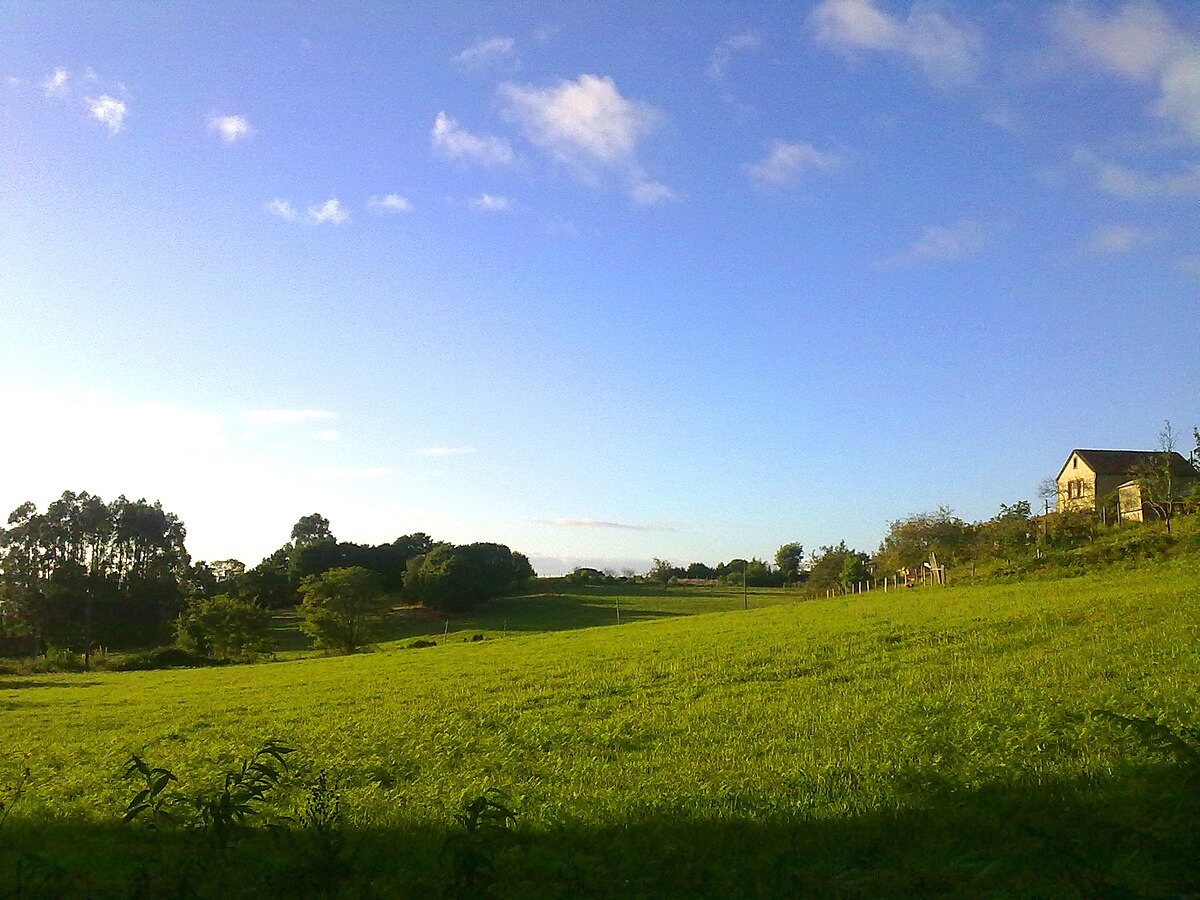
The landscape is what defines As Somozas. Gentle hills, open fields and patches of woodland stretch across the area. Between parishes, traditional corredoiras still survive. These are narrow, often sunken paths lined with walls and trees, worn over centuries of use. They are part of the everyday fabric rather than a curated attraction.
Small rivers also run through parts of the municipality, including the Xares in some sections. Near the water, vegetation becomes denser and the ground softer. After several days of rain, puddles form easily and the mud can be thick and sticky.
There are no signposted routes in the style of natural parks. Most paths follow local patterns of movement rather than mapped walking trails. They are suitable for a short walk rather than a planned excursion that takes up the whole day. The idea is to wander for a while, not to tick off a defined route.
Food and basic services
Services in As Somozas reflect its size. There may be a basic shop or two, but little beyond that. If you are coming from Ferrol or from the coast, it is practical to bring what you might need with you.
Food in the area follows the seasons. Produce from the garden, potatoes, some meat and simple home-style dishes are typical. There is nothing here that requires a long detour purely to sit down for a meal. Eating is part of daily life rather than a reason to travel.
Before you leave
It is worth setting expectations before visiting. This is not a monumental town filled with landmarks. The appeal lies in the quiet and in driving slowly between villages, taking in the surroundings as you go. For many visitors, an hour or two is enough to understand what it offers.
One small but important point concerns parking. Avoid blocking entrances to fields or agricultural tracks. It may seem obvious, yet it happens more often than it should. These access points are used every day. If a car is left in the wrong place, someone will need to get through.