Full Article
about Outes
Ocultar artículo Leer artículo completo
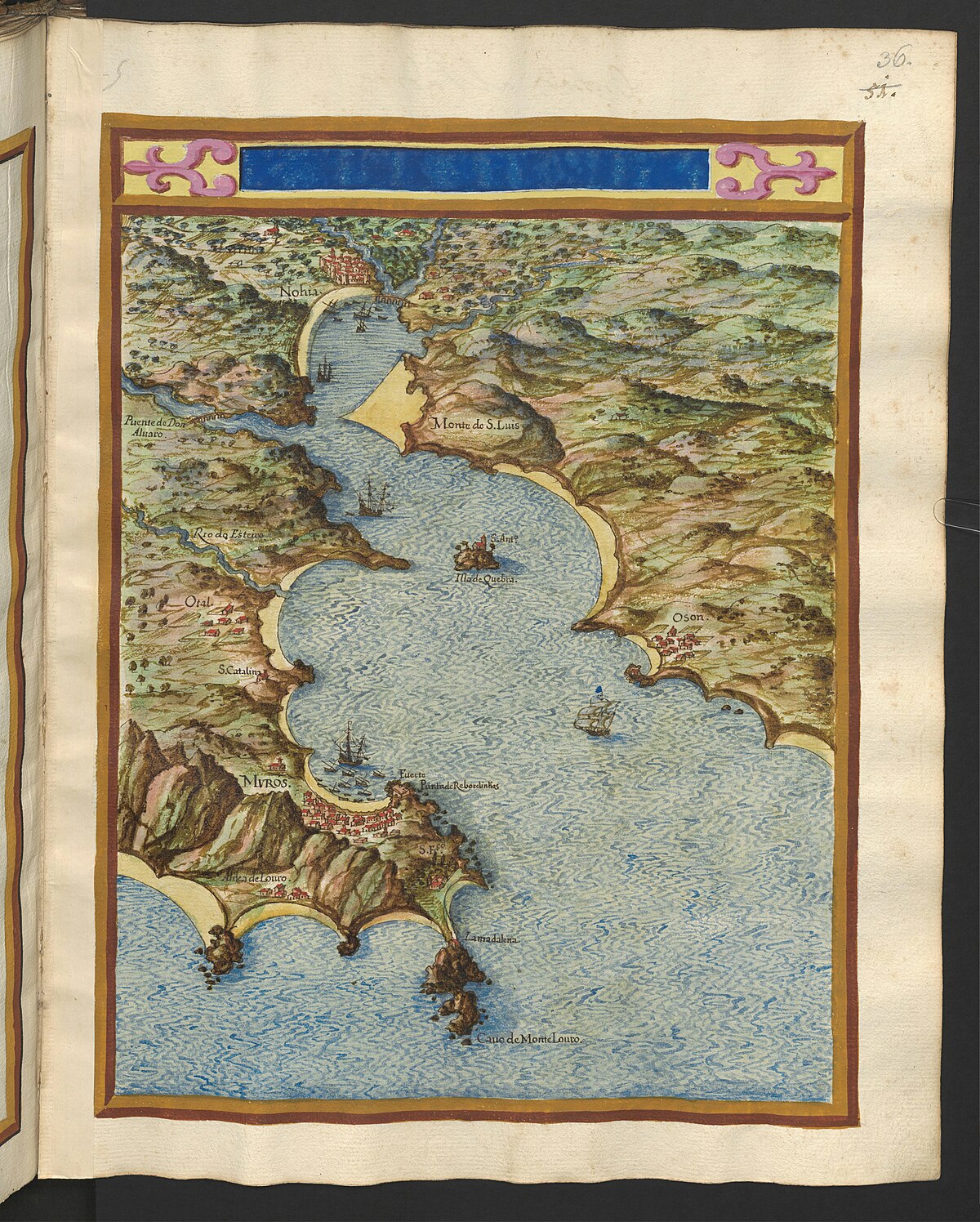
The 08:14 school bus brakes where the Tambre estuary meets the road. Lorry drivers pause here too, queuing for coffee thick enough to stand a spoon in while cranes shift eucalyptus logs onto ships bound for northern Europe. Nobody lingers for the view—yet that muddy swirl of water is the reason Outes exists at all.
With barely 5,000 residents scattered across coastal flats and inland hamlets, the municipality behaves more like a working tide-chart than a conventional village. Parish lanes end abruptly at oyster racks; tractors turn into boat ramps at high water. The place makes sense once you stop looking for a postcard centre and start following the rhythm that dictates everything else.
Estuary Life
Outes has no sand-fringed promenade. Instead, the waterfront is a practical jumble of net sheds, refrigerated lorries and a single ice plant that rattles from dawn. Walk the short concrete pier around half-tide and you’ll see women in rubber overalls raking clams by hand, their baskets slung from weathered trolleys. The activity is hypnotic, but bring shoes you don’t mind ruining—what looks like firm brown earth can swallow an ankle when the siren announces the water’s return.
Broña beach lies eight kilometres west, reachable by a lane that smells of pine and diesel in equal measure. At high tide the crescent is a placid paddling pond warmed by the shallow ría; at low tide it becomes a kilometre of rippled sand dotted with cockle holes. The turn-around is fast—about six hours between swimmable water and boot-sucking mud—so check the boletín de mareas pinned outside the council office or simply watch the locals: when they retreat, you should too.
Up the Hill, Down the Pint
The council headquarters sit 110 m above sea level in the parish of San Xulián, a name shared by the squat granite church opposite the only bank. Step inside and you’ll find baroque foliage carved by sailors who had clearly spent more time at sea than in art class. Sunday mass finishes at 11:45; by 11:50 the worshippers have crossed the square to Bar Central where coffee is 90 c and the croissants are still hot. There is no souvenir stall, no interpretation board—just a sense that life continues whether visitors understand it or not.
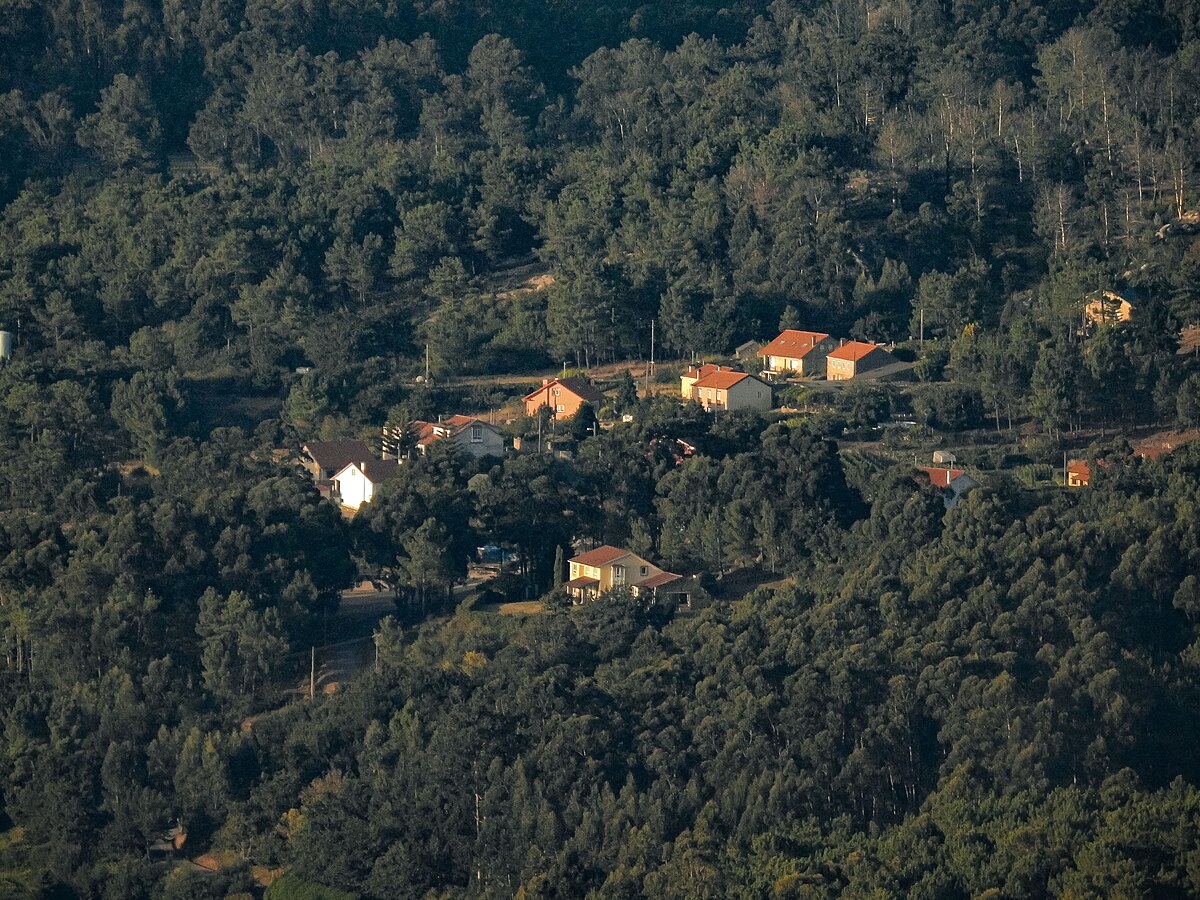
Roads climb from here into the Serra de Outes, gaining 400 m within ten minutes of hairpins. The reward is not a dramatic summit but a patchwork of tiny meadows held up by dry-stone walls. In April these fields glow yellow with gorse flowers; by July they’re burnt bronze and crackling underfoot. Park at the roadside crucifix near A Igrexa village: a ten-minute stroll along the grassy firebreak gives a hawk’s view of the entire ría, Muros headland framed by wind turbines on the horizon. Cloud cover rolls in without warning—carry a light jacket even when the coast below looks Mediterranean.
Eating What the Water Gives
Galician seafood is hardly a secret, yet Outes still prices it for neighbours rather than tour operators. At Pulpería A Serra, owner Manolo sets an octopus to boil in a copper cauldron visible from the dining room. The creature is snipped into bite-sized medallions, dressed with olive oil and pimentón, then served on a wooden plate that looks suspiciously like a cheese board. Brits expecting chips get them—ask and a bowl of hand-cut fries appears without eye-rolling. A half-portion feeds two for €12; house white adds another €2.
If tentacles feel a stretch, Churrasquería O Castro grills churrasco beef that would pass for sirloin in a London gastropub. The seasoning is nothing more than coarse salt, but the meat arrives exactly as requested because Galicians actually listen when you say “medium”. Locals accompany it with glasses of young Mencía wine; cider from Asturias is kept for the Brits who miss the apple tang.
Lunch service shuts at 15:30 sharp. Arrive late and you’ll be offered coffee while chairs are stacked around you—no malice, just the certainty that the working day restarted two hours ago and the kitchen needs hosing down before the evening shift.
Practical Currents
Arrival: Santiago airport is 50 min by hire car. The last twenty minutes on the N-550 sweep past eucalyptus plantations; lorries brake suddenly when entering Outes so keep distance. Public transport exists—a Monbus service from Santiago bus station—but only four daily, timed for school and hospital runs rather than tourists.
Sleep: Rural houses charge €60–80 for a double room with breakfast, usually scrambled eggs and cured ham rather than the full British. Hotel chain accommodation is absent; booking sites list three casas rurales and one roadside hostal. Weekends in late July fill with families from Santiago escaping the city heat—reserve ahead or you’ll end up in Noia, 15 km away.
Money: Contactless works in the two supermarkets, but both close 14:00-17:00 and foreign cards trigger a €20 minimum. The single cash machine beside the church runs dry on Friday night; plan accordingly.
Driving etiquette: Single-track lanes link the seven parishes. Pull in when a pick-up appears behind you—they know every bend and won’t hesitate to overtake on a blind corner. Flashing headlights mean “I’m coming through”, not “after you”.
When the Tide Turns Against You
Outes frustrates travellers who want attractions ticked off in two hours. There is no medieval quarter, no interpretive centre, no Instagram swing suspended above turquoise water. What you get instead is an authentic slice of coastal Galicia where mothers still shoo children indoors when the north wind carries rain sideways. Come with a rigid checklist and you’ll leave within the hour; treat it as a base for slow exploration and the municipality begins to deliver.
Weather can scupper the best-laid plans. Atlantic fronts arrive in minutes, turning mirror-calm estuary into a brown churn where even seagulls walk rather than fly. On such days forget beaches and head inland: the hill village of Toxos outos has a stone granary trail, and the café under the town hall lights its wood-burner year-round. A plate of caldo gallego (chunky potato and greens broth) costs €3 and buys you an hour of warmth while the storm passes.
Evening entertainment is limited to a handful of bars showing La Liga on muted televisions. Conversation drifts between mussel prices and EU fishing quotas; join in and someone will draw tide tables on a beer mat to explain why the clams tasted better last week.
Heading Out
Leave by the same road you entered, but time departure for an hour before high water. Pull off at the lay-by signed “Mirador das Xubias” and look back: oyster platforms float like rafts of grey Lego, while the peaks of the Torres del Tambre catch late sun. The scene won’t make a souvenir fridge magnet, yet it summarises Outes perfectly—an unglamorous, functioning marriage of land and sea that carries on regardless of who stops to watch.
Drive north towards Santiago and the estuary mouth soon disappears behind pine ridges. Within twenty minutes you’re back on a dual carriageway, coffee chains glowing in the dusk. The transition feels abrupt, almost unnecessary. Somewhere behind you the tide will drop again, uncovering clam beds and shifting the whole timetable for tomorrow. Out here, that’s the only itinerary that matters.