Full Article
about A Guarda
Hide article Read full article
A Guarda está en el sur de Galicia. El Miño se abre aquí al Atlántico y Portugal queda justo enfrente. La gente viene por dos cosas: el castro de Santa Trega y la langosta. Ambos atraen a mucha gente. Si vienes, conviene que sepas cómo funciona.
Subir a Santa Trega: consejos prácticos
El aparcamiento del castro suele ser de pago. Para las 10 de la mañana ya está lleno muchos días. Puedes subir andando desde el pueblo; se tresa una hora cuesta arriba, menos para bajar. Si vienes en verano o fin de semana, olvídate del coche al mediodía.
No es un Machu Picchu gallego. Es un poblado castreño grande, con murallas y bases de casas circulares entre matorral. Lo que ves son los cimientos. Hay algunas reconstrucciones que ayudan a entender la planta.
Por el camino hay petroglifos. No son fáciles de ver si no los buscas expresamente; la mayoría pasa de largo.
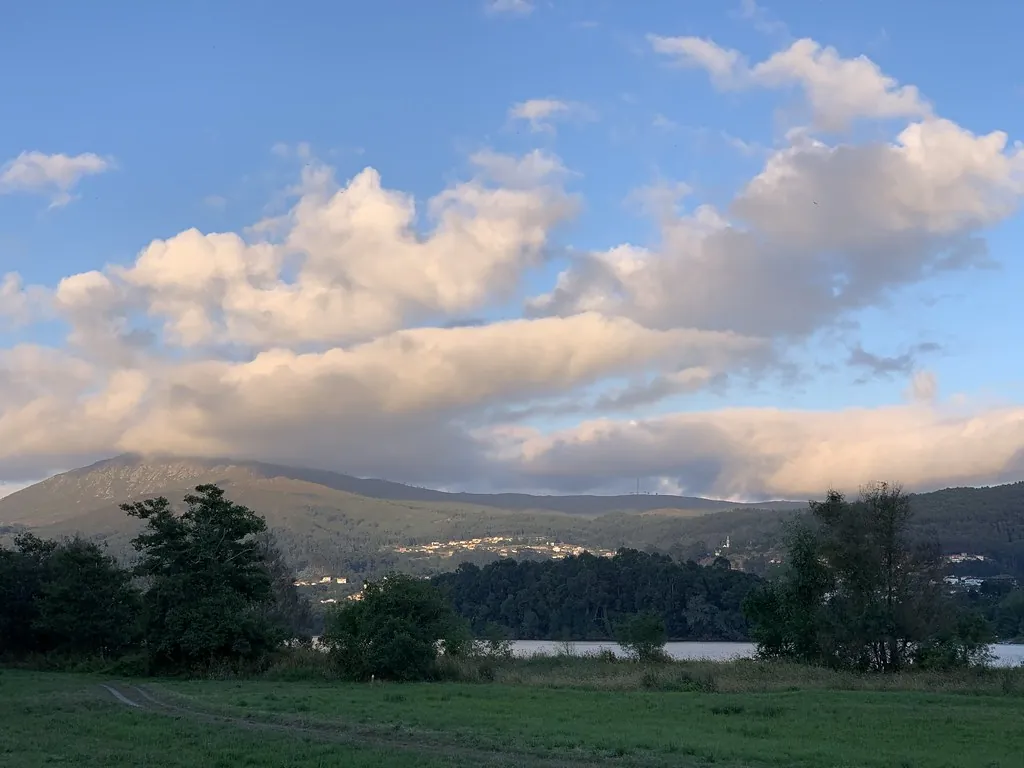
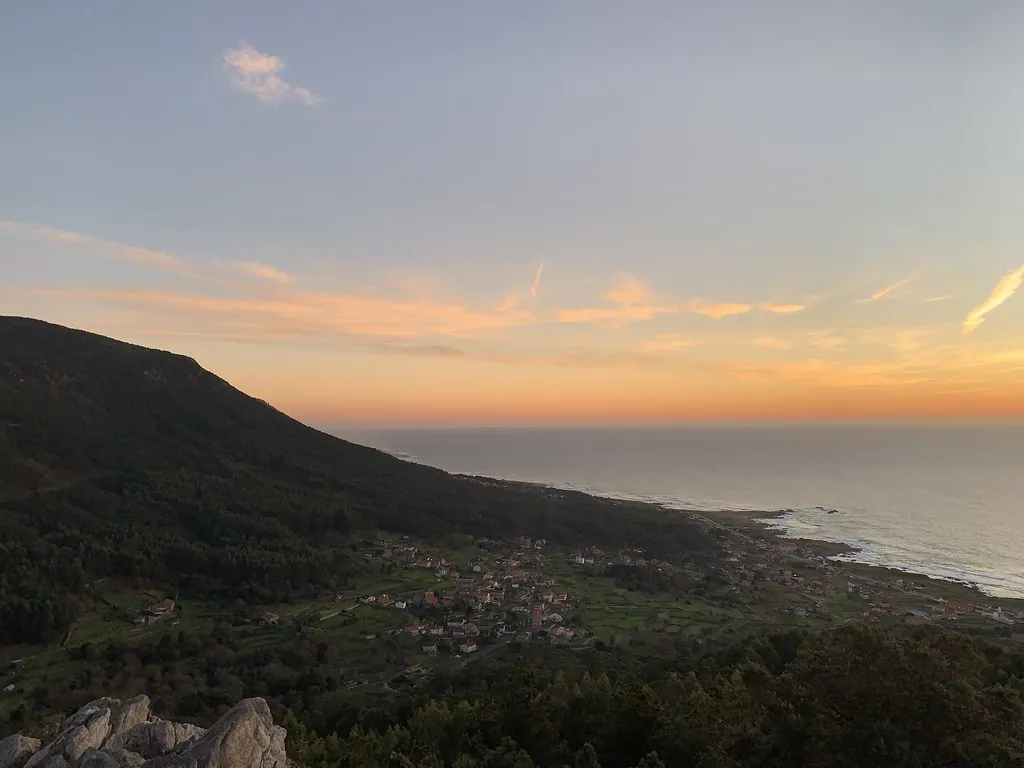
La vista es lo que paga el esfuerzo: el río Miño abajo, Portugal al otro lado, la desembocadura hacia el mar. En un día claro, merece la pena. Cuando hay niebla, que es frecuente, no se ve nada.
El museo del castro es pequeño. Da contexto sobre quién vivía aquí y cómo funcionaba el asentamiento. Se visita rápido; si hace buen tiempo, casi nadie se queda dentro.
El puerto y la langosta
El puerto tiene otro ritmo. Los barcos salen a pescar y eso marca el ambiente. Por las mañanas suele haber movimiento en la lonja.
En una fachada del puerto hay un mural enorme dedicado al mar. Destaca por su tamaño más que por otra cosa.
A Guarda es conocida por la langosta. En verano celebran una fiesta gastronómica alrededor de ella y el pueblo se llena. Es cuando todo es más caro.
La langosta tiene buena fama, pero no es lo único que se come aquí. Si ves caldeirada de peixe en algún menú, suele ser una opción más directa. Es un guiso sencillo con pescado de roca, patata y pimentón; refleja más la cocina diaria gallega que un festín.
Iglesia y monasterio
La iglesia parroquial está en el centro, construida sobre templos anteriores. La torre actual es una reconstrucción del siglo XIX, algo más alta que la original.No es un monumento que atraiga visitas por sí solo, pero ocupa un lugar central y se ve paseando.
El monasterio benedictino sigue habitado.Es austero por fuera.Tiene claustro interior.Forma parte del tejido del pueblo sin llamar especialmente la atención.
Paseos: río y monte
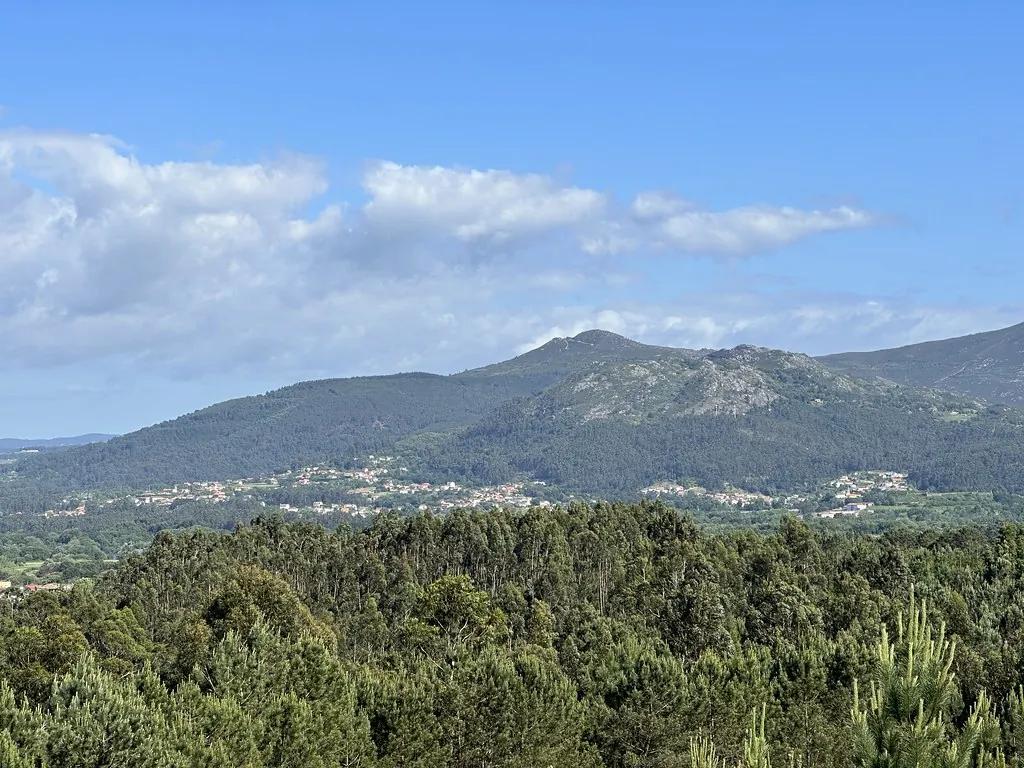
Si te quedas más tiempo,puedes caminar.Hay un paseo junto al Miño ,plano ,con Portugal siempre enfrente.También hay senderos por Monte Santa Trega ,algunos pasan cerca de zonas con petroglifos.Son alternativas más tranquilas a la carretera principal llena de coches .
A Guarda está en la ruta costera del Camino de Santiago .Es normal cruzarse con peregrinos entrando o saliendo del puerto ,con mochila ,rumbo a la siguiente etapa.Dan movimiento al pueblo incluso fuera de temporada alta .
Lo básico para organizarte
Ven temprano.A media mañana ya se forma cola para subir al castro y aparcar se complica.En julio o agosto ,paciencia.Hay más gente en todas partes y los precios suben durante las semanas fuertes .
La playa urbana del pueblo es normal.Para algo más abierto ,puedes ir en coche a arenales como Area Grande o O Muíño.El agua del Atlántico está fría.Eso no cambia .
A Guarda funciona como conjunto :el castro da historia y vistas ,el puerto mantiene vida diaria ligada al mar ,el río marca frontera .Ve con expectativas ajustadas sobre Santa Trega .Y prepárate para compartir espacio ,sobre todo en verano .