Full Article
about Tomiño
Ocultar artículo Leer artículo completo
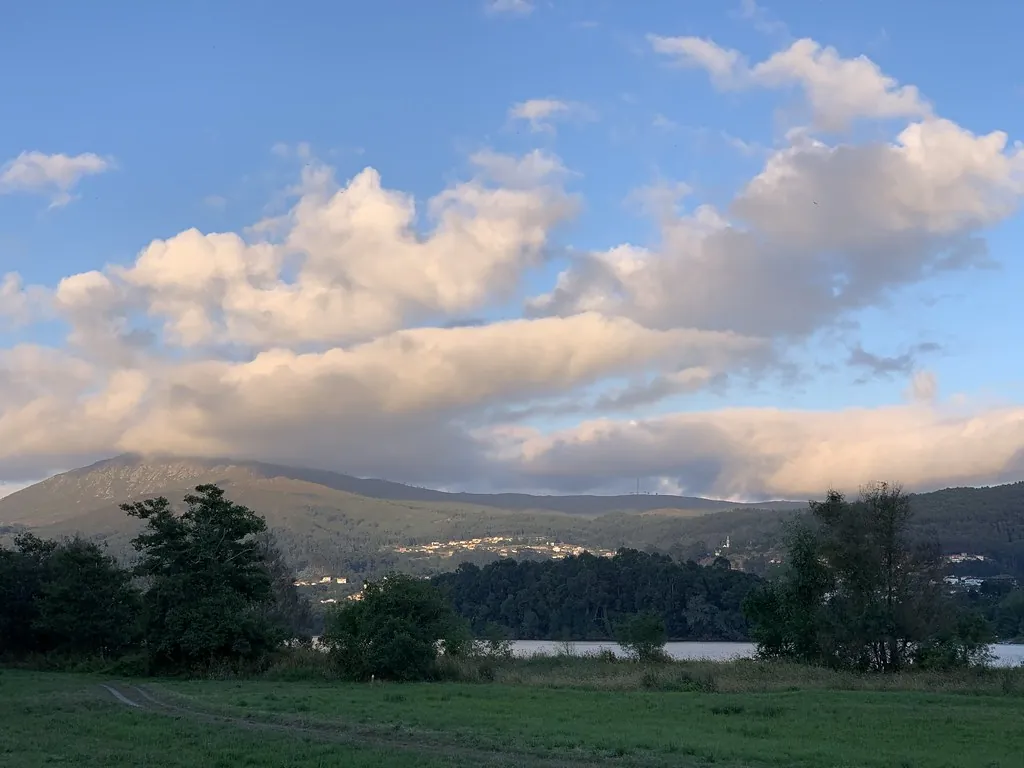
The Miño slips past Tomiño so lazily that Portugal feels closer than the nearest supermarket. Stand on the Spanish bank at Goián and you can lob a stone into Portuguese waters, though local fishermen would rather you didn't. Their rowing boats still bob here each dawn, working the same pools their grandfathers fished when smuggling brandy was a second income.
This is the country's southernmost corner, a municipality stitched together from twelve scattered parishes rather than a single nucleated village. Vineyards roll over the low hills, eucalyptus groves scent the air with cough-drop sharpness, and every lane seems to end at a stone cross or a tiny wine cellar whose owner only opens if you ring the day before. Tomiño refuses to hurry. It doesn't do Instagram moments. What it offers instead is a lesson in how Galicia unwinds when nobody's watching.
Wine, river and wet feet
The O Rosal sub-zone of Rías Baixas begins here, meaning the vines are legally entitled to the same albariño glamour as the coast an hour away. Prices stay lower because the Atlantic breeze has weakened by the time it climbs the valley, so the wines carry less salinity and more ripe peach. Bodegas such as Santiago Ruiz or Terras Gauda will open for tastings (£8–£12 for three glasses) but only with prior notice; their staff are usually out in the fields before nine and won't return until the siesta hour ends at four.
Between bodegas, the Miño provides the obvious playground. Summer weekends see Spanish and Portuguese families converge on the grassy banks at Goián, sharing cool-boxes and portable barbecues despite the border signs. Water levels fluctuate wildly after rain upstream; what looks like a safe shingle beach can be knee-deep an hour later. The river also hides a vicious undertow in the main channel, so most swimmers stay in the backwaters. Lifeguards appear only during July festivals – otherwise you're on your own.
Upstream at Tui the medieval bridge charges E1.35 toll for cars entering Spain; walk across for free and you can breakfast on pastel de nata in Valença before lunching on Galician octopus back in Tomiño. The Portuguese border is so soft that locals treat it as a high street extension: petrol is cheaper south of the river, decent bread is better north.
Parish-hopping without a plan
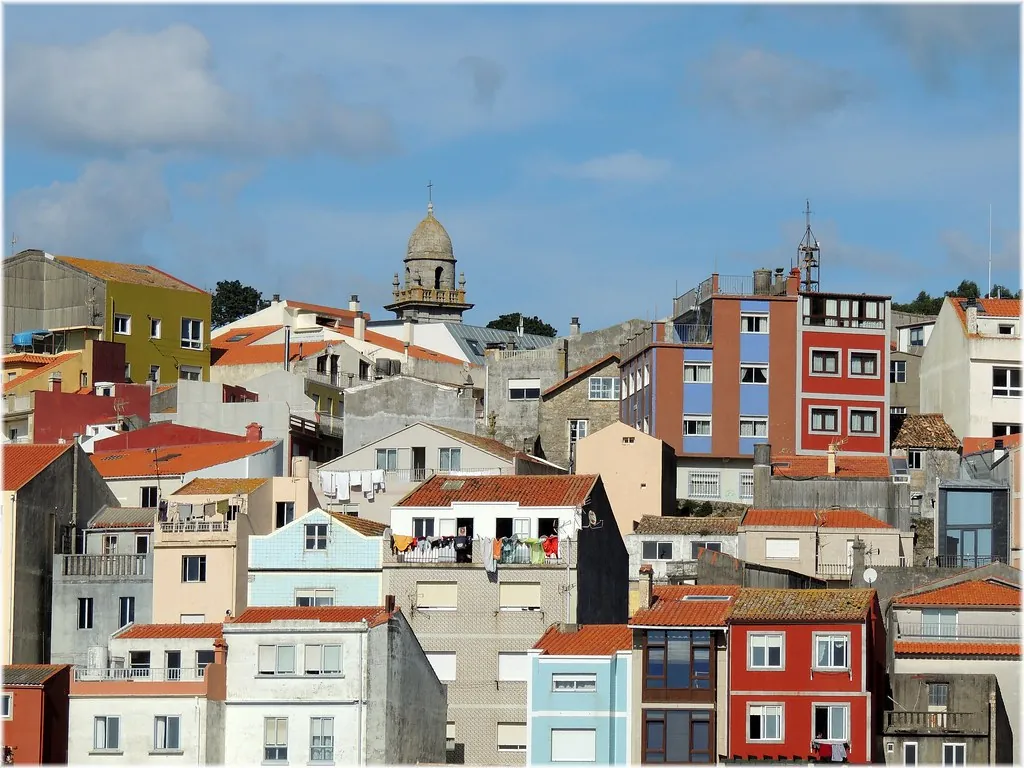
Forget the idea of a single "old town". Tomiño's population of 13,500 is sprinkled across hamlets linked by lanes barely wide enough for two tractors to pass. The only sensible strategy is to choose two churches, one viewpoint and one bar, then let the gaps fill themselves in.
Start with San Bartolomé de Rebordáns, ten minutes' drive west of the main PO-340. The Romanesque origin is visible in the squat tower and weathered capitals, though 18th-century builders plastered much of the interior in powder-blue and gilt. Mass is sung at 11:00 on Sundays; turn up ten minutes early and someone will unlock the door even if you clearly aren't congregation material.
From Rebordáns, follow signs for Pazos de Reis. The road climbs through baby vineyards, each plot identified by hand-painted boards: "Albariño Pazo de Señoráns 2026". San Martiño here is larger, its baroque altarpiece crowded with writhing cherubs. The priest keeps the key in the house opposite; ring the bell and he'll wipe communion wine from his fingers before letting you in. The atrium faces west, so evening light turns the granite honey-coloured – photographers arrive at 20:00 in May and stay twenty minutes.
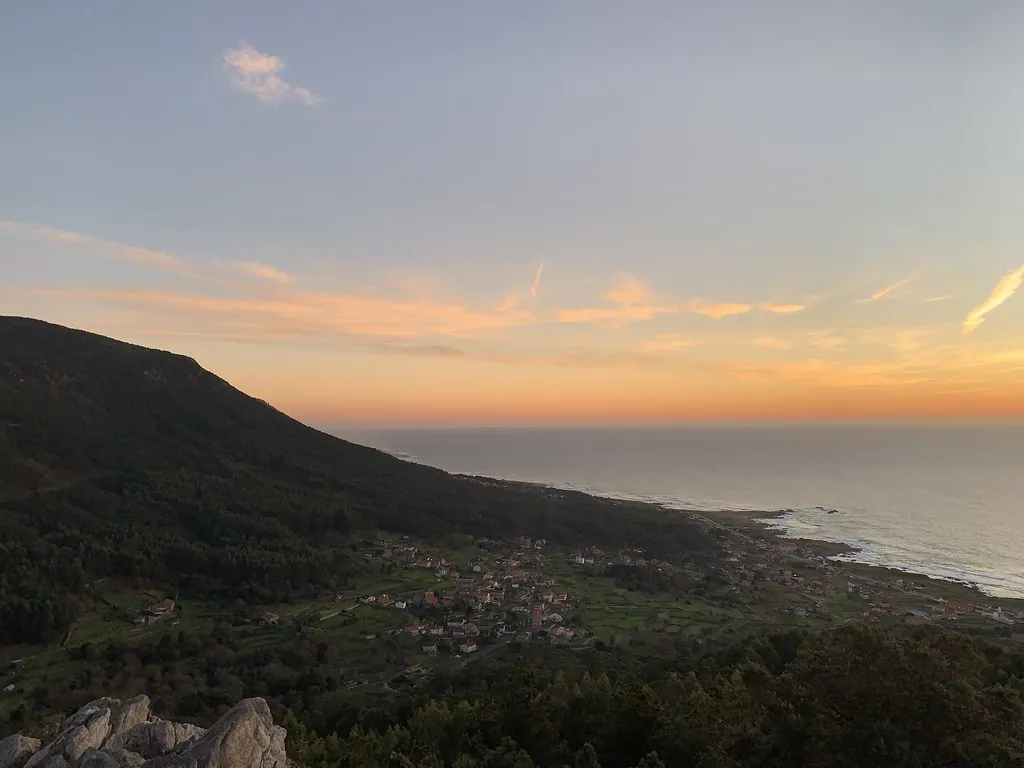
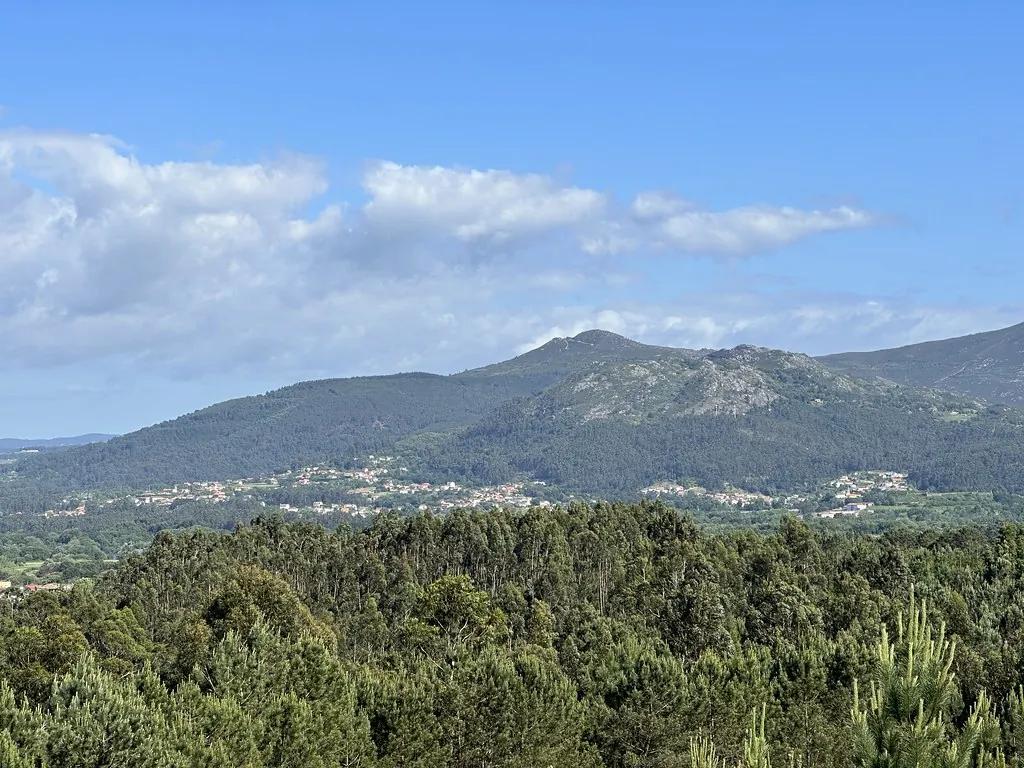
The mountain everyone mentions is A Groba, though "mountain" flatters a 680-metre ridge. The tarmac road zig-zags for 13 km from the N-550; hire cars overheat and cyclists swear. At the top, Galicia's wind turbines spin like impatient helicopters and the view can stretch from the Atlantic surf to Portugal's Peneda hills – or disappear into a milk-white fog within ten minutes. Even in August pack a fleece; the temperature drops eight degrees on the ascent. Several footpaths cut across the flank, including a six-kilometre loop that starts at the roadside shrine of Santa Trega and returns through gorse and abandoned vineyards. Allow two hours, take water, and expect muddy knees after rain.
What to eat when nobody's watching
Menus here still follow the market rather than TripAdvisor. Weekday lunch costs €12–€14 for three courses, wine and coffee, served in anonymous dining rooms attached to petrol stations or agricultural co-ops. Order what's written on the chalkboard, not what you hope for: if it says caldo gallego, you'll get a bowl of turnip tops and pork fat that keeps farmers upright through winter. Spring brings cogomelos (wild mushrooms) sautéed with garlic and scrambled egg; autumn swaps in castañas roasted over vine prunings.
Octopus arrives inland by the same lorries that supply the coast, so freshness isn't the issue – technique is. Look for bars where the kitchen is a shed out back and the cook wields scissors like a weapon. A plate of pulpo a feira (€12) should be rubbery enough to require chewing, not so tender it slides away. Paprika should make you sneeze once, not twice.
Albariño by the glass is usually the local cooperative's blend; it's perfectly acceptable, costs €2.80, and arrives in a chunky tumbler. Resist the temptation to ask for a wine list – you'll be handed the bottle and expected to gauge quantity by holding your thumb and forefinger apart.
Staying over, or not
Accommodation within the municipality is scarce. Most visitors base themselves in Vigo, twenty minutes north on the AP-9, and day-trip with a hire car. If you insist on waking in Tomiño itself, Casa do Cruceiro near the river sleeps ten, has a pool, and costs around £240 per night for the whole house – great value for two families, ruinous for a couple. Bedrooms lack air-conditioning, a detail Dutch guests complained about in August; British visitors in May found the thick stone walls kept temperatures pleasant.
Budget travellers occasionally discover the albergue in Goián, a former school converted into a 24-bed hostel run by the provincial government. Beds are €12, breakfast €3, and the warden locks the door at 22:30 sharp. Bring earplugs: Spanish school parties treat it as an adventure camp.
When the weather refuses to cooperate
Spring brings flowers and the risk of river mist so dense you can't see the opposite bank. Autumn delivers gold-leaf vineyards and sudden downpours that turn farm tracks into axle-deep clay. Summer is reliable for swimming but coincides with local holidays; the second fortnight of August packs every camping site on both sides of the border, and restaurant queues spill onto the road. Winter is mild – daytime 14 °C isn't unusual – but mountain roads ice over and many bodegas close for maintenance. The only sensible answer is to check a three-day forecast the week you leave and pack layers regardless.
Getting here without the car
Flying into Porto shaves an hour off the journey compared with Santiago, but car hire desks run out of automatics quickly. From Porto airport it's 70 minutes north on the A3, €5.60 in tolls. If you insist on public transport, a slow train trundles from Vigo to the border village of Guillarei; buses 15 and 18 continue to Tomiño centre twice daily, except Sundays when there's one. Journey time from Vigo: 45 minutes, fare €1.35. Taxis from Tui station cost €18 and drivers pretend the meter is broken – agree the price before you get in.
Leaving the border behind
Tomiño won't make anyone's "top ten Galicia" list, and that's precisely its appeal. It rewards travellers who prefer process to checklist: driving a road simply because the vines look prettier there, discovering a stone cross dedicated to a 17th-century plague, drinking wine poured by the man who bottled it that morning. Come with a full tank of petrol, an empty stomach and no itinerary longer than a postcard. The Miño will still be sliding south when you leave, ferrying small countries and smaller worries toward the sea.