Full Article
about Tui
Hide article Read full article
Morning over the Miño
Early in the day, the River Miño carries a scent that mixes fresh water with a faint salty edge and wet eucalyptus. From the international bridge, mist often lingers above the surface before slowly lifting. Across the water, Portugal comes into view, with Valença spreading over the hillside. At that hour there is little noise, just the occasional bell and sporadic traffic crossing the border.
Storks are often visible on the towers of the cathedral. Behind the walls of the convent of the Poor Clares, work has already begun on almond sweets, later sold in small paper bags. These quiet routines set the tone for Tui, a place where daily life unfolds alongside its long past.
Granite and light before midday
The cathedral of Santa María stands on the highest part of the old town, a compact mass of granite that dominates the skyline. Up close, its dual nature becomes clear. It is not only a church, but also a former fortress. The walls are thick, the towers end in battlements, and the stone shifts in colour depending on the light. In the morning it tends to appear pale grey; when the sun hits directly, it takes on a silvery sheen.
The main entrance, known as the Pórtico del Paraíso, marks the transition from Romanesque to Gothic. It draws attention for its carved columns, filled with figures that feel slightly unsettling at close range. Hybrid animals and watchful faces seem to follow those passing through. When wind rises from the river, it moves through the arches and carries a mix of damp air, wax, and old stone.
Inside, the light remains dim even on clear days. The nave holds the dense silence typical of old churches. If access to the towers is open, it is worth taking the time to climb. From above, Tui’s position becomes clear: the Miño marking the border, the farmland of the Baixo Miño stretching inland, and directly opposite, the fortress of Valença overlooking the other bank.
Streets that still close behind you
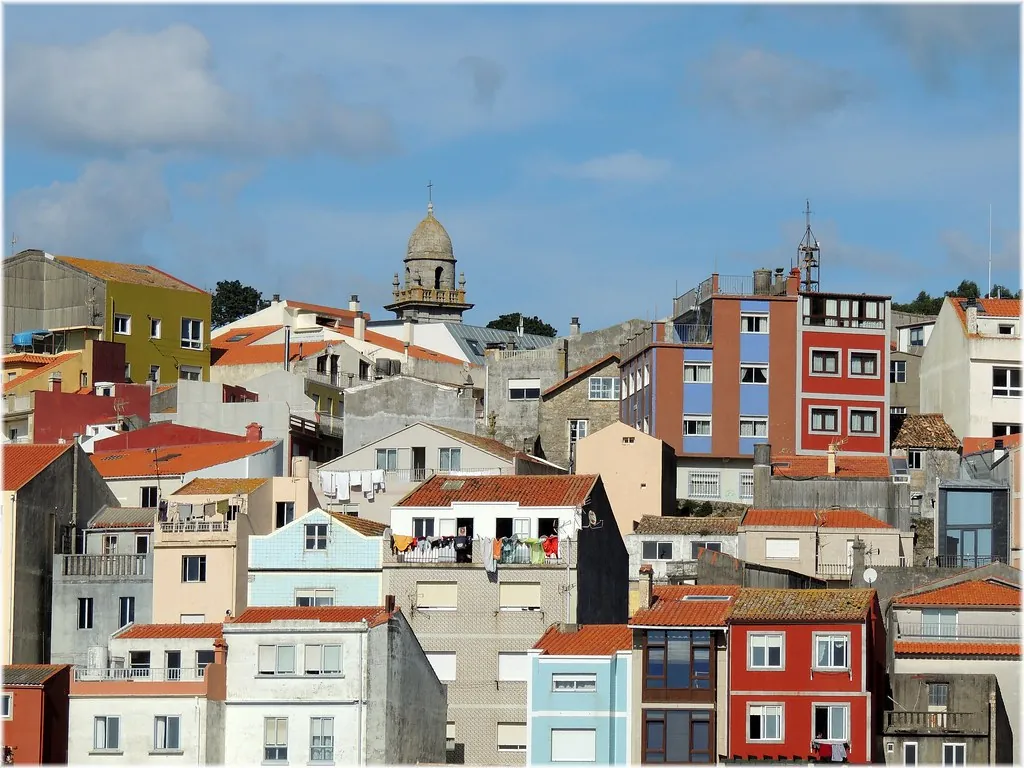
Heading down along Calle Cardenal Belluga, the streets narrow and the houses press close together. Cars pass with difficulty. The historic centre of Tui still preserves sections of its walls and several old gates. The Puerta de la Pía continues to function as a natural passage between the upper and lower parts of the town. Today, neighbours carrying shopping bags and pilgrims walking the Portuguese Way pass beneath its stone arch.
This is not a frozen historic setting. Laundry hangs from green-painted wooden balconies, plants line window ledges, and doorways open and close throughout the day. The area has been protected for decades, yet it remains a living neighbourhood rather than a museum.
In O Call, the area that once formed the Jewish quarter, the streets become even narrower. A small medieval synagogue, now used as an interpretive space, keeps its bare walls and a simple stone vault. It sits discreetly among the surrounding houses, easy to miss. Visiting early or later in the afternoon changes how the space feels, as angled sunlight slips into the street and draws a thin line of light across the ground.
Monte Aloia and the wider landscape
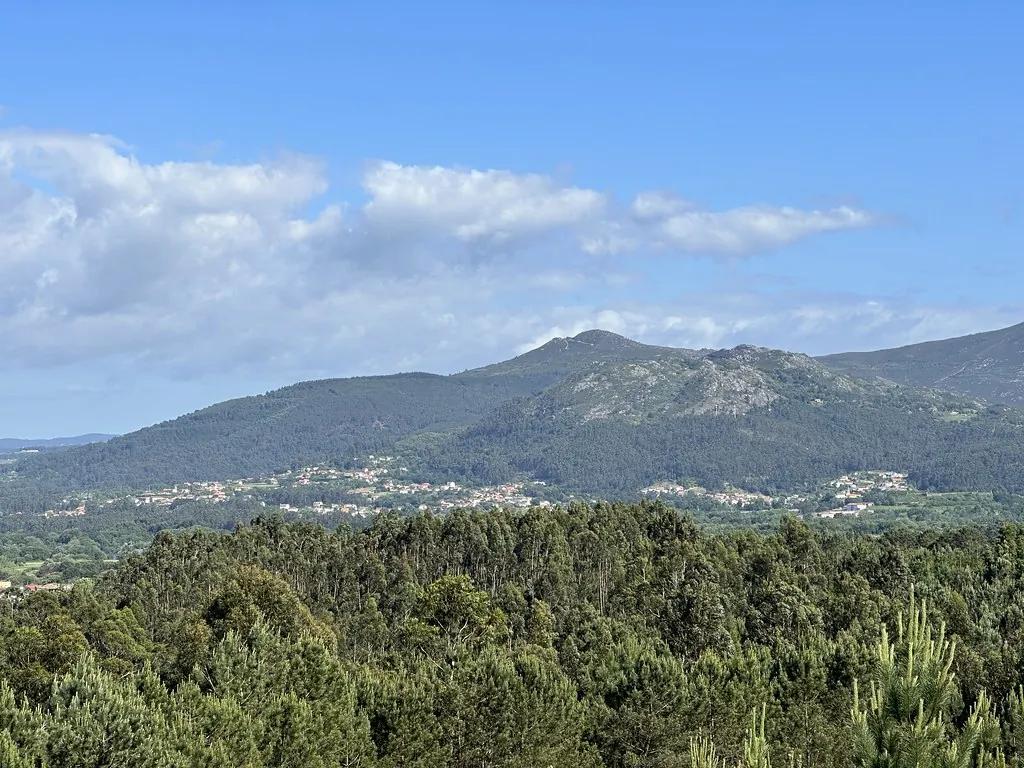
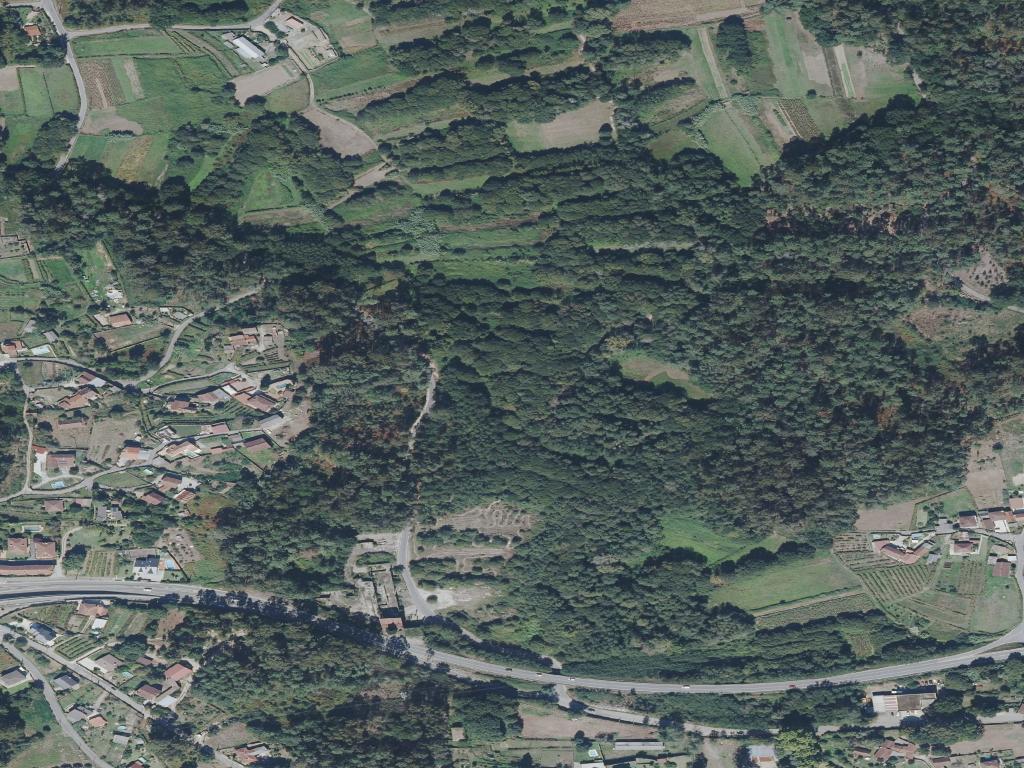
A short drive from the centre, the landscape begins to shift. Monte Aloia was the first natural park declared in Galicia and is closely tied to everyday life in Tui. It is used for walks, viewpoints, and long weekend meals outdoors.
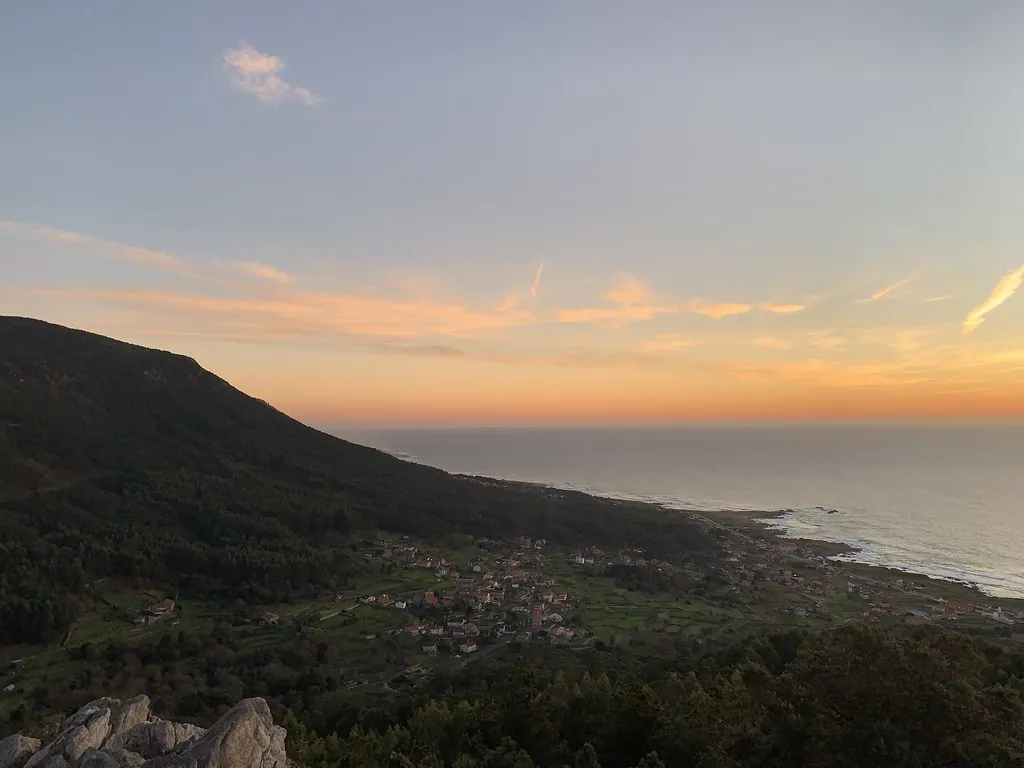
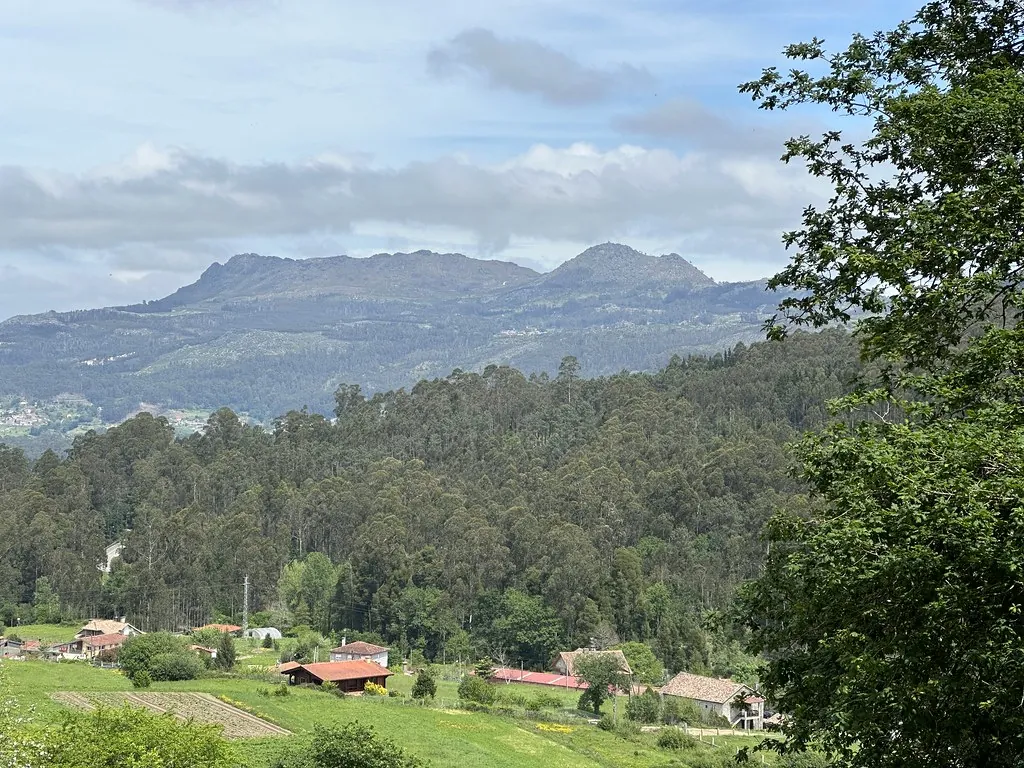
The road climbs through pine and eucalyptus, opening occasionally to views over the Miño valley. From certain viewpoints, the river can be seen winding through the land, with the cultivated fields of the Baixo Miño extending outwards. On clear days, the outline of Portugal closes the horizon.
Marked paths descend through areas of oak, ferns, patches of moss, and shaded ground. After rainfall, which is frequent here, the soil softens and the forest carries a strong scent of damp earth. Water appears in small streams that cross the paths and can often be heard before they are seen.
At weekends in good weather, the mountain is far from quiet, as it is widely used by local residents. During the week, the atmosphere shifts noticeably and becomes calmer.
Evening light along the river
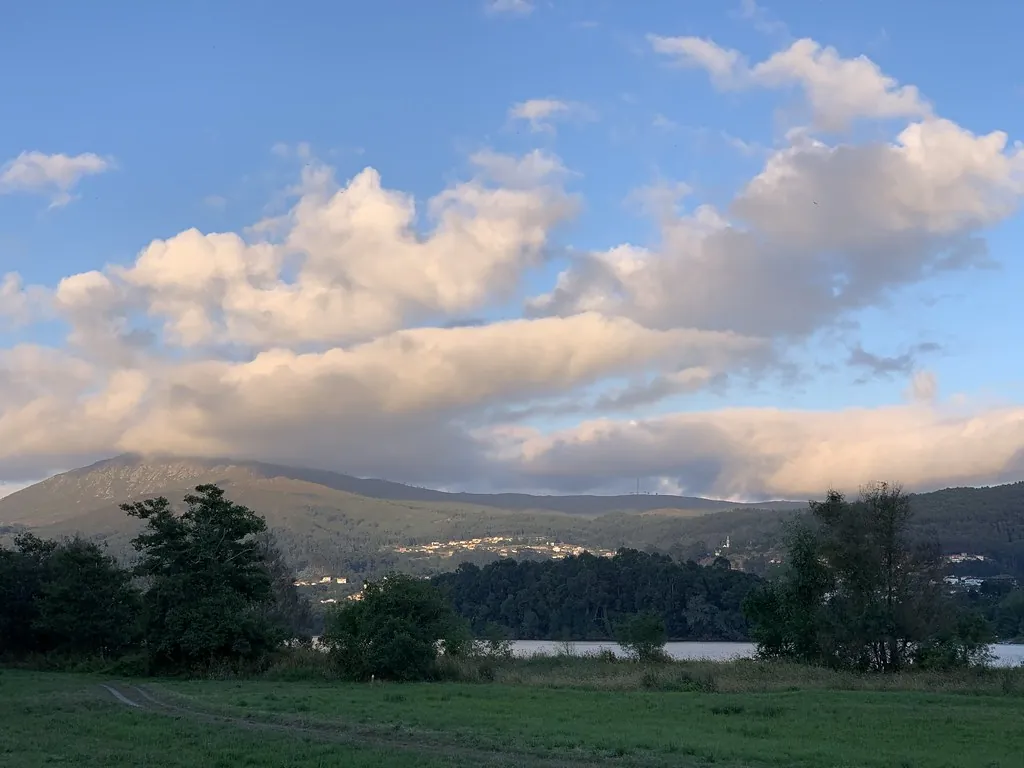
By late afternoon, the Miño darkens and the riverside walk begins to fill with people heading out for a stroll. From certain points, the walls of Valença can be seen gradually lighting up across the water.
Near the quay, small boats remain, along with traces of activity linked to the river. In winter, there is frequent talk of the meixón, the young eel traditionally fished in the Miño and still highly regarded in the area. When food events or celebrations linked to this product take place, the atmosphere becomes lively.
For a quieter view of Tui, a normal winter afternoon or early spring day is enough. The riverside path can fall almost silent, with only footsteps on gravel and the slow movement of water against the edge.
Getting there and when to go
Tui is well connected by road to Vigo and also has a train station on the line linking the south of Galicia with northern Portugal. Many travellers arrive on foot, as this is one of the towns along the Portuguese Way, one of the routes of the Camino de Santiago.