Full Article
about Maside
Hide article Read full article
Mist rises from the river Barbantiño as if the water were breathing. At eight in the morning, in the square by the Concello, the only sounds are the thin stream of the fountain and the dry rattle of a shutter being pulled up. In Maside, the day begins like this, slowly, with the kind of quiet that still lingers in some villages in the interior of O Carballiño, in the province of Ourense.
Anyone who comes looking for tourism in Maside tends to notice that first: silence, damp stone and the smell of firewood drifting from a kitchen even after sunrise. It is a place that does not rush to introduce itself.
Stone in the Morning Light
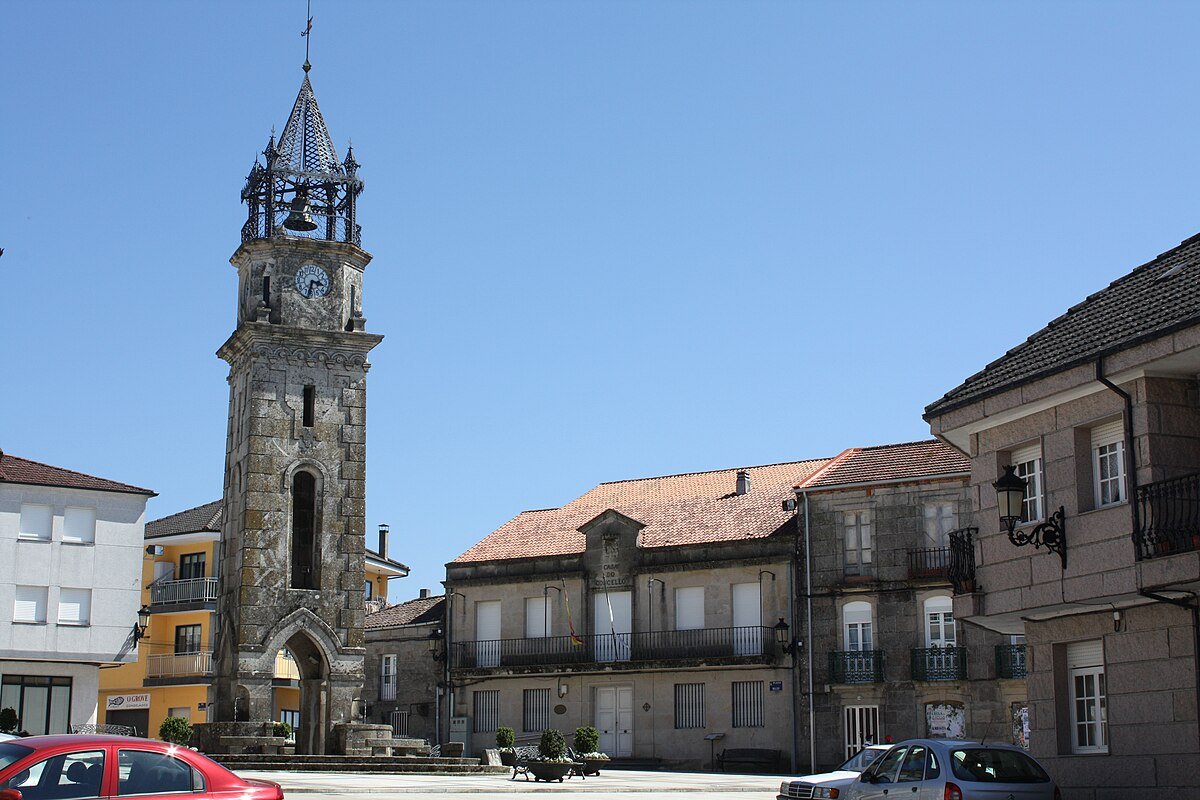
The first church appears almost without warning. Santo Tomé Vello has an unusual square bell tower, closer to a small lookout than to a conventional spire. The stone has darkened after centuries of rain and wind. When the mid-morning light falls across it from the side, the ochre surface turns almost golden.
A small Romanesque church route passes through this area, linking several parishes in the municipality. On paper it does not look long, yet it stretches out if attention lingers on details: a corbel carved with the face of an animal in Santa María de Louredo, the archivolts framing the doorway of Santa Comba, moisture clinging to the stone after days of rain.
In Treboedo, one of the usual stops, there is an old well beside the porch. It is little more than a circle of stone filled with dark water. Older residents say that coins were once thrown in, and that some would make a wish and leave without looking back. Today it is mostly frogs that occupy the space, beginning to croak when they hear footsteps nearby.
This route through Maside’s Romanesque churches is less about ticking off monuments and more about observing how they sit within the landscape. Granite walls, lichen on shaded sides, churchyards edged with low stone walls. The buildings do not dominate their surroundings. They seem to have grown out of them.
Water Among the Oaks
There is a small fervenza, or waterfall, in the surroundings of the castro of Santa Mariña. It is not clearly signposted, and the path narrows as it descends through oaks and undergrowth, so footwear with a decent sole is advisable.
The sound arrives first, before the water comes into view. A steady noise that rebounds off the rocks. The drop is not dramatic, yet enough to lift a fine spray that dampens your face if you stand too close. In summer some people climb into the pool below, although the water is usually cold even on the hottest days.
Above, on the rise, lies the castro. These ancient hilltop settlements are characteristic of north-west Spain, and here the remains of circular walls can still be made out, along with a few stone terraces that now serve more as viewpoints than anything else. From this higher ground the valley of the Barbantiño opens up, with slate roofs scattered across it and agricultural plots forming an irregular patchwork.
The walk between the waterfall and the castro brings together two different layers of the same landscape: water cutting through rock below, traces of early settlement above. Neither is heavily interpreted or staged. They are simply there, part of the everyday geography of Maside.
Bread, Smoke and Chestnuts
When autumn arrives, the village smells different. Smoke drifts from ovens and the sweet scent of chestnuts roasting in perforated pans fills the air.
Maside still preserves communal ovens which, at certain times of year, are lit again to bake bread or prepare shared meals. Rather than a large public festival, these occasions tend to be gatherings among neighbours. Dough rests on wooden tables, someone stirs a large pot, and conversations continue while the bread finishes baking.
Chestnuts also have their moment. As the weather turns colder, it is not unusual to see them roasting in the street. The earthy aroma clings to clothes and lingers long after the fire has gone out.
These seasonal habits say as much about Maside as its churches or walking paths. The rhythm of the year is marked by harvests and by the simple act of lighting an oven. Visitors who arrive in autumn may notice that the smoke at dusk becomes part of the landscape, hanging low over rooftops before fading into the valley air.
Still Evenings and Warm Springs
By late afternoon the valley grows almost motionless. Light slides slowly down the slopes. The dominant sounds are a distant car or a dog barking from a nearby plot of land.
In the surrounding countryside there are small springs of warm water that locals have known for generations. They are not formal thermal facilities or developed bathing areas. Instead, they are discreet upwellings in the middle of fields, where warm water emerges from the earth and forms shallow pools. People from the area sometimes stop by after work, without ceremony or schedule.
There is something understated about these springs. No signs announce them. No infrastructure frames them. They exist as they always have, quietly releasing warmth into the open air. Like much in Maside, they are part of daily life rather than a spectacle.
As evening deepens, the valley of the Barbantiño settles into shadow. Slate roofs lose their shine, and the outlines of fields soften. The earlier stillness returns, similar to the calm of the morning, though thicker now, as if the day had folded back in on itself.
Getting There and Choosing the Moment
Maside lies a short distance from the city of Ourense and from the town of O Carballiño. The usual way to arrive is by car along regional roads that pass through small villages, vineyards and maize fields. The approach is gradual, with no abrupt change from countryside to settlement.
Spring has a particular appeal here. Meadows are intensely green and the paths still carry the scent of damp earth. Autumn is also worth considering, when chestnut season begins and smoke from the ovens appears at dusk.
Those seeking quiet may prefer to avoid some weekends in August. When people who have family homes in the area return for the summer, traffic increases and the pace of the village shifts for a few days.
Maside does not present itself with grand attractions or fixed itineraries. It unfolds through small observations: the colour of stone in slanting light, the echo of water among rocks, the smell of bread and chestnuts in cool air. For travellers willing to adjust to its tempo, this corner of inland Galicia offers a way of experiencing place that is unhurried and grounded in everyday life.