Full Article
about San Cristovo de Cea
Hide article Read full article
A village shaped by bread and routine
At midday, sunlight falls straight through the window of a stone house in San Cristovo de Cea, and the smell of freshly baked bread hangs in the air, warm and dense. It is an ordinary scene here. Bread has been part of daily life for generations, not as a speciality but as something woven into the rhythm of the place.
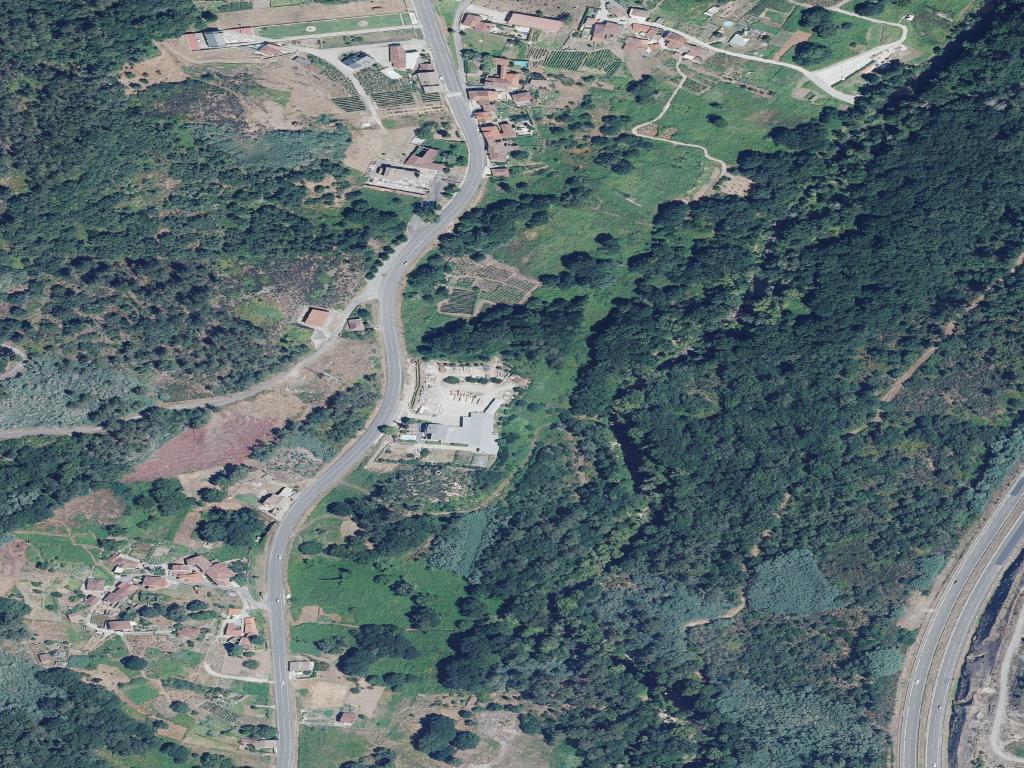
Beyond the houses, the river Cea moves calmly between vegetable plots and meadows. The landscape does not present itself all at once. It unfolds slowly, through small villages, low stone walls and paths that are still walked more often than they are traced on a map.
San Cristovo de Cea sits in the comarca of O Carballiño and keeps a steady rural pace that still sets the tone of each day. The Camino Sanabrés passes relatively nearby, and from time to time a pilgrim appears, boots dusty from the road. More often, though, the sounds are simpler: tractors moving at their own speed, dogs barking as a car goes by, the dry thud of a wooden door closing.
The parish church and the heart of the village
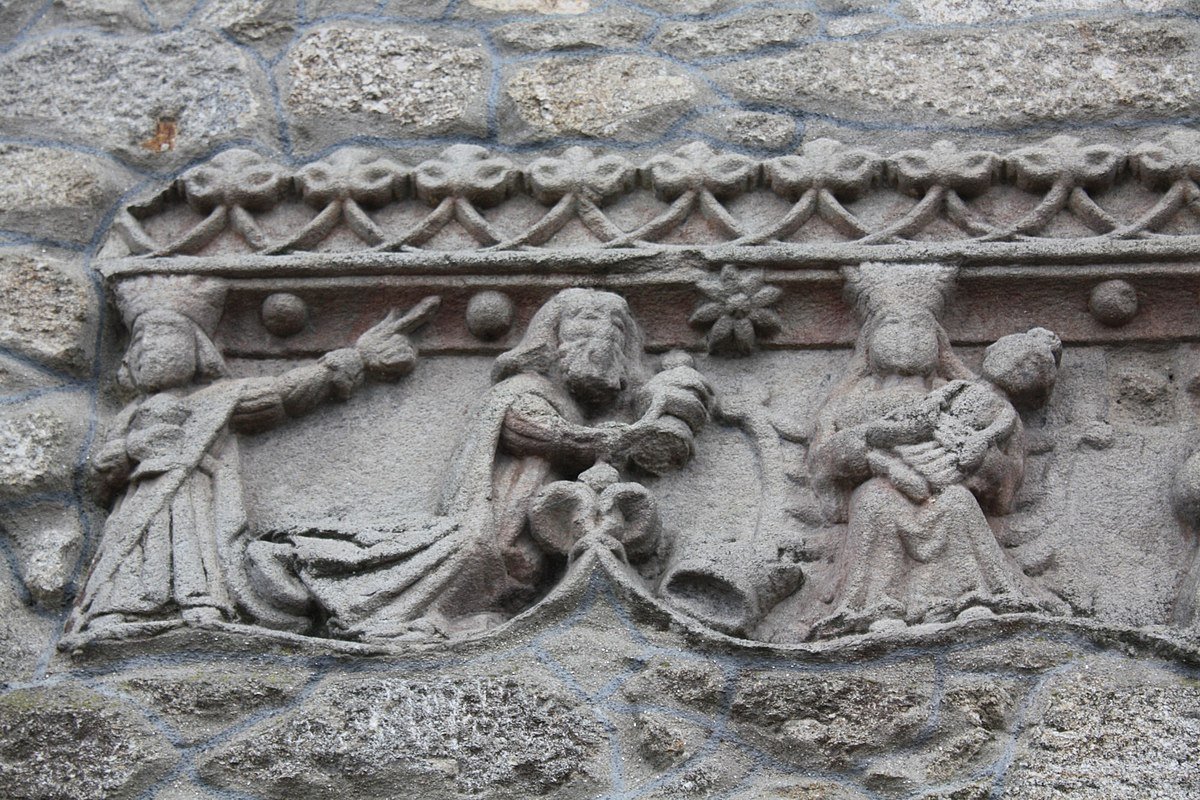
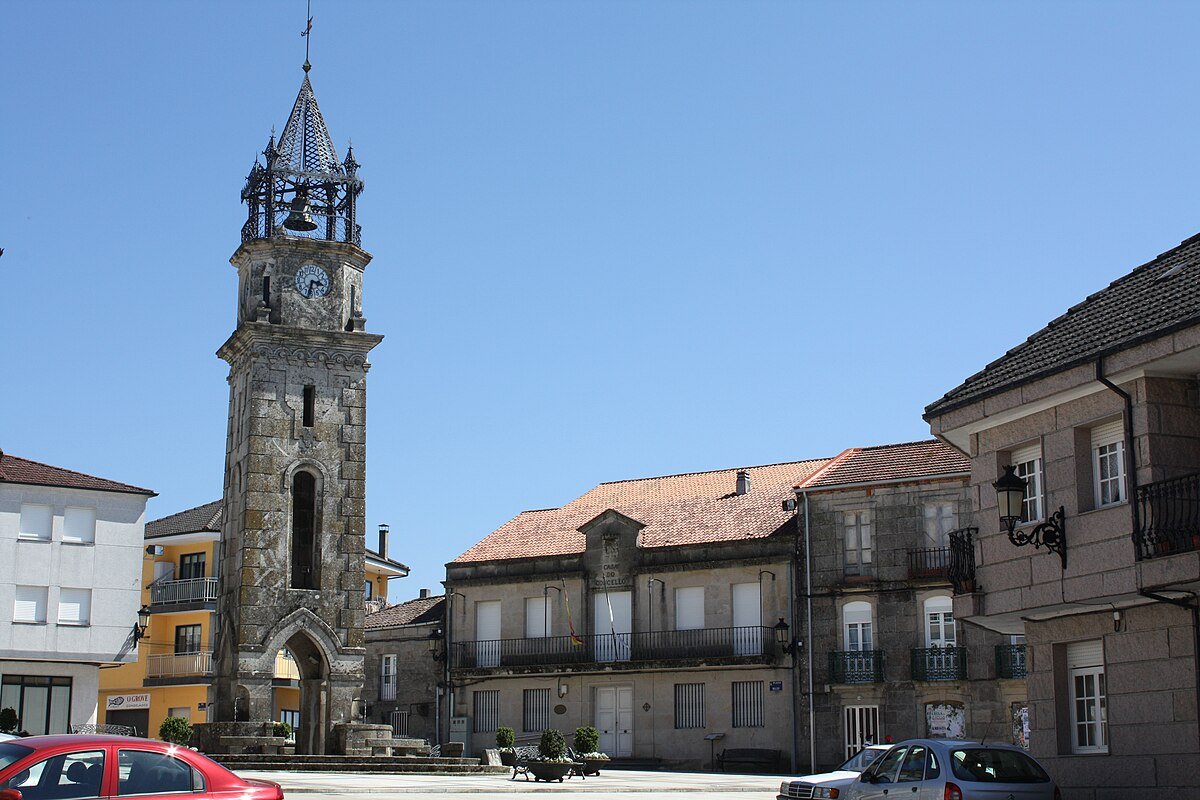
At the centre of the main settlement stands the parish church of San Cristovo. It is not monumental, yet its restraint fits naturally with its surroundings. Parts of the façade reveal older stonework, carefully shaped, alongside later additions that have accumulated over the centuries.
Around the church, houses cluster together without any obvious plan. Walking through the nearby streets brings up details that repeat across Galicia, though never in exactly the same way. A cruceiro, a traditional stone cross, stands at a fork in the road. A small chapel leans against a wall. A hórreo, the raised granary typical of the region, shows wooden slats darkened by damp.
There is no marked route through the village, and none is really needed. The best approach is to park, walk slowly and pay attention to what often goes unnoticed: a south-facing solaina, a type of open gallery, patches of moss spreading across stone, the hollow sound of footsteps on uneven slabs.
The Pazo de Lobeira from the outside
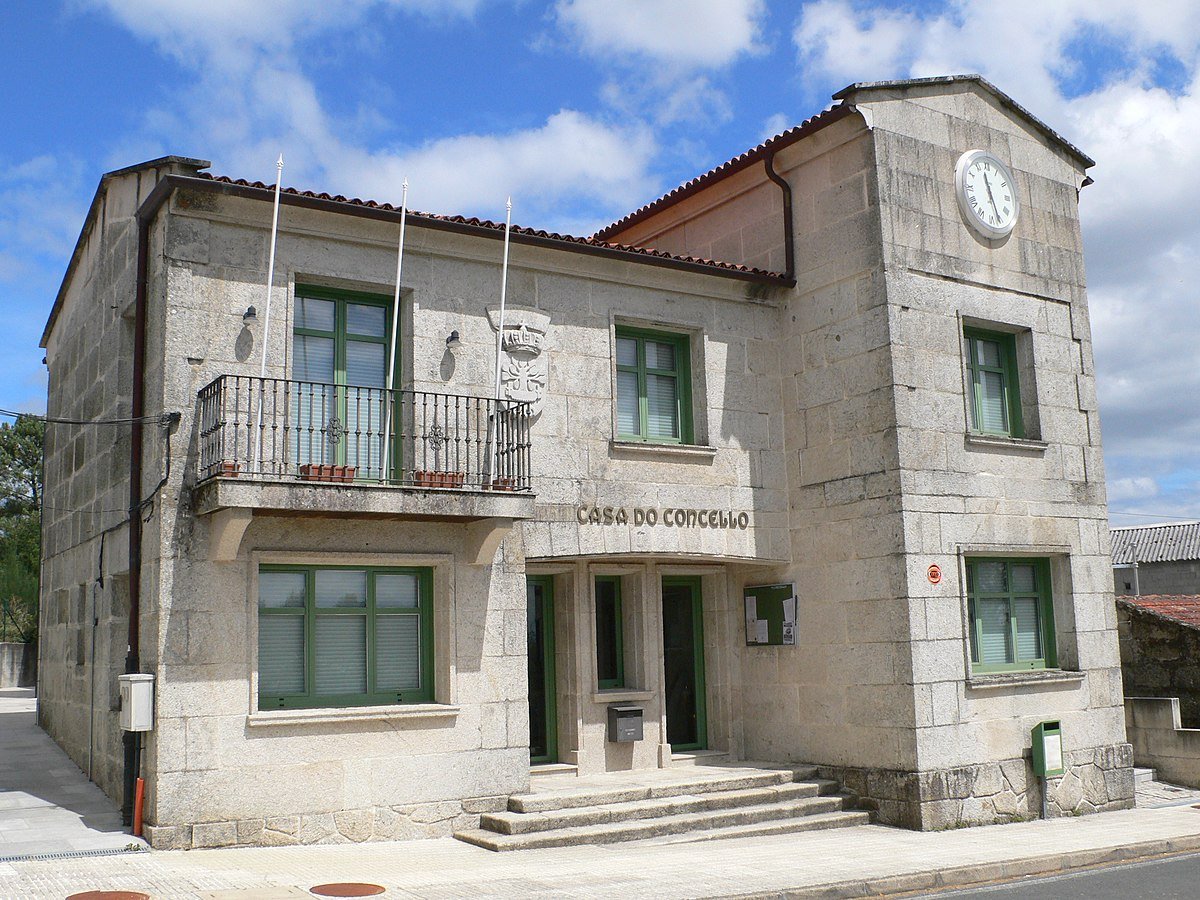
At one edge of the municipality rises the Pazo de Lobeira, a manor house that still carries a certain presence when seen from the road. The estate is privately owned and cannot be visited inside, but it is enough to approach as far as the path allows to take in its stone façade, carved coats of arms and compact structure.
These manor houses once played a central role in how the land was organised. Even today, despite the limited access, they offer a glimpse into how the territory was structured and who held control over much of the agricultural activity.
Granaries, hamlets and paths through fields
Much of what defines San Cristovo de Cea becomes clear when leaving the main village and heading into the surrounding hamlets. Hórreos stand on stone pillars, some with roofs darkened by time. Under many covered entrances, old tools, carts or sacks of grain are still stored.
Rural paths connect scattered houses, enclosed fields and patches of woodland dominated by oak and chestnut trees. On damp days, which are common here, the smell of wet earth and wood is immediate and unmistakable.
Anyone walking these tracks will need sturdy footwear. When it rains, mud quickly takes over the dirt sections, and the narrower paths can become slippery.
Easy walks and a stretch of the Camino Sanabrés
Exploring the area does not require elaborate plans. Many of the rural tracks allow for walking or cycling between hamlets with very little traffic. It is also possible to reach a section of the Camino Sanabrés and follow it for a while, watching pilgrims pass and the yellow arrows pointing the way to Santiago.
There is no need to commit to a full stage of the route. Sometimes a couple of kilometres between stone walls is enough, followed by a return along the same path.
And then there is the bread. In San Cristovo de Cea, baking remains very much alive, and the smell of dough in the oven often drifts out when passing near bakeries. It is one of those elements that blends into everyday life, as much a part of the setting as the vegetable gardens or the hórreos.
When to come and what to keep in mind
Spring and early autumn tend to be good times to explore the area. The fields are green, the paths are manageable without too much mud, and the afternoon light falls softly on the stone façades.
Winter brings frequent rain, and some dirt tracks become more difficult to navigate. In summer, the heat in the inland parts of Ourense can be stronger than expected, so it makes sense to avoid the middle of the day if planning to walk.
A car is almost essential for getting around. The hamlets are quite spread out, and public transport does not always connect these smaller settlements effectively.
If you only have a few hours
A morning or an afternoon is enough to walk through the main village, reach a nearby hamlet and spend some time on the paths that follow the course of the river Cea. This is not a place built around ticking off sights or lining up monuments.
Often, the most interesting moments come from stopping without a plan and paying attention to what is already there: the quiet movement of the river, the sound of footsteps on stone, or the lingering scent of bread in the air.