Full Article
about Bueu
Hide article Read full article
First things first: arrive by car
Anyone planning tourism in Bueu should think about parking before anything else. In summer the centre fills up quickly and the area around the port tends to clog. The simplest approach is to leave the car higher up, near Avenida de Compostela or around the plaza de abastos, then walk down. It is about ten minutes downhill. You avoid circling the harbour in search of a space, which often takes longer than the walk itself.
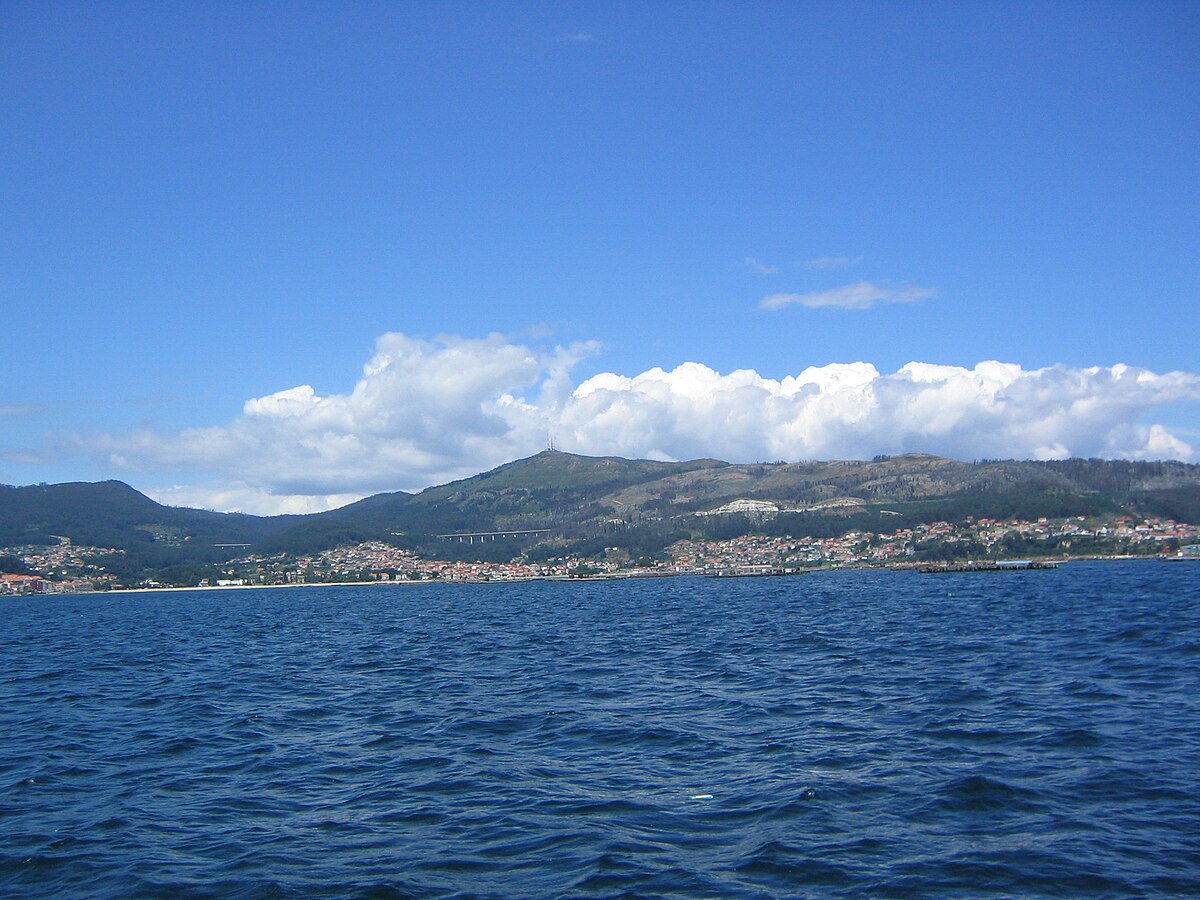
Bueu has around 12,000 residents. It faces the ría, one of Galicia’s deep Atlantic inlets, and keeps its focus firmly on the water. There is enough here for a solid day out: a working port, a handful of beaches and the headland of cabo Udra. It is not a place overloaded with sights, and it does not try to be.
From Pontevedra, the drive across the O Morrazo peninsula is short and straightforward. Getting into town is rarely the issue. Leaving the car once you arrive is the real test, especially in high season. Streets in the centre are narrow and the lower part of town can become blocked. If you see a space uphill, take it.
Boats also leave from here to the island of Ons during the season. Timetables change depending on the time of year and the weather, so it is sensible to check in advance rather than assume there will be a convenient return later in the day.
What stands out, and what doesn’t
Bueu’s parish churches reflect different periods. The church of San Martiño dates from the 19th century and looks exactly that: a correct, solid building from that era without great flourish. Santa María de Cela is much older. You notice it in the stonework and in the rural setting that surrounds it, which gives it a different atmosphere altogether.
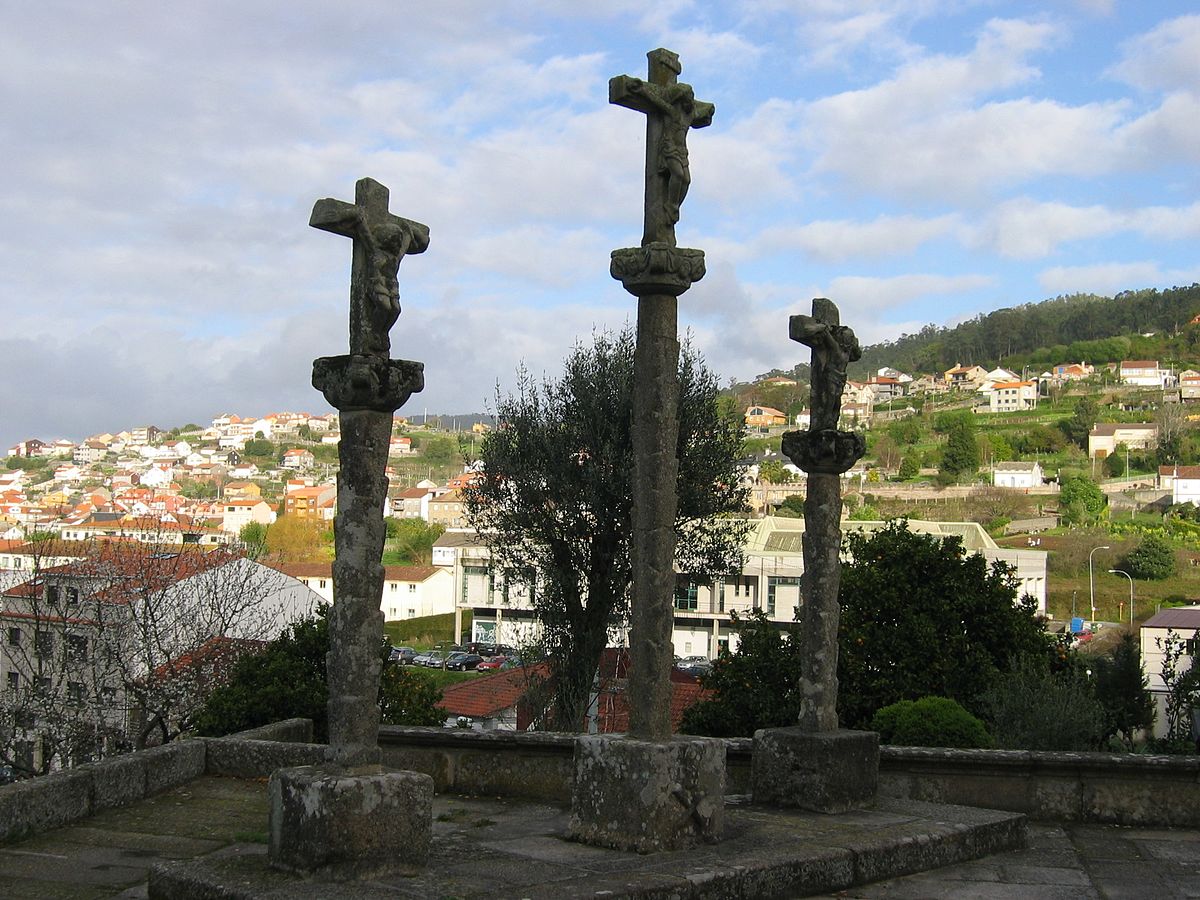
Across the municipality, cruceiros are scattered between parishes. These traditional Galician stone crosses often stand at crossroads or along old paths. Anyone with an interest in them will come across several simply by walking inland along the quieter lanes.
The pazo do Casal can be identified by the coat of arms on its façade and a gate that shows clear wear from the salt air. Pazos are traditional Galician manor houses, usually linked to rural estates. Near the sea, the Roman site of Pescadoira preserves remains of ancient salting facilities. They sit beside the shore and make more sense with a bit of context than as a quick glance from the promenade. Without some background, they can look like little more than low ruins by the water.
If one place defines the area, it is cabo Udra. From the Abelleira car park, a path runs out along the tip of the headland. The round trip covers several kilometres and stays close to the sea throughout. Along the way you pass former military positions and natural viewpoints over the ría de Aldán. On a foggy day there is not much to see beyond the immediate coastline. Under a clear sky, the view opens up across the water.
Beaches and tides
Within Bueu itself there are several small beaches. The sand tends towards coarse and the water remains cold, even in summer. By mid-morning in August they are already fairly full.
Those looking for more space often head to Lapamán, on the other side of the ría. The beach there is long and open. In peak summer it also attracts plenty of people, so solitude is not guaranteed, but the scale is different from the smaller stretches in town.
Another option is to cross to Ons when boats are running. The island forms part of the Atlantic Islands off the Galician coast. Playa de Melide is the widest beach on Ons. Before setting out, it is important to check return sailings carefully, as departures at the end of the day are not always frequent.
The rhythm of the tide shapes the experience in Bueu. At low tide there can be a distinct smell of seaweed around the port. This is part of daily life in a working harbour rather than a staged seafront.
A port on the plate
Bueu remains a fishing port. That fact defines much of what appears on the table in local homes and simple eateries. Caldeirada de pescado is a standard dish: potatoes, a paprika-based broth and the fish of the day. It is straightforward and depends on the freshness of the catch rather than elaborate preparation.
Empanada changes according to what the ría provides. Empanada de berberechos, made with cockles, tends to appear when the product is at its best. If you see it on the counter, it makes sense to ask whether it is recent.
Octopus and mussels feature on most menus. The mussels here come from bateas, the floating platforms anchored in the ría. Ropes hang beneath them, and the mussels grow attached to those lines. When they are in season and from these waters, they need little more than steam in a pot. They taste strongly of the sea, with a faint woody note from the ropes. They are usually served without ceremony, perhaps with lemon if you want it and a piece of pan de millo, the local maize bread, alongside.
When to go, and when to think twice
July and August concentrate most of the movement. The port grows noisier, traffic increases and the centre feels tighter. This is when beaches fill early and parking requires patience.
September is often calmer. The weather still holds on many days and the water in the ría is slightly less cold than at the start of summer. The pace softens without the complete lull of winter.
In winter, Bueu runs on a different rhythm. Rain is frequent and the seafront promenade is largely left to residents. Visitors at that time will see a more subdued version of the town, shaped by routine rather than tourism.
A straightforward plan
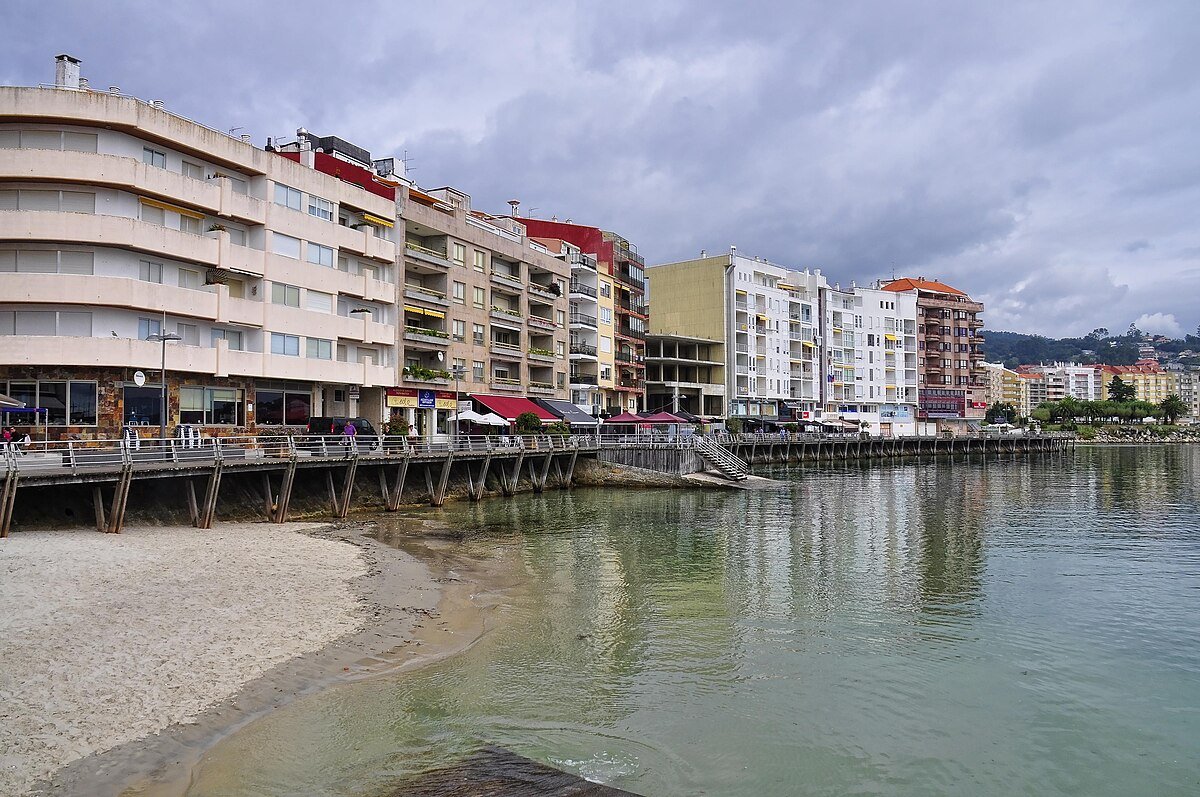
Bueu is an active port, not a decorative backdrop. Boats work, nets are handled, and neighbourhoods extend beyond the centre with little attempt to impress. The smell of algae when the tide goes out and the sight of everyday life around the harbour are part of the place.
A simple plan works best: a walk around the port, some time on the beach if the weather allows, and a hike out to cabo Udra. That combination offers a clear sense of what Bueu is about. It does not require much more than that.