Full Article
about Cangas
Hide article Read full article
A Town Shaped by the Ría
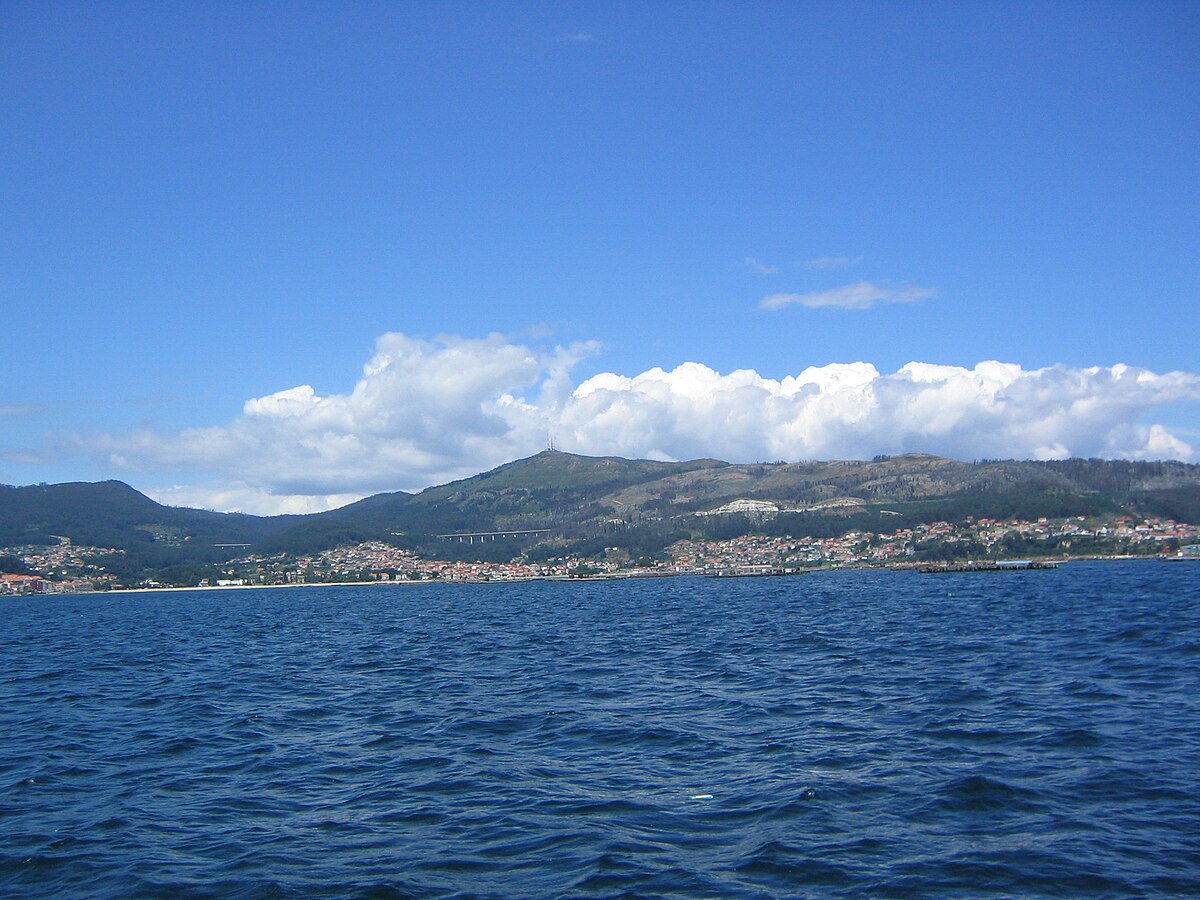
To understand tourism in Cangas, it helps to look at a map first. The municipality occupies the western side of the peninsula do Morrazo, directly opposite the city of Vigo across the ría de Vigo, one of Galicia’s deep Atlantic inlets. For centuries this was a landscape of fishermen and scattered hamlets set among smallholdings, low hills and coves exposed to the ocean.
Growth came with the sea. Fishing and the old salting and canning factories transformed what had been a local harbour into one of the maritime centres of the ría during the 19th century. That link to fishing and industry shaped the town’s economy and appearance.
Cangas still revolves around its port. Boats leave regularly for Vigo and, when sea conditions allow, for the islas Cíes at the mouth of the ría. This constant relationship with the water explains much about the town: the layout of the urban centre, the character of its market and even the way the wider municipality is organised into parishes.
The Historic Centre and the Harbour
The heart of Cangas is arranged around the quay and the former colegiata de Santiago. Construction of the present church began in the 16th century, at a time when the town was expanding thanks to maritime activity. Its façade is sober, flanked by two towers that for many years acted as a visual reference point for those entering the harbour.
Inside, the space feels broad and relatively austere. That simplicity is not unusual along the Galician coast. Many churches were rebuilt or altered several times after fires or attacks arriving from the sea. Cangas suffered pirate incursions in the Early Modern period, a fact that contrasts with the calm rhythm of the town today.
A short walk from the church, the streets still retain traces of the old fishermen’s quarter. Narrow houses, interior courtyards and buildings that once combined living space with storage speak of a practical, working environment. Some present-day constructions stand on the sites of former salting factories that continued operating here well into the 20th century.
The sense of continuity between past and present is strong. The port remains the focal point, and the town centre unfolds naturally from it.
A Living Maritime Memory
Daily life continues to be marked by the harbour. Early in the day, the scale of the place becomes clear: boats arriving, crates of fish moving quickly across the quayside, local residents stopping to buy produce before heading home.
Traditionally, Cangas has depended on inshore fishing, shellfish gathering and work on the bateas de mejillón, the wooden platforms used to cultivate mussels across the ría. This maritime economy left its mark on industrial architecture, although many of the old canneries have disappeared or been given new uses.
Around the square near the municipal market, the atmosphere of a seafaring town persists. On market days, producers from nearby parishes gather here, alongside fish and seafood that come directly from the port. The setting reflects the long-standing exchange between sea and land that has defined the municipality.
The relationship with Vigo also forms part of this daily routine. The boat connection across the ría is short and widely used by residents, reinforcing the idea that Cangas belongs to a wider coastal network rather than existing in isolation.
Parishes, Stone Crosses and Rural Traces
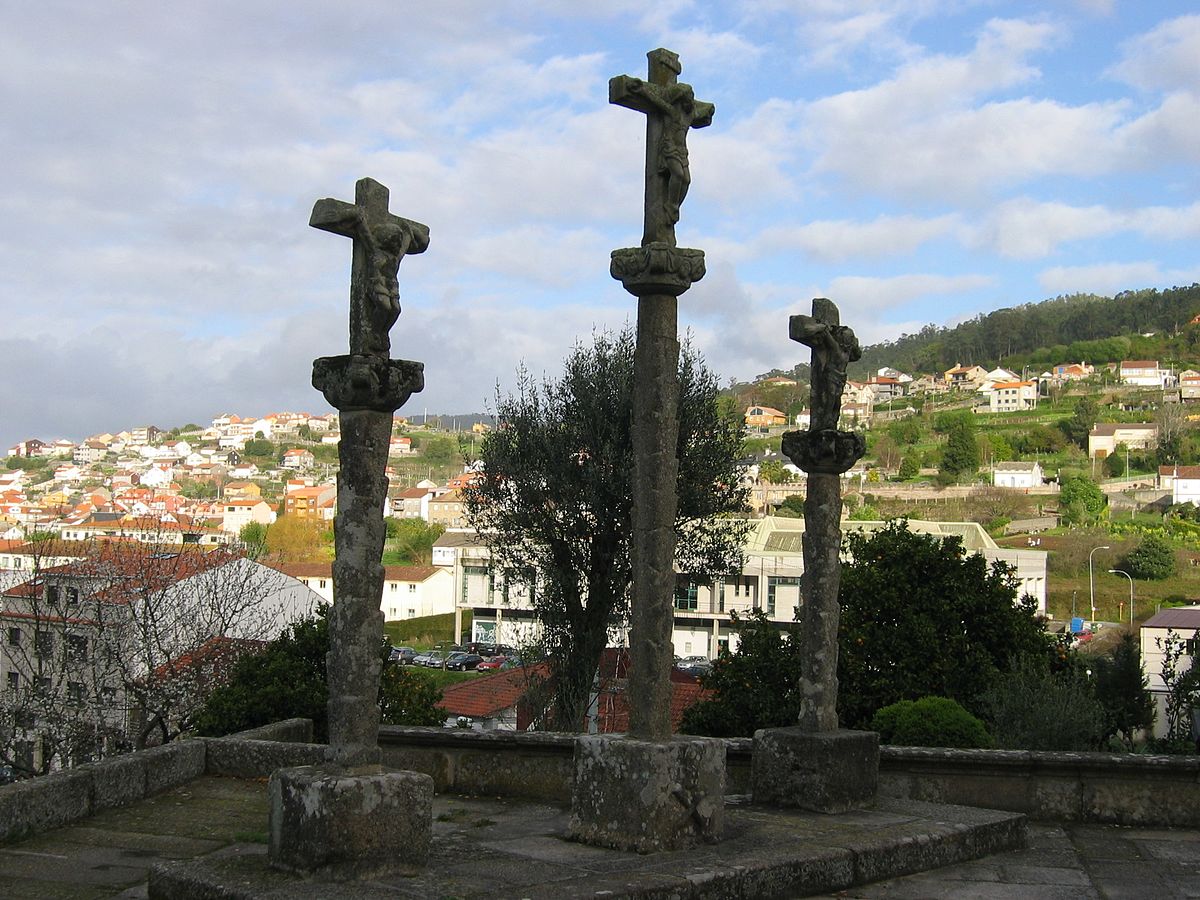
Beyond the compact urban centre, Cangas spreads out into several parishes. These areas preserve elements that are characteristic of the Galician landscape: hórreos, which are raised stone granaries used to store maize; small rural churches; and cruceiros, the carved stone crosses found at crossroads and churchyards across the region.
The most famous cruceiro stands in O Hío. Carved in granite, it is considered one of the most elaborate in Galicia. Scenes of the Passion are sculpted with an unusual level of detail for this type of popular monument. Its significance is not solely religious. The monument also reflects the economic strength that some parishes linked to the sea once achieved.
These rural districts form an essential part of Cangas. They show that the municipality is not limited to its waterfront, but includes agricultural plots, traditional architecture and religious landmarks that predate modern tourism.
The Open Coast of the Morrazo
Heading westwards, the landscape begins to change. The sheltered waters of the ría fall behind, replaced by a stretch of coastline more directly exposed to the Atlantic. The area known as the Costa da Vela combines cliffs, small beaches and paths that follow the edge of the hills.
Near Donón it is possible to climb Monte do Facho. In pre-Roman times there was a castro here, a fortified settlement typical of north-western Iberia. Later, during the Roman period, a sanctuary dedicated to the god Berobreo occupied the site. Few visible remains survive today, yet the location still makes sense as a natural viewpoint over the islas Cíes and the entrance to the ría.
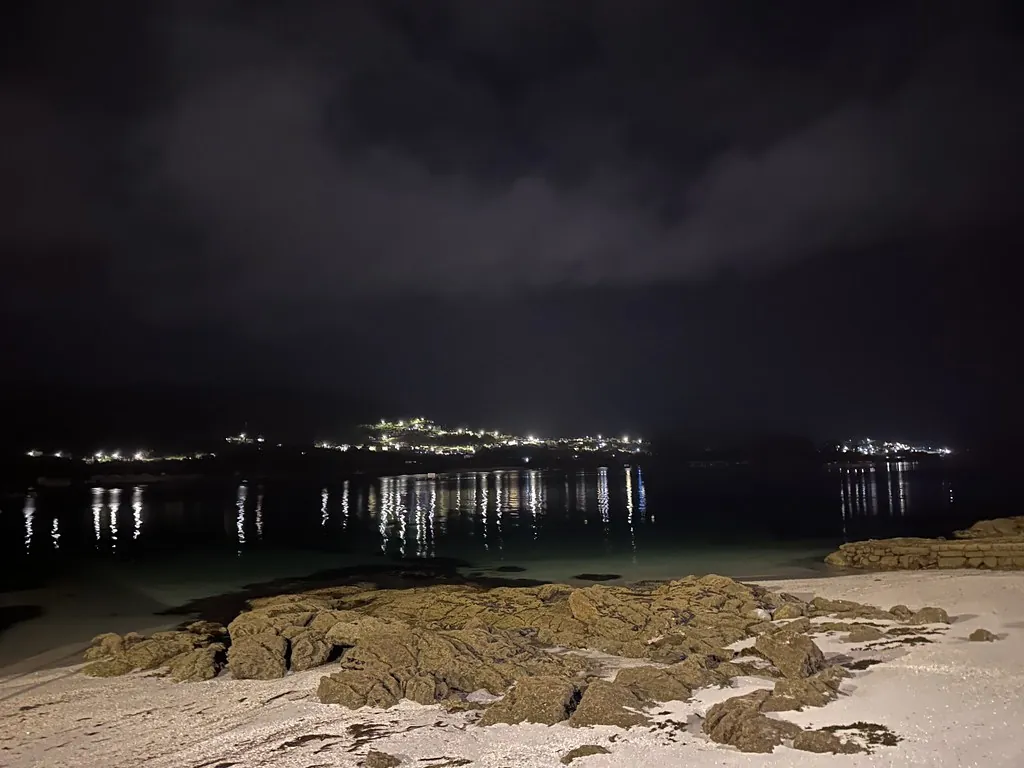
Closer to the town centre lies the beach of Rodeira, the one most frequently used by local residents. It does not have the sense of isolation found on other beaches of the Morrazo peninsula. Instead, it functions as the town’s everyday shoreline, a place for families, evening walks and neighbours who come down on foot from their homes.
This contrast between sheltered ría and open ocean is one of the defining features of Cangas. Within a relatively small area, the scenery shifts from busy harbour to exposed Atlantic cliffs.
Practical Notes
Cangas can be explored easily on foot around the port and in the historic centre. The distances are short and the layout follows the curve of the waterfront.
To visit the outlying parishes or the western coastline, travelling by car is advisable. These areas are more dispersed and rural in character.
Regular boat connections link Cangas with Vigo, a brief crossing that many residents use in their daily routines. From the port, boats also sail to the islas Cíes during the season. Access is usually regulated and depends on sea conditions.
In Cangas, the sea is not a backdrop but a constant presence. The harbour, the parishes and the Atlantic coast all form part of a municipality whose history and present remain closely tied to the ría de Vigo.