Full Article
about Moaña
Hide article Read full article
Across the Ría, Within Reach
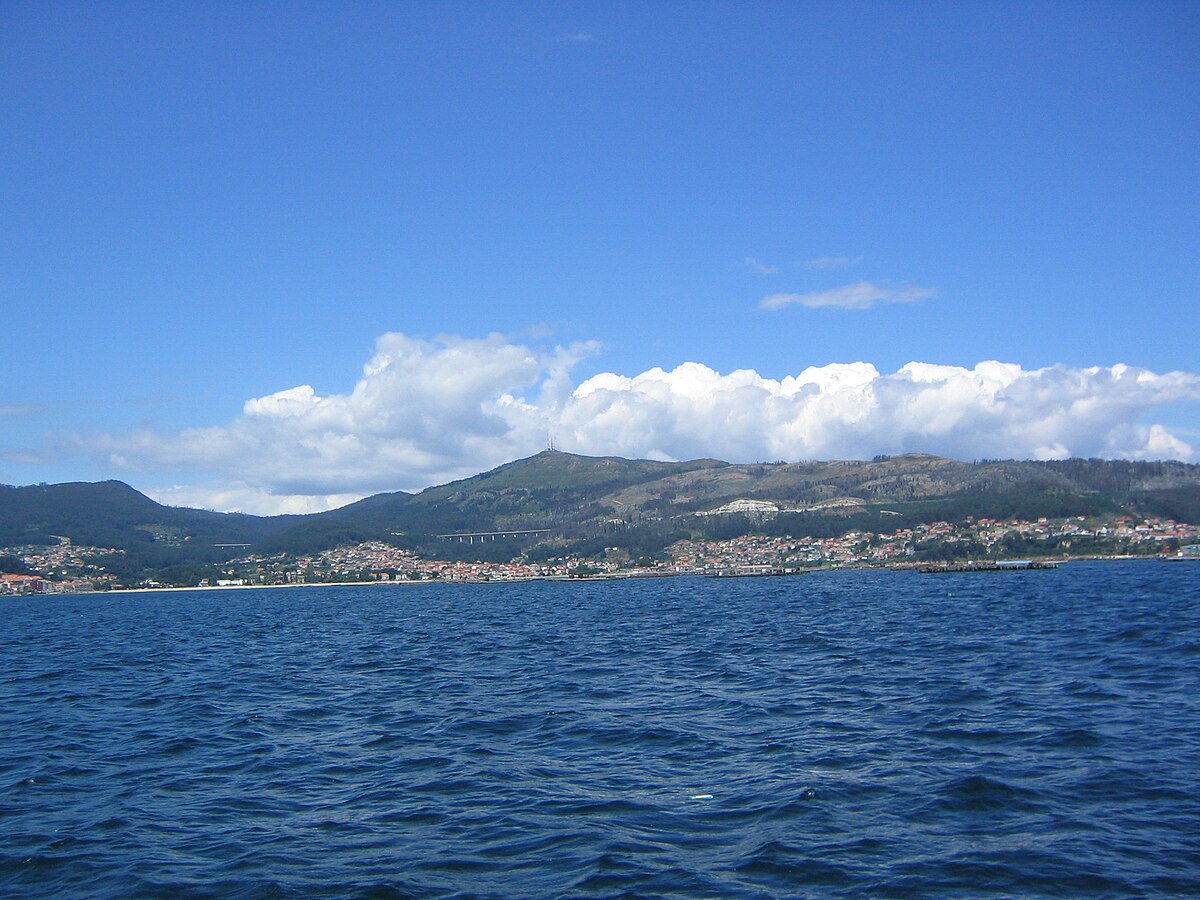
You know when you're on the Vigo waterfront, looking across at the other side? That's Moaña. It's right there, staring back at you. Most people get on the boat to Cangas or just stay put. Moaña is that place you see every day but never really think about visiting.
If you do cross over, don't expect a town that's done its hair for you. There are no candy-coloured houses arranged for your Instagram grid. Moaña feels more like a place that got up, had its coffee, and went about its business without checking if anyone was watching.
The Mussel Platforms Are the Real Skyline
Forget church steeples. The thing that defines Moaña's view are the bateas. Those wooden platforms you see from A Xunqueira beach aren't forgotten rafts; they're mussel farms. It's a working landscape. A huge amount of the shellfish you eat in this part of Galicia starts right here, growing on ropes hanging beneath those planks.
The port in the morning is where this all makes sense. Boats come in, crates get unloaded, and there's a low hum of Galician chatter mixed with engine noise. It’s not a show. It’s just Tuesday.
And if you happen to land here on a Sunday in September, you might stumble into the Festa do Mexillón. Picture a big tent by the water, the smell of steam and salt, and people seriously focused on eating piles of mussels. It’s less of a tourist event and more like the town throwing itself a deserved party.
You Come Here to Eat What Comes Out of That Water
Let's be clear: if seafood isn't your thing, your options thin out quickly. This isn't a criticism, just a fact.
The caldeirada de congro is the dish that tells you everything. It's a conger eel stew that every family makes differently, and everyone will tell you their aunt makes the only correct version. The empanadas are thick, packed full, and designed to be eaten with your hands even at a table with forks. The food here has confidence. It doesn't need fancy plating because it knows its main ingredient swam nearby yesterday.
History You Have to Squint to See
Moaña’s past isn't handed to you on a plaque. You have to go looking for it.
Up in the hills around Borna, there are petroglifos. Prehistoric carvings on rock surfaces showing spirals and weird geometric shapes. You'll likely walk right past them if you're not paying attention—the paths are just dirt tracks through pines, with barely any signage. You need to get down on your haunches and let your eyes adjust to the stone. It feels more like discovering something than visiting an exhibit.
Higher still is the Castro de Montealegre. My first thought was "Is this it?"—just some low stone walls outlining where huts once stood. But then you stand there, two thousand years later, with that same ridiculous view over the entire ría, and it clicks. They chose this spot for a reason.
A Beach That Disappears Twice a Day
A Xunqueira is the town beach. It has sand, a paved promenade behind it, and faces full-on towards Vigo.
The star here is the tide. When it goes out, it leaves these vast, shiny sand flats and little pools where kids become crab-hunting expeditions for hours. When it comes back in, it swallows almost everything right up to the wall. The beach’s personality completely changes depending on the clock.
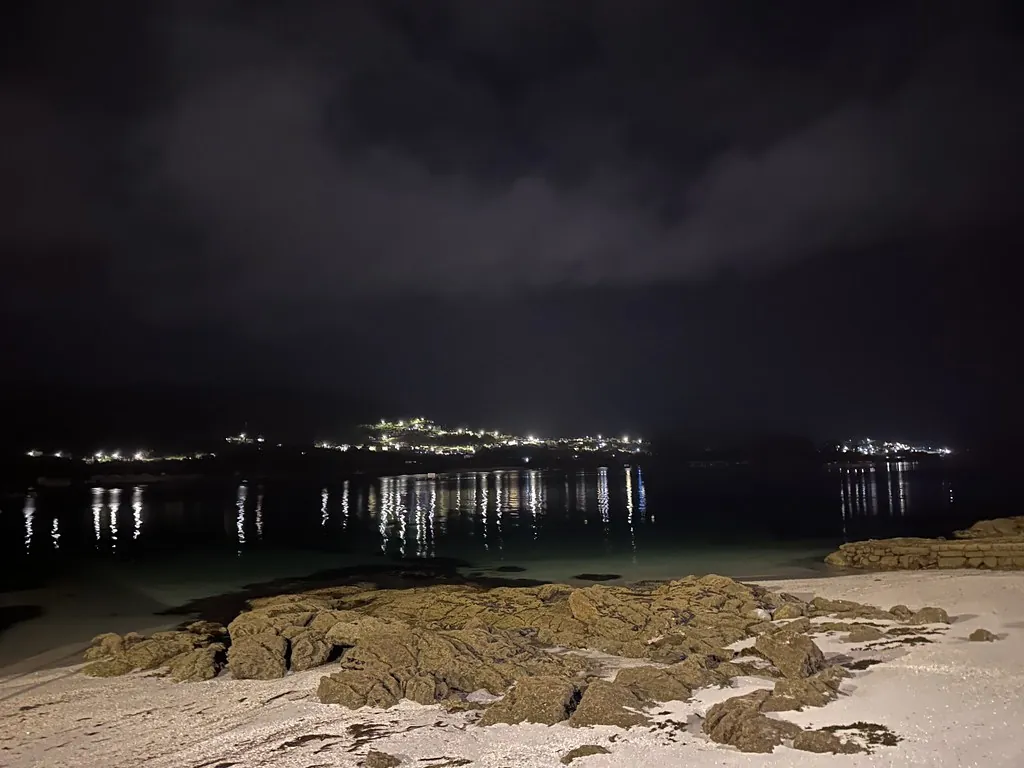
In summer it gets busy with families and their cool boxes, but it rarely feels chaotic. It’s more of a steady hum of people walking dogs, kids shouting from the water's edge, and groups sitting on the wall watching the lights come on across the bay in Vigo.
Getting There & Getting Around
Driving from Vigo is simple: head over the Rande bridge and follow the coast around. It takes about half an hour if traffic is light. The more scenic route is taking the passenger ferry from Vigo to Cangas (a 20-minute trip that feels like hitting a reset button) and then driving or bussing along the coast for another ten minutes into Moaña.
Once you're here? Everything revolves around the port and that seafront promenade. Parking is generally fine outside of peak August weeks when you might have to circle a bit like everyone else.
Moaña isn't trying to be anything other than what it is: a town that lives with its back to the hills and its face in the sea. A good day here looks like: a walk on A Xunqueira at low tide, watching those bateas bob in middle distance lunch down by port area somewhere as boats come go finishing up with an evening stroll when sky over Vigo turns pink then blue sometimes enough