Full Article
about A Arnoia
Ocultar artículo Leer artículo completo
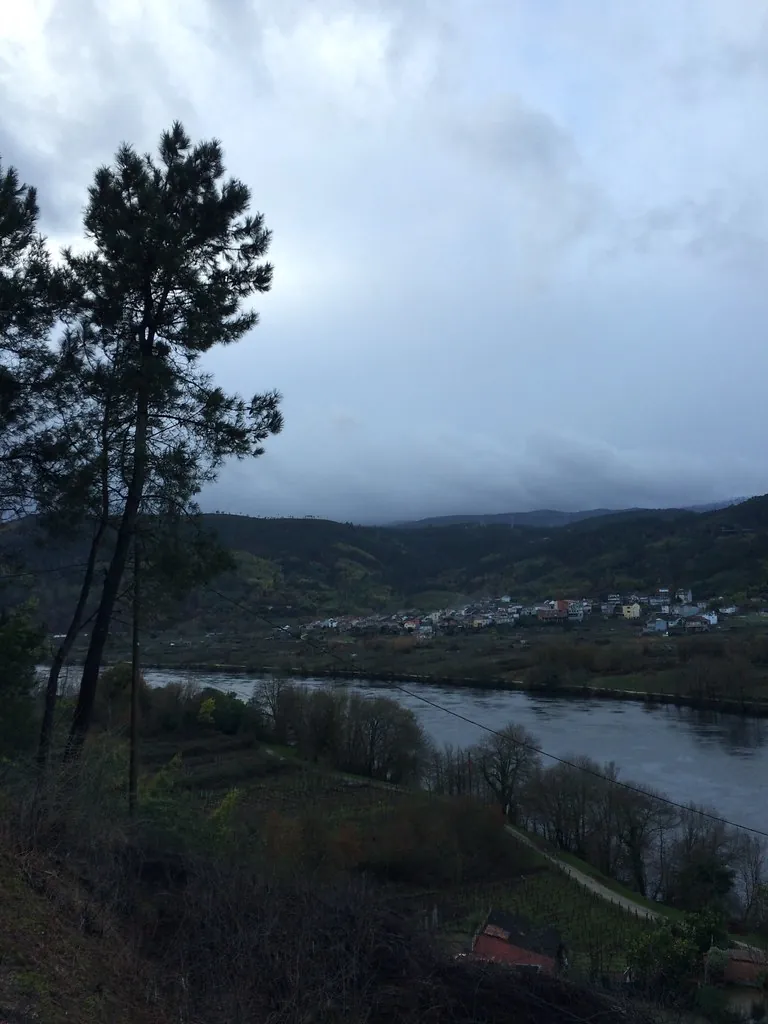
The morning mist lifts off the River Arnoia to reveal terraces of vines stitched into the hillside like green corduroy. This is inland Galicia, forty minutes south of Ourense, where the pace slows to the rhythm of pruning shears and church bells. British visitors who make it this far tend to be the ones who've already ticked off Santiago's cathedral and the rías of the coast; they come for thermal waters, stay for the wine, and leave wondering why more people don't.
A Arnoia won't shout for attention. The village centre—really just a scatter of stone houses, a pharmacy and two cafés—sits low in the valley. There's no medieval quarter to conquer, no selfie-ready mirador. Instead, the appeal is the working landscape: smallholdings no bigger than a Surrey allotment, family plots bounded by granite walls, and the smell of wet earth after an Atlantic shower.
Walking the Ribeiro Without a Timetable
The best map is the river itself. A flat path shadows the east bank for three kilometres, starting behind the church of Santa María. Ducks取代tourists here; you'll pass one man casting a line for trout, another clipping his hedge with shears older than the EU. Turn left at the stone cross and the lane climbs gently through hamlets whose names—A Laxa, O Outeiro—appear only on rusted letterboxes. In April the verges are loud with cow parsley; by October the vines have turned traffic-light red and farmers wheel handbarrows of treixadura grapes to microscopic presses.
Stout shoes matter. What looks like a farm track can dissolve into red clay after rain, and Galician weather keeps Met Office forecasters humble. Carry water: the next bar is never guaranteed to be open, though if the green shutters are up at A Casa da Veiga you can get a coffee and a slice of tarta de Santiago for €3.50 while the owner explains why the 2022 harvest was "muy complicado".
Wine That Costs Less Than the Bottle
The Ribeiro DO is Spain's best-value white region, full stop. A litre of zippy treixadura-blend in a plastic bottle sells from garage forecourts at €2.80, while proper estate-bottled versions rarely top €9. Visiting the wineries—bodega is the local word—requires a phone call the day before; English is patchy, but enthusiasm is universal. Start with Pazo Casanova, five minutes up the OU-536 towards Ribadavia: the owner will talk you through fermentation tanks the size of a Bedford van and let you taste three vintages for nothing if you buy a bottle. Larger groups should book; solo travellers can usually wing it.
Driving is the only practical way to string these visits together. Public buses exist on paper; in reality they are school runs that vanish at 2 p.m. A hire car from Porto airport (1 h 20 min, toll €6) gives freedom to zig-zag between villages, and the police rarely bother with breath-testing on weekday afternoons—though the granite walls have zero forgiveness, so designate a driver or spit conscientiously.
Thermal Waters, But Not Here
Confusion alert: A Arnoia is not A Arnoia Spa. The famous thermal baths are eight kilometres north in Baños de Molgas, where sulphurous water gushes at 38 °C. What the village does have are small hotel spas—Hotel Balneario A Arnoia's indoor pool smells faintly of eggs and costs €18 to use if your room rate doesn't include it. British guests have been known to check in expecting Roman baths and leave underwhelmed; adjust expectations to "pleasant warm soak after a day's walking" and you'll be fine. For the full Victorian-bath experience, drive to Molgas, pay €25 for a day pass, and share the pool with retired Madrilenios discussing property prices.
What to Eat When the Barman Is Also the Cook
Galician cooking is bluntly seasonal. March brings caldo gallego, a white-bean broth thick enough to stand a spoon in; June is for river trout served with a single slice of jamón; November means roast chestnuts sold from street braziers. Vegetarians survive on tortilla and the excellent local bread. Meat-eaters should order pulpo a la gallega—octopus softened in copper cauldrons, sprinkled with sweet pimentón and served on a wooden platter the size of a cricket bat. The spa hotels tone down the paprika for foreign stomachs; village bars do not.
Lunch service stops dead at 3.30 p.m. Arrive at 4 and you'll be offered crisps and a sympathetic shrug. Sunday is particularly skeletal: fill the car on Saturday evening, buy emergency cheese from the 24-hour freezer in the Repsol garage, and plan a picnic by the river where the only soundtrack is water and the occasional church bell.
When to Come, When to Stay Away
Spring (mid-April to early June) delivers green so vivid it looks filtered, plus daytime temperatures in the low twenties—think Devon without the crowds. September and early October add the grape harvest and mellow light that flatters even phone cameras. July and August are hot, often 34 °C by noon; walkers need to start at dawn, and the valley can feel airless. Winter is quiet, occasionally magical when snow dusts the vines, but rural closures multiply: phone ahead and don't bank on anywhere serving dinner midweek.
Rain is part of the package. Galicia earns its greenery; showers arrive horizontally and pass just as quickly. Pack a proper waterproof, not a festival poncho, and remember that muddy boots are a badge of honour in the bodega.
Making It Work
Base yourself in A Arnoia only if you value silence over choice. The modern Hotel Balneario has 54 rooms, secure parking and a buffet that gets the job done (doubles from €75 B&B). Otherwise stay in nearby Ribadavia—ten minutes by car—where medieval lanes, Jewish-quarter museums and a wider restaurant scene provide evening amusement. Either way, hire the smallest car that can handle a hill-start; Galician garages are tight and satellite reception vanishes in every valley.
Credit cards are accepted everywhere except the places they aren't. The village cash machine sometimes runs dry on Saturday night; the next one is in Ribadavia. Bring a debit card that refunds foreign fees and a pocketful of 20-cent coins for the market coffee stall.
Last Glass
A Arnoia doesn't deliver instant drama. It offers instead the slow pleasure of watching a landscape that has been productive since Roman legions needed wine with their oysters. Walk for an hour, taste wine made 200 metres from the vineyard, listen to a farmer complain about EU paperwork in Spanish you almost understand. Then drive back to the airport and notice how the Duty Free treixadura costs three times what you paid at the cellar door. That's the moment you'll realise the valley worked its trick after all—quietly, without a single postcard in sight.