Full Article
about Beade
Ocultar artículo Leer artículo completo
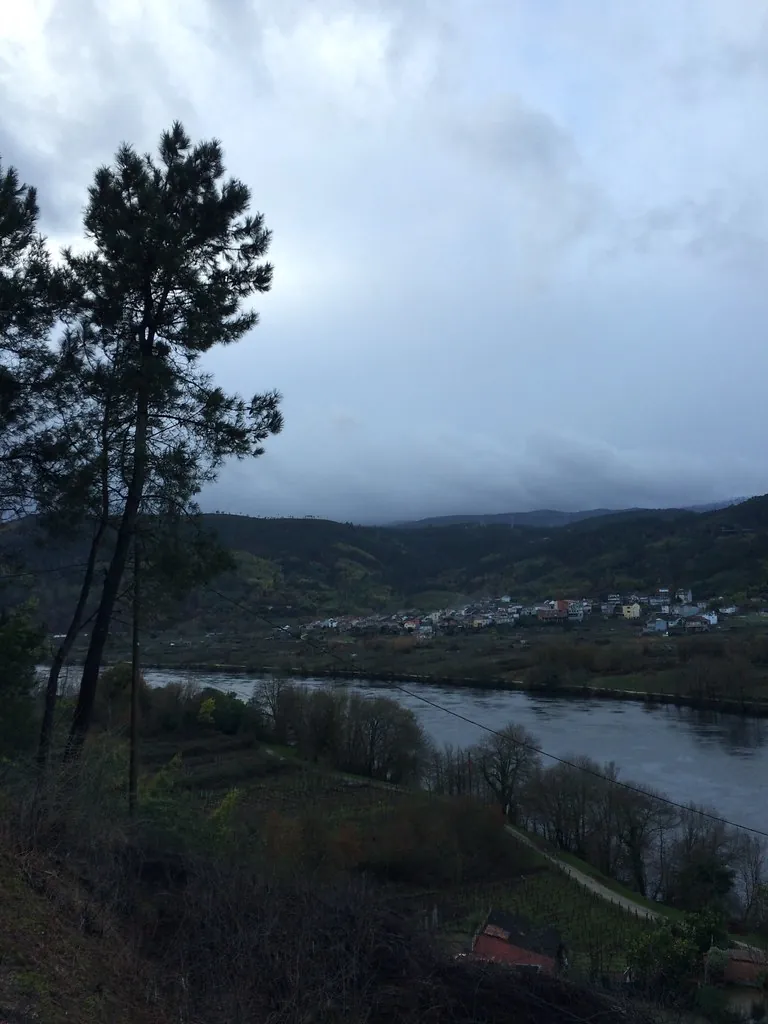
The church bell strikes eleven and the only other sound is a tractor reversing into a vineyard. Beade doesn't do grand reveals. Instead, this scatter of stone houses and smallholdings unfurls along a ridge above the Avia valley, 25 kilometres south-west of Ourense, where the vineyards of Ribeiro produce the white wines that rarely make it onto British supermarket shelves.
That's the first thing to understand: people don't come here to tick off sights. They come because someone mentioned the autumn colours in the vineyards, or because they've learned that treixadura—the local grape—makes a refreshingly sharp white that costs €6 a bottle at the cellar door. The village itself is an afterthought, a place to park while you work out which dirt track leads to which tiny winery.
Vineyards First, Village Second
From the OU-533 approach road Beade appears as a smudge of granite roofs between rows of vines. Pull in at the first lay-by and the scale becomes clear: this is farming country first, human settlement a distant second. The plots are small—many barely half an acre—separated by waist-high dry-stone walls whose builders knew exactly how to angle schist slabs so gravity does the work. In late October the leaves turn copper and rust, and the hills look as though someone's stretched tweed across them. Spring is greener, obviously, but also dustier; by July the earth between the vines is bone-dry and the afternoon heat shimmers off the slate.
Walking tracks exist, though you'd need local help to find them. One starts behind the church and follows an irrigation channel for two kilometres to the neighbouring hamlet of Boborás, passing a cruceiro—one of those carved stone crosses that mark medieval rights-of-way—halfway along. The gradient is gentle, but the path narrows to a single foot-width between vine trellises; wear shoes you don't mind scuffing and expect to meet a farmer who'll nod, pause his pruning, and carry on without small talk.
What Passes for a Centre
Beade's parish church of Santo Estevo sits on a small rise, its Baroque tower visible from anywhere in the valley. Inside, the whitewashed walls and dark wood altarpiece are typical of rural Galicia: impressive if you've never seen one before, otherwise exactly what you'd expect. More interesting is the stone granary opposite, raised on mushroom-shaped stilts to keep rats out of the grain. Count the slots in the wall—each one corresponds to a different household's storage space, a medieval timeshare system that still functions for tools and feed.
There is no café on the square, no gift shop, no interpretive centre. The nearest coffee comes from a vending machine inside the social club, open only when the lights are on. Plan accordingly: buy water in Ourense, pack a picnic, and regard any refreshment as a bonus rather than a given.
Cellar Doors and Cave Bodegas
Ribeiro wines earned Denominación de Origen status in 1932, making this one of Spain's oldest protected regions, yet exports remain tiny. That works in your favour. Phone Bodegas Casal de Armán a week ahead and the owner, José, will meet you at the gate even if you're the only booking. The tasting room occupies a converted hayloft; the wine is poured straight from the tank, and the price list is written on a chalkboard that hasn't changed since 2019. Expect to pay €5-7 for a bottle of their twin-labelled treixadura—less if you bring your own box and promise to carry it carefully over the dirt track.
Some cellars are still dug into hillsides, their entrances barely wider than a supermarket trolley. These cuevas maintain a constant 12 °C year-round, perfect for fermentation without air-conditioning. Bring a jumper even in August, and mind your head; Galicians are shorter than the average Brit, and the granite lintels are unforgiving.
When to Go, What to Avoid
Spring works best. Cherry trees punctuate the vineyard margins with brief April blossom, temperatures sit in the high teens, and the trackways firm up after winter rain. Autumn brings harvest activity—tractors laden with yellow plastic grape bins clog the lanes at dusk—but also low-angled light that makes every wall glow. Summer can roast; thermometers nudge 35 °C by midday, shade is scarce, and the only breeze drifts up from the valley floor three hundred metres below. Winter is quiet, occasionally snowy, and perfectly pleasant if you own sturdy boots and don't mind driving on roads that ice over after 4 p.m.
Avoid the last weekend of July unless you're specifically attending the Santa Ana fiestas. The population quadruples, every cousin who emigrated to Vigo or Madrid returns, and parking becomes a creative exercise in verge-physics. The fiesta itself is fun—octopus boiled in copper cauldrons, empanada sold by the wedge, fireworks let off far too close to the church tower—but it isn't the tranquil wine village the rest of the year delivers.
Getting There, Getting Lost
Google Maps will try to send you down the OU-4017, a single-track lane where passing places appear every kilometre whether you need them or not. Ignore the algorithm. Stay on the OU-533 from Ourense as far as San Cristovo de Cea, then follow signs to Beade. The final three kilometres twist through oak woodland; meet oncoming tractors with courtesy and they'll usually reverse uphill faster than you'd imagine possible.
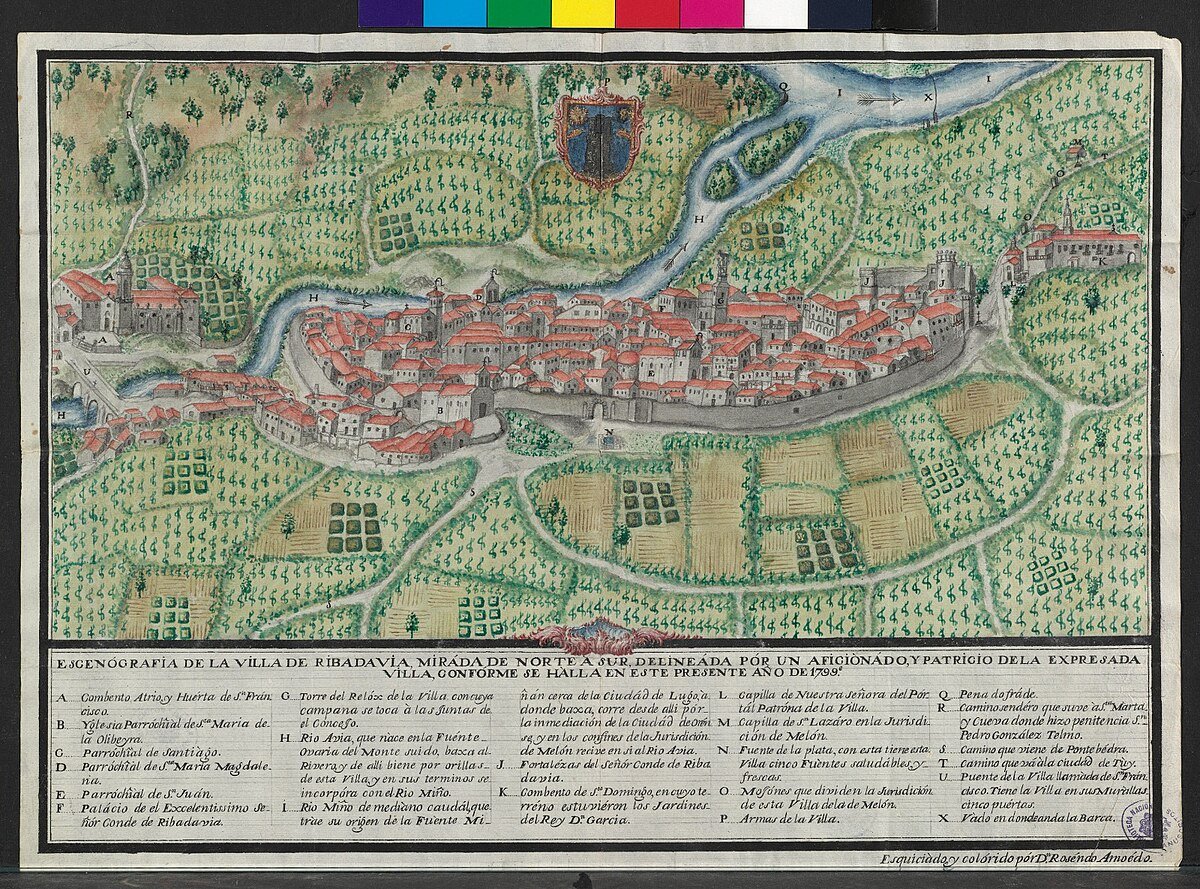
There is no public transport. A taxi from Ourense costs about €35 each way—uneconomical unless you fill the car and split the fare. Better to hire for the day, combine Beade with lunch in nearby Ribadavia (Jewish quarter, castle remains, riverside cafés that do serve coffee), and accept that you'll average 40 km/h once you leave the main road.
The Honest Verdict
Beade won't change your life. It will, however, give you a morning of quiet lanes, decent wine priced like it's 2005, and a reminder that parts of Europe still function perfectly well without being optimised for visitors. Turn up expecting postcard perfection and you'll be gone in twenty minutes. Arrive curious about how small-scale wine is made, prepared to walk a bit and talk a bit (Spanish helps, but Galician goodwill covers many linguistic sins), and you'll leave with a case of treixadura in the boot and a hunch that you should have stayed for lunch— even if you still haven't found anywhere to eat.