Full Article
about Castrelo de Miño
Ocultar artículo Leer artículo completo
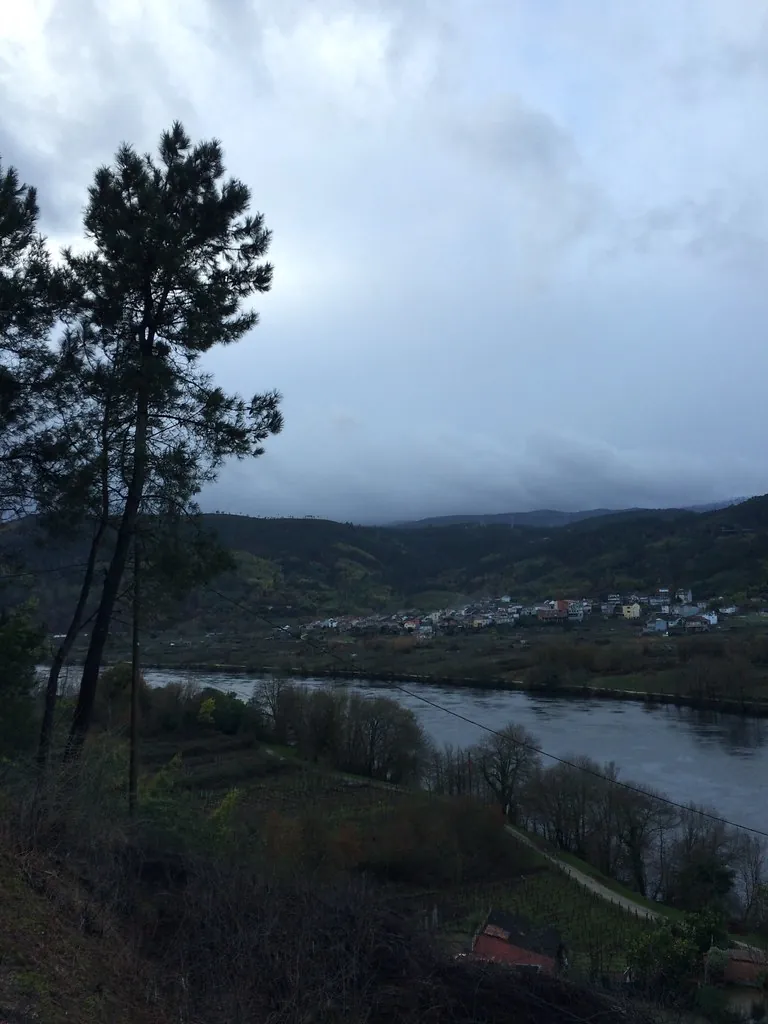
The reservoir at Castrelo de Miño appears without warning. One minute you're threading through terraces of vines, the next you're staring at what looks like a Highland loch dropped into Galicia. The river Miño has been dammed here since 1960, flooding the valley floor and turning the village into an accidental lakeside settlement. It's the kind of geographical quirk that makes you stop the car, even when you're running late for lunch.
At 140 metres above sea level, Castrelo sits lower than much of the Ribeiro wine region that surrounds it. The difference matters. While neighbouring villages bake in summer heat, the water keeps things temperate. Morning mist rolls off the reservoir, wrapping the lower vineyards in a fog that wouldn't look out of place in the Loire. By midday it's burned off, revealing slopes that drop 200 metres from ridge to river in a series of stone-walled terraces that would make a Cotswold dry-stone waller weep with recognition.
The village itself won't win any beauty contests. It's a working place – concrete farm buildings mixed with traditional stone houses, the occasional half-finished new-build that someone's run out of money for. The centre is a triangle of streets around the church and a square that doubles as car park and social hub. There's no postcard-perfect plaza mayor because Castrelo was never meant for tourists. It was meant for growing grapes, raising chickens, and getting on with life.
That honesty is precisely what draws the few foreigners who do make it here. Most arrive by accident, having taken the wrong turn off the A-52 while heading for the more celebrated wine towns of Ribadavia or Ourense. The GPS sends them down the N120, then suddenly they're descending through curves of vines towards a body of water that shouldn't exist. Some keep driving. The smart ones stop.
Walking here requires recalibration of British hill standards. What the Spanish call a 'paseo' would have the Ramblers Association issuing warnings. The vineyard tracks climb and drop with agricultural indifference to human knees. A gentle-looking circuit on the map might involve 150 metres of ascent on loose shale, followed by a descent so steep you find yourself walking sideways like a crab. Proper boots aren't optional – they're essential. The compensation comes in views that stretch across the reservoir to the mountains of Portugal, close enough that you can make out individual wind turbines on the opposite ridge.
The wine grown on these slopes is predominantly white – Treixadura, Torrontés and Lado grapes that produce bottles crisp enough to make a Sauvignon Blanc seem flabby. The local cooperative, housed in a functional 1970s building on the edge of the village, sells direct from stainless steel tanks. Bring your own containers or buy recycled plastic bottles for €2. The wine inside costs €1.80 per litre. It's the sort of pricing that makes you wonder why anyone bothers with supermarket plonk, until you remember the baggage allowance on Ryanair.
For structured tastings, you need to book ahead. Casa Solla, ten minutes drive towards Poio, runs English-language tours on Wednesday and Saturday mornings. They'll walk you through the terraces, explain why the best plots face south-east, and pour samples of their 'Emilio Rojo' – a single-vineyard wine that trades at €45 in London shops. The tasting costs €15, refunded against any purchase. More interesting are the garage-scale producers like Finca Teira, where Jesús makes 3,000 bottles a year in a shed behind his house. Email him ([email protected]) at least 48 hours ahead. He speaks wine English – enough to explain fermentation but not politics.
The reservoir transforms village life in ways that only become apparent after a few days. Summer evenings see locals heading to improvised 'beaches' – patches of shore where someone's dumped a load of sand to cover the sharp zebra mussel shells. Children learn to swim here, splashing around while their grandparents supervise from camping chairs, sharing bottles of ice-cold Estrella. Stand-up paddleboards appear on weekend mornings, rented from a hut by the old ferry crossing. It's €15 for two hours, including delivery to the water's edge. The same outfit runs kayak tours at sunset, paddling past herons and the occasional osprey while your guide explains how the dam construction displaced three villages. Nobody lived in Castrelo then – it was all vines, no houses. The place essentially exists because of electricity generation.
Winter tells a different story. The reservoir drops, exposing mudflats that smell of rotting vegetation. Mist hangs in the valley for days. Roads ice over – Galicia's municipal gritters rarely make it down these minor roads. The village empties as younger residents head to Ourense or Vigo for work. Only the elderly and the determined stay, tending vines that look like gnarled fists protruding from the earth. It's atmospheric, certainly, but requires proper weather gear and realistic expectations. Cafés close early, sometimes for days.
Where to eat depends on timing. The weekend-only restaurant at Bodega Casa do Visillo serves exceptional pulpo a feira – octopus cooked in copper cauldrons, sliced with scissors, dressed with rock salt and pimentón. They'll do it 'sin aceite' if you ask, though purists might mutter. Their empanada gallega makes perfect picnic food for reservoir excursions. During the week, options shrink to Bar O'Miño by the bridge. The menu is written on a whiteboard and changes according to whatever José's mother has cooked. Lacón con grelos appears most Tuesdays – pork shoulder with turnip tops, mild enough for British palates that find fabada too rich. A three-course lunch with wine costs €12. They don't take cards.
Accommodation is limited and mostly rural. The smartest choice is Casa Rural A Devesa, three kilometres uphill in the hamlet of Lebosende. It's a converted farmhouse with four rooms, underfloor heating and views across the reservoir. Prices start at €80 for two, including breakfast featuring their own hens' eggs. Cheaper options exist in Ribadavia, fifteen minutes away, but then you lose the evening light on the water and the sound of frogs from the irrigation channels.
Practicalities matter more here than in tourist-slick destinations. There's no cash machine – the nearest is in Belesar, three kilometres away and only open when the solitary bank feels like it. Fill up with euros in Ourense before you arrive. Saturday's market consists of two vegetable vans and a fishmonger who appears around 10 am, sells out by noon, then vanishes. The village shop opens 9-1 and 5-8, closed Sundays and Thursday afternoons. Plan accordingly or face a 20-kilometre drive for milk.
The train station at Belesar gets three services daily from Ourense, timed for commuters rather than tourists. Car hire remains essential – the interesting places aren't connected by public transport. Driving brings its own challenges. The N120 descent into Castrelo features 12% gradients and hairpin bends that test clutch control. Meeting a tractor on a single-track vineyard road requires reversing skills honed on Highland single-tracks. Sat-nav lies here, sending rental cars down farm tracks that peter out among the vines. When in doubt, follow the signs to the reservoir – water always finds the lowest point.
Castrelo de Miño won't suit everyone. Those seeking medieval architecture or Michelin stars should head elsewhere. It works for travellers who can appreciate subtle pleasures – the way afternoon light turns the reservoir bronze, the satisfaction of buying wine from the person who grew the grapes, the quiet pride of a village that's become a lakeside resort without quite realising how it happened. Come with time to spare and expectations set to 'rural Spain' rather than 'tourist destination'. Bring walking boots, cash, and a taste for white wine that costs less than bottled water. Leave before the reservoir's beauty becomes ordinary, because that's when you'll know you should have stayed longer.