Full Article
about Cenlle
Hide article Read full article
Cenlle is like the broth a grandmother makes: it looks simple, yet there is something in it you cannot quite identify. You stand in the main square, glance around and think, nothing much is happening here. And that is true. That is also the point.
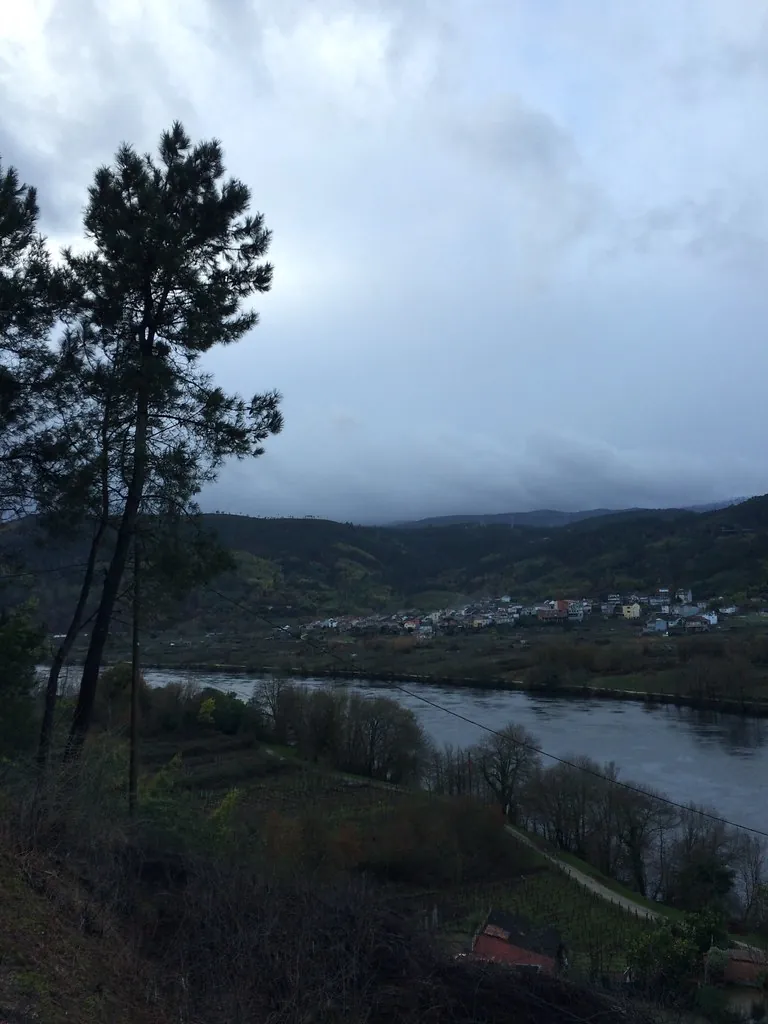
This small municipality in the province of Ourense, in inland Galicia, does not try to impress. It does not dress itself up for visitors or package its identity into neat slogans. What it offers is slower and less obvious, tied to the River Miño and to the vines that climb the slopes above it.
A place that does not try too hard
Arriving in Cenlle on a misty day, with the fog from the Miño clinging to the cars, the first reaction can be uncertainty. What now? Half‑lowered shutters, a dog sniffing a lamppost, two neighbours talking with the unhurried cadence of people who are not rushing anywhere. It feels familiar if you have spent time in small towns.
There is a detail that sets it apart. During the grape harvest, when you cross the N‑120, the smell of fermenting must drifts out from the wineries. It can feel as if someone has spilled new wine across the road.
Cenlle has around a thousand residents, though that figure swells in summer. Not because of tourists, but because people come home. Sons and daughters who moved to Ourense, to Vigo, even to Switzerland, return in August. The village fills with cars bearing foreign number plates and with children speaking Galician in accents that blend here and elsewhere. It is a different kind of seasonal change, more reunion than invasion.
Thermal pools by the Miño
One of the municipality’s quiet draws lies beside the river at A Barca. These are not spa facilities in the formal sense. There is no complex, no organised entrance. What you find are natural hot springs emerging close to the Miño, forming small pools where people sit to soak their feet or wade in up to the waist when the weather allows.
Locals say the water stays warm throughout the year, hovering in the low thirties Celsius. It is just enough to feel welcome when the air turns cold.
In damp autumn weather, with fine rain settling into clothes, the contrast becomes sharper. Shoes come off, jeans are rolled up, feet lower into the water. After a few minutes, conversation starts. Stories surface easily at the edge of a pool. One regular visitor explains that her husband comes every week because it “sorts his legs out”. There is no ceremony to it.
Do not expect polish. A tap, wet stone, the faint sulphur smell that lingers on fabric for a while. What stands out is how ordinary it all feels to the people who use it. This is not an attraction staged for outsiders, but a habit woven into local life.
Walking up to Castro de A Pena
Several signposted footpaths run through the area, some short and others more substantial. One of the routes most often mentioned by residents climbs towards the castro of A Pena.
A castro is a fortified settlement from the Iron Age, typical of north‑west Spain. The full circular walk is roughly eight kilometres. It passes through vineyard land, along small tracks linking hamlets, and into a stretch of woodland near the Miño where the silence feels dense. If something rustles in the leaves, the first thought might be wild boar.
The final ascent leads to a kind of peninsula above the river. There, remains of the castro are still visible, along with wide views across the valley. From this height, the terraced vineyards of the Ribeiro become clearer. Green steps cut into the slopes, clinging to the mountain.
In the same area, traces of ancient gold workings from pre‑Roman and Roman times have been documented. Little can be distinguished today, yet the knowledge that people were turning over this soil in search of metal two thousand years ago adds another layer to the landscape. It shifts the perspective from rural present to deep past without any need for grand explanations.
Ribeiro wine, without ceremony
Cenlle sits within the Ribeiro denomination of origin, one of Galicia’s historic wine regions. It may not have the media profile of other Spanish areas, but white wine has been produced here for centuries.
Vineyards appear almost everywhere, often in small family plots. Narrow terraces, stone walls, vines gripping the incline as best they can. The work is visible in the shape of the land itself.
Many of the local wineries seem to operate at their own pace, without a heavy focus on structured visits or formal tastings. The typical approach is straightforward. If you want to try the wine, you are told to come in. It might be poured into whatever is to hand, sometimes even a plastic cup.
Ribeiro whites are usually fresh and fairly expressive, often blending several traditional grape varieties. There is a balance between fruit and a mineral edge that makes them easy to drink when well chilled. During the harvest in September, the air fills with the scent of pressed grapes. It is a sensory marker of the season, as distinctive as the colour change in the vines.
What you actually find in Cenlle
Cenlle is unlikely to appear on lists of Spain’s most beautiful villages. There are no dramatic cliff‑hanging houses or historic quarters that look like film sets.
What it offers is more everyday. You park the car, walk for a few minutes and end up in conversation with someone asking where you have come from. The paths are not crowded with hikers equipped for competition. A coffee can last longer than expected because the conversation does.
In autumn, when the vines begin to shift colour, the valley takes on a particular tone. Yellows and reds spread across the slopes. Smoke rises from a chimney here and there. The Miño moves steadily in the background.
A simple plan works best here: a short walk, a soak at the thermal pools if the weather is kind, then time set aside to sit and watch the pace of the place. Cenlle does not demand attention. It rewards patience.