Full Article
about Melón
Hide article Read full article
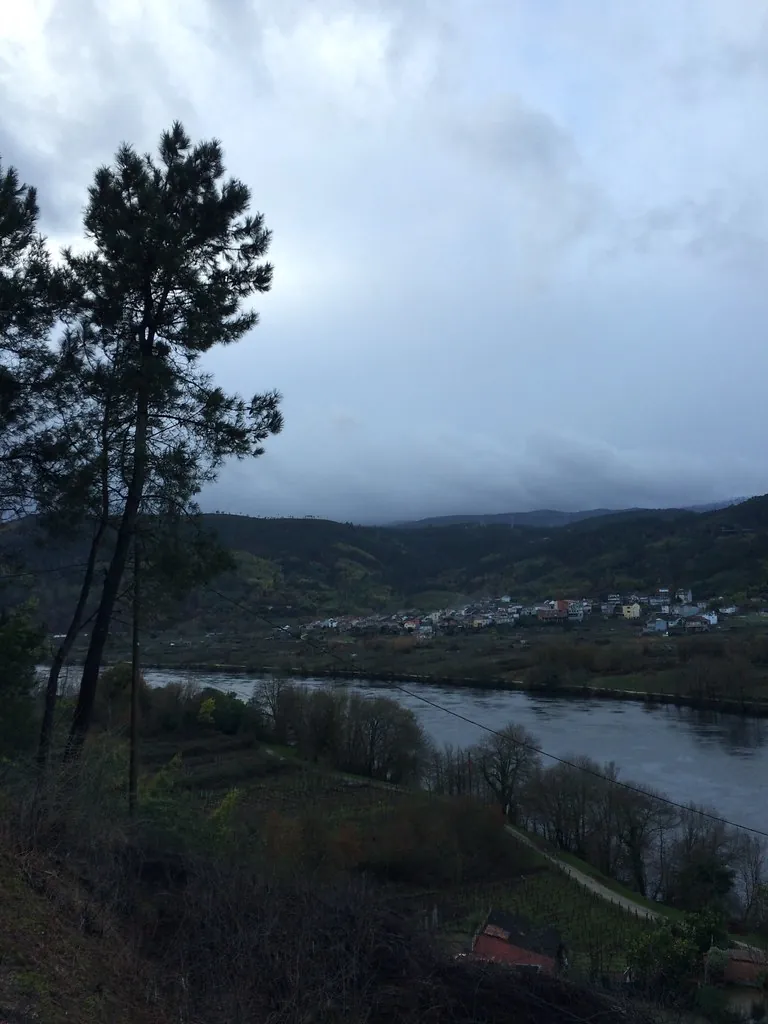
Driving along the A‑52, you might expect Melón to announce itself with oversized road signs, the kind that advertise everything from fuel to a 24‑hour gym. It does not. The turn‑off is discreet, easy to miss if you are not paying attention. Then, almost without warning, the motorway remains above and the road drops into a valley where everything slopes towards the river.
From the carriageway you can already see the monastery, calm and self‑assured, as if to say you have arrived.
A Village Shaped by a Monastery
The story of Melón revolves around the Monasterio de Santa María. It begins in the 12th century, when King Alfonso VII granted these lands for the foundation of a Cistercian monastery. Monks connected to Clairvaux settled in this valley, enclosed by hills that still feel imposing today.
The choice was deliberate. The Cistercians sought secluded places with water close at hand and land to cultivate. Here they had the river da Cortella, slopes rising on either side and a great deal of quiet. For some, perhaps too much quiet.
Important parts of the original monastery remain. Today it functions as the parish church, so it is not a museum or a monumental complex in the conventional sense. It is part of daily life. Step through the entrance arch and something shifts. You may have parked moments earlier with cars passing on the nearby road, yet inside the enclosure the sound seems softened, as though absorbed by the stone.
It is worth walking around rather than stopping at the façade. The setting helps explain why the monks chose this place in the first place. The buildings, the river and the surrounding slopes all fit within the same narrow valley. Nothing feels separate from the landscape that supports it.
Festivities That Still Belong to the Locals
In Melón, celebrations retain the atmosphere of neighbourhood gatherings rather than fixtures designed for visitors. In spring there is usually a romería at Santa Cruz. A romería is a traditional pilgrimage‑style festivity, and here people head up carrying branches and food, following a custom that has been repeated for generations.
Corpus Christi is also marked with enthusiasm. Long tables are set up and food appears from every direction. By the end of the evening it can seem as though half the village is sharing supper together. Arrive on that day and it would be entirely normal for someone to ask where you are from before offering you a portion of whatever is on their plate.
June brings what feels like a chain of celebrations linking parishes and nearby hamlets. Each place honours its own saint in its own way. If a visit coincides with those weeks, it makes sense to ask what exactly is being celebrated, as the answer may differ from one village to the next.
Winter changes the mood, yet Entroido, the Galician Carnival, keeps distinctive masks and costumes alive in some of the surrounding hamlets. These outfits do not resemble shop‑bought fancy dress. They look as though they belong to another century entirely.
A Rougher Corner of O Ribeiro
Mention O Ribeiro and many people picture orderly vineyards and gentle hills. Melón offers a different version. The terrain here is steeper and more abrupt, with slopes where planting a single vine already requires effort.
The landscape combines exposed stone, scrub, walnut trees and small vineyard plots that endure as best they can. This is not a polished image of O Ribeiro. It is the side shaped by work and persistence.
The municipality is divided into numerous small hamlets within two main parishes, Melón and Quins. Some are inhabited throughout the year. Others fill up in summer or during festival periods. It is one of those places where you still sense that each settlement once had, and in many ways still has, its own rhythm and identity.
For walkers, the Puente de Semelón appears along local routes. This 18th‑century stone bridge has a single elegant arch. Beneath it, the river runs with a constant sound of water against rock. On one of the walls someone has left modern graffiti. It looks out of place, yet it also says something about how different layers of time coexist here rather than being neatly separated.
Practical Notes Before You Go
The monastery is the obvious starting point. It does not take long to see, but it rewards a slower look. Spend time around the exterior and within the enclosure to understand how the buildings sit in the valley.
Outside peak hours or on particularly quiet days, the village can feel very still. There are not always bars open, so bringing water or something to eat if you plan to spend the afternoon is sensible. Melón does not operate on a constant timetable of activity.
Autumn often brings a special atmosphere. The surrounding hills change colour and the scent of wood smoke begins to drift through the hamlets. In winter, fog settles deep in the valley and local roads call for unhurried driving.
Melón does not try to impress in five minutes. It is better understood after stepping out of the car and walking for a while. The monastery, the river da Cortella and the scattered hamlets make sense together, each element part of the same enclosed landscape. The motorway may run above, but down in the valley the pace is different, shaped by centuries of monastic history, local festivals and the steady presence of the river.