Full Article
about Barro
Hide article Read full article
Water slips down the moss-covered steps of rock at Barosa, a sound older than any road. Late morning on a weekday, the air is cool and carries the faint, sweet smell of damp grain from the closed mills. Your own footsteps on the wooden walkway are the loudest thing you’ll hear.
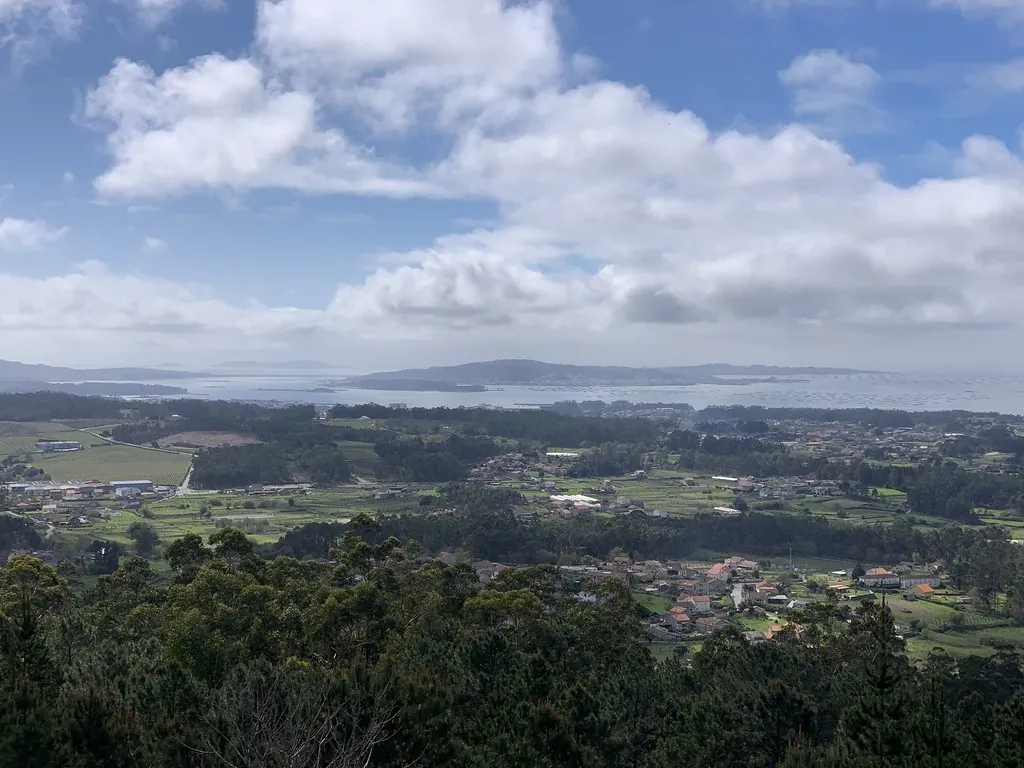
Barro doesn’t gather itself into a single village. It’s a municipality of six parishes—Agudelo, Curro, Perdecanai, Portela, Valiñas, San Antoniño—scattered among vineyards and fields connected by roads where you rarely need to pull over to let another car pass. The N‑550 highway cuts through, a brief roar of asphalt, but a single turn off it is enough. The road narrows, stone walls appear, and the noise is swallowed by the land.
The pull of the river path
A marked path follows the Barosa for a few kilometres. It passes the silent, timber-and-stone watermills that climb the slope, their wheels still. The walk insists on a slow pace. You stop to run a hand over the wet wood of a railing, to watch the river descend not in a single fall but in a series of steps, moving from one green pool to the next.
On a Sunday in summer, families spread towels on flat rocks and children wade in the pools. Come on a Tuesday morning, and you might have the sound of moving water entirely to yourself, broken only by the tap of a walking stick ahead on the path. The atmosphere between these two moments is not the same place.
Nearby, stretches of the old Lombo da Maceira path keep their cobbled stones, slick with moisture in autumn when fog sits in the woods. This route now shares ground with the Camino Portugués. The stretch through Barro runs for kilometres between vine rows and small settlements; it’s where many pilgrims settle into their stride after leaving Pontevedra’s outskirts behind.
Stone faces and shared tables
In Agudelo, the church of San Martiño sits on a slight rise, its Romanesque tower a landmark. The stone darkens in winter, holding the damp for days. Under the portico, one carved corbel shows a weathered face everyone calls “o mouro.” The name is given without explanation, as if it has always been there.
Around the feast day of San Martiño in November, if the weather holds, long tables appear in the square nearby. Large pots of cocido steam in the open air, and there is viño novo from that year’s harvest. The gathering feels like an extended family meal—neighbours, children, people from nearby parishes eating outdoors before winter.
Curro has its turn in mid-August. The local band often plays from the steps of its Baroque church, the music spilling across the square. People bring their own food: empanadas, bread, bottles of wine kept cool in bags. Later, as the sun warms the stone façade to a honeyed tone, someone will start singing without a microphone, and others will join in.
A meal when it’s ready
The midday meal sets the rhythm here. In small dining spots across the parishes, cooking is straightforward. Lacón con grelos appears when it’s cold, river trout when it’s in season. Stews simmer for hours.
Many places operate like traditional casas de comidas; they aren’t always open every day. An open door and the scent of wood smoke are your best indicators. It’s common to ask what’s available rather than choose from a printed menu. The wine often comes from nearby small producers, served in unlabelled bottles or from a larger container behind the counter.
When to go and how to move through it
Barro is a short drive east from Pontevedra via the N‑550. From that main road, smaller turn-offs lead to each parish and down to the Barosa river area.
Parking is rarely difficult except on summer Sundays near the waterfalls, when roadside spaces fill by mid-morning. A weekday visit changes everything.
Late spring and early summer turn everything a deep green, and the Barosa runs fuller. August brings heat and more local visitors to the river pools. Winter is wet. The rain deepens the colours of the landscape, darkens the stone walls and church towers, and brings back that persistent scent of wet earth and old moss that never really leaves.